
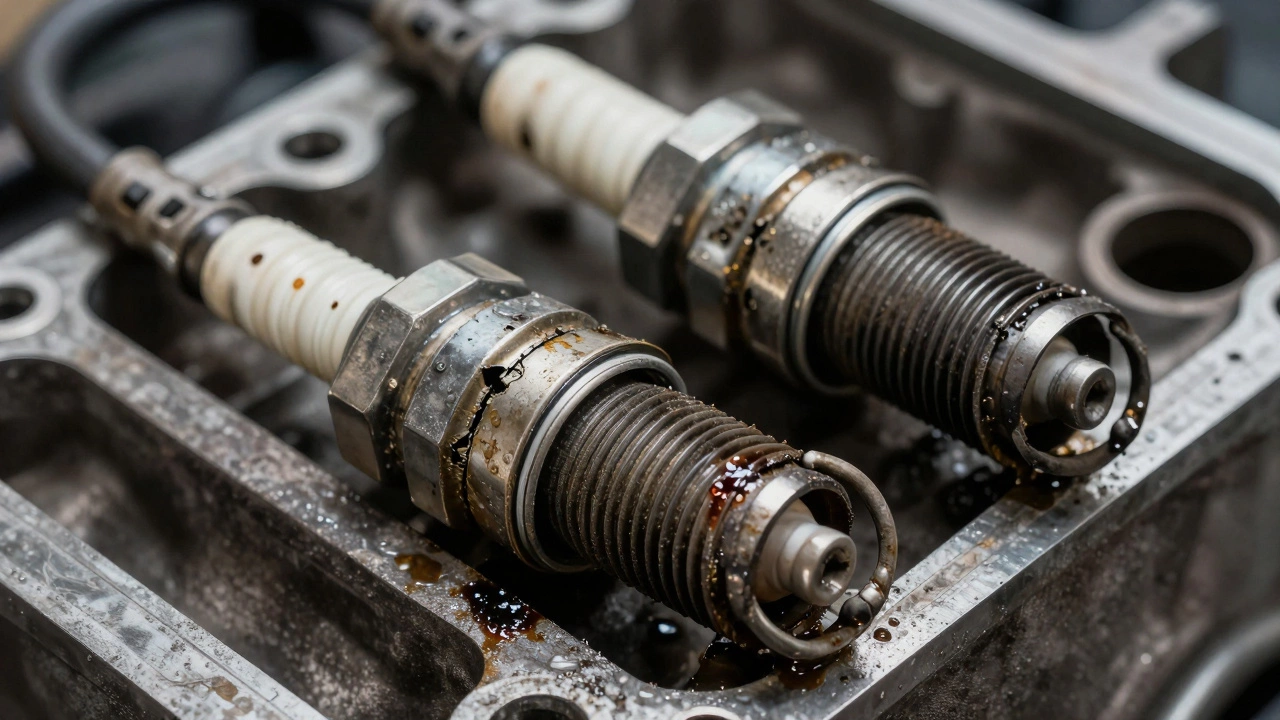
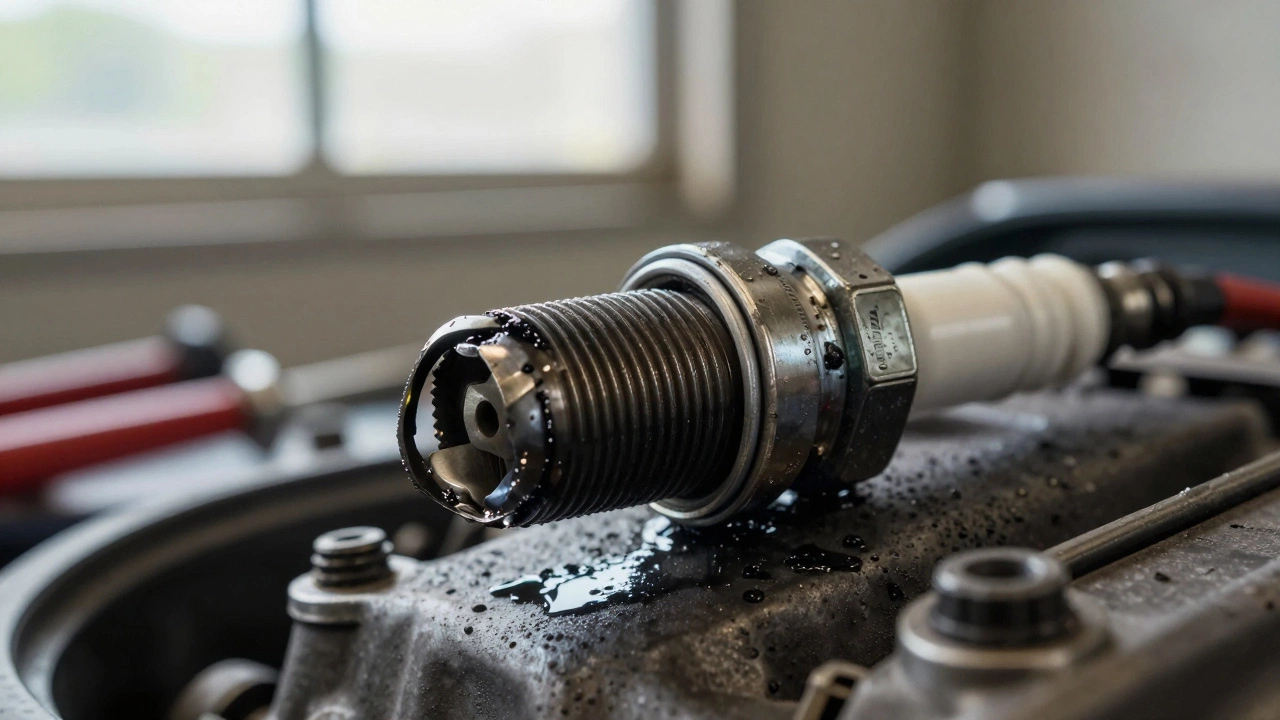
When your car sputters, stalls, or refuses to start, it’s often not the battery—it’s the spark plug failure, a breakdown in the ignition system that prevents the engine from igniting fuel properly. Also known as misfiring plugs, this issue quietly drains power, kills fuel economy, and can lead to bigger engine damage if ignored. Spark plugs aren’t just little metal sticks—they’re the heartbeat of your engine’s combustion cycle. Each one fires hundreds of times per minute, and when they wear out or get fouled, your car doesn’t just run worse—it starts to fall apart.
Spark plug failure doesn’t happen overnight. It starts with small clues: a rough idle when you’re stopped, a hesitation when you press the gas, or a check engine light that comes and goes. You might notice your car’s fuel efficiency dropping without any obvious reason. That’s not coincidence. Worn or dirty spark plugs can reduce fuel economy by up to 8%, according to real-world tests. And if you keep driving, unburned fuel can flood your catalytic converter, leading to repairs that cost ten times what new plugs would’ve cost.
What causes it? The usual suspects: old age (most plugs last 30,000 to 100,000 miles), oil leaks coating the electrodes, carbon buildup from bad fuel, or simply using the wrong heat range for your engine. Some drivers think upgrading to expensive iridium plugs will magically boost horsepower—spark plug performance, the ability of a plug to ignite fuel cleanly and consistently under pressure—but the truth is, unless your engine was running with degraded plugs to begin with, you won’t feel a power jump. What you will feel is smoother acceleration, fewer misfires, and a quieter engine.
And it’s not just about the plugs themselves. engine misfire, a condition where one or more cylinders fail to ignite fuel properly can be caused by bad ignition coils, cracked spark plug wires, or even a vacuum leak. That’s why mechanics don’t just swap out plugs and call it done—they check the whole system. If your car’s been misfiring for weeks, it’s likely more than just worn-out plugs.
You don’t need to be a mechanic to spot the warning signs. Listen for a rhythmic stutter when idling. Smell raw fuel after a failed start. Watch for the check engine light flashing—that’s your car screaming for help. And if you’ve gone over 60,000 miles without replacing them, you’re already playing with fire.
Below, you’ll find real stories from drivers who ignored the signs—and those who caught it early. We cover what actually changes after a spark plug replacement, how to tell if yours are failing before it’s too late, and why some "performance" plugs are just expensive placebo. No fluff. Just what works.
 8 February 2026
Bad spark plugs can cause serious engine damage, including catalytic converter failure, warped valves, and even engine rebuilds. Don't wait for a breakdown-replace them on schedule to avoid costly repairs.
 15 January 2026
Bad spark plugs can absolutely prevent your car from starting. Learn the signs, how to check them yourself, and why ignoring them can cost you far more than a simple replacement.
 27 November 2025
Bad spark plugs cause rough idling, poor fuel economy, hard starts, and engine misfires. Learn the key symptoms and why ignoring them can lead to expensive engine damage.





©2026 northwichtyrescentre.co.uk. All rights reserved
0