Windshield wipers aren’t just rubber strips-they’re your only defense against rain, snow, and road grime. If they’re streaking, chattering, or leaving blind spots, you’re driving with compromised vision. And that’s not just annoying-it’s dangerous. So when you’re shopping for new ones, the real question isn’t just what is a good price for windshield wipers? It’s: What’s the right balance of cost, quality, and safety for your car?
How Much Should You Actually Pay?
Windshield wipers range from $8 to $60 per pair, but that wide range doesn’t mean you’re getting five times the performance. Most drivers pay between $15 and $30 for a solid set that lasts 6-12 months. You don’t need to spend $50 on premium blades unless you live in extreme weather or drive daily in heavy rain.
Here’s what you’ll typically find at different price points:
- $8-$15: Basic beam blades or traditional frame-style wipers. These work fine for light rain and mild climates. Brands like Rain-X or ANCO fall here. They’re reliable for occasional use but may warp in freezing temps or wear out faster.
- $16-$25: Mid-tier hybrid or beam blades. These are the sweet spot for most drivers. Brands like Bosch Icon, Michelin Stealth, or Valeo offer better aerodynamics, quieter operation, and consistent pressure across the glass. They last longer and handle snow better than budget options.
- $26-$60: High-end or heated blades. These are for people in snowy regions (think Minnesota, Canada, or the Rockies). Heated blades prevent ice buildup and are worth it if you face winter storms regularly. Brands like PIAA Silicone or Rain-X Latitude fall here.
For the average driver in a temperate climate, spending $20-$25 gets you blades that perform well, last a full year, and won’t cost you $500 in repair bills from a missed pedestrian because your wipers failed at 70 mph.
Why Price Varies So Much
It’s not just brand names. The cost difference comes down to three things: design, materials, and features.
Frame-style blades are the old-school type with a metal frame holding the rubber. They’re cheaper to make, so they cost less-but they’re bulkier, catch wind at highway speeds, and can ice up in winter.
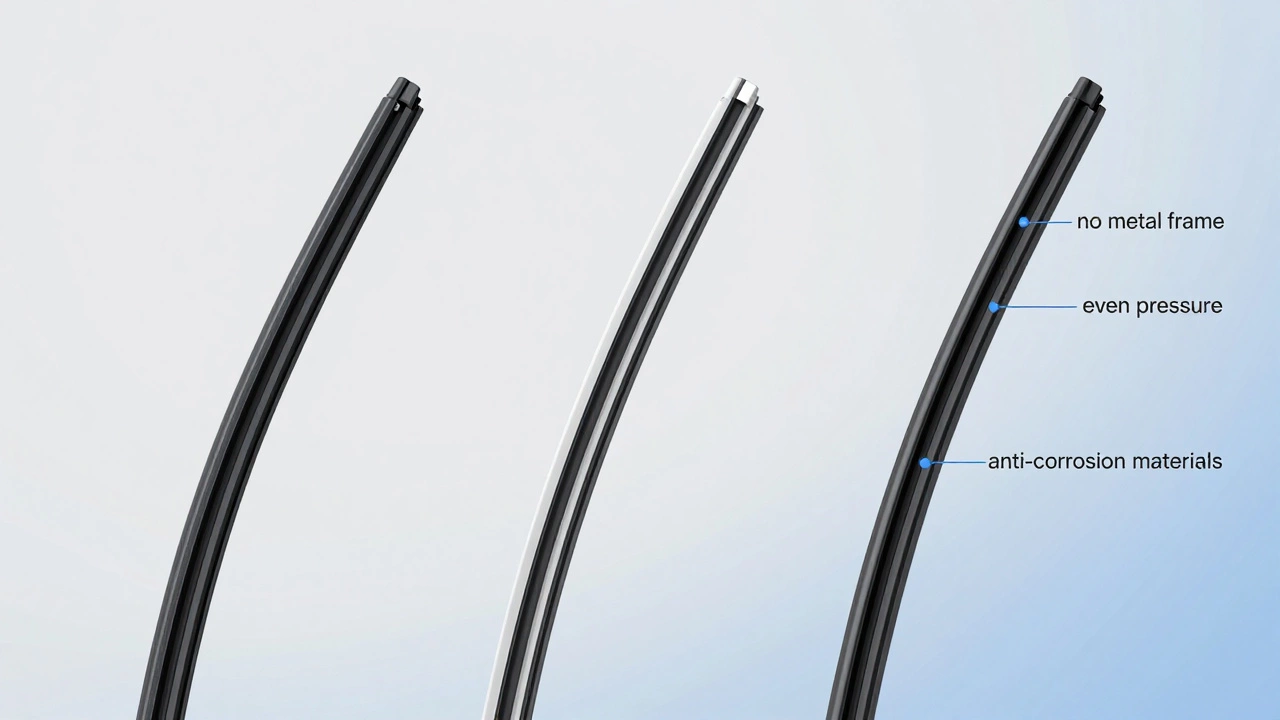
Beam blades have no metal frame. Instead, they use a solid, flexible spine that presses evenly across the windshield. This design reduces streaking and improves contact in high winds. They’re more expensive to manufacture, which shows in the price.
Hybrid blades combine both: a beam spine with a light frame for added structure. They’re the most popular today because they offer the best balance of performance and price.
Some blades also include:
- Water-repellent coating (like Rain-X’s hydrophobic layer) that makes water bead and roll off faster.
- Anti-corrosion materials that resist rust in coastal or snowy areas.
- Heated elements built into the blade to melt ice before it sticks.
These features add $5-$15 to the price. You don’t need them unless you live where ice is a monthly problem.
What Happens When You Buy Cheap
Buying the cheapest wipers might save you $10 today-but it can cost you more in the long run.
Low-quality blades often:
- Leave streaks even after cleaning the windshield
- Chatter or skip at highway speeds
- Wear unevenly, causing smearing
- Break down faster in UV light or extreme cold
One driver in Ohio replaced her $9 wipers every 3 months because they’d smear in light rain. After switching to a $22 pair, she went 14 months without a problem. That’s $28 saved per year-not counting the stress of poor visibility during rush hour.
And here’s the scary part: The National Highway Traffic Safety Administration says poor visibility due to faulty wipers contributes to over 150,000 crashes annually in the U.S. That’s not a risk worth taking to save $5.
How to Pick the Right Size and Type
Price means nothing if the blades don’t fit. You can’t just grab any pair off the shelf.
Every car has specific wiper blade sizes-usually two different lengths for driver and passenger sides. Some newer cars even have rear wipers or curved blades for SUVs.
Here’s how to get it right:
- Check your owner’s manual. It lists exact sizes.
- Use an online fit guide. Most auto parts stores (AutoZone, Advance Auto Parts, O’Reilly) have tools where you enter your make, model, and year.
- Look at your old blades. The size is printed on the metal arm or rubber edge.
Don’t guess. A 16-inch blade won’t work on a car that needs 18 inches. Too short? It won’t clear the glass. Too long? It’ll overlap and damage the windshield or motor.
Where to Buy for the Best Deal
You don’t need to buy wipers from the dealership. In fact, you shouldn’t.
Dealership blades can cost 2-3x more than aftermarket brands. A $40 pair from your Honda dealer? You can get the exact same Bosch Icon blade at AutoZone for $24.
Best places to buy:
- Auto parts stores (AutoZone, O’Reilly, Advance Auto Parts): Often have free installation. Sales happen monthly-sign up for emails to catch discounts.
- Warehouse clubs (Costco, Sam’s Club): They sell Bosch or Michelin blades in packs of two for $18-$22. Plus, they offer lifetime replacements if they wear out early.
- Amazon: Be careful. Stick to sellers with 4.7+ ratings and verified purchases. Avoid unknown brands with no reviews.
- Big-box retailers (Walmart, Target): Carry decent budget and mid-range blades. Good for emergencies.
Pro tip: Buy in pairs. Even if only one side is worn, the other is close behind. Replacing both at once ensures even wiping and avoids having to do it again in 3 months.
When to Replace Them
Don’t wait until you can’t see. Replace wipers at least once a year-even if they look fine. Rubber degrades over time from sun, heat, and cold.
Signs you need new blades:
- Streaking or smearing after a single swipe
- Chattering or skipping across the glass
- Cracked or brittle rubber
- Missing pieces of rubber
- Wipers lifting off the windshield at high speeds
Some drivers replace them every 6 months if they drive in dusty or sandy areas. Others stretch to 18 months if they park in a garage and live in a mild climate. But once a year is the rule for safety.
Can You Install Them Yourself?
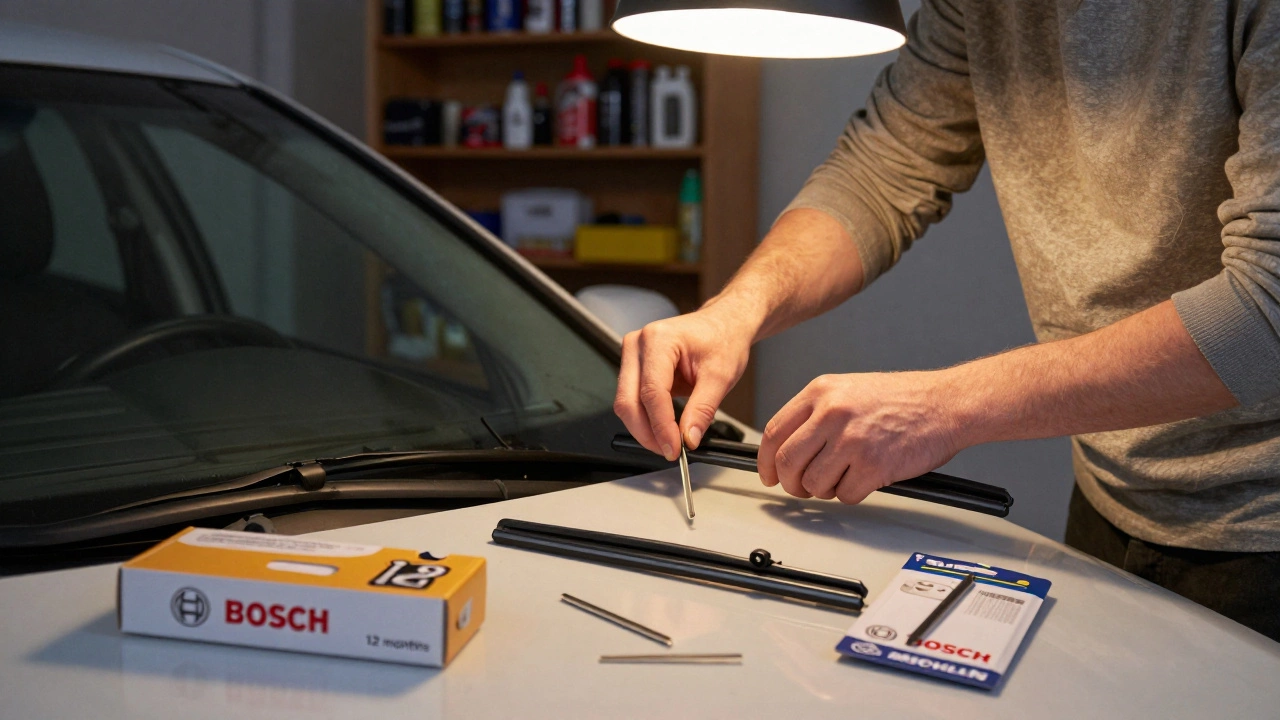
Yes. It takes 10 minutes and zero tools.
Most modern blades use a hook, pin, or clip system. Just press the release tab, slide the old blade off, and snap the new one into place. No wrenches. No screws.
YouTube has clear videos for almost every car model. Search: “How to replace windshield wipers on [your car make and model].”
Save $20-$40 in labor. Most shops charge that just to swap out wipers-even though it takes less time than changing your oil.
Final Advice: Don’t Overpay, But Don’t Underinvest
A good price for windshield wipers isn’t the lowest one. It’s the one that gives you clear vision, lasts through the season, and doesn’t fail when you need it most.
For most drivers: spend $20-$25 on a hybrid or beam blade from Bosch, Michelin, or Valeo. Buy from a trusted auto parts store. Replace every year. Install them yourself.
That’s not expensive. That’s smart.
Your eyes are worth more than $15. Don’t risk them for a bargain that costs more in the long run.
Are expensive windshield wipers worth it?
Expensive wipers are only worth it if you live in extreme weather-like heavy snow, ice, or constant rain. For most people, mid-range blades ($16-$25) offer the best mix of performance and price. Premium blades with heating or special coatings add cost but rarely add safety unless you face freezing conditions regularly.
How often should I replace my windshield wipers?
Replace them at least once a year, even if they look fine. Rubber degrades from sun exposure, heat, and cold. If you see streaking, chattering, or cracks, replace them immediately. Drivers in harsh climates may need to replace them every 6 months.
Can I use any brand of wiper blades?
No. Wiper blades are sized and shaped for specific vehicles. Using the wrong size can damage your windshield or wiper motor. Always check your owner’s manual or use an online fit guide by entering your car’s make, model, and year.
Is it cheaper to buy wipers online or in-store?
Online prices are often lower, but in-store offers free installation and instant access. Auto parts stores like AutoZone or Advance Auto Parts frequently run sales and loyalty discounts. Warehouse clubs like Costco sell high-quality blades at bulk prices. Compare prices, but don’t sacrifice reliability for a few dollars.
Do I need to buy two wiper blades?
Yes. Even if only one blade is worn, the other is close behind. Replacing both at once ensures even wiping and prevents uneven performance. Most cars have different sizes for driver and passenger sides, so buy a pair that matches your vehicle’s specs.