Brake Rotor Diagnostic Tool
Check the boxes below that match your current driving experience or visual inspection findings. This tool helps estimate the likelihood of rotor failure.
You’re cruising down the M5, maybe heading out for a weekend trip from Bristol, and suddenly your steering wheel starts shaking when you tap the brakes. It’s not just annoying; it’s a warning light flashing in mechanical form. Bad rotors, also known as brake discs, are often the culprit behind that unsettling vibration or noise, yet many drivers ignore them until the problem becomes expensive or dangerous. Unlike brake pads, which wear down visibly over time, rotors can fail in ways that aren’t immediately obvious unless you know what to listen for and feel.
Ignoring these signs doesn’t just mean a rougher ride. Warped or cracked rotors can compromise your stopping distance, especially in wet conditions common here in the UK. If you’ve ever wondered why your car pulls to one side or makes a grinding noise that sounds like metal on metal, this guide will help you diagnose whether your rotors need attention before they leave you stranded.
The Physical Sensations: Vibration and Pulsation
The most common complaint associated with failing rotors is vibration. But not all vibrations are created equal. You need to distinguish between tire issues and brake issues. If the steering wheel shakes only when you apply the brakes, your front rotors are likely warped. This happens because the heat generated during braking causes the metal to expand. If the cooling isn’t even-perhaps due to heavy braking followed by splashing through cold puddles-the disc deforms slightly. When the new, flat pad clamps onto this uneven surface, it pushes back against the caliper, sending that pulse up the hydraulic line and into your hands.
What if the vibration comes from the seat or the rear of the car? That usually points to the rear rotors. Since the rear brakes do less work than the front, people often forget about them. However, rust buildup on rear rotors is incredibly common in cars driven short distances, like school run vehicles. This rust creates an uneven surface, causing similar pulsation sensations. A quick rule of thumb: if the shake stops the moment you release the pedal, it’s almost certainly a rotor issue, not a balance problem with your tires.
Auditory Clues: Squeals, Grinds, and Clicks
Your ears are excellent diagnostic tools if you learn their language. While some noise is normal, specific sounds indicate rotor trouble. A high-pitched squeal that persists after you stop braking might be the wear indicator on your brake pads hitting the rotor. However, if the sound changes to a deep, metallic grinding, you’ve likely worn the pads completely away. Now, the steel backing plate of the pad is scoring the surface of the rotor. This ruins the rotor surface, creating grooves that prevent proper contact for new pads.
Another sound to watch for is a rhythmic clicking or ticking while driving, which disappears when you brake. This can indicate a loose wheel bearing or, more rarely, a cracked rotor. Cracks in cast iron rotors are serious. They happen when thermal stress exceeds the material’s limits. Once a crack forms, water gets inside, accelerates corrosion, and weakens the structural integrity. A cracked rotor can shatter under extreme heat, so don’t wait on this one.
Visual Inspection: What to Look For
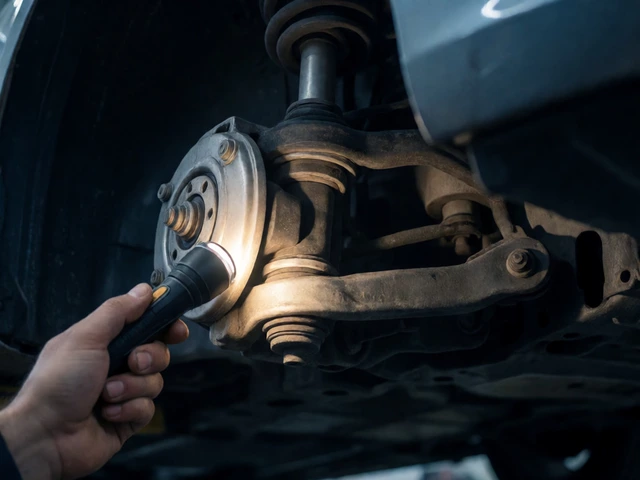
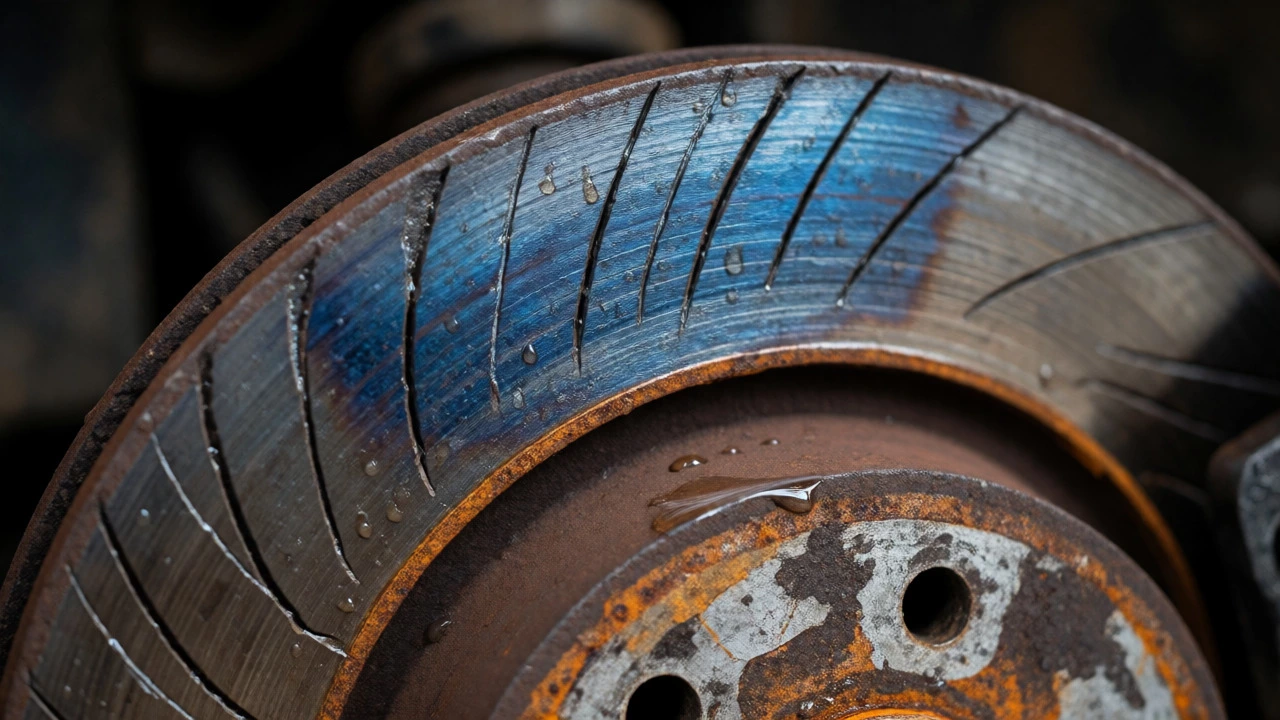
You don’t always need a mechanic to spot the early stages of rotor failure. A visual check through your wheel spokes can reveal a lot. First, look for scoring. These are deep circular scratches running parallel to the edge of the rotor. Light scoring is normal, but deep grooves reduce the effective braking surface area. If you run your finger across the face (when cool!) and catch your fingernail in a groove, the rotor needs resurfacing or replacement.
Next, check for blueing or discoloration. Blueing indicates overheating. The metal has been subjected to temperatures high enough to change its crystal structure, making it brittle. Overheated rotors lose their ability to dissipate heat effectively, leading to faster warping. Also, look at the edge of the rotor. A pronounced "lip" or ridge around the outer diameter suggests significant wear. Measure the depth with a coin or a specialized gauge. If the lip is too thick, the rotor may have fallen below the minimum thickness specification set by the manufacturer.
Performance Issues: Pulling and Long Stopping Distances
Does your car pull to the left or right when you brake gently? This asymmetry often means one rotor is providing more friction than the other. This could be due to a stuck caliper piston dragging on one side, heating that rotor excessively and changing its friction characteristics compared to the cooler, free-moving side. Alternatively, contamination like oil or grease on one rotor surface can cause it to grab differently than the clean one.
Long stopping distances are another subtle sign. As rotors warp or develop hard spots from overheating, the contact patch between pad and rotor decreases. Less contact means less friction, meaning you need more pedal pressure to achieve the same deceleration. In emergency situations, this lag can be critical. If you find yourself standing on the brakes earlier than usual to make a corner, suspect your rotors.
Resurface or Replace? Making the Right Call
Once you’ve identified bad rotors, you face a choice: machine them (resurface) or replace them. Modern rotors are often thinner than older models, leaving little material for machining. Each time you resurface a rotor, you remove metal. If the rotor is already near its minimum thickness, machining it further risks overheating and cracking. Check the stamp on the hub or the edge of the rotor for the "Min Thk" marking. Use a micrometer to measure current thickness. If you’re within 0.5mm of the limit, replace it.
| Condition | Resurface | Replace |
|---|---|---|
| Minor Scoring | Yes | No |
| Deep Grooves (>0.5mm) | No | Yes |
| Near Min Thickness | No | Yes |
| Visible Cracks | No | Yes |
| Cost Consideration | Labor intensive | Parts cost higher |
Replacement is often cheaper in the long run because labor costs for machining have risen. Plus, new rotors come with fresh surfaces that bed in properly with new pads. Remember, never put new pads on old, glazed rotors without addressing the surface condition, or you’ll waste the money on the pads.
Preventing Premature Rotor Wear
You can extend the life of your rotors with better driving habits. Avoid riding the brakes downhill; use engine braking instead. Constant friction generates excessive heat, accelerating wear and warping. Also, try to avoid sudden stops from high speeds repeatedly, which shocks the metal components. Regular maintenance helps too. Cleaning the hub surface where the rotor sits prevents rust buildup that can cause the rotor to sit unevenly, leading to runout (wobble).
If you live in coastal areas like parts of Devon or Cornwall, salt air accelerates corrosion. Wash your wheels regularly to remove brake dust and road salt. Brake dust contains metallic particles that can embed in the rotor surface, acting like sandpaper. By staying proactive, you keep your braking system responsive and safe.
Can I drive with bad rotors?
You can drive short distances with mildly warped rotors, but it’s risky. Vibrations can loosen other suspension components over time. If the rotors are cracked or significantly thinned, driving is unsafe as they could fail catastrophically under hard braking. Limit speed and increase following distance if you must drive to a shop.
How much does it cost to fix bad rotors?
In the UK, replacing a pair of front rotors and pads typically ranges from £150 to £350 depending on the vehicle model and labour rates. Machining alone might cost £40-£60 per axle, but given the low cost of aftermarket rotors, replacement is frequently recommended for reliability.
Do bad rotors damage brake pads?
Yes. Rough, scored, or warped rotors cause uneven wear on brake pads. The pads may glaze over due to excessive heat or wear out faster on the high spots of a warped rotor. Always inspect pads when diagnosing rotor issues.
Why do my rotors keep warping?
Frequent hard braking, aggressive driving, or improper lug nut torque can cause repeated warping. Ensuring lug nuts are tightened evenly to the correct spec prevents distortion. Cheap, thin OEM rotors are also more prone to warping than premium alternatives.
Is rotor rust normal?
Surface rust on rotors is normal, especially after rain or washing. It usually clears up after a few stops. However, heavy pitting or rust that doesn’t clear after driving indicates severe corrosion that may affect braking performance and requires inspection.