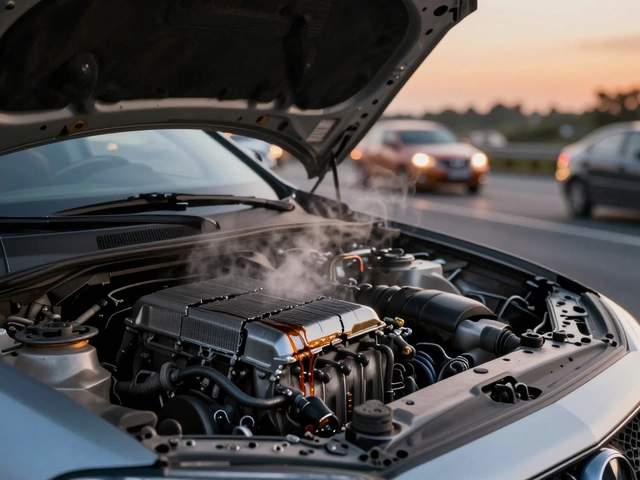
If your car won’t start and you suspect the fuel pump is bad, you’re not alone. Fuel pump failures are one of the most common reasons cars suddenly refuse to turn over-even when the battery is fine and the lights work. The engine might crank but never catch, or you might hear a quiet whirring noise from the back of the car that stops right after you turn the key. That’s usually the fuel pump struggling to deliver gas to the engine. But here’s the thing: you don’t always need to replace the pump right away to get moving. There are a few temporary fixes that can get you to a garage, and they’re safer than you think.
Confirm it’s the fuel pump, not something else
Before you try anything, rule out the obvious. A bad fuel pump mimics other problems. If your car cranks but won’t start, it could be a clogged fuel filter, a dead ignition coil, or even a faulty crankshaft position sensor. Fuel pumps usually fail in one of two ways: they stop working completely, or they work weakly-delivering enough pressure to make noise but not enough to fire the engine.
To check if it’s the fuel pump, listen near the rear of the car when you turn the key to the ‘on’ position (before cranking). You should hear a brief humming sound for about two seconds. If you hear nothing, the pump isn’t getting power. If you hear a weak buzz or clicking, the pump is failing. You can also try tapping the bottom of the fuel tank gently with a rubber mallet while someone cranks the engine. Sometimes a stuck pump will kick back to life for a few seconds. If the car starts after that, the pump is on its last legs.
Use the ‘key cycle’ trick to build pressure
One of the simplest tricks to get a car with a weak fuel pump started is called the ‘key cycle’ method. It doesn’t fix the pump, but it can force enough fuel into the lines to let the engine fire.
Here’s how:
- Turn the ignition key to the ‘on’ position (don’t start the engine).
- Wait for the fuel pump to run for two seconds, then turn the key back to ‘off’.
- Repeat this three to five times.
- On the final cycle, hold the key in the ‘start’ position.
This works because each time you turn the key to ‘on’, the pump primes the fuel lines. After a few cycles, enough fuel reaches the injectors to create a combustible mix. Many drivers have started their cars this way after the pump started failing. It’s not a permanent fix, but it’s enough to get you to the nearest mechanic.
Try a fuel pressure test with a gauge
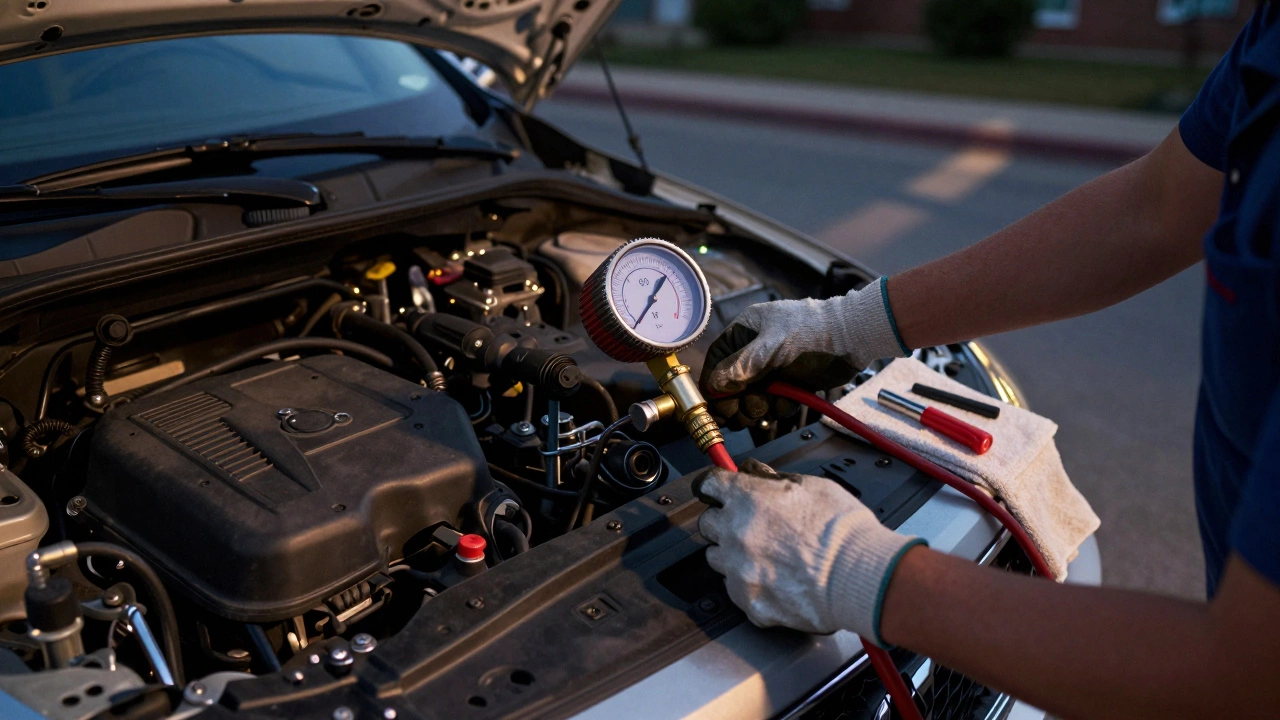
If you have access to a fuel pressure gauge (most auto parts stores rent them for free), connect it to the fuel rail test port. This is usually a small Schrader valve-like fitting under the hood near the fuel injectors. Turn the key to ‘on’ and check the reading. Most cars need between 30 and 60 psi to start, depending on the model. If the pressure is below 20 psi, the pump is too weak. If it reads zero, the pump isn’t running or the fuel line is blocked.
Low pressure doesn’t always mean a bad pump-it could be a clogged filter or a failing regulator. But if the pressure is low and the filter is clean, the pump is the likely culprit. This test gives you hard data, so you know whether to push for a repair or look for a temporary workaround.
Jump-start the fuel pump (safely)
Some people suggest tapping the fuel tank or shaking the car to get the pump going. Those methods are hit-or-miss. A more reliable method is to bypass the fuel pump relay and send direct power to the pump.
You’ll need a jumper wire, a 12V power source (like the battery), and basic tools. Here’s how:
- Locate the fuel pump relay in the fuse box (check your owner’s manual or look for a small black box labeled ‘FUEL PUMP’).
- Remove the relay and identify the pins. Pin 30 is usually the power input, and pin 87 is the output to the pump.
- Use a jumper wire to connect pin 30 to pin 87.
- Turn the key to ‘on’. The pump should run continuously now.
- Start the car. If it fires up, the relay was the problem-not the pump.
If the car starts, the relay was faulty. If it still won’t start, the pump itself is dead. This test tells you exactly where the failure is. And if the pump runs when you jump it, you know you’re dealing with a weak pump, not a dead one.
Use a fuel additive to thin the fuel
When a fuel pump is struggling, it’s often because the fuel is thick or dirty. Older gas, especially if it’s been sitting for months, can turn gummy. Ethanol-blended fuel attracts water, which can cause corrosion and clog the pump’s internal filter.
Add a bottle of fuel system cleaner-like Chevron Techron or Sea Foam-to your tank. It won’t fix a broken pump, but it can dissolve minor gunk and help the pump move fuel more easily. Pour it in before you try the key cycle or relay jump. Let it sit for 15 minutes while you prepare your next steps. Some people report success after adding cleaner and then restarting the car. It’s not magic, but it removes one variable.
Push-start or tow-start (for manual transmissions only)
If you have a manual transmission and the car won’t start, you can sometimes get it going by push-starting. This bypasses the fuel pump entirely by using engine compression to draw fuel through the lines.
Here’s how:
- Turn the key to ‘on’ (don’t start).
- Press the clutch all the way down.
- Shift into second gear (first gear can be too jerky).
- Have someone push the car or roll it downhill.
- Once you reach 5-10 mph, quickly release the clutch.
- If the engine turns over and fires, keep the gas light and drive to a shop.
This works because the engine’s rotation pulls fuel through the lines without needing the pump to prime. It’s not foolproof-especially in cold weather or if the fuel system is completely dry-but it’s saved many drivers with bad pumps.

What to do after you get it started
Once you get the car running, don’t celebrate yet. A failing fuel pump can die again at any moment-maybe at a red light, maybe on the highway. Drive directly to a repair shop. Don’t make detours. Don’t turn off the engine unless you have to.
While you’re there, ask for a full fuel system inspection. A bad pump often leaves debris in the fuel lines. If the filter isn’t replaced, the new pump will fail again in weeks. Also, check the fuel tank for rust or water. Many fuel pump failures are caused by contaminated fuel, not just age.
When replacing the pump, go with an OEM or high-quality aftermarket brand like Bosch, Delphi, or Denso. Cheap pumps fail faster and often don’t deliver consistent pressure. A $150 pump might save you $500 in repeat repairs.
Prevent future fuel pump failures
Fuel pumps last longer if you treat them right. Here’s how:
- Keep your tank at least a quarter full. Running on empty makes the pump overheat.
- Use high-quality fuel. Cheap gas has more contaminants that clog the pump’s internal screen.
- Replace the fuel filter every 30,000-40,000 miles. Many mechanics skip this, but it’s the #1 cause of premature pump failure.
- Avoid long idling. Fuel pumps rely on fuel flow to cool them. Sitting in traffic with the engine running but not moving stresses the pump.
If you’ve had a bad pump before, consider installing an inline fuel pressure gauge. It’s a cheap way to monitor pump health before it leaves you stranded.
When to call a tow truck
Some situations aren’t worth risking. If you’ve tried the key cycle, relay jump, and push-start-and nothing works-it’s time to stop. Don’t keep cranking the engine. That drains the battery and can damage the starter. If you smell gas, see fuel leaking, or hear loud grinding noises, turn the car off and call for help. Fuel system problems can be dangerous if handled carelessly.
Even if you get the car running, treat it like a ticking clock. A bad fuel pump is a silent failure waiting to happen. Don’t wait for it to die on the highway. Get it replaced before it leaves you stranded with no options.