Radiator Replacement Cost Calculator
Estimate your radiator replacement cost based on vehicle type and UK location. Costs vary depending on your car model, repair shop, and whether parts are OEM or aftermarket.
Replacing a radiator isn’t something most drivers plan for-until their car starts overheating on the motorway. You pull over, pop the hood, and see steam rising. That’s when you realize: you need a new radiator. But how much should you actually expect to pay? The answer isn’t simple. It depends on your car, where you live, and whether you go to a dealership or an independent garage. In the UK, most people pay between £300 and £800 to replace a radiator, but some models can cost over £1,200.
What’s Included in a Radiator Replacement?
A radiator isn’t just a metal tank with coolant running through it. It’s part of a system. When a mechanic says they’re replacing the radiator, they’re usually replacing more than just that one part. The job typically includes:
- Removing the old radiator and draining the coolant
- Replacing the radiator cap and thermostat (if worn)
- Installing a new radiator with proper hoses and clamps
- Refilling with the correct coolant type and amount
- Bleeding air from the cooling system
- Checking for leaks and testing the system under load
Some shops throw in a coolant flush for free. Others charge extra. If your radiator failed because of corrosion or a cracked hose, they might recommend replacing those parts too. That’s not always necessary-but it’s smart if your car is older than five years.
How Car Make and Model Affect the Price
Not all radiators are created equal. A basic radiator for a 2010 Ford Fiesta might cost £80. But a radiator for a 2023 BMW 3 Series? That’s £350 alone. Why? Complexity. Modern cars have electric fans, plastic tanks, aluminum cores, and integrated transmission coolers. Some radiators even come with sensors built in.
Here’s a rough breakdown by vehicle type:
| Vehicle Type | Radiator Part Cost | Labor Cost | Total Estimated Cost |
|---|---|---|---|
| Small Hatchback (e.g., VW Polo, Hyundai i20) | £70-£120 | £120-£180 | £190-£300 |
| Midsize Sedan (e.g., Toyota Camry, Ford Mondeo) | £120-£200 | £150-£220 | £270-£420 |
| Family SUV (e.g., Honda CR-V, Nissan Qashqai) | £150-£280 | £180-£260 | £330-£540 |
| Performance Car (e.g., BMW 3 Series, Audi S3) | £250-£400 | £200-£350 | £450-£750 |
| Luxury/High-End (e.g., Mercedes S-Class, Range Rover) | £350-£600 | £250-£500 | £600-£1,100+ |
European and Japanese cars tend to be more expensive because their cooling systems are tighter, and parts are harder to access. American and Korean models are usually cheaper to fix. If you drive a diesel, expect higher labor costs-those radiators often sit behind the turbocharger or intercooler, requiring extra disassembly.
Labor Costs: Why They Vary So Much
Labor isn’t just about how long it takes. It’s about where you are and who’s doing the work. In Bristol, a reputable independent garage charges £75-£95 per hour. A dealership? £110-£140. That’s a big difference over a 2.5-hour job.
Some garages quote a flat rate. Others charge by the hour. Always ask: Is this a fixed price or hourly? If it’s hourly, get an estimated time. Most radiator replacements take 2 to 3.5 hours. If a garage says it’ll take 5 hours for a Ford Focus, that’s a red flag.
Here’s a real example: A 2017 Volkswagen Golf had a cracked radiator. One local garage quoted £380 total-£160 for the part, £220 for labor. Another dealership quoted £620-same part, £380 labor. The part was identical. The only difference? Brand name.
When You Should Skip the Replacement
Not every leak means you need a new radiator. Sometimes, it’s just a loose hose clamp, a cracked plastic tank, or a faulty radiator cap. Those cost £10-£40 to fix. Before you commit to a full replacement, ask for a pressure test. A good mechanic will pressurize the system and show you exactly where the leak is.
If your radiator is 10+ years old and your car is worth less than £2,000, replacing it might not make financial sense. You could spend £500 on a new radiator and still have worn suspension, failing brakes, or a dying transmission. In those cases, it’s better to consider selling the car or putting the money toward a newer model.
What About DIY?
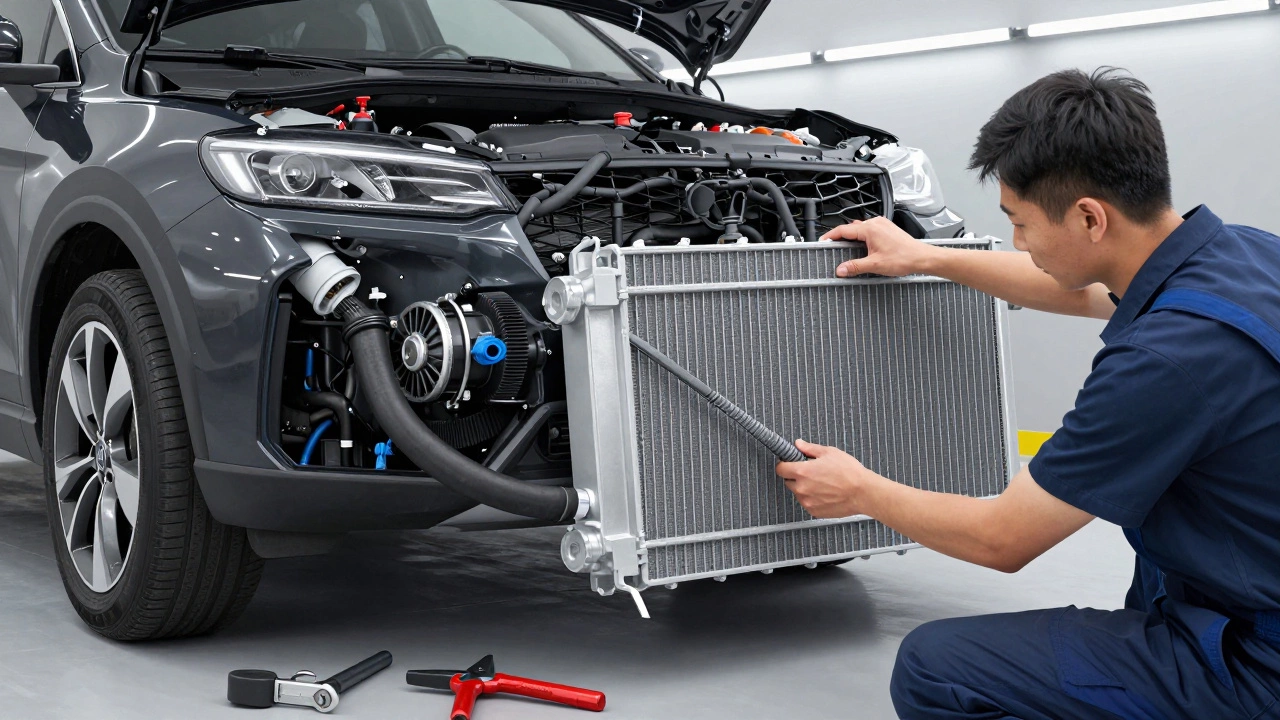
Can you replace a radiator yourself? Yes-but only if you’re comfortable with tools and have a safe place to work. You’ll need jack stands, a drain pan, a wrench set, and the right coolant. You’ll also need to bleed the system properly. If you don’t, air gets trapped, and your engine overheats again.
Most people underestimate the mess. Coolant is toxic. Spilling it on your driveway can kill grass and harm pets. And if you don’t get the air out, you’ll be back in the garage within a week. For most drivers, the risk isn’t worth the £100-£200 you might save.
One exception: older cars with simple designs. A 1998 Honda Civic or a 2005 Toyota Corolla are easy enough for a weekend mechanic. But even then, you need to know the coolant type. Mixing the wrong coolant can destroy your engine.
How to Avoid Being Overcharged
Here’s how to protect yourself:
- Get at least two written quotes. Don’t settle for the first one.
- Ask if the part is OEM (original equipment) or aftermarket. Aftermarket parts are cheaper but vary in quality.
- Confirm whether the quote includes disposal of the old radiator and coolant.
- Check if the warranty covers both parts and labor. At least one year is standard.
- Look for garages with RAC or AA approval. They follow strict pricing guidelines.
Be wary of shops that say, “We’ll know more once we take it apart.” That’s a sign they’re guessing. A good mechanic should be able to diagnose the issue without disassembly.
What Happens If You Don’t Replace It?
Driving with a bad radiator is dangerous. Your engine will overheat. That’s not just inconvenient-it’s expensive. Overheating can warp the cylinder head, blow the head gasket, or even seize the engine. Replacing a head gasket costs £1,200-£2,500. That’s more than double the price of a radiator.
One customer in Bath had a slow leak. She ignored it for two months. By the time she brought it in, the engine was damaged. She paid £2,100 to rebuild it. The radiator itself would’ve cost £320.
When to Call a Professional
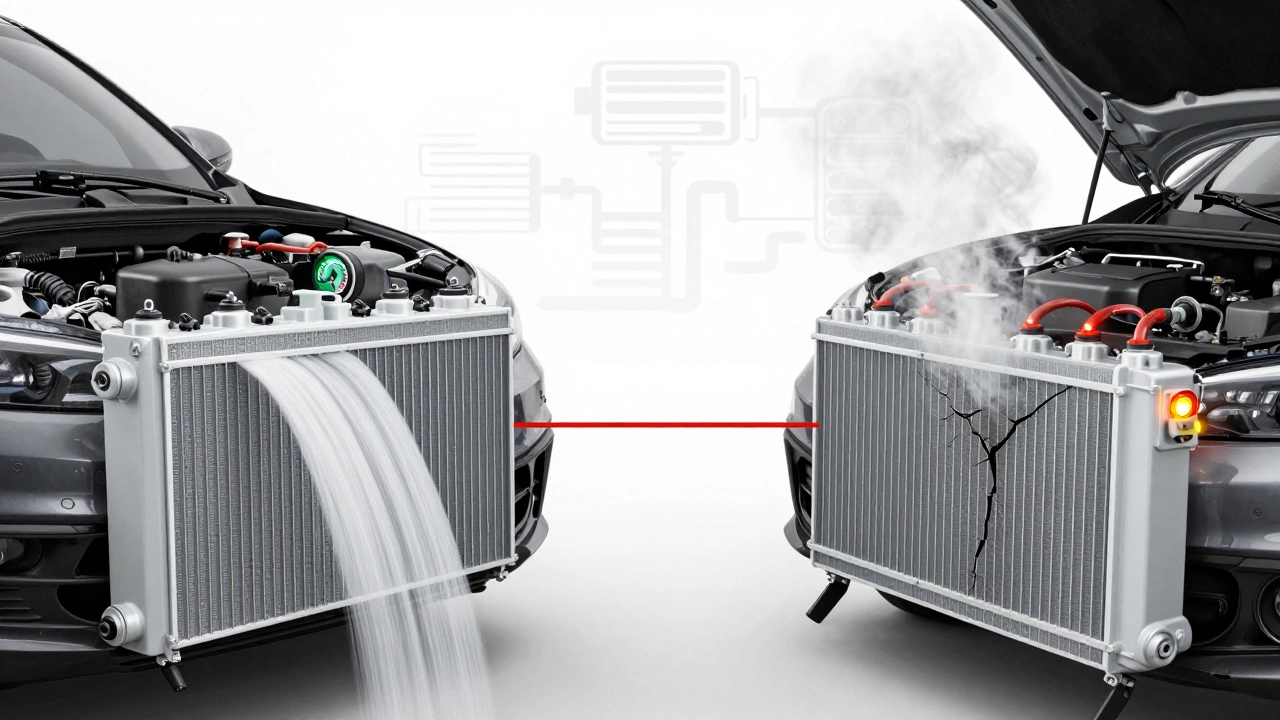
You should always call a pro if:
- Your car overheats while driving
- You see coolant pooling under the car
- The temperature gauge is in the red zone
- You smell sweet, syrupy fumes (that’s coolant burning)
- Your heater stops working
These aren’t warning signs-they’re emergencies. Don’t wait for the engine to smoke.
What to Do After the Replacement
After your radiator is replaced, follow these steps:
- Check the coolant level after 50 miles. Top up if needed.
- Watch the temperature gauge for the next 3 days. It should stay steady.
- Look under the car for leaks every morning for a week.
- Keep receipts. You’ll need them if the part fails under warranty.
Some garages offer a free check-up after 100 miles. Take them up on it. It’s a simple way to catch problems early.
How long does a radiator usually last?
Most radiators last 8 to 12 years, or around 100,000 to 150,000 miles. But that depends on maintenance. If you change coolant every 2-3 years and flush the system regularly, your radiator will last longer. Neglecting coolant leads to corrosion, which eats away at the metal and plastic parts.
Can I use any coolant in my car?
No. Different cars need different coolant types. Using the wrong one can cause leaks, clogs, or even engine damage. Check your owner’s manual. Most modern cars use OAT (Organic Acid Technology) coolant-often red, orange, or pink. Older cars might use IAT (Inorganic Acid Technology), which is green. Mixing them is risky. Always use the type specified by the manufacturer.
Is it cheaper to repair or replace a radiator?
Repairing a radiator is rarely cost-effective. Most radiator leaks come from cracks in the plastic end tanks or corrosion in the core. These can’t be patched reliably. Even if a shop offers to weld it, the fix won’t last. Replacing it is the only long-term solution.
Why does my radiator keep failing?
If your radiator keeps failing, the problem isn’t the radiator-it’s the system. Common causes include: using the wrong coolant, not flushing the system, a faulty thermostat that keeps the engine too hot, or a leaking head gasket letting combustion gases into the coolant. Get the whole system checked, not just the radiator.
Do I need to replace the thermostat at the same time?
It’s not required, but it’s smart. The thermostat is a cheap part-usually £20-£40-and it’s easy to replace while the radiator is out. If it’s stuck closed, it can cause overheating. If it’s stuck open, your engine won’t warm up properly, hurting fuel economy and heater performance. Replacing it now saves you a second trip to the garage later.
Final Thoughts
Replacing a radiator is one of those repairs that feels expensive until you realize how much worse it could be. A £400 radiator replacement is a bargain if it stops you from needing a £2,000 engine rebuild. The key is acting fast, getting multiple quotes, and not cutting corners on coolant quality. Don’t wait until your car is smoking on the A4. A little attention now saves a lot of money-and stress-later.