Imagine you’re sitting in your car on a cold Bristol morning. You turn the key, but instead of that familiar engine rumble, you get silence-or worse, a dry cough and nothing. Before you panic about the battery or the starter motor, consider the fuel pump, which is an electric device that pushes fuel from the tank to the engine at high pressure. It’s often the quiet culprit behind no-start conditions and erratic driving performance.
A failing fuel pump doesn’t always announce its departure with a dramatic explosion. More often, it gives subtle warnings that easy to ignore until you’re stranded. Knowing these signs early can save you hundreds in towing fees and prevent damage to other expensive components like the catalytic converter or oxygen sensors.
The Loud Whine From the Rear
If your car has started making a loud whining or humming noise coming from the rear seat area, pay attention. In most modern vehicles, the fuel pump is submerged inside the fuel tank. This design uses the fuel itself to cool and lubricate the pump. When you hear a persistent whine while driving, especially under acceleration, it usually means the pump is struggling to maintain pressure.
This noise isn’t normal. A healthy fuel pump operates quietly. The whine indicates internal wear-bearings grinding down or the impeller rubbing against the housing. If you ignore this sound, the pump will eventually fail completely. At that point, the metal debris from the worn-out pump can circulate through your fuel lines, potentially clogging injectors and causing secondary damage.
Engine Sputtering at High Speeds
Have you noticed your car losing power when you’re merging onto the highway or climbing a steep hill? This symptom, known as sputtering, happens when the fuel pump can’t deliver enough fuel to match the engine’s demand. At idle or low speeds, the weak pump might still provide just enough fuel to keep the engine running. But under load, the pressure drops below the required threshold.
You’ll feel the engine hesitate, stumble, or even stall briefly before recovering. This is distinct from ignition issues, which usually cause rough idling regardless of speed. Fuel delivery problems are load-dependent. If the sputtering gets worse as RPMs increase, your fuel pump is likely the bottleneck. Driving like this for too long can lead to lean air-fuel mixtures, which run hot and damage pistons and valves.
Difficulty Starting or No Start Condition
The most definitive sign of a dead fuel pump is when the car refuses to start. However, there’s a difference between "hard starting" and "no start." Hard starting might mean the pump is weakening but still functional. No start usually means total failure.
Here’s a quick diagnostic trick: Turn the key to the "On" position (without cranking the engine). Listen closely near the rear of the vehicle. You should hear a faint buzzing sound for 2-3 seconds. This is the fuel pump priming the system. If you hear nothing, the pump may be dead, or the fuse/blower could be blown. If you hear the buzz but the car still won’t start, the pump might be spinning but not building pressure.
Stalling Under Load or Heat
Does your car stall unexpectedly when you stop at a red light after driving hard? Or does it die only when the engine bay is hot? These are classic signs of a failing fuel pump suffering from heat soak or electrical resistance issues.
Fuel pumps generate heat during operation. As they age, their efficiency drops, and they draw more current. This increased current can overheat the wiring harness or the pump’s internal windings. When the component gets too hot, it may shut down temporarily to protect itself. Once it cools down, it works again. This intermittent behavior makes diagnosis tricky because the problem disappears when you try to check it later.
Check Engine Light with Fuel System Codes
Your car’s computer monitors fuel pressure via sensors. When the pressure deviates from the expected range, the ECU triggers a Check Engine Light. Common codes include P0087 (System Fuel Pressure Too Low) and P0088 (System Fuel Pressure Too High).
While these codes can sometimes indicate a dirty fuel filter or a faulty pressure regulator, a weak fuel pump is a primary suspect. Don’t ignore these lights. Running a car with incorrect fuel pressure leads to poor combustion, reduced fuel economy, and increased emissions. Over time, unburned fuel can wash oil off cylinder walls, leading to premature engine wear.
Decreased Fuel Economy
If your gas mileage has dropped significantly without changes in driving habits, your fuel pump might be inefficient. A struggling pump often runs longer than necessary to build pressure, drawing excess electricity from the alternator. This puts extra strain on the charging system and reduces overall vehicle efficiency.
Additionally, inconsistent fuel pressure causes the engine control unit to compensate by injecting more fuel to maintain performance. This rich mixture wastes fuel and foules spark plugs. If you’ve recently replaced your air filter and tires but still see poor MPG, inspect the fuel delivery system.
| Symptom | Likely Cause | Alternative Causes |
|---|---|---|
| Loud whining noise | Failing fuel pump | Alternator bearing, transmission whine |
| Engine sputtering at high speed | Weak fuel pump | Clogged fuel filter, mass airflow sensor |
| No start, no prime sound | Dead fuel pump | Blown fuse, bad relay, dead battery |
| Stalling when hot | Overheating pump | Ignition coil failure, thermostat issue |
| Poor fuel economy | Inefficient pump | Dirtied MAF sensor, old spark plugs |
How to Confirm the Diagnosis
Before replacing the fuel pump, confirm it’s actually the problem. Misdiagnosis is common because fuel symptoms mimic many other issues. Here’s how to narrow it down:
- Check the fuses and relays: Locate the fuel pump fuse in your owner’s manual. Pull it out and inspect for a broken filament. Swap the fuel pump relay with another identical one (like the horn relay) to test if the relay is faulty.
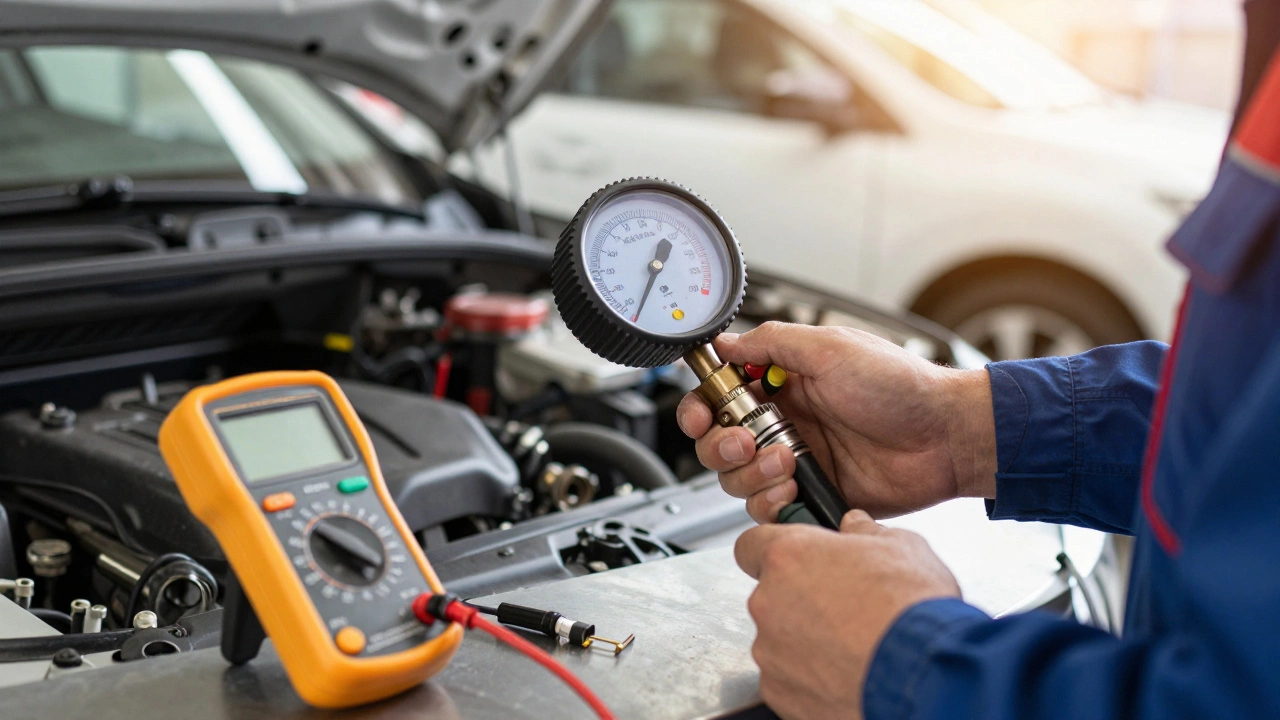
- Test fuel pressure: Connect a mechanical fuel pressure gauge to the service port on the fuel rail. Compare the reading to the manufacturer’s specification. Most cars require 35-65 PSI. If the pressure is low or drops quickly when the engine is off, the pump or pressure regulator is at fault.
- Listen for the prime: As mentioned earlier, listen for the 2-second buzz when turning the key to "On." No buzz suggests an electrical issue or a dead pump.
- Inspect the fuel filter: If your car has a replaceable external fuel filter, change it first. A clogged filter restricts flow, mimicking a bad pump. This is a cheap fix compared to replacing the pump.
Costs and Considerations for Replacement
Replacing a fuel pump varies in cost depending on your vehicle. For many sedans, the pump is accessible through a panel under the rear seat or in the trunk. Labor costs are lower in these cases. However, some SUVs and trucks require dropping the entire fuel tank to access the pump, which adds significant labor time.
In the UK, parts and labor for a standard replacement typically range from £200 to £600. Luxury brands or vehicles with complex fuel systems can exceed £1,000. Always use OEM (Original Equipment Manufacturer) or high-quality aftermarket parts. Cheap pumps often lack proper filtration and durability, leading to premature failure.
When installing a new pump, replace the fuel filter and strainer simultaneously. Clean the electrical connectors and apply dielectric grease to prevent corrosion. This ensures the new pump receives clean power and fuel, extending its lifespan.
How long does a fuel pump last?
Most fuel pumps last between 80,000 and 100,000 miles (130,000 to 160,000 km). However, lifespan depends on driving habits, fuel quality, and whether the tank is kept above a quarter full. Running the tank empty frequently exposes the pump to heat and debris, shortening its life.
Can I drive with a bad fuel pump?
It’s risky. If the pump is merely weak, you might limp home, but avoid highways and heavy traffic. If the pump fails completely, the car will stall and won’t restart. Stranding yourself in unsafe locations creates unnecessary danger. Have the vehicle towed if symptoms are severe.
Is a noisy fuel pump dangerous?
The noise itself isn’t dangerous, but it signals impending failure. A failing pump can lose pressure suddenly, causing the engine to stall while driving. This loss of power steering and braking assistance increases accident risk. Address the noise promptly.
Why does my car surge at constant speed?
Surging at steady speeds often indicates inconsistent fuel pressure. A failing pump may fluctuate in output, causing the engine to rev up and down. Other causes include a dirty mass airflow sensor or vacuum leaks, but fuel delivery is a prime suspect.
Should I replace the fuel pump if the car starts fine?
If you hear loud noises or experience high-speed sputtering, yes. Preventive replacement avoids being stranded. If the car runs perfectly with no symptoms, wait. Fuel pumps don’t need scheduled replacement unless diagnosed faulty.