Running out of windshield wiper fluid isn’t just inconvenient-it’s dangerous. On a rainy day in Bristol, a dirty windshield can turn a short drive into a guessing game. You might not have time to run to the store, or maybe you’re on a road trip with no gas station in sight. So what can you use instead? The good news is, several safe, effective substitutes exist-if you know what to avoid and what actually works.
Why You Can’t Just Use Water
Many people think tap water is fine as a quick fix. It’s free, right? But water alone doesn’t clean dirt, bugs, or road grime well, and it freezes in temperatures below 0°C. In the UK, even mild winter nights can dip below freezing. Ice in your washer system can crack reservoirs, damage pumps, or clog nozzles. You might think you’re saving money, but you’re risking expensive repairs.
Windshield wiper fluid isn’t just water. It’s a blend of methanol or ethanol, surfactants, and anti-freeze agents. These ingredients break down grease, prevent freezing, and stop the fluid from leaving streaks. Water doesn’t do any of that.
Best Homemade Substitutes
If you need a quick, safe alternative, here are three options that actually work-tested in real-world conditions across the UK.
- Distilled water + white vinegar (50/50 mix): This is the most reliable DIY option. Vinegar cuts grease and grime without leaving streaks. Use distilled water to avoid mineral deposits that can clog nozzles. Mix equal parts and pour into the reservoir. Works down to about -2°C. Not ideal for deep winter, but fine for autumn or mild spells.
- Distilled water + rubbing alcohol (70% isopropyl, 30% water): Alcohol lowers the freezing point dramatically. A 30% mix freezes at around -15°C, making it suitable for most UK winters. It also evaporates quickly, reducing streaking. Use 70% isopropyl alcohol from the pharmacy-don’t use 99% unless you dilute it further. Pure alcohol can damage rubber wiper blades over time.
- Distilled water + a few drops of dish soap: A tiny bit of unscented dish soap (like Dawn or Fairy) helps break down bug residue. Use no more than two drops per litre. Too much soap creates suds that clog the system. This works best in warmer months and should never be used alone-always mix with distilled water.
What NOT to Use
Some online hacks are dangerous. Don’t risk your car’s washer system with these:
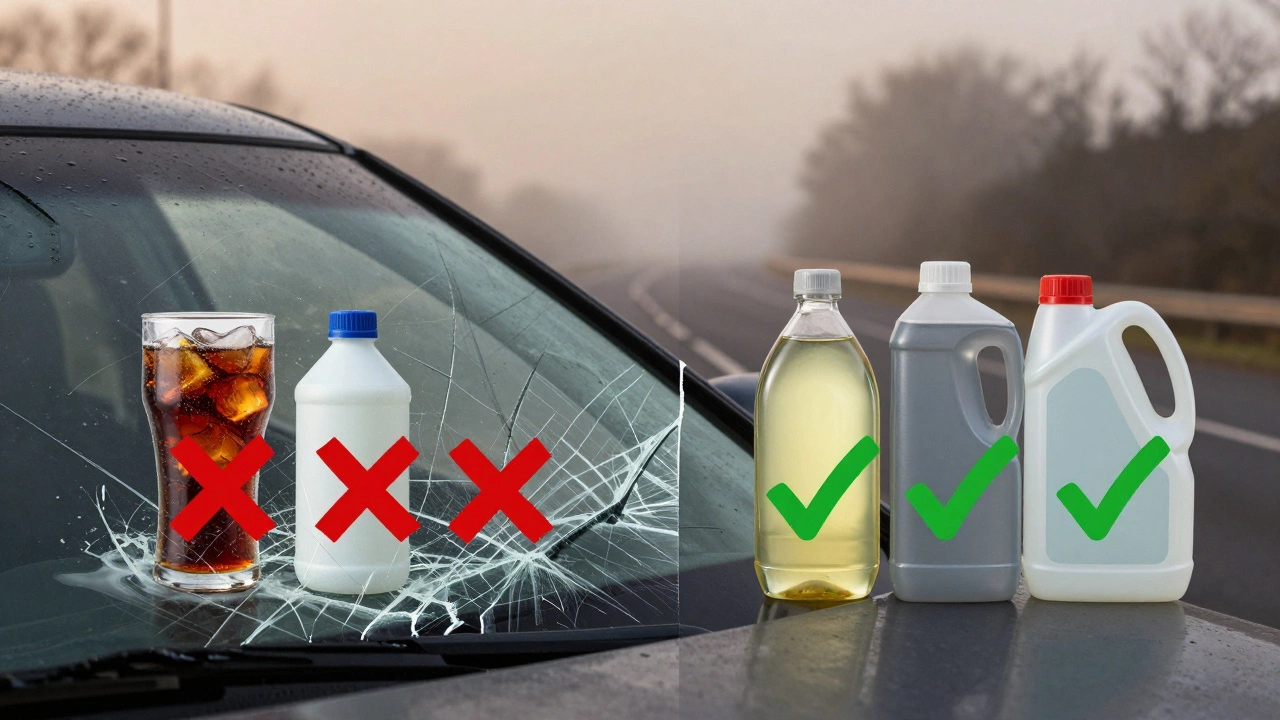
- Ammonia or glass cleaner: These are too harsh. They can crack plastic reservoirs, degrade rubber hoses, and eat away at paint if they spray onto the hood.
- Antifreeze (ethylene glycol): It’s toxic, smells awful, and can damage your washer pump. It’s made for the radiator, not the windshield.
- Cola or beer: Yes, people have tried it. Sugar in cola gels up inside nozzles. Alcohol in beer evaporates too fast and leaves sticky residue. Neither cleans effectively.
- Tap water alone: As mentioned, it freezes and leaves mineral streaks. Avoid it unless it’s 15°C+ and you’re only using it once.
How to Make a Winter-Ready DIY Fluid
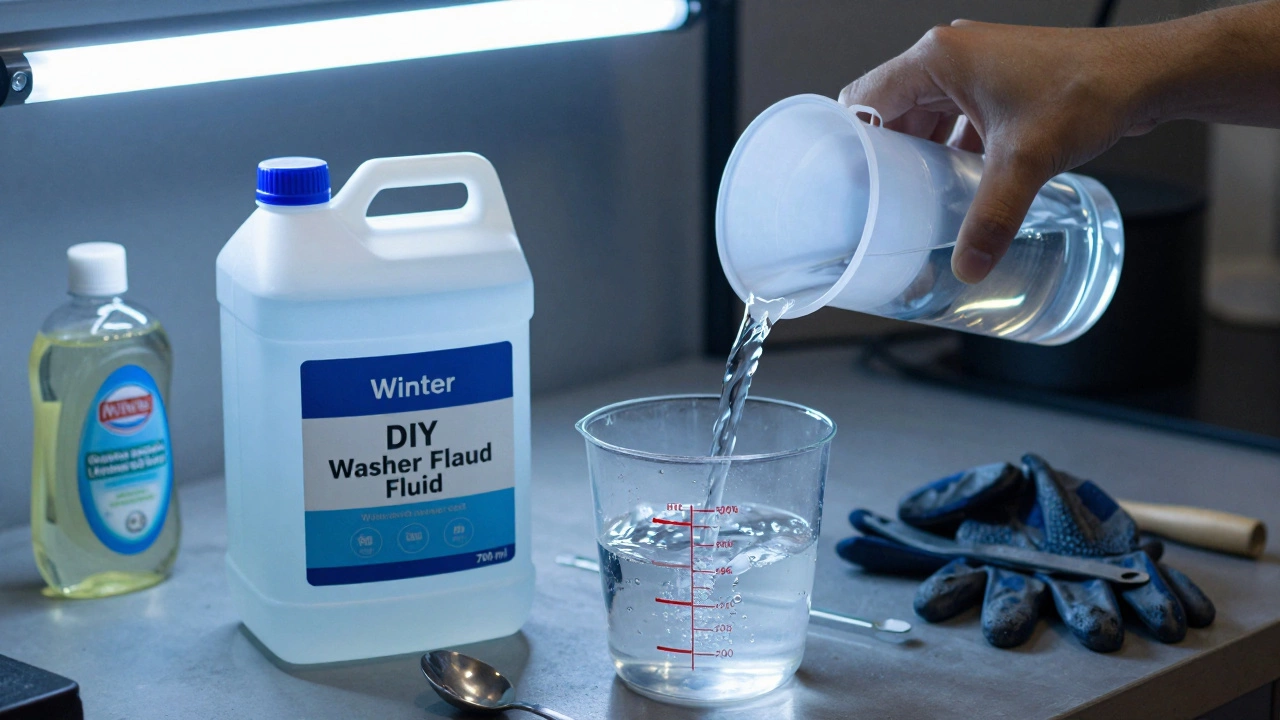
If you live in an area where temperatures regularly drop below -5°C, you need something stronger. Here’s a proven recipe that works in UK winters:
- Fill a clean 1-litre bottle with 700ml of distilled water.
- Add 300ml of 99% isopropyl alcohol (available at pharmacies or hardware stores).
- Add 1 teaspoon of liquid dish soap (unscented).
- Shake well before pouring into your car’s reservoir.
This mix freezes at around -25°C and cleans better than most store-bought fluids. It’s also cheaper-about £1.50 to make a litre, compared to £3-£5 for commercial brands. You can double or triple the batch and store it in a sealed container for months.
What About Commercial Alternatives?
If you don’t want to mix your own, there are better store-bought options than standard fluid:
- Winter-grade washer fluid: Look for bottles labeled “-25°C” or “arctic formula.” These use higher alcohol content and are designed for UK winters. Brands like Halfords, Autoglym, and Rain-X make reliable versions.
- Concentrated washer fluid: Buy a concentrate and dilute it yourself. You get more mileage per bottle, and you can adjust the strength based on the season. One 500ml bottle makes up to 5 litres.
- Biodegradable or eco-friendly fluids: Made with plant-based alcohols and non-toxic surfactants. They’re slightly more expensive but safer for the environment and your car’s components.
Check the label for freezing point and alcohol content. If it doesn’t say, don’t buy it.
How to Prevent Running Out
Don’t wait until you’re out of fluid to think about it. Check your reservoir every time you fill up with petrol. Most cars have a clear reservoir with minimum and maximum marks. Top it off in spring and autumn, and refill before long trips.
Keep a 1-litre bottle of your preferred mix in your trunk. Even a small emergency supply can save you from being stranded on a wet motorway. If you use your wipers often-like in Bristol’s frequent drizzle-go through a full reservoir every 2-3 months.
Signs Your Washer System Is Damaged
If you’ve used the wrong fluid and now your washer isn’t working right, here’s what to look for:
- No spray from the nozzles-even with fluid in the tank
- Whining or clicking noise when you activate the wipers
- Fluid leaking under the car near the front wheels
- Streaks or smearing even after cleaning the windshield
These usually mean a clogged nozzle, a failing pump, or cracked tubing. A clogged nozzle can often be cleared with a pin or compressed air. A dead pump costs £50-£120 to replace. Catching the problem early saves you time and cash.
Final Tip: Test Before You Trust
Before pouring any substitute into your tank, test it on a small area of your windshield. Spray it, wipe it with a clean cloth, and check for streaks or residue. If it leaves a film or smells strong, don’t use it in the system.
Also, avoid mixing commercial fluid with homemade mixes. Different chemical blends can react unpredictably. Stick to one type at a time.
Windshield wiper fluid might seem like a minor thing, but it’s one of the simplest ways to keep your visibility sharp. A good substitute isn’t about cutting corners-it’s about using the right ingredients to protect your car and your safety.