Brake Health Diagnostic Tool
Select the symptom you are experiencing to receive an immediate diagnosis and recommended action.
What are you noticing?
Diagnosis
Wear Indicator Active
The high-pitched squeal is likely your brake pad's built-in metal wear indicator scraping against the rotor. This means the friction material is thin but not yet gone.
Recommended Action
- Replace brake pads immediately.
- Inspect rotors for minor scoring, but replacement may not be necessary if they are smooth and thick enough.
You’re driving down the motorway, and suddenly your steering wheel vibrates every time you tap the brakes. Or maybe there’s a high-pitched squeal that follows you from the roundabout to the supermarket. Is it just dust? Is it expensive damage? Or is it something you can ignore for another month? Most drivers hesitate here because they don’t know what they’re looking at. The truth is, brake pads and rotors work as a paired system, but they fail in distinct ways that give you clear warning signs. If you understand the difference between a worn pad and a warped rotor, you save money on unnecessary repairs and, more importantly, keep your stopping distance predictable.
The Squeal vs. The Grind: Decoding Brake Noises
Sound is usually the first clue that something is wrong with your braking system. But not all noises mean the same thing. When you hear a sharp, high-pitched squealing sound while driving-even when you aren’t braking-it’s often the wear indicator doing its job. This is a small metal tab attached to the brake pad designed to scrape against the rotor once the friction material gets too thin. It’s an intentional alarm bell. If you catch this early, you only need to replace the pads.
A grinding noise, however, tells a different story. This deep, metallic rasp happens when the brake pad has completely worn away, and the steel backing plate is grinding directly against the brake rotor. At this stage, you’ve already damaged the rotor. Replacing just the pads won’t fix it; the rotor surface is likely scored or gouged. You’ll probably need to replace both components. Don’t wait for the grind. By then, you’re paying double the parts cost and potentially risking caliper damage.
Vibration and Pulsation: Checking Your Rotors
If your brakes feel smooth when lightly applied but shake violently when you press harder, look at your rotors. Warped rotors are the primary cause of steering wheel vibration during braking. This warping isn’t always visible to the naked eye. It often results from uneven cooling-like slamming on hot brakes and then hitting a cold puddle-or from excessive heat buildup due to dragging calipers.
Here’s how to test it: Drive at about 40 mph on a safe, empty road. Apply firm pressure to the brake pedal. If the pedal pulses up and down under your foot, or if the steering wheel shakes, your front rotors are likely out of true. Rear rotor issues usually manifest as a pulsating seat or floorboard rather than a shaking wheel. While some shops claim they can "turn" (resurface) rotors to fix this, modern rotors are thinner than they used to be. Often, replacement is safer and cheaper than machining them down to their minimum thickness specification.
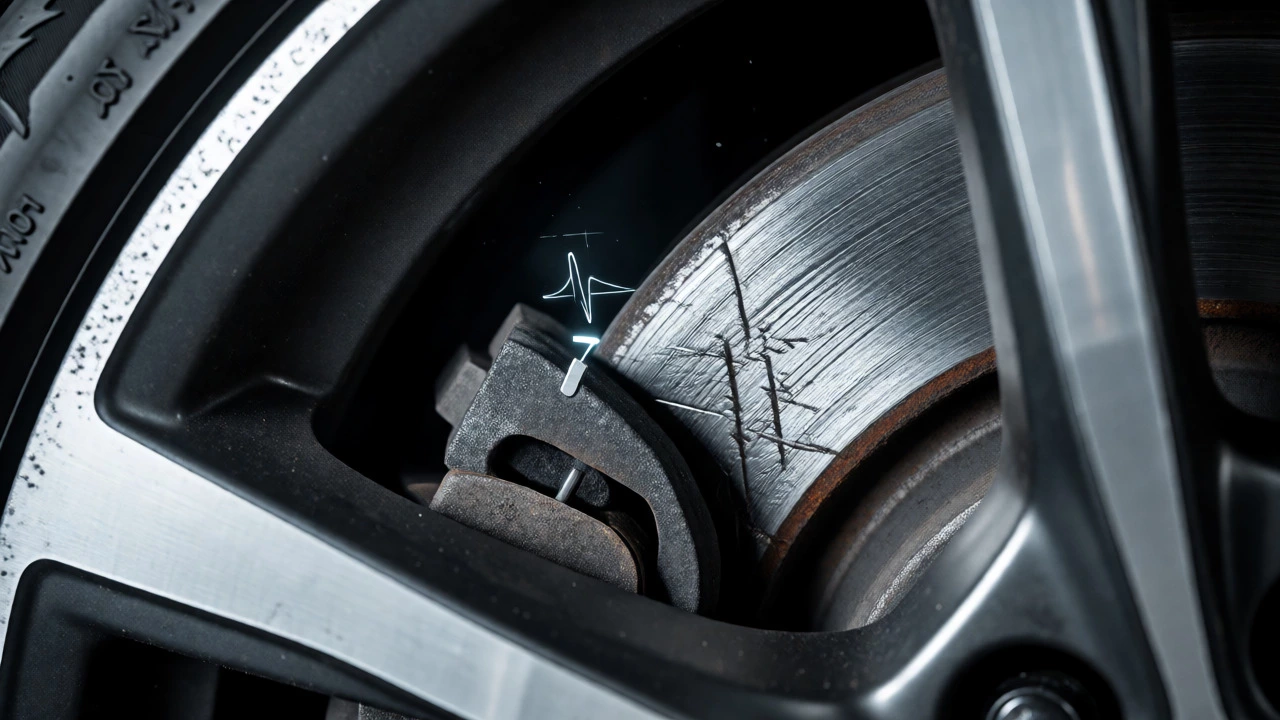
Visual Inspection: What to Look For Under the Wheel
You don’t need to lift the car to check most brake issues. Just peer through the spokes of your alloy wheels. Look for two main things: pad thickness and rotor condition.
- Pad Thickness: Healthy brake pads have at least 6mm of friction material. If you see less than 3mm, plan a replacement soon. Anything below 1.5mm is critical. Compare the inner and outer pads; sometimes one wears faster due to sticking slides.
- Rotor Surface: Run your finger across the edge of the rotor (when cool). Feel for a lip or ridge on the outer edge. A slight lip is normal wear, but a deep, sharp groove indicates significant material loss. Also, look for blue discoloration or dark spots, which signal overheating. Cracks radiating from the center hub are a red flag requiring immediate replacement.
If your wheels are heavily caked in brake dust, clean them first. Dark gray powder is normal, but if you see bright metal shavings or chunks falling off, you might have a failing component shedding material.
Pedal Feel and Pulling: Diagnosing Caliper Issues
Sometimes the problem isn’t the pads or rotors themselves, but how they’re being squeezed. If your car pulls to one side when you brake, you likely have a stuck caliper slide pin or a seized piston. This causes one wheel to brake harder than the other. Over time, this uneven force accelerates wear on one set of pads and can warp the associated rotor.
A spongy or soft brake pedal is another critical sign. If the pedal sinks toward the floor, you might have air in the lines, a leak in the master cylinder, or severely worn pads allowing the caliper pistons to extend too far. Conversely, if the pedal feels extremely hard and requires massive effort to stop, you could have a vacuum booster failure or contaminated brake fluid. Always address pedal feel changes immediately-they affect your ability to control the car in emergencies.
| Symptom | Likely Culprit | Action Required |
|---|---|---|
| High-pitched squeal | Wear Indicator (Pads) | Replace pads immediately |
| Metal-on-metal grinding | Worn Backing Plate (Pads/Rotors) | Replace pads AND rotors |
| Steering wheel vibration | Warped Front Rotors | Replace front rotors and pads |
| Pulsating brake pedal | Warped Rear Rotors | Inspect rear brakes |
| Car pulls to one side | Stuck Caliper / Uneven Wear | Service calipers and replace pads |
| Deep scoring/grooves on rotor | Debris or Worn Pads | Replace rotors (cannot resurface) |
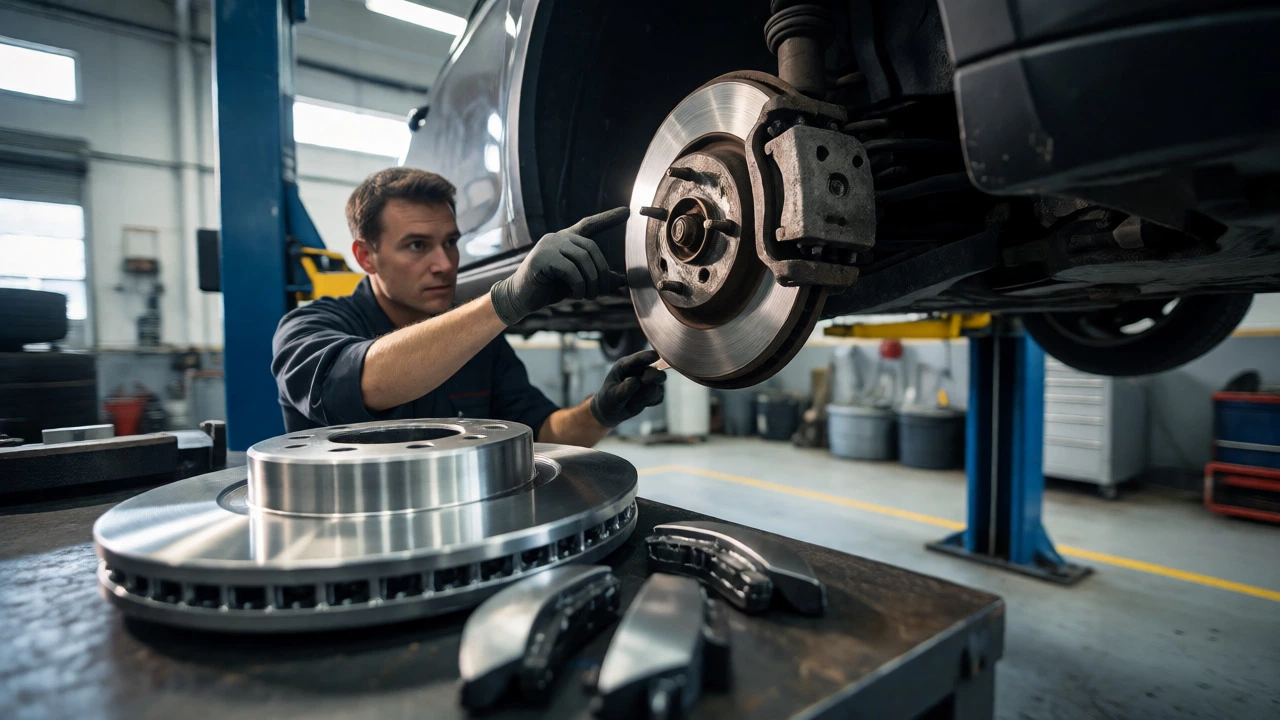
When to Replace vs. Resurface
Many older cars allowed mechanics to machine rotors back to flatness. Today, most vehicles use lightweight, single-piece cast iron rotors that have tight minimum thickness tolerances. If a rotor is within 1-2mm of its minimum spec, resurfacing removes too much material, leaving it prone to cracking and rapid re-warping. Furthermore, if the rotor has deep grooves from grinding, machining might eliminate the surface but leave structural weaknesses.
Always replace rotors in pairs (fronts together, rears together). Braking relies on balanced friction. Mixing new pads with old, glazed rotors leads to poor initial bite and uneven bedding-in. In fact, many manufacturers void warranties on new pads if they aren’t installed with new or properly machined rotors. Given that rotors are relatively inexpensive compared to labor costs, replacing them alongside pads is almost always the smarter long-term play.
Bedding-In New Brakes Properly
You’ve diagnosed the issue, bought the parts, and fixed the car. Now, don’t drive home like you did before. New brake pads require a process called bedding-in. This transfers a thin layer of friction material onto the rotor surface, creating a uniform contact patch. Without this step, you risk glazing the pads, leading to reduced stopping power and persistent noise.
Find a safe, empty stretch of road. Accelerate to 40 mph, then brake firmly (but don’t come to a complete stop) until you slow to 10 mph. Repeat this 5-7 times, allowing the brakes to cool slightly between stops by driving normally for a minute. Avoid hard emergency stops for the first 200 miles. This simple procedure ensures your new brakes perform at peak efficiency and last longer.
Can I drive with bad brake pads?
If the wear indicator is squealing, yes, for a short distance to get to a shop. If you hear grinding, avoid driving unless necessary. Grinding damages rotors rapidly and increases stopping distance significantly. Never ignore brake noises; they are safety-critical warnings.
How long do brake rotors last compared to pads?
Typically, rotors last twice as long as pads. If you change pads every 30,000-50,000 miles, rotors might last 60,000-100,000 miles. However, aggressive driving, heavy towing, or city traffic can shorten rotor life, requiring replacement every second pad change.
Why do my new brakes still squeak?
New brakes may squeak briefly during the first few days as they bed in. If the noise persists after 200 miles, it could be cheap semi-metallic pads (which are naturally noisier), missing anti-squeal shims, or improper installation. Ceramic pads are generally quieter but cost more.
Do I need to replace rotors every time I change pads?
Not always. If the rotors are thick enough, smooth, and not warped, you can reuse them. However, if there is any vibration, deep scoring, or if they are near minimum thickness, replace them. Skipping rotor replacement often leads to premature pad wear and return visits.
What causes brake rotors to warp?
Rapid cooling of hot rotors (e.g., driving through a deep puddle after hard braking) causes thermal shock, leading to distortion. Excessive heat from dragging calipers or continuous braking on steep hills without engine braking can also contribute to warping.