Fuel Pump Health Checker
Symptom Assessment
Check symptoms you're experiencing to determine potential fuel pump issues.
When your fuel pump starts going out, your car doesn’t just die suddenly-it gives you warning signs, if you know what to look for. Most drivers ignore these clues until they’re stranded on the side of the road. By then, it’s too late to avoid a tow bill. The truth is, fuel pumps don’t always fail without notice. They weaken over time, and the symptoms show up in small, frustrating ways that many people mistake for bad gas or a dirty throttle body.
Your car hesitates when you accelerate
If your car sputters or loses power when you press the gas pedal-especially when climbing a hill or merging onto the highway-it’s not just the engine being lazy. A weak fuel pump can’t keep up with the increased demand for fuel. You might notice it more when the tank is low, because the pump is struggling to pull fuel from the bottom of the tank. This isn’t a one-time glitch. It happens consistently under load. I’ve seen people replace spark plugs and clean injectors only to find out the real issue was a fuel pump that was barely holding on.
The engine won’t start-or takes too long to crank
Turn the key and hear the starter spin but no fire? If your car cranks for longer than usual before starting, especially after sitting for a few hours, the fuel pump may not be building enough pressure. Modern fuel-injected engines need fuel pressure within seconds of turning the key. A failing pump might take three or four tries before it builds enough pressure to ignite the fuel. If you’ve ruled out a dead battery or bad starter, and the engine turns over fine, the fuel pump is the next suspect.
You hear a loud whining noise from the fuel tank
Most people think the fuel pump is silent. It’s not. A healthy pump makes a quiet hum you barely notice when you first turn the key. But when it’s wearing out, that hum turns into a high-pitched whine, sometimes loud enough to hear over the radio. This noise comes from the motor inside the pump struggling to push fuel through a clogged filter or worn internal parts. It’s not just annoying-it’s a sign the pump is overheating and running inefficiently. If you hear this, especially after the car has been running for a while, don’t wait. The pump could lock up completely at any moment.
Your car stalls at high speeds or under heavy load
Imagine cruising at 70 mph on the motorway, then suddenly the engine cuts out. You coast to the shoulder, restart it, and it runs fine-until you try to accelerate again. That’s a classic fuel pump failure pattern. At highway speeds, the engine needs more fuel than at idle. A weak pump can’t keep up. This isn’t random. It happens every time you push the engine hard. I’ve had customers come in thinking their transmission was slipping. Turns out, the fuel pump was dropping pressure under load. The engine doesn’t get enough fuel to sustain combustion, so it shuts down.
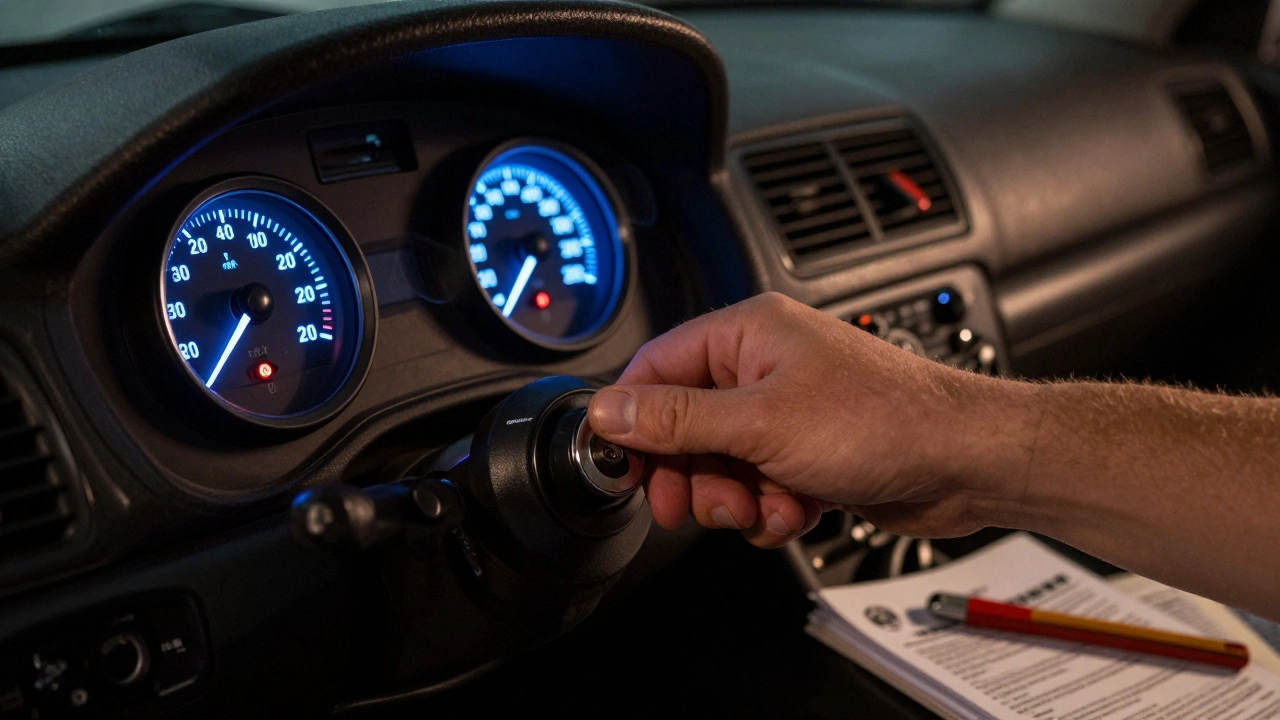
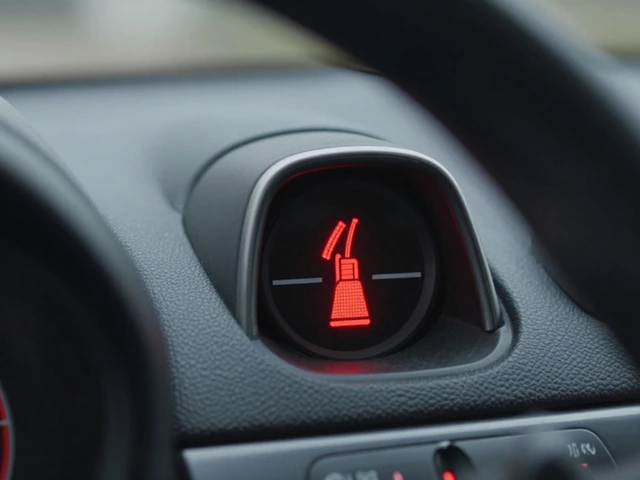
Check engine light comes on with no clear code
Modern cars have sensors that monitor fuel pressure. If the fuel pump isn’t delivering the right amount, the engine control unit will trigger a check engine light. But here’s the catch: the code might not say "fuel pump." You could see P0191 (fuel pressure sensor range/performance) or P0087 (fuel rail pressure too low). These codes point to fuel delivery issues-but they don’t tell you if it’s the pump, the filter, or a sensor. That’s why you can’t just clear the code and walk away. If you’ve replaced the fuel pressure sensor and cleaned the injectors and the problem returns, the pump is likely the culprit.
Performance drops when the fuel tank is low
One of the most telling signs? Your car runs fine with a full tank but starts acting up when the fuel level drops below a quarter. Why? Because the fuel pump is submerged in fuel, which helps cool it. When the tank is low, the pump runs hotter and struggles to maintain pressure. If your car runs better with a full tank and starts sputtering as you drive down to empty, that’s not just bad luck-it’s the pump overheating. This isn’t something you can fix by adding fuel stabilizer. It’s a hardware problem.
Engine misfires or runs rough at idle
When the fuel pump can’t deliver a steady stream of fuel, the engine gets inconsistent amounts of fuel. That leads to misfires-especially at idle. You might feel the car shaking, hear popping sounds from the exhaust, or notice the RPMs dipping below 700. These symptoms look like bad spark plugs or a vacuum leak. But if you’ve checked those and the problem persists, the fuel pump is the next thing to test. A fuel pressure gauge will show if the pressure is below the manufacturer’s spec. For most modern cars, that’s between 40 and 60 psi. Anything under 30 psi and the pump is failing.
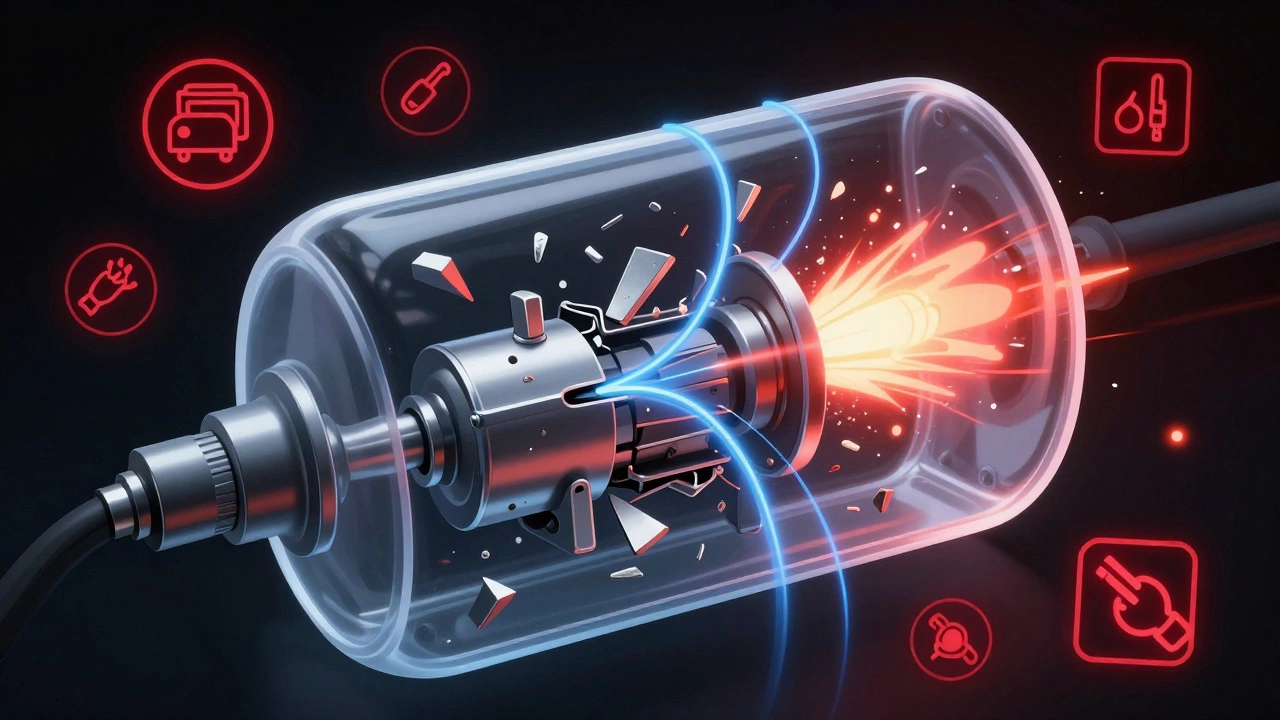
What happens if you ignore it?
Ignoring a failing fuel pump doesn’t just mean inconvenience. It can damage other parts. If the pump runs dry too often, the motor overheats and burns out. That’s an expensive replacement. Worse, when the pump starts shedding metal particles from worn internals, those bits can clog your fuel filter and even get into your fuel injectors. Replacing injectors costs three times as much as replacing a fuel pump. And if the pump dies completely while you’re driving, you’re not just stranded-you’re at risk of a collision if it happens on a busy road.
How to confirm it’s the fuel pump
You don’t need to guess. There are two simple tests you can do:
- Listen for the pump when you turn the key to "on" (before starting). You should hear a brief hum for two seconds. If you don’t hear it, the pump might not be getting power-or it’s dead.
- Use a fuel pressure gauge. Connect it to the fuel rail test port (if your car has one). Compare the reading to your owner’s manual. If pressure is low or drops quickly after turning off the engine, the pump or check valve is faulty.
Most auto parts stores will lend you a fuel pressure gauge for free. That’s cheaper than replacing parts you don’t need.
What to do next
If you’ve confirmed the fuel pump is failing, replace it. Don’t try to delay it. Even if your car still runs, the risk of sudden failure is too high. Buy a quality replacement-OEM or a reputable aftermarket brand like Bosch or Denso. Cheap pumps fail faster and often come with poor seals that leak. Also, replace the fuel filter at the same time. It’s cheap insurance. And if your tank is nearly empty, fill it up before starting the job. A full tank helps support the pump during installation and reduces the chance of air getting into the system.
Replacing a fuel pump isn’t always easy. On many cars, you have to remove the rear seat or access panel to reach the pump module. Some models require dropping the fuel tank. If you’re not comfortable with that, take it to a mechanic. But don’t let the labor cost scare you. A failed fuel pump on the highway costs more in towing and lost time than a professional replacement does.
How to make your fuel pump last longer
There’s no magic trick, but there are simple habits that help:
- Avoid running the tank below a quarter full. Keeping fuel in the tank keeps the pump cool.
- Use quality fuel. Cheap gas can contain more contaminants that clog the pump’s internal filter.
- Replace the fuel filter every 30,000 to 40,000 miles. Many manufacturers say 60,000, but in real-world driving, it’s better to be safe.
- Don’t ignore warning signs. A slight hesitation now could save you a big repair later.
Fuel pumps aren’t meant to last forever-but they’re designed to last 100,000 miles or more. If yours is failing before that, it’s likely because of how you’ve treated it. Keep the tank full, use good fuel, and listen to your car. It’ll tell you when it’s struggling.
Can a bad fuel pump cause the check engine light to come on?
Yes. A failing fuel pump can trigger codes like P0191 (fuel pressure sensor range/performance) or P0087 (fuel rail pressure too low). These codes mean the engine isn’t getting enough fuel pressure, which could be caused by a weak pump, clogged filter, or faulty sensor. Testing fuel pressure with a gauge is the only way to know for sure.
How long does a fuel pump usually last?
Most fuel pumps last between 100,000 and 150,000 miles. But many fail earlier if the tank is frequently run low, if low-quality fuel is used, or if the fuel filter hasn’t been replaced. In real-world conditions, especially in cities with stop-and-go traffic, 80,000 miles isn’t unusual for a pump that’s been neglected.
Can I drive with a failing fuel pump?
You might be able to drive short distances, but it’s risky. A failing pump can die without warning, leaving you stranded. It can also damage your fuel injectors or clog the fuel filter with metal debris. Driving with a bad pump is like driving with a ticking time bomb under your car.
Why does my car start better when the tank is full?
The fuel pump is cooled by the fuel surrounding it. When the tank is low, the pump runs hotter and struggles to build pressure. A full tank keeps the pump submerged and cooler, allowing it to work more efficiently. If your car starts easier with a full tank, the pump is likely overheating and weakening.
Do I need to replace the fuel filter when replacing the fuel pump?
Yes. The fuel filter is often part of the pump assembly, or it’s located nearby. If the pump is failing, it’s likely because debris has clogged the filter. Replacing the filter at the same time prevents the new pump from getting contaminated right away. It’s a small cost compared to the risk of premature failure.