The Quick Answer: General Timelines
If you want a rule of thumb, most manufacturers suggest changing your Engine Air Filter every 12,000 to 15,000 miles. However, that is a generic number. If you live in a pristine suburb, you might stretch it to 30,000 miles. If you spend your weekends on dusty country lanes or live in a city with heavy smog, you might need a new one every 6,000 miles.
The goal is to keep the Internal Combustion Engine getting a steady stream of oxygen. When the filter is clogged, the engine has to work harder to pull air in, which kills your fuel economy and makes your acceleration feel sluggish.
| Driving Environment | Recommended Interval | Risk Level |
|---|---|---|
| Clean City/Suburban | 15,000 - 30,000 miles | Low |
| Mixed Urban/Rural | 10,000 - 15,000 miles | Medium |
| Heavy Dust/Construction/Off-road | 5,000 - 10,000 miles | High |
Signs Your Filter Is Clogged
You don't always have to rely on the odometer. Your car will tell you when it is choking. One of the most obvious signs is a drop in Fuel Efficiency. If you notice you are visiting the petrol station more often than usual despite no change in your driving habits, your engine might be struggling to breathe.
Keep an ear out for a change in engine sound. A clogged filter can cause the engine to sound "strained" or produce a deeper, more labored drone during acceleration. You might also notice a distinct smell of unburnt fuel from the exhaust. This happens because the engine can't get enough air to burn the fuel completely, leading to a "rich" mixture.
The most reliable way to check is the visual test. Pop the hood, open the air box, and pull out the filter. Hold it up to a bright light. If the light doesn't pass through the pleats, or if you see a layer of grey grime and trapped debris, it is time for a replacement. Don't bother knocking the dust out with your hand; once the deep fibers are clogged, the air is blocked regardless of how clean the surface looks.
Paper vs. Performance Filters
When you go to buy a replacement, you will see a few different options. Most cars come with a Paper Air Filter. These are cheap, effective, and designed to catch the smallest particles. The downside? They are disposable. Once they are full, they go in the bin.
Then there are Performance Air Filters, often made of cotton or synthetic materials. These are marketed as "lifetime" filters because they are washable. While they do allow a bit more air into the engine, which can slightly bump up horsepower, they often don't filter out as many tiny particles as a high-quality paper filter. If you prioritize engine longevity over a tiny bit of extra pep, stick with the standard OEM paper filters.
The Hidden Danger of Ignoring the Filter
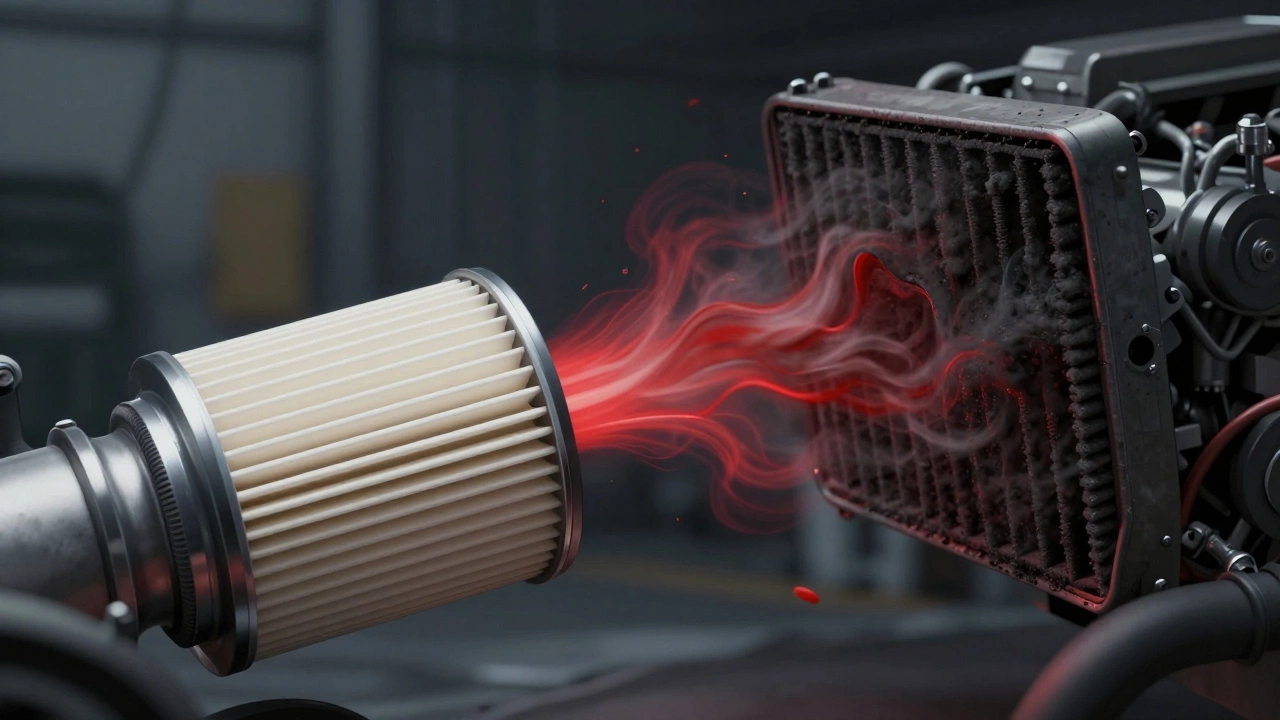
What happens if you just keep driving with a filthy filter? At first, you lose some MPG. But eventually, the vacuum created by the engine trying to suck air through a blockage can actually pull air from other, unfiltered leaks in the intake system. This is called "dirt ingestion."
When dust and grit enter the Cylinder Bore, they act like sandpaper on your piston rings and cylinder walls. This wears down the engine from the inside, leading to oil leaks, loss of compression, and eventually, a total engine rebuild. Spending ten pounds on a filter now is a lot cheaper than spending two thousand on a new engine later.
How to Replace It Yourself in 10 Minutes
Replacing an air filter is one of the easiest pieces of maintenance you can do. You don't need a degree in engineering or a full toolkit. In most cars, you just need a screwdriver or a socket wrench.
- Open the bonnet and locate the air filter housing (usually a large black plastic box with a thick hose leading to the engine).
- Undo the clips or screws holding the lid of the box in place.
- Remove the old filter and take a quick look inside the housing. If there are dead leaves or bugs in there, wipe them out with a damp cloth.
- Slide the new filter in. Make sure it seats perfectly in the rubber gasket; if it's crooked, air will leak around the edges, defeating the purpose of the filter.
- Close the lid and secure the clips.
Common Mistakes to Avoid
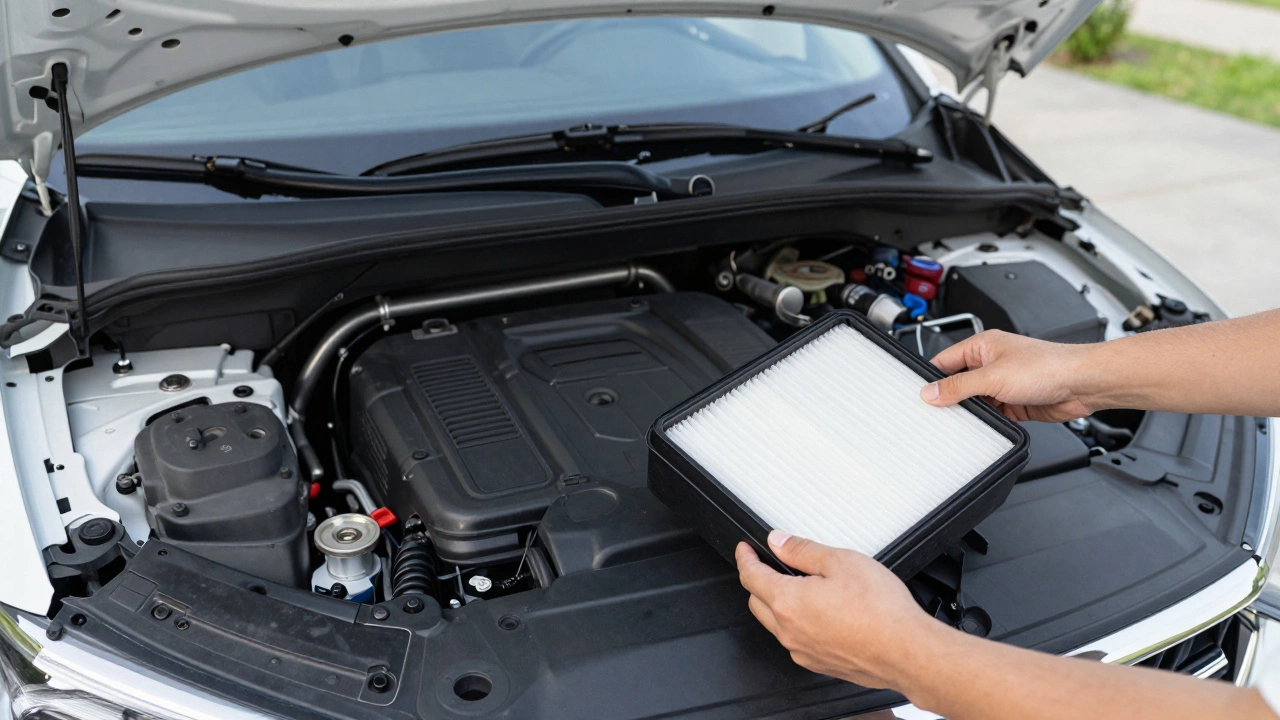
One big mistake people make is "cleaning" a paper filter with compressed air. It might look cleaner, but the high-pressure air often creates microscopic holes in the paper. These holes are just big enough to let harmful dust through but too small for you to see. If it is a paper filter, just replace it.
Another error is ignoring the Cabin Air Filter. People often confuse the two. The engine filter keeps the car running; the cabin filter keeps your lungs clean by filtering the air coming through the AC vents. If your car smells musty or the windshield fogs up easily, you probably need to change your cabin filter too, usually located behind the glovebox.
Can a dirty air filter cause the check engine light to come on?
Yes. Modern cars use a sensor called a Mass Air Flow (MAF) sensor to measure the air entering the engine. If the filter is so clogged that the airflow drops significantly, the computer may detect an imbalance in the air-fuel ratio and trigger a warning light, often indicating a "lean" or "rich" condition.
Does a high-flow filter actually increase horsepower?
In a stock engine, the gains are usually negligible-maybe 1 to 2 horsepower. While they allow more air through, the engine's computer is designed for a specific flow. You'll notice a bigger difference in a modified or turbocharged engine, but for a daily driver, the trade-off in filtration quality often isn't worth the tiny power boost.
How do I know if I'm using the correct filter for my car?
Always check your vehicle's owner manual or use a parts lookup tool with your specific VIN (Vehicle Identification Number). Even within the same model year, different engine sizes (e.g., 1.6L vs 2.0L) often use different filter dimensions.
Is it okay to change the air filter every time I get an oil change?
It's a great habit. While you might not need a new filter every 5,000 miles, checking it during every oil change ensures you never miss a replacement. It is much better to change a slightly clean filter too early than to run a filthy one too long.
Why does my car use a pleated design for the filter?
The pleats increase the surface area of the filter material. By folding the paper, manufacturers can fit a huge amount of filtering medium into a small plastic box, allowing the filter to trap more dirt before it becomes completely blocked.
What's Next for Your Maintenance?
Now that your engine is breathing easily, take a look at your other fluids. If you haven't checked your Engine Oil levels recently, now is the time. A clean air filter and fresh oil are the two most important factors in extending the life of your motor. If you noticed a lot of grit in your air box, it might also be worth checking your spark plugs, as poor air intake can sometimes lead to carbon buildup on the plugs.