Car Radiator Lifespan & Risk Estimator
Enter your vehicle details below to get an estimated assessment of your radiator's condition and potential future costs.
Expected Failure Window:
Calculating...
Estimated Replacement Cost:
Calculating...
You’re driving along the motorway, windows down because the AC is acting up, and suddenly you notice a sweet smell or see steam hissing from under the bonnet. Panic sets in. Is your engine about to seize? For most drivers, the car radiator is an invisible hero-buried behind the grille, quietly doing its job until it doesn’t. But how long can you actually expect this critical component to last before it needs replacing?
The short answer? A healthy radiator typically lasts between 8 to 10 years or 100,000 to 150,000 miles. However, that’s just an average. Some fail in five years due to poor maintenance, while others soldier on for fifteen. It depends heavily on what you drive, where you live, and how well you treat your cooling system. If you want to avoid a roadside breakdown or a hefty repair bill, you need to understand what kills radiators and how to spot the early warning signs.
The Real Lifespan: Why There Is No Single Number
Manufacturers rarely give a specific mileage limit for radiators because they aren’t considered "wear items" like brake pads or oil filters. They are designed to last the life of the vehicle. In reality, the life of a vehicle radiator is dictated by corrosion, pressure stress, and physical damage.
Most modern cars use aluminium core radiators with plastic end tanks. This design saves weight and cost but introduces new failure points. The plastic becomes brittle over time due to heat cycles, leading to leaks at the seams. Older cars often had copper-brass radiators, which lasted longer but were heavier and more expensive to repair. Today, if your radiator fails, it’s almost always cheaper to replace the whole unit than to attempt a repair.
| Radiator Type | Average Lifespan (Years) | Average Mileage | Common Failure Mode |
|---|---|---|---|
| Aluminium Core / Plastic Tanks | 8-10 | 100k-150k miles | Plastic tank cracking, seam leaks |
| Copper-Brass (Older Vehicles) | 10-15+ | 150k+ miles | Corrosion holes, solder joint failure |
| Heavy Duty / Commercial | 5-7 | High load dependent | Vibration damage, debris impact |
What Actually Kills Your Radiator?
It’s rarely just old age. Most premature failures stem from three main culprits: coolant neglect, external damage, and internal contamination.
Coolant Neglect: This is the number one killer. Coolant isn’t just water; it contains anti-corrosion additives. When you top up with plain tap water instead of proper antifreeze, you dilute these chemicals. Over time, minerals in tap water cause scale buildup inside the narrow tubes, restricting flow and causing hot spots that warp the metal. Or worse, the lack of inhibitors allows rust to eat through the aluminium core.
External Debris: Your radiator sits at the front of the car, taking the brunt of road grit, bugs, and stones. Small impacts might not leak immediately but can weaken the fins or crack the plastic tanks. In rural areas, dirt and mud clog the fins, reducing airflow efficiency. You might not know it’s happening until your temperature gauge starts creeping up on hot days.
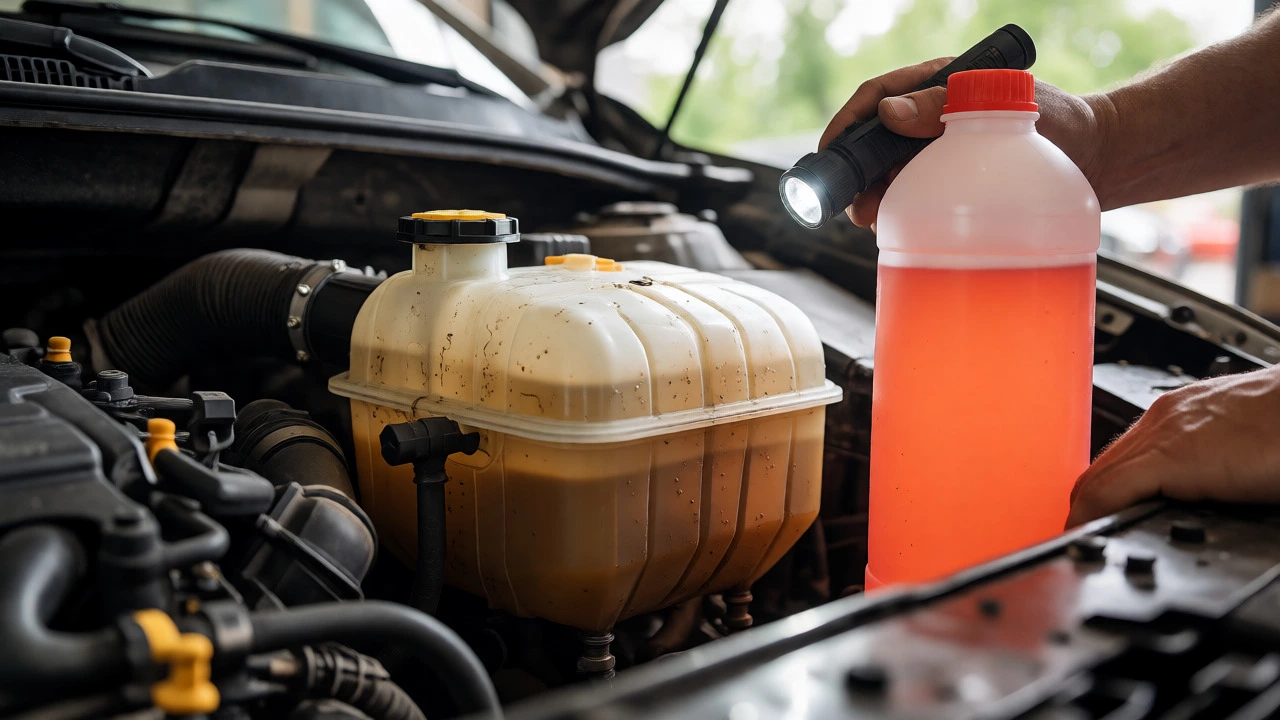
Internal Contamination: Have you ever seen brown, sludge-like stuff when checking your coolant reservoir? That’s usually a sign of a failing head gasket or mixing incompatible coolants. Oil entering the cooling system coats the radiator internals, preventing heat transfer. Once this happens, cleaning is difficult, and replacement is usually the only fix.
Signs Your Radiator Is On Its Way Out
You don’t have to wait for steam to pour out of the bonnet to know something is wrong. Catching these symptoms early can save you from towing fees and potential engine damage.
- Temperature Fluctuations: If your gauge swings wildly or stays higher than normal even after warming up, your radiator might be partially blocked.
- Discoloured Coolant: Fresh coolant is bright green, orange, or pink. If it looks rusty, muddy, or oily, there’s trouble inside the system.
- Puddles Under the Car: Look for coloured fluid underneath the front of the car. Even a slow drip indicates a breach in the seals or core.
- Bent Fins: Visually inspect the radiator through the grille. If many fins are bent flat, airflow is restricted, forcing the radiator to work harder and overheat.
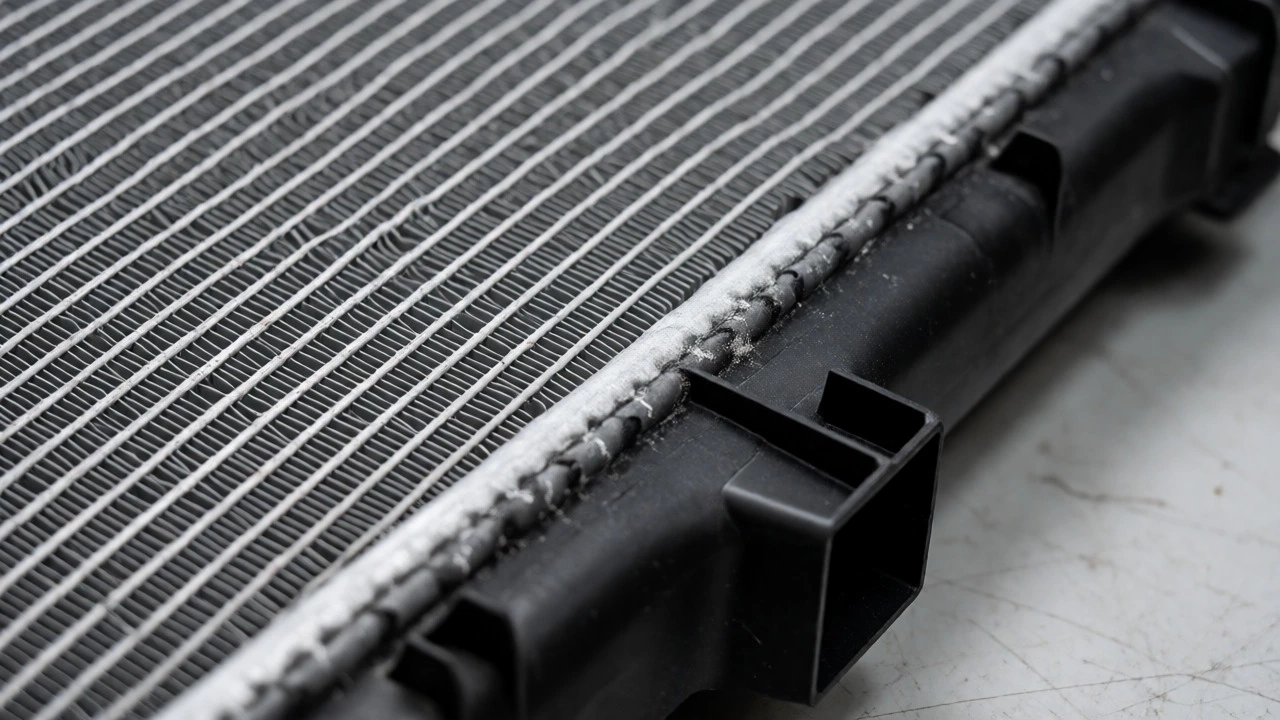
- Leaking Seams: Check the corners where the plastic meets the metal. White crusty residue or wetness here means the seal is breaking down.
If you notice any of these, get a pressure test done. It’s a quick diagnostic that mechanics perform to find leaks without disassembling anything.
Maintenance Tips to Extend Radiator Life
You can’t change the material of your radiator, but you can significantly extend its life with simple habits. Think of it as brushing your teeth-you do it regularly so you don’t lose them later.
Flush the System Regularly: Most manufacturers recommend flushing the cooling system every 30,000 to 50,000 miles. This removes sediment and replenishes the anti-corrosion agents. Don’t just drain and fill; flush it properly to remove trapped air and old contaminants.
Use the Right Coolant: Never mix different types of coolant (e.g., OAT with HOAT). Mixing can cause chemical reactions that turn the liquid into jelly, blocking your radiator instantly. Stick to the specification listed in your owner’s manual.
Keep It Clean: Gently spray the radiator fins with low-pressure water from the engine bay side to push out bugs and dirt. Avoid high-pressure washers directly on the fins, as they bend easily. Straightening bent fins with a fin comb improves airflow and reduces thermal stress.
Check Hoses and Clamps: Often, what looks like a radiator leak is actually a cracked hose or a loose clamp. Replacing a £10 hose is far cheaper than a £150 radiator. Inspect these rubber components annually for cracks or bulges.
Replacement Costs and Considerations
When the time comes to replace it, what will it cost? Prices vary widely based on the make and model of your car and whether you go to a dealer or an independent garage.
In the UK, a standard aftermarket radiator part costs between £40 and £150. Premium brands like Valeo or Denso sit at the higher end. Labour usually takes 1.5 to 3 hours, costing roughly £60-£90 per hour depending on your location. So, expect a total bill between £150 and £400 for a typical family car. Luxury vehicles or complex installations (like those requiring bumper removal) can push this over £600.
Should you buy OEM (Original Equipment Manufacturer) or aftermarket? For radiators, reputable aftermarket brands are generally excellent value. They meet strict quality standards and often come with multi-year warranties. Unless you drive a rare classic or a high-performance German saloon with proprietary designs, aftermarket is usually the smart financial choice.
Frequently Asked Questions
Can I drive my car with a leaking radiator?
You should avoid driving if possible. A small leak might let you drive a few miles to a shop if you keep topping up coolant, but there is a high risk of overheating. If the temperature gauge hits red, stop immediately. Continuing to drive can warp the cylinder head or blow the head gasket, turning a £200 repair into a £2,000 disaster.
How often should I replace my car radiator?
There is no fixed schedule. Replace it only when it fails or shows significant signs of wear, such as persistent leaks or severe corrosion. With proper maintenance, many radiators never need replacement during the ownership of the car.
Is it worth repairing a radiator leak?
For older cars with copper-brass cores, repair is sometimes viable. For modern aluminium-plastic units, repair kits or epoxy patches are temporary fixes at best. Given the labour involved in removing the radiator, full replacement is almost always more reliable and cost-effective in the long run.
Why does my new radiator leak after six months?
This is often due to improper installation, such as overtightened clamps cracking the plastic necks, or using incompatible coolant that corrodes the new seals. Ensure your mechanic performs a pressure test after installation and uses the correct fluid type specified by the manufacturer.
Do electric cars have radiators?
Yes, but they serve different purposes. EVs have radiators for the battery pack and power electronics, which operate at lower temperatures than combustion engines. These systems are generally less prone to catastrophic failure but still require periodic coolant checks to prevent corrosion.
Final Thoughts
Your radiator is tough, but it’s not invincible. Treat it with respect by using the right coolant, keeping it clean, and addressing minor leaks before they become major headaches. If you’re buying a used car, ask specifically about the cooling system history. A well-maintained radiator can easily outlast the clutch, the turbo, and the suspension. Don’t wait for the steam to tell you it’s time for attention-check your gauges and look under the bonnet occasionally. It’s the cheapest insurance policy for your engine.