Suspension Health Diagnostic Tool
Select Symptoms You Are Experiencing
Check all boxes that apply to your current driving experience. The more specific you are, the more accurate the diagnosis.
Likely Causes:
Urgency Level:
Estimated Repair Cost Range
Prices vary by vehicle make/model and labor rates. Includes parts and basic alignment if needed.Ever take a corner and feel like your car is about to tip over? Or maybe you hear a strange clunking noise every time you hit a speed bump? These aren't just annoying quirks; they are clear signals that your suspension system might be failing. Driving with bad suspension isn't just uncomfortable-it’s dangerous. It affects how your brakes work, how your tires grip the road, and how much control you have in an emergency.
Most drivers ignore these warning signs until something breaks completely. By then, the repair bill is often twice as high because other parts have taken damage too. The good news? You don’t need to be a mechanic to spot the early red flags. With a few simple checks and by paying attention to how your car feels, you can catch suspension issues before they become major headaches.
The Bounce Test: A Simple DIY Check
One of the easiest ways to check if your shocks or struts are worn out is the "bounce test." This doesn't require any tools, just your hands and a bit of effort. Go to each corner of your vehicle and push down firmly on the bumper or fender. Let go quickly. If the car bounces more than once or twice before settling, your shock absorbers are likely shot.
Healthy shocks dampen movement instantly. When they fail, the springs continue to oscillate because there's nothing stopping them. Think of it like jumping on a trampoline versus jumping on concrete. Your suspension should act like the concrete-absorbing the energy and keeping things stable. If your car feels like a boat rocking in the waves after hitting a bump, it’s time to get those shocks looked at.
Noises That Don't Belong
Your car makes noises all the time. The engine hums, the wind whooshes, and the tires roll. But new sounds, especially when going over bumps or turning, are trouble. Listen for these specific cues:
- Clunking or Knocking: This usually points to worn bushings or ball joints. Bushings are rubber components that isolate metal parts from each other. When they crack or dry out, metal hits metal, creating a loud clunk.
- Creaking: Often caused by dried-out strut mounts or sway bar links. If you hear creaking when driving slowly over rough surfaces, your suspension components are rubbing without proper lubrication.
- Hissing: If you have air suspension (common in luxury SUVs), a hissing sound means air is leaking from the bags or lines. This will cause your ride height to drop unevenly.
Don't ignore these sounds. A loose ball joint can detach while driving, causing the wheel to collapse. That’s not a repair; that’s a catastrophe waiting to happen.
Uneven Tire Wear: The Silent Killer
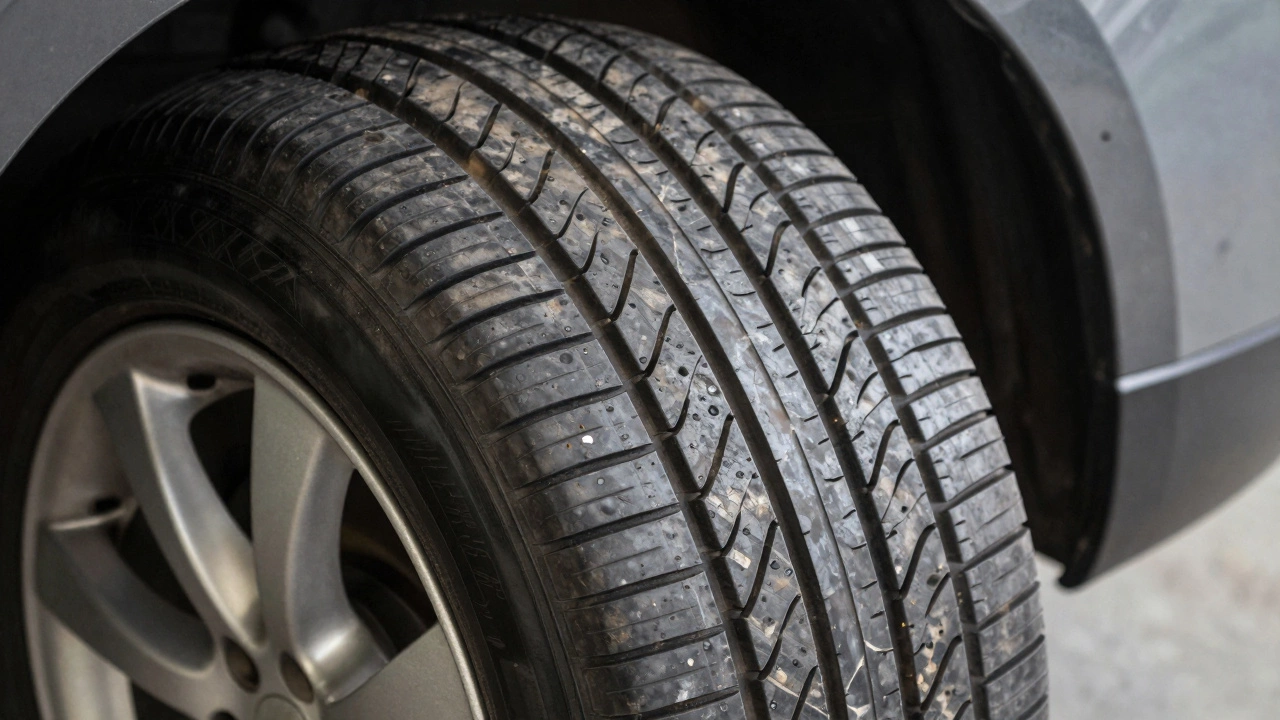
If you look at your tires and notice patches of wear that shouldn't be there, your suspension is likely misaligned or broken. Healthy tires wear evenly across the tread. Bad suspension causes specific patterns:
- Cupping or Scalloping: Looks like dips around the tire circumference. This happens when shocks can't keep the tire planted on the road, causing it to bounce and skip.
- Inner or Outer Edge Wear: Suggests alignment issues stemming from bent suspension arms or worn bushings.
- Feathering: Treads feel sharp on one side and smooth on the other. This indicates toe alignment problems, often linked to steering linkage wear.
Tires are expensive. Replacing them only to have them ruined again by bad suspension is a waste of money. Always check suspension health before buying new rubber.
Pulling to One Side
When you let go of the steering wheel on a flat, straight road, does your car drift left or right? While road crown (the slight slope of roads for drainage) can cause minor pulling, significant drifting suggests suspension trouble. Worn control arm bushings or a collapsed strut can change the geometry of your wheels, forcing them to angle incorrectly.
This also makes steering feel vague or unresponsive. You might find yourself constantly making small corrections to stay in your lane. This fatigue adds up over long drives and increases accident risk.
Nose Diving and Squatting
Pay attention to how your car behaves during braking and acceleration. When you slam on the brakes, does the front end dip dramatically? When you step on the gas, does the rear squat down excessively?
Some body roll is normal, but extreme diving or squatting means your shocks aren't controlling the weight transfer. This reduces tire contact with the road exactly when you need it most-during hard stops or quick merges. It extends your braking distance and compromises stability.
Steering Wheel Vibration
If your steering wheel shakes at certain speeds, it’s often related to wheel balance or alignment. However, if the vibration persists regardless of speed or feels like a shudder through the chassis, your suspension components may be loose. Worn tie rod ends or ball joints can create play in the steering system, transmitting vibrations directly to your hands.
Check this by having someone watch the wheels while you gently wiggle the steering wheel back and forth (with the car parked and engine off). Any visible movement in the wheel hub area indicates loose suspension parts.
Visual Inspection: What to Look Underneath
You don't need to crawl under your car to spot some issues. Park on level ground and look at your tires from the front and rear. Are they aligned properly? Does one side sit lower than the other?
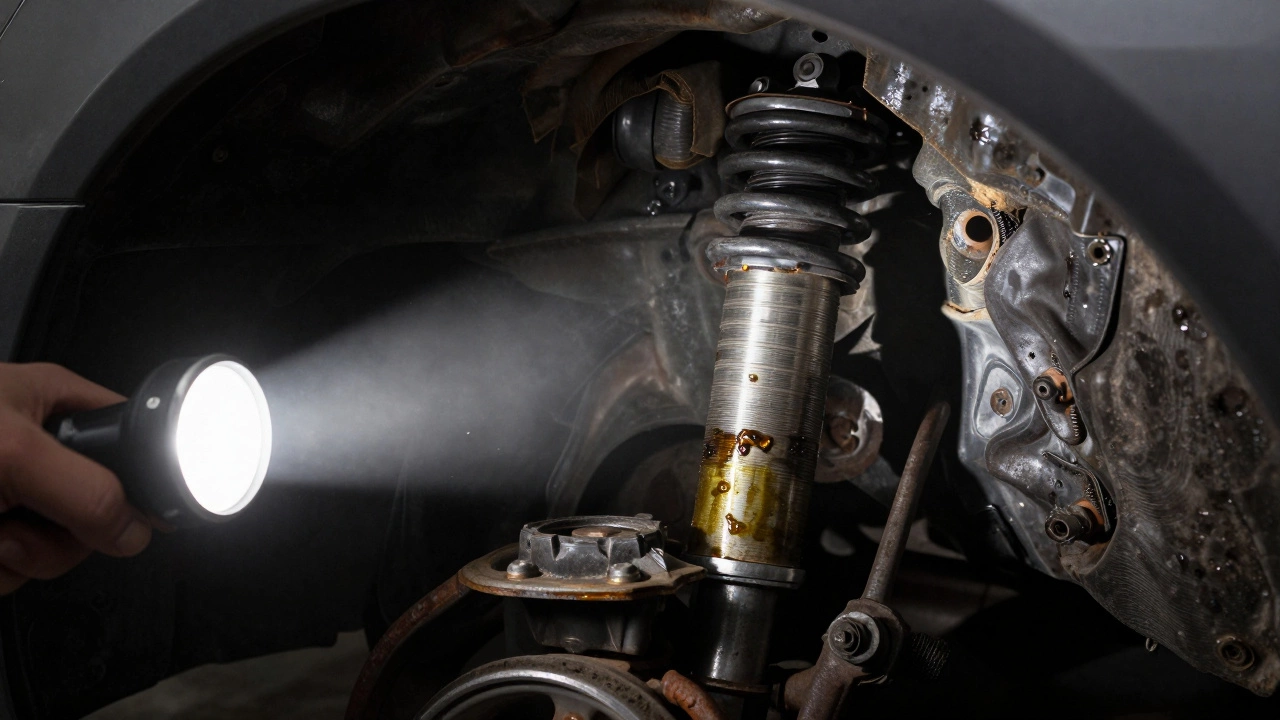
If you're comfortable using a flashlight, shine it into the wheel wells. Look for:
- Oil Leaks: Shocks and struts contain hydraulic fluid. If you see grease or oil on the outside of the shock body, the seals are broken. The shock is no longer effective.
- Damaged Dust Covers: Rubber boots protect internal components from dirt and water. Torn covers lead to rapid corrosion and failure.
- Rust or Corrosion: Especially common in areas with salted roads. Rust eats away at metal joints, weakening them over time.
| Symptom | Likely Cause | Urgency Level |
|---|---|---|
| Bouncing after bumps | Worn Shock Absorbers/Struts | High |
| Clunking noises | Broken Bushings/Ball Joints | Immediate |
| Uneven tire wear | Misalignment/Worn Components | Medium |
| Pulling to one side | Bent Control Arms/Alignment | High |
| Steering vibration | Loose Tie Rods/Balancing | Medium |
Cost of Ignoring Suspension Problems
Replacing a pair of shocks might cost between £150 and £400 depending on your vehicle. Sounds manageable, right? Now consider what happens if you wait. Worn shocks destroy tires faster. A set of quality tires can cost £600 or more. Add in the cost of an alignment (£50-£100), and you've already doubled your initial repair estimate.
But the real cost is safety. In wet conditions, poor suspension reduces traction significantly. Studies show that vehicles with degraded suspension systems have up to 30% longer stopping distances on slippery roads. That extra distance could mean the difference between a near-miss and a collision.
When to See a Professional
If you notice any combination of the symptoms above, schedule an inspection immediately. Mechanics use specialized equipment to measure suspension geometry and check component integrity. They can identify subtle issues that aren't obvious during a visual check.
Ask for a full suspension assessment, not just a quote for shocks. Sometimes replacing one part reveals others that are nearing failure. Addressing everything at once saves labor costs and ensures your car drives safely afterward.
How long does bad suspension last?
There's no fixed timeline. Some shocks fail within 50,000 miles, while others last over 100,000. It depends on driving conditions, load weight, and maintenance. Once symptoms appear, assume failure is imminent and inspect soon.
Can I drive with bad suspension?
Technically yes, but it's risky. Short trips to a mechanic are fine. Long drives or highway speeds increase danger due to reduced control and higher chance of component failure.
Does bad suspension affect fuel economy?
Yes. Misaligned wheels and excessive rolling resistance from poor tire contact increase drag. You might lose 1-3 mpg efficiency, adding up over time.
What's the difference between shocks and struts?
Shocks only dampen movement. Struts are structural parts of the suspension, supporting the vehicle's weight and holding the wheel assembly together. Replacing struts is more complex and usually requires an alignment afterward.
How much does a full suspension repair cost?
A complete overhaul including shocks, struts, bushings, and alignment can range from £800 to £2,500+ depending on the vehicle. Luxury brands and performance cars tend toward the higher end.