Fuel Pump Pressure Diagnostic Calculator
Fuel Pressure Diagnostic Tool
Enter your vehicle details and measured fuel pressure to determine if your fuel pump is working properly.
Diagnostic Results
Vehicle Specifications
What this means: A proper fuel pressure reading indicates the pump is delivering adequate fuel to the engine. Low pressure can cause hesitation, stalling, or no-start conditions.
If your car sputters, stalls, or won’t start even with a full tank, a failing fuel pump might be the culprit. But how do mechanics actually know it’s the pump and not something else? It’s not just about swapping parts until something works. There’s a method - one that’s been refined over decades of working on everything from old Ford Escorts to modern Teslas.
Start with the basics: rule out the easy stuff
Before touching the fuel pump, a good mechanic checks the simple things first. You’d be surprised how often a bad fuel pump is blamed when it’s really a clogged fuel filter, a dead relay, or a blown fuse. These are cheaper and faster to fix. The first step is always the same: verify there’s power getting to the pump.
Most cars have a fuel pump relay under the hood or in the fuse box. The mechanic will listen for a brief hum when you turn the key to the ‘on’ position - that’s the pump priming the lines. No sound? They’ll check the fuse. If the fuse is good, they’ll swap the relay with another one from the same box (like the horn relay) to test it. If the pump suddenly hums after the swap, the old relay was dead.
They’ll also check the fuel pump’s electrical connector. Corrosion or loose pins can cut power. A quick voltage test with a multimeter at the connector tells you if electricity is reaching the pump. If there’s no voltage, the problem is in the wiring or control module - not the pump itself.
Check fuel pressure - the real test
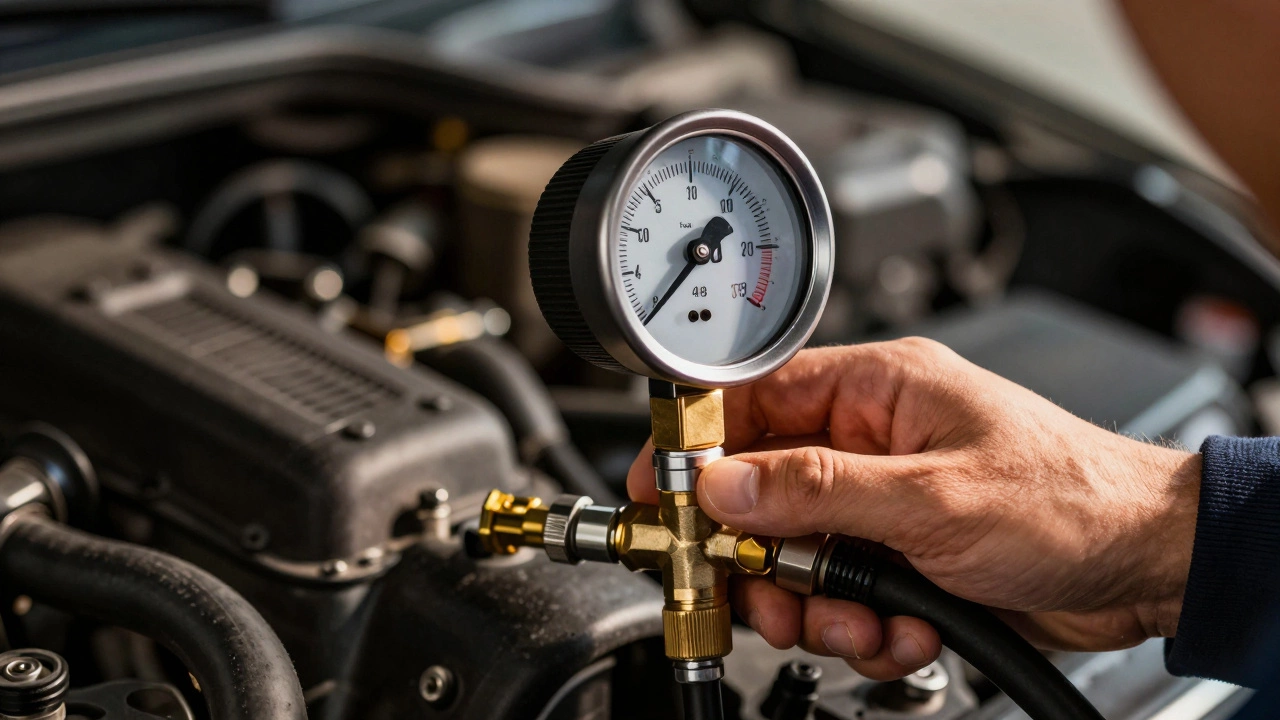
Once electrical issues are ruled out, the next step is measuring fuel pressure. This is where the real diagnosis begins. Most modern cars have a Schrader valve (like a tire valve) on the fuel rail. The mechanic attaches a fuel pressure gauge here. With the engine running, they check the reading against the manufacturer’s specs.
For example, a 2020 Honda Civic needs around 45-55 psi. If the gauge reads 20 psi or less, the pump isn’t delivering enough pressure. Low pressure means the engine isn’t getting enough fuel to run properly - leading to hesitation, misfires, or stalling under load.
Some cars don’t have a test port. In those cases, the mechanic might tap into the fuel line with a special fitting. It’s a bit more work, but it’s standard practice. They’ll also check pressure with the engine off. A healthy system holds pressure for several minutes. If pressure drops fast, it could mean a leaking fuel injector or a faulty fuel pressure regulator - both of which can mimic a bad pump.
Listen for noise - or the lack of it
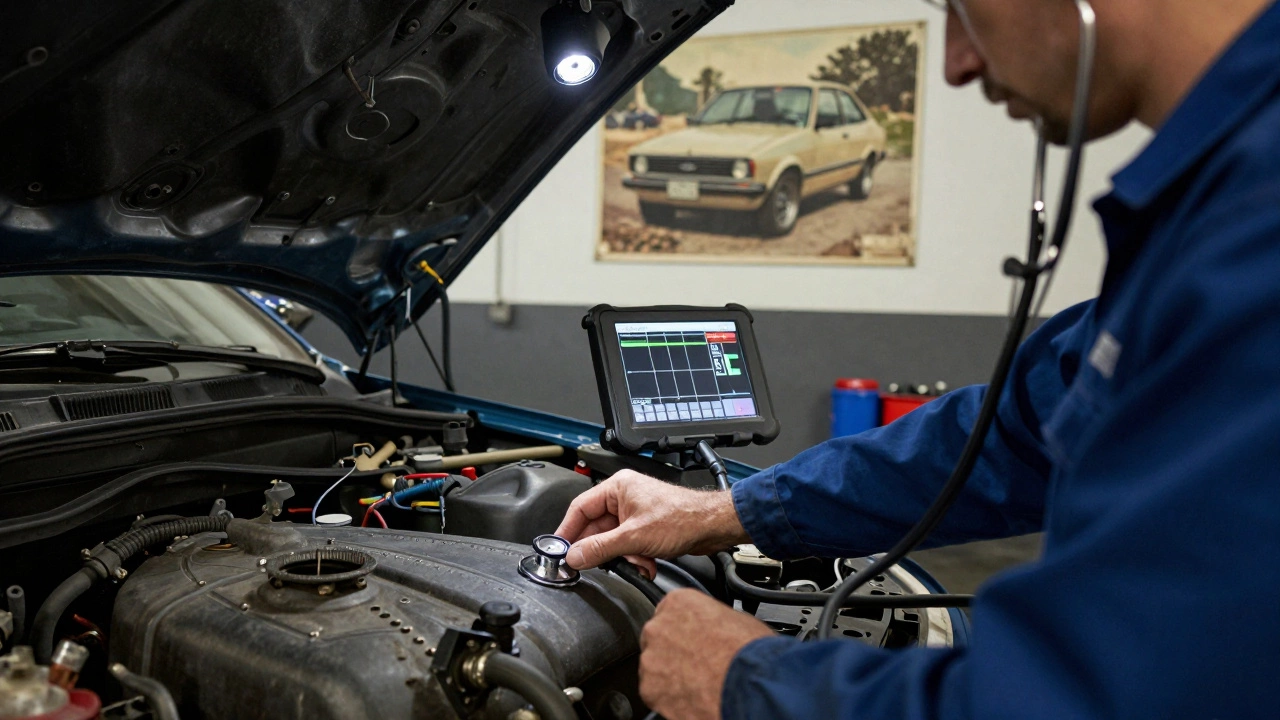
Fuel pumps make a quiet whirring sound when they’re working. A failing one might get louder, or it might go completely silent. Mechanics listen near the fuel tank, often with a stethoscope or a long screwdriver pressed against the tank wall. If the pump is making a grinding, rattling, or screeching noise, it’s usually a sign of internal wear. The impeller or bearings are failing.
But silence doesn’t always mean death. Sometimes, the pump is just weak. A pump can still run quietly and still be failing. That’s why pressure testing is more reliable than listening alone. Still, noise is a red flag - especially if it’s new. If your car suddenly sounds like a coffee grinder under the back seat, don’t ignore it.
Use a scan tool to read live data
Modern cars have onboard diagnostics. A mechanic plugs in a scan tool and looks at live fuel trim data. Fuel trim tells you how much the engine control unit (ECU) is adjusting the air-fuel mixture to keep things balanced.
If the long-term fuel trim is over +15%, the ECU is adding extra fuel because it’s not getting enough from the pump. That’s a strong indicator of low fuel delivery. If the ECU is trying to compensate like this, the pump is likely struggling. The scan tool might also show a P0191 code - “Fuel Rail Pressure Sensor Range/Performance.” That’s a direct hint the system isn’t seeing the pressure it expects.
Some advanced tools can even monitor the fuel pump’s duty cycle - how hard the ECU is telling the pump to work. If the duty cycle is maxed out at 100% but pressure is still low, the pump can’t keep up. That’s a clear sign it’s worn out.
Check the fuel quality and tank condition
A bad fuel pump doesn’t always mean the pump is broken. Sometimes, it’s the fuel. Old, stale gas can gum up the pump’s internal filter or clog the intake screen. Water in the tank can cause corrosion. A mechanic might drain a small sample from the tank and check for discoloration or sediment.
They’ll also look at the tank’s condition. Rust inside the tank can flake off and get sucked into the pump. If the tank is dirty, replacing the pump without cleaning the tank means the new pump will fail in months. That’s why a good mechanic will recommend cleaning or replacing the tank if it’s heavily corroded - especially on older vehicles.
Test the pump’s flow rate
Pressure tells you how hard the pump pushes, but flow tells you how much it delivers. A pump might hit 50 psi but only deliver half the gallons per hour it should. That’s enough to idle the engine but not enough to drive at highway speeds.
To test flow, the mechanic disconnects the fuel line at the engine and routes it into a graduated container. They’ll turn the ignition on (without starting the engine) and time how much fuel comes out in 15 seconds. A typical pump should deliver at least 12-15 ounces in that time. Less than that? The pump is weak.
This test is especially useful for older cars without fuel pressure ports. It’s a direct, no-BS way to see if the pump can move enough fuel. It’s not always done on every job - but when symptoms are unclear, it’s the tiebreaker.
What doesn’t indicate a bad fuel pump?
Not every engine problem is the fuel pump. A misfire could be spark plugs or coils. A rough idle might be a vacuum leak. A car that won’t start could be a dead battery or a bad starter. Even a clogged fuel filter can cause similar symptoms.
One big myth: if the car starts after sitting for a few hours, it’s the fuel pump. That’s usually vapor lock - a problem with fuel line heat soak, not pump failure. Another myth: if you tap the fuel tank and the car starts, the pump is bad. That’s a temporary fix - it might dislodge debris blocking the intake, but it doesn’t fix the root issue.
Good mechanics avoid guessing. They test. They measure. They compare. They don’t replace parts based on hunches.
When to replace the fuel pump - and what else to replace
If the pump is confirmed bad, replacement is the only fix. But here’s what most people don’t know: when you replace the fuel pump, you should also replace the fuel filter (if it’s not integrated), the fuel pump sender unit (which includes the fuel level sensor), and the fuel tank seal. These parts wear out at the same rate. Replacing them all at once saves labor and prevents repeat visits.
On many cars, the pump is inside the tank. That means the tank has to be dropped. That’s a 3-4 hour job. If you’re already there, why not do the rest? A new fuel filter costs $25. A new sender unit costs $80. Doing it now saves $200 in labor later.
Also, check the fuel lines. Rubber lines can crack over time. If they’re brittle or swollen, replace them. A leaking fuel line is a fire hazard.
What happens if you ignore it?
Driving with a failing fuel pump is risky. The engine might stall while you’re on the highway. Or it might not start at all when you need it. In cold weather, a weak pump can struggle to prime the system, leaving you stranded.
Worse, a failing pump can send metal shavings into the fuel system. These can clog fuel injectors or damage the engine. Replacing a fuel injector costs $400-$800 per unit. That’s more than the pump.
Don’t wait for total failure. If you’re seeing symptoms - hesitation, stalling, long crank times - get it checked. A 15-minute pressure test can save you hundreds.
Can a bad fuel pump cause the check engine light to come on?
Yes. A failing fuel pump often triggers codes like P0191 (fuel rail pressure too low) or P0087 (fuel system pressure too low). The engine control unit notices the fuel delivery isn’t matching what it expects and turns on the light. But the check engine light can also come on for dozens of other reasons - so don’t assume it’s the pump until it’s tested.
How long does a fuel pump usually last?
Most fuel pumps last between 100,000 and 150,000 miles. But that’s not a guarantee. Running the tank low often - especially below a quarter full - makes the pump work harder and overheat. Contaminated fuel, like water or dirt, can shorten its life dramatically. High-mileage cars with frequent short trips are more prone to early failure.
Can I test the fuel pump without tools?
You can try listening for the hum when you turn the key, and you can check if the car starts after spraying starter fluid into the air intake. If it fires up briefly, it’s likely not getting fuel - pointing to the pump or fuel delivery. But that’s not a definitive test. Without a pressure gauge or multimeter, you’re guessing. Real diagnosis needs tools.
Is it cheaper to fix a bad fuel pump or replace the whole car?
Replacing a fuel pump costs between $200 and $600, depending on the car. Labor makes up most of that - $150-$350. If your car is in good condition otherwise, it’s almost always cheaper to fix the pump. Only consider replacing the car if the repair cost exceeds 50% of the vehicle’s value - which rarely happens with a fuel pump job.
Do electric fuel pumps wear out faster than mechanical ones?
Electric pumps, used in all modern cars since the 1980s, are more reliable than old mechanical pumps. But they’re more sensitive to fuel quality and running low on gas. Mechanical pumps, found in older cars, were simpler and lasted longer - but they were less precise and couldn’t handle modern fuel injection systems. So while electric pumps can fail earlier under poor conditions, they’re better overall.
Final tip: Prevent it before it breaks
The best way to avoid a bad fuel pump is to never run your tank below a quarter full. Keep the pump submerged in fuel - it needs that to stay cool. Use quality fuel from reputable stations. Avoid filling up right after a tanker has dumped fuel - that stirs up sediment in the tank. And replace the fuel filter every 40,000 miles, even if the manual says longer. It’s cheap insurance.
When your car starts acting up, don’t panic. Don’t guess. Don’t let a shop just swap parts. Ask for the pressure test. Ask for the flow test. Ask for the scan data. A good mechanic will show you the numbers - not just tell you what’s wrong.