Brake Balance Estimator
Estimate how rear brake wear affects your stopping distance. Based on UK Vehicle and Operator Services Agency data showing 12% longer stopping distances on wet roads with worn rear brakes.
Critical threshold: 3mm or less indicates dangerous wear.
Estimated Impact
Enter your rear brake pad thickness to see impact on stopping distance.
When you slam on the brakes in your car, you’re not just stopping the wheels-you’re trusting a system built on physics, weight transfer, and precise engineering. But if you had to pick one set of brake pads to replace first, which would save your life: the front or the rear?
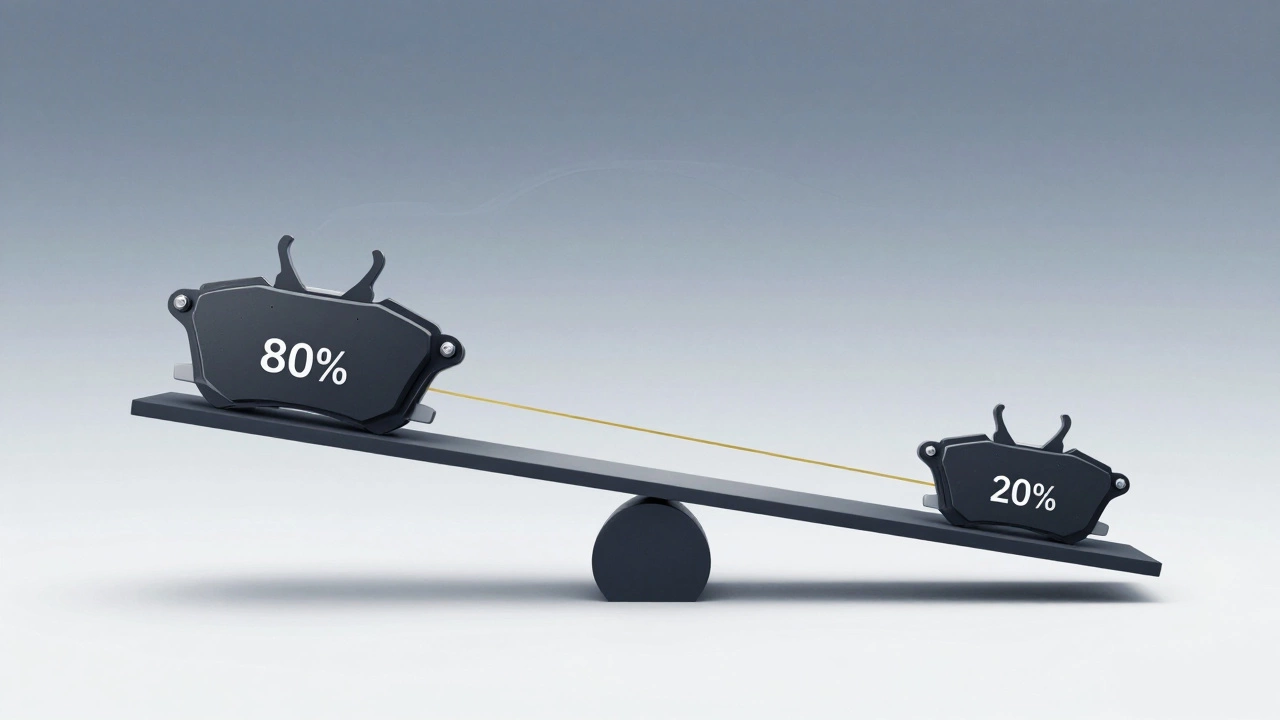
Front brake pads handle 70-80% of stopping power
Under normal braking, your car’s weight shifts forward. That’s not just a feeling-it’s physics. As you hit the brake pedal, the vehicle’s center of mass pushes down on the front tires, pressing them harder into the road. This increases friction, which means the front brakes do the heavy lifting. In most cars, the front brake pads handle between 70% and 80% of the total stopping force. That’s why front brake pads wear out two to three times faster than rear ones.
Look at any brake pad set from a major manufacturer like Brembo, Akebono, or Bosch. The front pads are thicker, larger, and made from more aggressive friction material. Rear pads are often smaller, thinner, and sometimes even made from softer compounds. That’s not an accident-it’s by design. The front brakes are engineered to absorb the majority of heat and stress.
Rear brakes are there for stability, not stopping
Think of rear brake pads like a co-pilot, not the driver. Their job isn’t to stop the car quickly-it’s to keep it straight. If the rear brakes were too strong, the car would oversteer, fishtail, or even spin out, especially on wet or icy roads. That’s why most modern cars use smaller rear drums or discs with less clamping force. Even in high-performance vehicles, rear brakes are tuned to work in harmony with the front, not dominate them.
Some drivers think rear brakes are just for parking. That’s a myth. While the parking brake often uses a separate mechanical cable system, the hydraulic rear brakes still engage every time you press the pedal. They help balance the braking force across the axle, preventing uneven wear and maintaining control.
What happens if you ignore rear brake pads?
Ignoring rear brake wear might seem harmless at first. After all, the car still stops, right? But here’s what really happens:
- The front pads take on even more load, overheating faster and wearing out in half the time.
- Brake balance shifts, making the car feel spongy or unresponsive under hard stops.
- On slippery surfaces, the rear wheels lock up before the fronts, increasing stopping distance and risk of skidding.
- Brake fluid pressure builds unevenly, which can damage the master cylinder or ABS module over time.
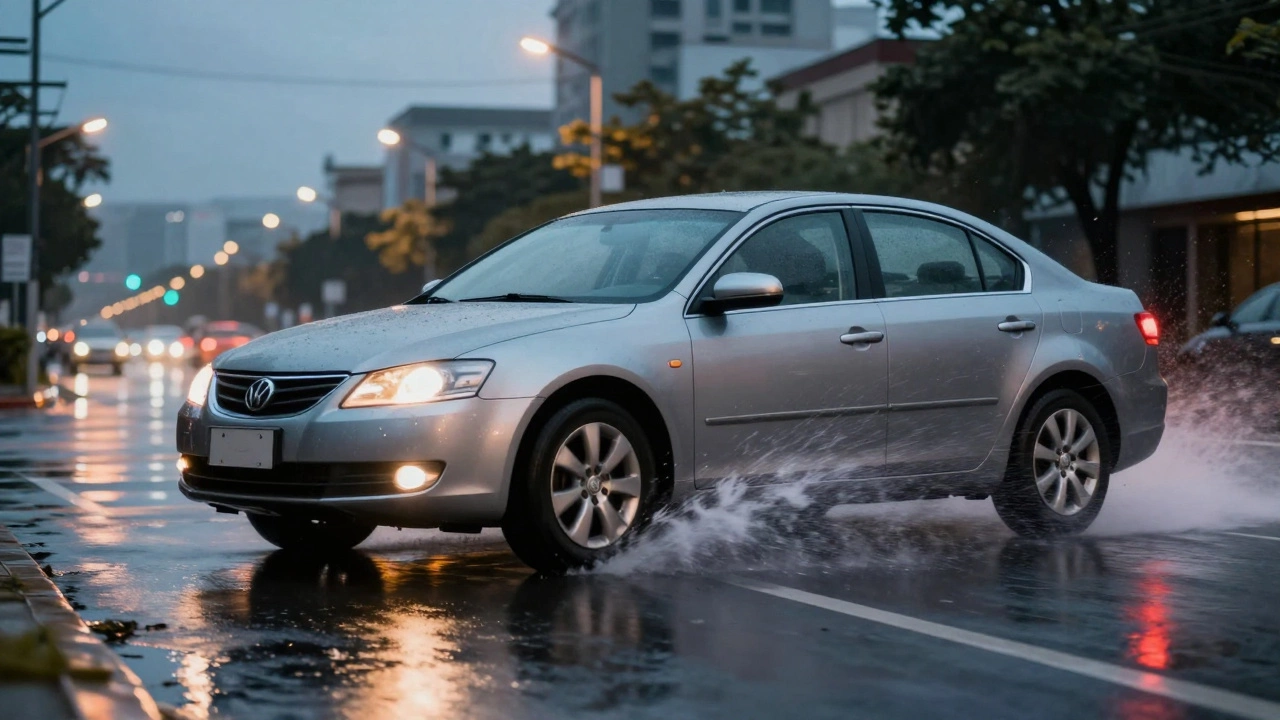
A 2023 study by the UK’s Vehicle and Operator Services Agency found that vehicles with worn rear brake pads had 12% longer stopping distances on wet roads compared to those with balanced brake systems. That’s the difference between avoiding a child stepping into the road and hitting them.
How to tell if your rear brake pads need replacing
You won’t always hear or feel rear pad wear. Front pads make noise first because they’re under more stress. But here’s how to check the rears:
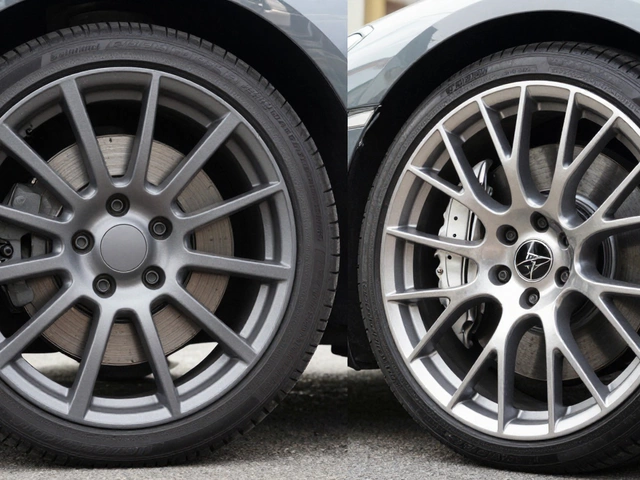
- Look through the wheel spokes. If you can see the brake rotor, you might spot the pad thickness. If it’s under 3mm, replace them.
- Listen for a low grinding sound when braking slowly. That’s metal-on-metal-your rear pads are gone.
- Check your service records. Most manufacturers recommend rear pad replacement every 40,000 to 60,000 miles, but driving style matters. If you do a lot of city driving, check them at 30,000 miles.
- Use a brake pad gauge. These cost under £15 and give you an exact measurement without removing the wheel.
Don’t wait for warning lights. Most cars don’t have rear pad sensors. The dashboard only alerts you if the front pads are dangerously thin.
Front and rear brake pads should always be replaced together
It’s tempting to replace only the front pads to save money. But here’s why that’s a bad idea:
- New front pads have higher friction than old rear ones. This throws off brake balance and causes pulling to one side.
- Uneven braking puts extra strain on the suspension and steering components.
- ABS and ESC systems rely on even brake force. Mismatched pads confuse the sensors and reduce safety.
- You’ll end up replacing the rears sooner anyway-and you’ll pay more in labor if you do it twice.
Always replace brake pads in pairs: front axle together, rear axle together. If you’re replacing fronts, check the rears. If the rears are at 40% thickness or less, replace them too. It’s not just smart-it’s safer.
Brake pad material matters more than position
Not all brake pads are created equal. Ceramic pads last longer, produce less dust, and handle heat better than organic or semi-metallic pads. But they’re also more expensive.
For everyday driving, ceramic pads are the best all-around choice for both front and rear. They’re quiet, durable, and gentle on rotors. If you drive in hilly areas or tow regularly, semi-metallic pads offer better heat resistance-but they’re noisier and wear rotors faster.
Never mix pad types. If you put ceramic pads on the front and semi-metallic on the rear, you’re creating a braking imbalance. The car will feel unpredictable under hard stops. Stick with the same material on both axles.
Real-world example: A Bristol commuter’s brake failure
A driver in Bristol, commuting daily from Clifton to Temple Meads, ignored rear pad wear for over 18 months. The front pads were replaced twice, but the rears were never checked. One rainy morning, she braked hard to avoid a van cutting in. The rear wheels locked up. The car spun 180 degrees and hit a lamppost. No one was hurt, but the repair bill was £4,200.
Her mechanic said it wasn’t a mechanical failure-it was a failure to maintain balance. The front pads were new, but the rears were down to 1mm. The system couldn’t handle the load.
Bottom line: Front pads do the work. Rear pads keep you safe.
The front brake pads are the stars of the braking system. They generate most of the stopping power. But the rear pads? They’re the unsung heroes. Without them, the front pads can’t work safely. One side doesn’t matter more than the other-it’s the balance that saves lives.
Replace both sets together. Check them every 10,000 miles. Don’t wait for the warning light. And never assume the rear pads are fine because they’re not making noise. Your life doesn’t depend on the strongest brake-it depends on the most balanced one.
Are rear brakes less important than front brakes?
No. While front brake pads handle most of the stopping force, rear brake pads are critical for stability and balance. Without properly functioning rear pads, the car can become unstable during braking, especially on wet or slippery surfaces. Both sets work together-neither is optional.
Why do front brake pads wear out faster than rear ones?
When you brake, your car’s weight shifts forward, pressing the front tires harder into the road. This increases friction and puts more load on the front brakes. As a result, front brake pads wear two to three times faster than rear pads. It’s physics, not a defect.
Can I replace only the front brake pads?
Technically, yes-but you shouldn’t. Replacing only the fronts creates an imbalance in braking force. The new front pads will grip harder than the worn rears, causing the car to pull to one side, increasing stopping distance, and stressing the ABS system. Always replace pads in pairs on each axle.
How often should rear brake pads be replaced?
Rear brake pads typically last between 40,000 and 60,000 miles, but this varies based on driving habits. City driving, frequent stops, and towing reduce lifespan. Check them visually every 10,000 miles or during tire rotations. Replace them if they’re thinner than 3mm.
Do all cars have rear brake pads?
Most modern cars have rear disc brakes with pads. Older or budget models may use rear drum brakes, which use brake shoes instead of pads. Either way, the rear braking system is still essential. Don’t assume your car doesn’t need rear maintenance just because it’s not a disc.