Suspension Service Estimator
When you hit a pothole or take a corner at speed, the suspension is the unsung hero keeping your tires on the road and your ride smooth. But not all suspensions are built the same. If you’ve ever wondered what kind of suspension most cars on the road use today, the answer is simple: the MacPherson strut.
Why the MacPherson Strut Dominates the Road
More than 80% of passenger vehicles sold worldwide use the MacPherson strut suspension. That’s not a guess-it’s backed by data from automotive engineering reports and manufacturer design trends. From budget hatchbacks to mid-size SUVs, this system is everywhere. Why? Because it’s cheap to make, light, and works well enough for everyday driving.
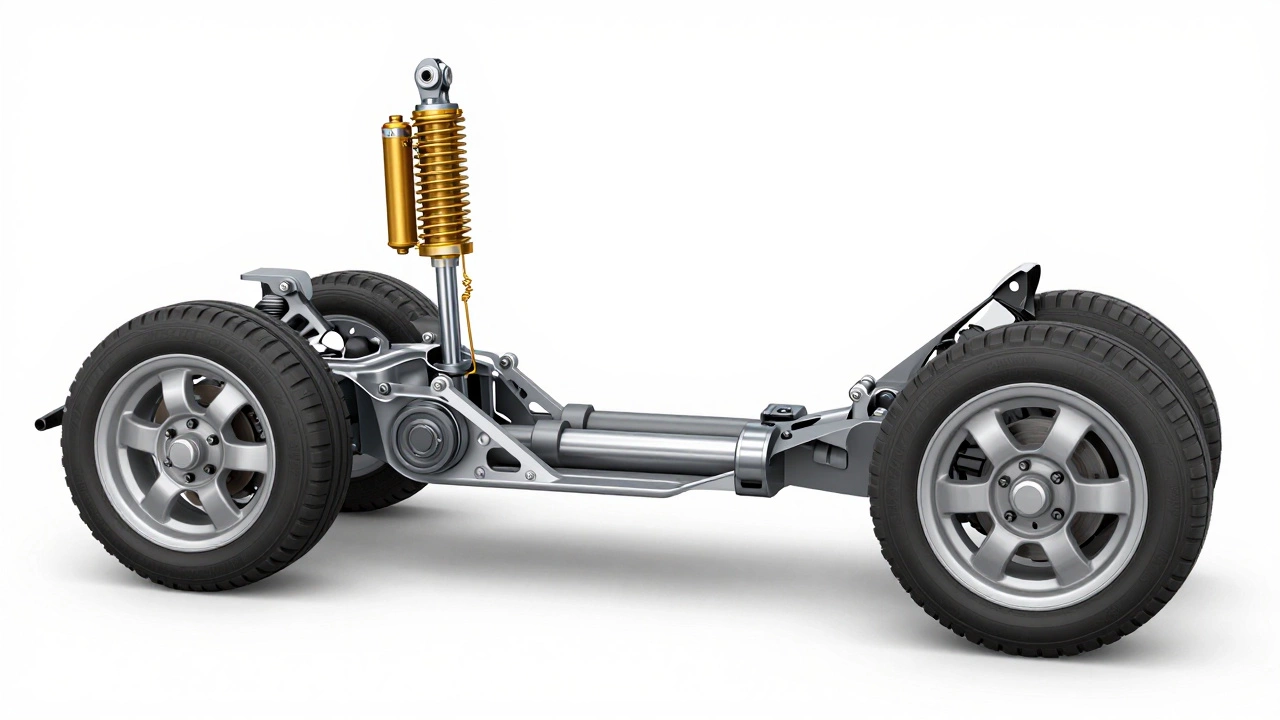
Unlike older designs that used separate shock absorbers and springs, the MacPherson strut combines both into one compact unit. It’s mounted vertically, with the spring wrapped around the strut, and the whole thing connects directly to the steering knuckle. That means fewer parts, less weight, and more space in the engine bay. For manufacturers trying to cut costs and fit bigger engines or electric motors, this is a win.
How It Works (Without the Jargon)
Think of the MacPherson strut as a shock absorber with a spring and a steering pivot all in one. When your wheel hits a bump, the strut compresses. The spring absorbs the energy, and the shock absorber controls how fast it bounces back. The strut also acts as the upper mounting point for the steering system, so it replaces the need for a separate upper control arm.
This design cuts down the number of components compared to a double-wishbone setup. Instead of four or five parts per wheel, you’ve got maybe two: the strut itself and the lower control arm. Fewer parts mean fewer things that can break, which is why automakers love it for high-volume models.
What Cars Use It?
You’ll find MacPherson struts on almost every popular car made in the last 30 years. Here are a few examples:
- Toyota Corolla
- Honda Civic
- Ford Focus
- Volkswagen Golf
- Hyundai Elantra
- Chevrolet Malibu
- Subaru Impreza
Even some compact SUVs like the Honda CR-V and Toyota RAV4 use this system on the front axle. It’s so common that if you walk into a parts store and ask for front suspension components, the default answer will be MacPherson strut assemblies.
When It Falls Short
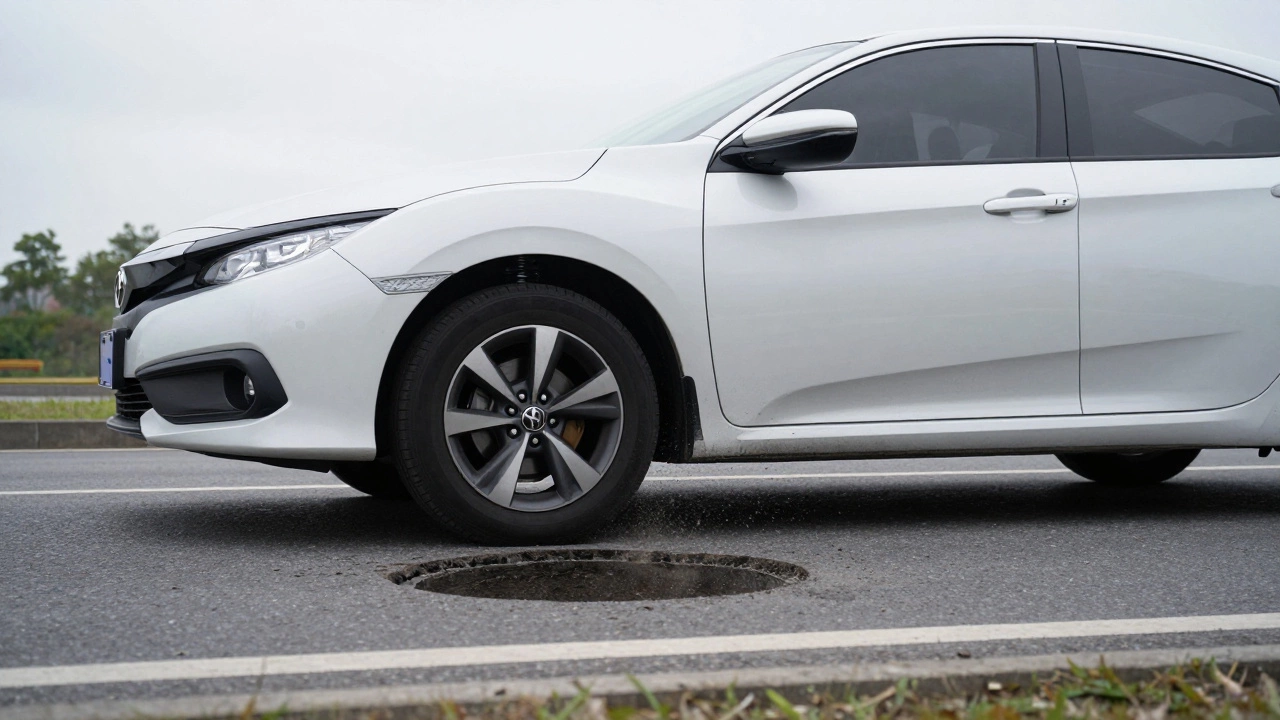
It’s not perfect. The MacPherson strut has trade-offs. Because the strut takes on the job of steering geometry and damping, it doesn’t handle extreme cornering as well as a double-wishbone setup. High-performance cars-like the Porsche 911 or BMW M3-use double-wishbone suspensions because they give better tire contact during hard turns.
Also, when a MacPherson strut wears out, replacing it isn’t always easy. The whole unit often needs to be swapped, not just the shock or spring. And if the strut tower (the top mount where it connects to the body) rusts or cracks, repairs get expensive. That’s why rust-prone areas like the northeastern U.S. or coastal cities see more strut-related issues.
Alternatives You Might See
While the MacPherson strut rules the road, other systems still exist:
- Double-wishbone suspension: Used in sports cars and luxury sedans. Offers better handling but costs more and takes up more space.
- Torsion beam axle: Common on rear axles of budget cars. Simple, cheap, and durable-used in cars like the Kia Rio and Hyundai Accent.
- Multi-link suspension: Found in higher-end models like the Audi A4 or Mercedes C-Class. More complex, better ride quality, but expensive to fix.
These alternatives exist for performance or comfort, but they’re not practical for mass-market cars. The MacPherson strut hits the sweet spot: good enough for daily driving, cheap enough to fit in a $20,000 sedan.
What Happens When It Fails?
Signs your MacPherson strut is worn out:
- Clunking or knocking noise over bumps
- Vehicle leaning more than usual in turns
- Uneven tire wear (especially cupping)
- Excessive bouncing after hitting a bump
- Fluid leaking from the strut
Most manufacturers recommend inspection every 50,000 miles, but if you drive on rough roads or carry heavy loads, check them every 30,000. Replacing a pair of front struts can cost between $400 and $800 depending on the car. Don’t wait until the strut breaks-that can lead to loss of steering control.
Why This Matters to You
If you’re shopping for a used car, check the suspension. A car with worn struts will feel floaty, handle poorly, and wear out tires faster. It’s one of the most common repair items after brakes and tires. Knowing what system your car uses helps you understand repair costs and safety risks.
And if you’re upgrading your ride, remember: swapping out MacPherson struts for performance upgrades is possible-but it’s not a simple bolt-on. You’ll need new springs, dampers, and often modified mounting points. Most aftermarket kits still stick to the strut design because it’s the standard.
The Bottom Line
The MacPherson strut isn’t flashy. It doesn’t win races. But it’s everywhere because it works. For the average driver, it delivers comfort, reliability, and affordability. It’s the reason your daily commute doesn’t feel like a rollercoaster. And as long as carmakers are building millions of affordable vehicles each year, this simple design will keep rolling.
Is the MacPherson strut the same as a shock absorber?
No. A shock absorber only controls bounce. The MacPherson strut combines a shock absorber, a coil spring, and a steering pivot into one unit. It does more than just dampen movement-it supports the weight of the car and helps guide steering.
Can I upgrade my MacPherson strut suspension?
Yes, but not easily. You can replace stock struts with performance versions from brands like Bilstein, Koni, or KW. These offer stiffer damping and adjustable settings. But you can’t swap the whole system for a double-wishbone without major body and frame changes-something only race shops or custom builders do.
Do electric cars use MacPherson struts too?
Yes. Even heavy EVs like the Tesla Model 3 and Nissan Leaf use MacPherson struts on the front. The design saves space, which helps fit large battery packs. Some EVs use reinforced struts to handle extra weight, but the basic layout stays the same.
Why do some cars have different suspensions front and rear?
Cost and space. Most cars use MacPherson struts up front because they handle steering and damping together. In the rear, a simple torsion beam or multi-link setup is cheaper and still effective. The rear doesn’t need to steer, so it doesn’t need the complexity of a strut.
How long do MacPherson struts last?
Typically 70,000 to 100,000 miles, but that depends on road conditions. If you drive mostly on smooth highways, they might last 120,000. If you live where roads are full of potholes or salted in winter, expect to replace them closer to 50,000 miles.