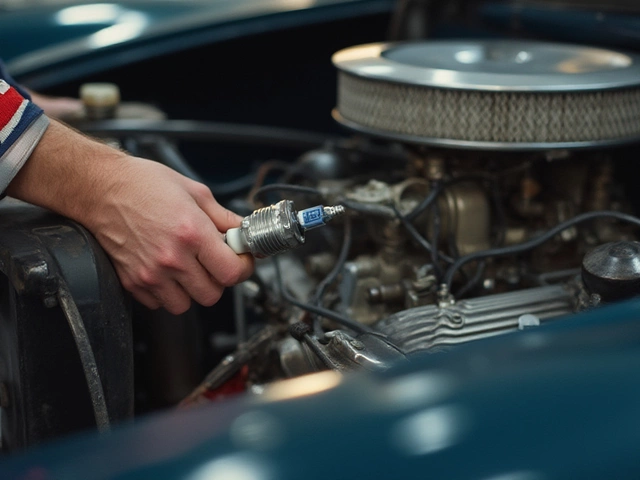
Clutch Replacement DIY Feasibility Checker
Is This a DIY Project for You?
Answer these questions to determine if you're ready to tackle clutch replacement yourself. This tool is based on real-world experience from mechanics.
Replacing a clutch isn’t hard if you have the right tools, time, and patience-but it’s not something you should try on a Sunday afternoon after a beer. Most people think it’s like changing brake pads. It’s not. A clutch is buried deep inside the transmission, and getting to it means pulling the engine or transmission out of the car. If you’ve never worked under a car before, this job will test your patience, strength, and problem-solving skills.
What’s Actually Involved in Clutch Replacement?
You’re not just swapping out a pad. A clutch kit includes the clutch disc, pressure plate, release bearing, and sometimes the pilot bearing or input shaft seal. But the real work isn’t the parts-it’s the access. On most front-wheel-drive cars, you have to disconnect the engine mounts, support the engine with a jack, unbolt the transmission, slide it back, and then pull the clutch assembly out. On rear-wheel-drive cars, you might be able to drop the transmission without touching the engine, but that’s rare.
There’s no magic trick to make this easy. Even professional mechanics take 4 to 8 hours for a clutch job. If you’re doing it yourself, expect to spend two full weekends. You’ll need a transmission jack, torque wrench, clutch alignment tool, jack stands, and a full set of sockets. Skipping any of these tools means you’ll either damage the parts or not get the job done right.
Why People Think It’s Easy
YouTube videos make it look simple. Someone in a garage pulls a clutch out in 90 minutes while upbeat music plays. They don’t show the 10 hours of prep work, the bent shift linkage they had to fix, or the time spent cleaning the flywheel surface because they didn’t notice it was glazed. Most DIYers who jump into a clutch job without knowing what they’re doing end up with a grinding noise, a slipping clutch, or worse-a cracked flywheel that costs $400 to replace.
Clutch kits themselves are cheap-$150 to $400 depending on your car. But the labor? That’s where the real cost is. Shops charge $800 to $1,500 because they’re not just installing a part. They’re aligning a precision system that connects your engine to the wheels. One misaligned clutch disc, and your gear shifts will feel like trying to park a truck in a compact spot.
When You Should Try It Yourself
You can reasonably tackle this if:
- You’ve replaced a timing belt, water pump, or starter motor before
- You have a garage with good lighting and a flat concrete floor
- You own a torque wrench and a transmission jack (or can rent one)
- You’re not in a rush-this isn’t a weekend project, it’s a multi-day project
- Your car is a common model with plenty of online guides
For example, replacing a clutch in a 2010 Honda Civic or a 2008 Ford Focus is well-documented. There are forums with step-by-step photos, torque specs, and warnings about common mistakes. But if you drive a 2017 BMW 3 Series or a 2021 Volkswagen Golf with a dual-clutch transmission? Don’t even think about it. Those systems are electronic, require calibration tools, and need factory-level diagnostics to reset after installation.
The Hidden Problems You Won’t See Coming
Even if you install the clutch perfectly, you might still have issues. Here’s what often gets missed:
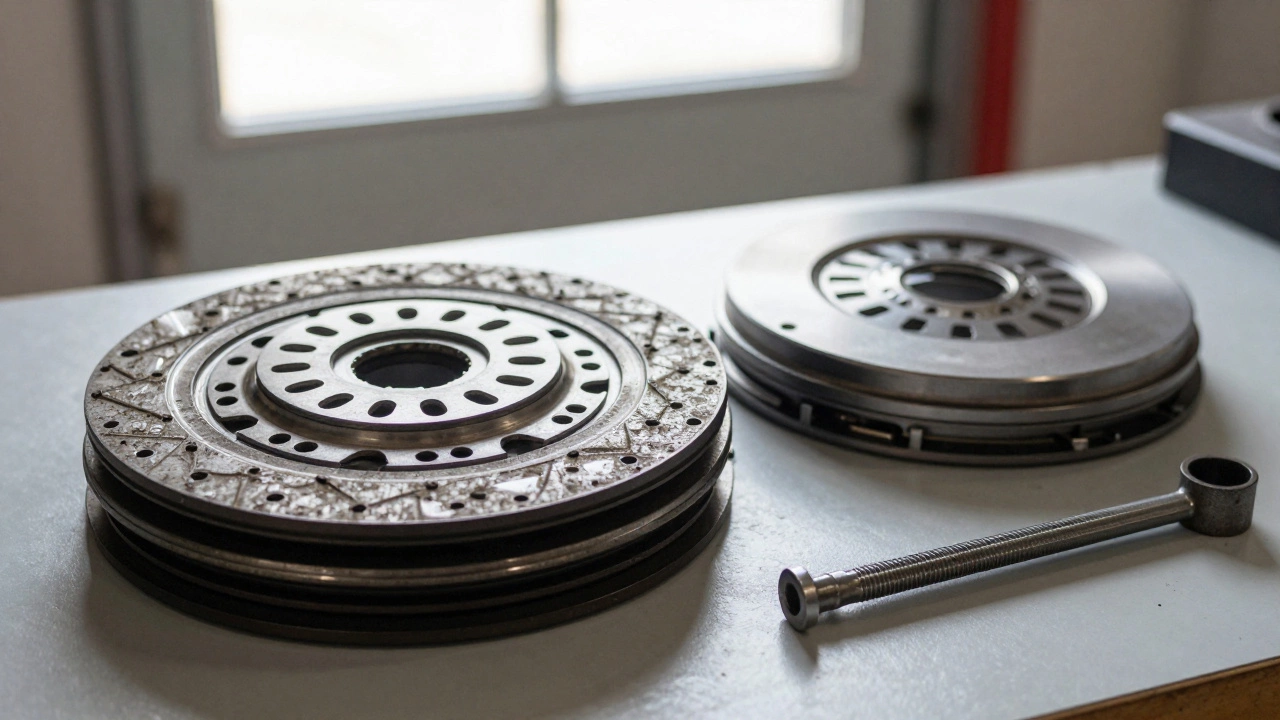
- Flywheel condition: If the flywheel is scored, cracked, or warped, the new clutch will wear out fast. Resurfacing it costs $75-$150. Replacing it? $300-$600.
- Hydraulic system: If your clutch pedal feels spongy after replacement, you probably didn’t bleed the system properly. Air in the line means no clutch engagement.
- Slave cylinder: This small part pushes the release bearing. If it’s old, it’ll leak or stick. Most mechanics replace it at the same time as the clutch.
- Input shaft seal: Oil leaking from the transmission into the clutch area will ruin the new disc. Check this seal-it’s cheap to replace while you’re in there.
These aren’t optional upgrades. They’re part of the job. Skipping them is like replacing your brakes but leaving the rotors worn out. You’re not saving money-you’re setting yourself up for another repair in six months.
What Happens If You Do It Wrong?
Bad clutch installation leads to three things: slipping, grabbing, or complete failure.
Slipping means the clutch doesn’t fully engage. Your RPMs rise but the car doesn’t accelerate. You’ll smell burning friction material. Grabbing means the clutch engages too abruptly, jerking the car forward-this damages the transmission and makes driving uncomfortable. Complete failure? You can’t shift gears at all. The car becomes a very expensive paperweight.
And if you torque the pressure plate bolts unevenly? You’ll warp the pressure plate. That’s not a $50 fix. That’s a $600 clutch kit and another day of labor.
Is It Worth It to DIY?
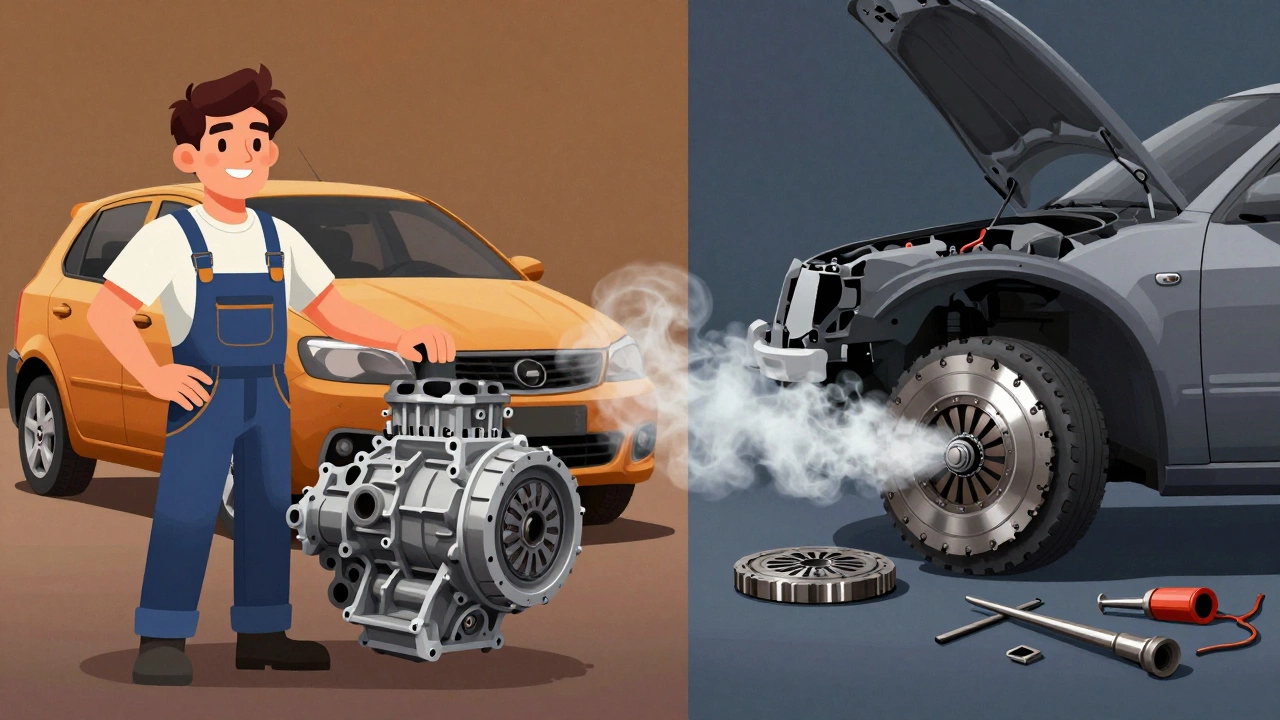
Let’s say you buy a clutch kit for $300. You rent a transmission jack for $50. You spend two weekends on it. You don’t break anything. You get it right. You saved $1,000. That’s a win.
But if you spend $350 on parts, $75 on rental tools, and then have to tow your car to a shop because you messed up the alignment? You’re out $1,400 and two weeks of your life.
Most people who attempt this job without experience end up paying more than if they’d just hired a mechanic from the start.
What to Do Instead
If you’re handy but unsure about the clutch, here’s a smarter path:
- Watch at least three full-length YouTube videos of your exact car model doing a clutch replacement.
- Find the factory service manual online-it has torque specs, diagrams, and step-by-step procedures.
- Buy the clutch kit and the slave cylinder at the same time.
- Take the car to a shop and ask them to remove the transmission. Pay them $200-$300 for that step.
- Take the transmission home, replace the clutch yourself, and bring it back to have them reinstall it.
This cuts your time in half, reduces your risk, and still saves you $500-$700. You’re doing the hard part, but not the part that could break the car.
Final Verdict: Is Replacing a Clutch Easy?
No. It’s not easy. But it’s doable-if you’re prepared. If you’ve done major engine work before, have the tools, and know your limits, go for it. If you’re new to car repairs, or if your car is modern, complex, or high-end, hire a professional.
The clutch is one of the few repairs where cutting corners doesn’t just cost money-it costs safety. A failed clutch on the highway isn’t just inconvenient. It’s dangerous.
Don’t let a YouTube video convince you this is a quick fix. This is a real job. Do it right, or don’t do it at all.
How long does a clutch replacement take?
A professional mechanic usually takes 4 to 8 hours. For a DIYer with experience, expect 12 to 16 hours spread over two weekends. Beginners may take 20+ hours, especially if they run into unexpected issues like rusted bolts or a leaking slave cylinder.
Can I drive with a bad clutch?
Technically, yes-but you shouldn’t. A slipping clutch will overheat and fail completely. A grinding clutch can damage the flywheel or transmission gears. Driving with a bad clutch risks leaving you stranded or causing expensive damage to other parts.
Do I need to replace the flywheel when replacing the clutch?
Not always, but you should inspect it. If the surface is glazed, cracked, or has deep grooves, it must be replaced or resurfaced. A worn flywheel will ruin a new clutch in under 1,000 miles. Most mechanics recommend replacing it if the car has over 80,000 miles.
What’s the difference between a clutch kit and a clutch pack?
A clutch kit includes the clutch disc, pressure plate, and release bearing. A clutch pack usually refers to the disc and pressure plate only-sometimes sold without the release bearing. Always buy a full kit unless you’re certain your release bearing is new.
How do I know if my clutch needs replacing?
Signs include: clutch pedal feeling spongy or going all the way to the floor, difficulty shifting gears, the engine revving without acceleration (slipping), a burning smell from the clutch, or the car lurching forward when you engage the clutch. If you notice two or more of these, get it checked.
Most people who replace their clutch themselves do so because they want to save money. But the real savings come from doing it right the first time-not from skipping steps. Take your time. Use the right tools. And if in doubt, ask a professional. Your transmission will thank you.