
When your car starts sputtering, struggling to start, or losing fuel efficiency, the culprit isn’t always the fuel pump or battery—it could be your spark plugs, small but critical components that ignite the air-fuel mixture in your engine’s cylinders. Also known as ignition plugs, they’re one of the few parts in your engine that wear out predictably, not suddenly. Most modern spark plugs last between 30,000 and 100,000 miles, depending on the type. Standard copper ones might need replacing at 30,000 miles, while platinum or iridium plugs can go over 60,000 or even 100,000 miles without issue. But mileage isn’t the only factor—how you drive, what fuel you use, and whether your engine runs rich or lean all play a role in how fast they degrade.
Ignoring worn spark plugs doesn’t just mean a rough idle or poor gas mileage. It can lead to engine misfires, a condition where one or more cylinders fail to ignite properly, which sends unburned fuel into your exhaust system and can damage your catalytic converter. That’s an expensive fix. And if misfires continue, they can cause your engine to overheat or even hydrolock in extreme cases. You might not notice it at first, but a failing spark plug often shows up as hesitation when accelerating, a check engine light, or even a smell of raw gasoline from the tailpipe. These aren’t random glitches—they’re signals your spark plugs are done.
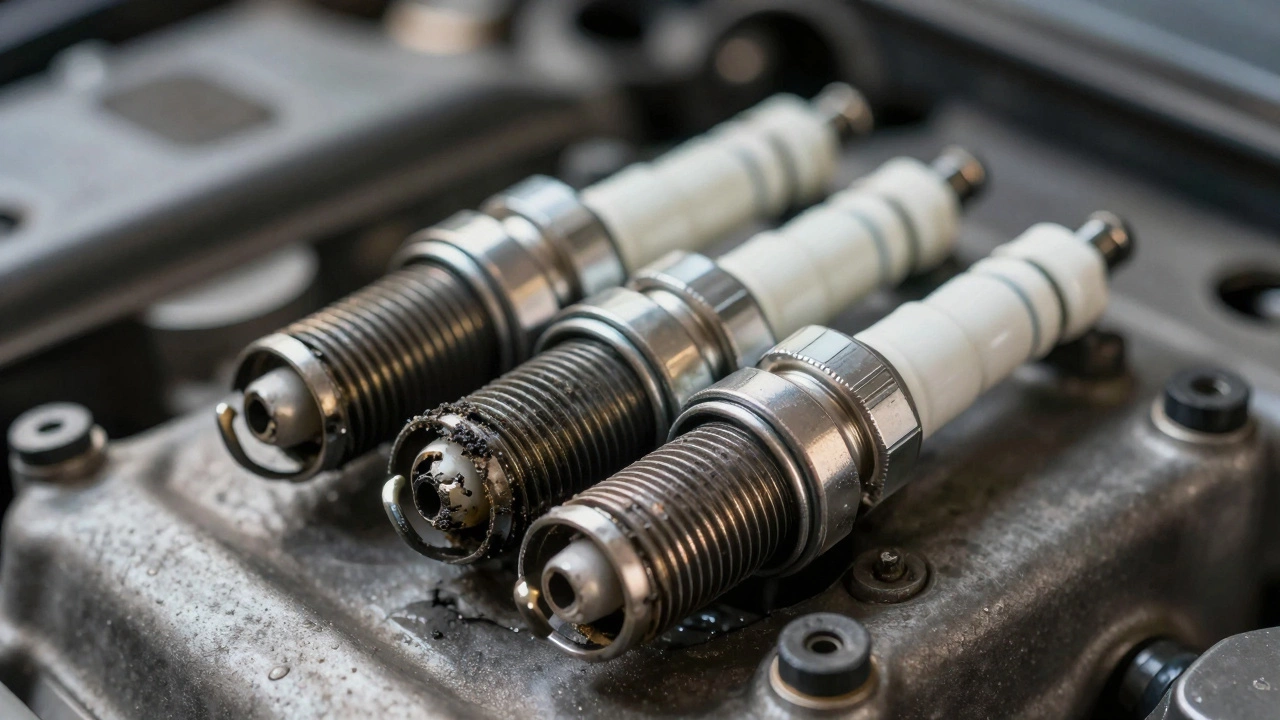
It’s not just about the plugs themselves. The spark plug symptoms, like rough idling, hard starts, or poor fuel economy you see are often linked to other systems. A dirty air filter, bad fuel injector, or failing oxygen sensor can make spark plugs wear out faster. That’s why replacing spark plugs without checking the rest of the ignition system is like putting new tires on a car with bad shocks—it won’t last long. The best approach? Replace them on schedule, but pay attention to how your car behaves. If it’s acting off before the mileage hits, don’t wait. A simple visual check during an oil change can reveal carbon buildup, cracked porcelain, or electrode erosion—clear signs they’re past their prime.
Some drivers think new spark plugs will make their car faster or louder. That’s rarely true. But if your plugs are worn, replacing them brings back what you’ve lost: smooth acceleration, better fuel economy, and fewer surprises on the road. You won’t feel a power boost—you’ll feel the absence of problems. And that’s worth more than you think.
Below, you’ll find real-world advice from mechanics and drivers who’ve been there. Whether you’re trying to figure out if your plugs are failing, wondering how long yours should last, or just want to avoid a breakdown, these posts give you the facts without the fluff.
 1 December 2025
Spark plugs typically last 3 to 10 years depending on type and driving habits. Copper plugs need replacing every 2 years, platinum every 5, and iridium up to 10. Watch for misfires and poor fuel economy-signs your plugs are failing.
©2026 northwichtyrescentre.co.uk. All rights reserved





0