
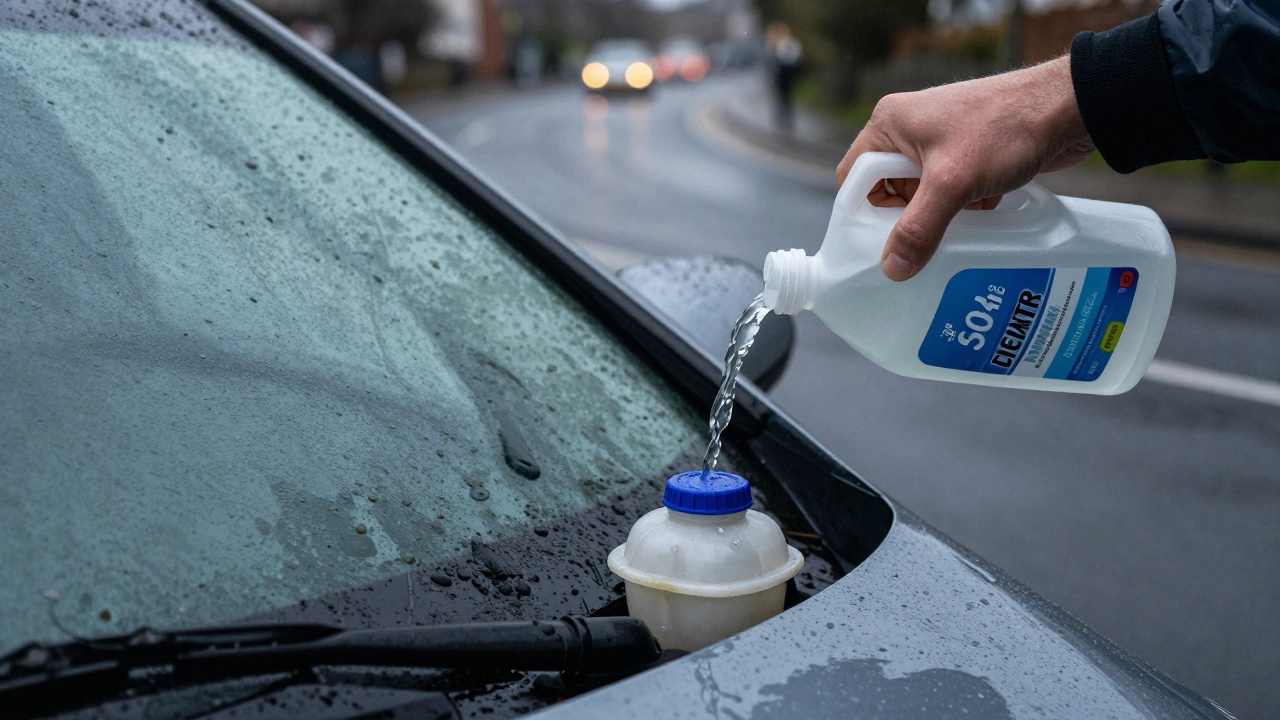
When you need homemade washer fluid fast, it’s tempting to mix water with dish soap or vinegar. But windshield washer fluid, a specially formulated liquid designed to clean windshields without damaging rubber, plastic, or paint isn’t just clean water with a splash of cleaner. Using the wrong mix can crack your washer nozzles, ruin your wiper blades, or even eat away at your car’s paint job. Many people try to save money by making their own, but not all recipes are safe—or even effective.
DIY car cleaning, the practice of using household items to maintain vehicle components sounds smart until you realize that washer fluid ingredients, the chemicals used in commercial and homemade washer solutions are chosen for specific reasons. Ethanol or isopropyl alcohol in commercial fluid prevents freezing in winter. Surfactants help break down bugs and road grime without leaving streaks. Dyes make it easy to spot leaks. Skip these, and you’re gambling with visibility—and safety.
Some online guides suggest mixing vinegar and water. That might work in summer, but vinegar is acidic. Over time, it eats away at the rubber seals in your washer system. Others recommend ammonia. That’s worse—it can fog your headlights and damage tinted windows. Even dish soap? It leaves oily residue that smears across your windshield at high speeds. The truth? There’s a reason stores sell washer fluid for under £5. It’s cheap, it’s designed for your car, and it’s been tested.
That said, there are a few safe, low-cost alternatives if you’re in a pinch. In mild weather, you can mix one part distilled water with one part high-purity isopropyl alcohol (90% or higher). Add a drop of dish soap only if you’re dealing with heavy bug splatter—and rinse the system afterward. This mix won’t freeze until around -20°C, which works for most UK winters. But it’s still not a long-term fix. The real issue? You’re replacing a $5 solution with time, risk, and potential repairs.
And if you’re asking this question, you probably already noticed your wipers streaking, your washer isn’t spraying well, or your fluid keeps running out. Those aren’t just inconveniences. They’re signs your system needs attention. A clogged nozzle, a failing pump, or old, dirty fluid can all cause the same symptoms. The posts below cover exactly that—what works, what doesn’t, and how to spot the real problem before it costs you more than a bottle of fluid ever would.
 1 December 2025
When you run out of windshield wiper fluid, safe alternatives like vinegar-water mixes or diluted isopropyl alcohol can work in a pinch. Avoid ammonia, antifreeze, or tap water. Learn what actually cleans without damaging your system.


©2026 northwichtyrescentre.co.uk. All rights reserved
0