Spark Plug Health Checker
Assess Your Spark Plug Health
Spark Plug Assessment
Ever swapped out old spark plugs and felt like your car suddenly came alive? That quick burst of throttle response, smoother idle, maybe even a little extra zip off the line? It’s not just in your head - but it’s not magic either. Spark plugs don’t magically upgrade your engine. They just restore what was already there.
What spark plugs actually do
Spark plugs are the ignition system’s final link. They sit in the cylinder head, firing a high-voltage spark across a tiny gap to ignite the air-fuel mixture. That’s it. No fuel delivery. No turbo boost. Just a precise electrical spark at exactly the right millisecond.
Over time, that spark gets weaker. Carbon builds up. Electrodes wear down. The gap widens. By the time your plugs hit 60,000 to 100,000 miles - depending on type - they’re not firing as cleanly. You might not notice it until you replace them, because the engine compensates. The ECU adjusts timing, fuel mix, even idle speed to keep things running. But it’s working harder.
Why you feel a difference after replacement
After installing new plugs, the engine doesn’t get more power - it gets back what it lost. That’s the key.
- Throttle response: Old plugs misfire slightly under light acceleration. You press the pedal, and there’s a tiny lag. New plugs fire instantly. That lag disappears. It feels like more power, but it’s just better timing.
- Idle smoothness: A misfiring plug can cause the engine to shake or stumble at stoplights. New plugs eliminate that. The idle becomes steady. It’s not louder or faster - just calmer.
- Acceleration: Under heavy load - merging onto a highway, climbing a hill - worn plugs can’t keep up. The combustion becomes incomplete. You feel hesitation. New plugs restore full combustion, so power delivery feels more immediate.
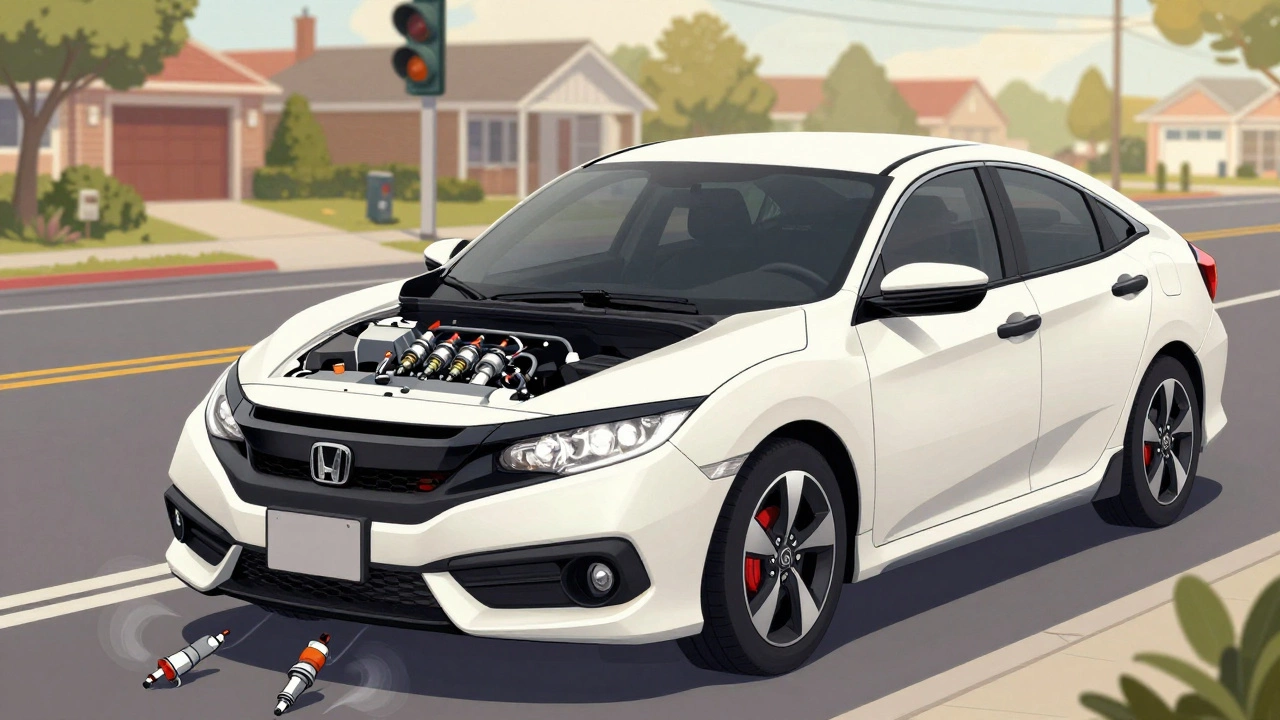
Real-world example: A 2018 Honda Civic with 95,000 miles was running rough at idle and lagging slightly during light acceleration. After replacing the iridium plugs (original equipment), the idle dropped from 850 RPM with vibration to 720 RPM, smooth as glass. The 0-60 mph time didn’t change - but the car felt 10% more eager to move. That’s the difference between a tired system and a healthy one.
Not all spark plug changes are equal
Replacing worn plugs with the same type? That’s restoration. Replacing them with the wrong type? That’s trouble.
Some people think upgrading to “performance” plugs - like platinum or iridium - gives more power. It doesn’t. If your car came with standard copper plugs, switching to iridium won’t make it faster. It might last longer, yes. But performance? Only if the original plugs were mismatched or degraded.
What matters most is:
- Correct heat range: Too cold? Fouling. Too hot? Pre-ignition or melted electrodes.
- Correct gap: Factory specs are there for a reason. Even a 0.005-inch error can hurt efficiency.
- Correct thread size and reach: Wrong plug can hit the piston. That’s expensive.
Always check your owner’s manual. If you’re unsure, look up your exact model and engine code on a trusted parts site like RockAuto or Autodoc. Don’t guess.
When you won’t notice a difference
If your spark plugs were replaced within the last 30,000 miles, you won’t feel anything after swapping them out again. The engine was already running fine. No magic. No gain.
Also, if your car has other problems - a clogged air filter, failing fuel injector, bad coil pack, or dirty throttle body - new plugs won’t fix those. You might think the change worked because the car feels better… but it’s likely the placebo effect, or another issue happened to improve around the same time.
Here’s a real case: A customer in Bristol brought in a 2016 Ford Focus that was sluggish. He replaced the plugs himself and thought it was fixed. Two weeks later, it was worse. Turned out the fuel pump was failing. The new plugs just masked the problem temporarily. When the pump gave out completely, the engine starved for fuel - no spark plug could fix that.
How to know if your plugs need replacing
Don’t wait for the check engine light. By then, damage might already be done.
Signs your spark plugs are worn:
- Hard starting, especially in cold weather
- Engine misfires - you feel it as a stumble or jerk
- Reduced fuel economy - you’re filling up more often
- Rough idle or stalling at stops
- Check engine light with codes like P0300 (random misfire) or P0301-P0304 (cylinder-specific misfires)
Most manufacturers recommend replacement between 60,000 and 100,000 miles. But if you drive mostly short trips in stop-and-go traffic, carbon builds faster. In that case, 40,000 miles might be the real limit.
What to expect after replacement
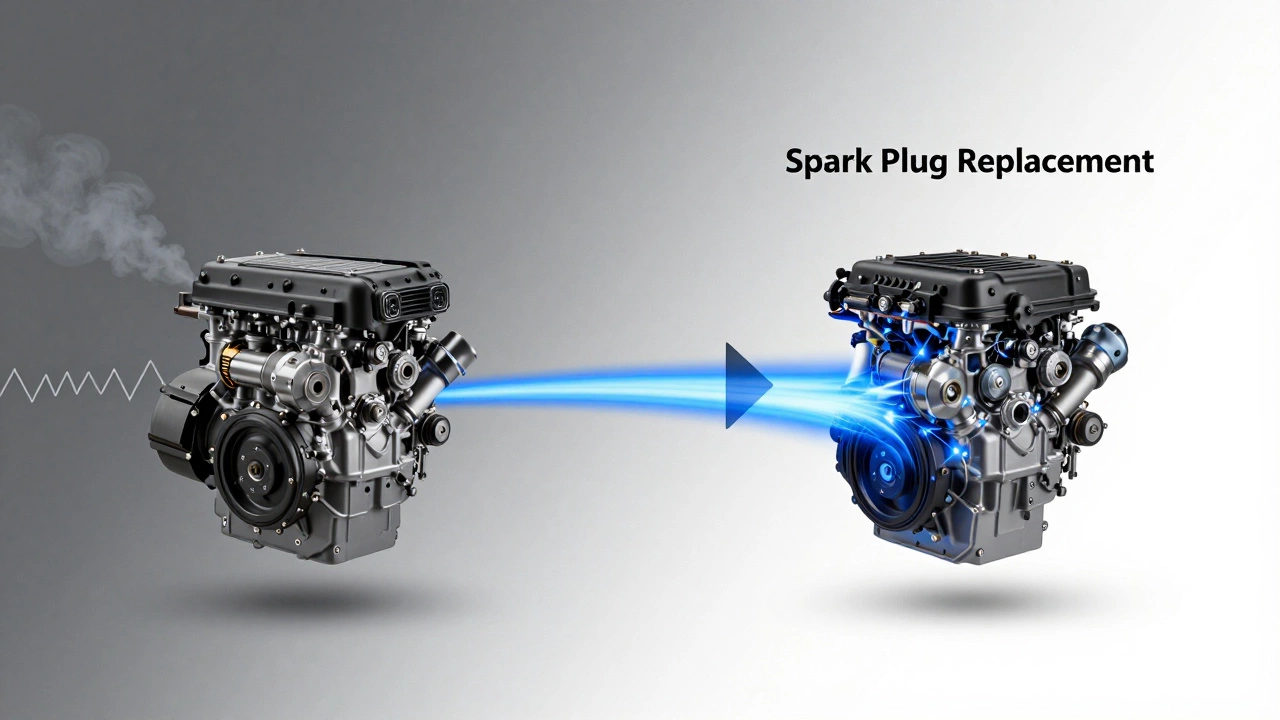
After installing new spark plugs, give the engine a few miles to adapt. The ECU needs time to relearn optimal settings. Don’t expect instant perfection.
Within 50 miles, you should notice:
- Smaller delay between pressing the gas and the car responding
- Quieter, steadier idle
- Less hesitation when climbing hills
- Improved fuel economy - typically 2% to 6% better, depending on condition of old plugs
But here’s the truth: You won’t suddenly get 20 more horsepower. You won’t hear a louder exhaust note. You won’t feel like you bought a new car. What you’ll feel is normal. That’s the goal.
Pro tip: Always replace in sets
Never change just one plug. If one’s worn out, the others are close behind. Replacing just one creates imbalance. The engine runs unevenly. You’ll get misfires. You’ll waste time and money.
And don’t forget to check the ignition coils while you’re in there. If they’re old, they can cause the same symptoms as bad plugs. A failing coil can even damage new plugs. If your car has over 80,000 miles, consider replacing coils at the same time - especially if you’ve had misfire codes before.
Final verdict: Do spark plug changes make cars more responsive?
Yes - but only if the old ones were failing. If your car was running fine, you won’t notice anything. If it was struggling, you’ll feel like it’s reborn.
It’s not about upgrading. It’s about restoring. Spark plugs are like tires: worn ones don’t make you slower - they just stop doing their job properly. Replace them when needed, with the right ones, and your car will respond the way it was meant to.
And if you’re not sure whether yours are bad? Look at the codes. Check your mileage. Listen to the idle. That’s better than guessing.
Do spark plug changes improve fuel economy?
Yes, if the old plugs were worn. A misfiring spark plug wastes fuel because not all the air-fuel mixture burns. Replacing them can improve fuel economy by 2% to 6%. That’s roughly 1 to 2 miles per gallon on average, depending on how bad the old plugs were.
Can I use any spark plug in my car?
No. Spark plugs have specific thread size, reach, heat range, and gap. Using the wrong one can cause misfires, poor performance, or even engine damage. Always match the part number from your owner’s manual or a trusted parts database.
How often should I change spark plugs?
Most modern cars need replacement every 60,000 to 100,000 miles. Copper plugs last 20,000 to 30,000 miles. Iridium and platinum last longer. But if you drive mostly short trips in city traffic, carbon buildup happens faster - consider replacing them every 40,000 miles.
Will new spark plugs make my car louder?
No. Spark plugs don’t affect exhaust noise. If your car sounds louder after a plug change, it’s likely because the engine is running more efficiently - combustion is cleaner, so there’s less muffled sound from misfires. But the exhaust note itself hasn’t changed.
Can bad spark plugs damage the engine?
Yes. Long-term misfires can overheat the catalytic converter, leading to expensive repairs. In rare cases, severe misfires can cause piston or valve damage if unburned fuel washes down cylinder walls or causes detonation. Don’t ignore persistent misfires.