
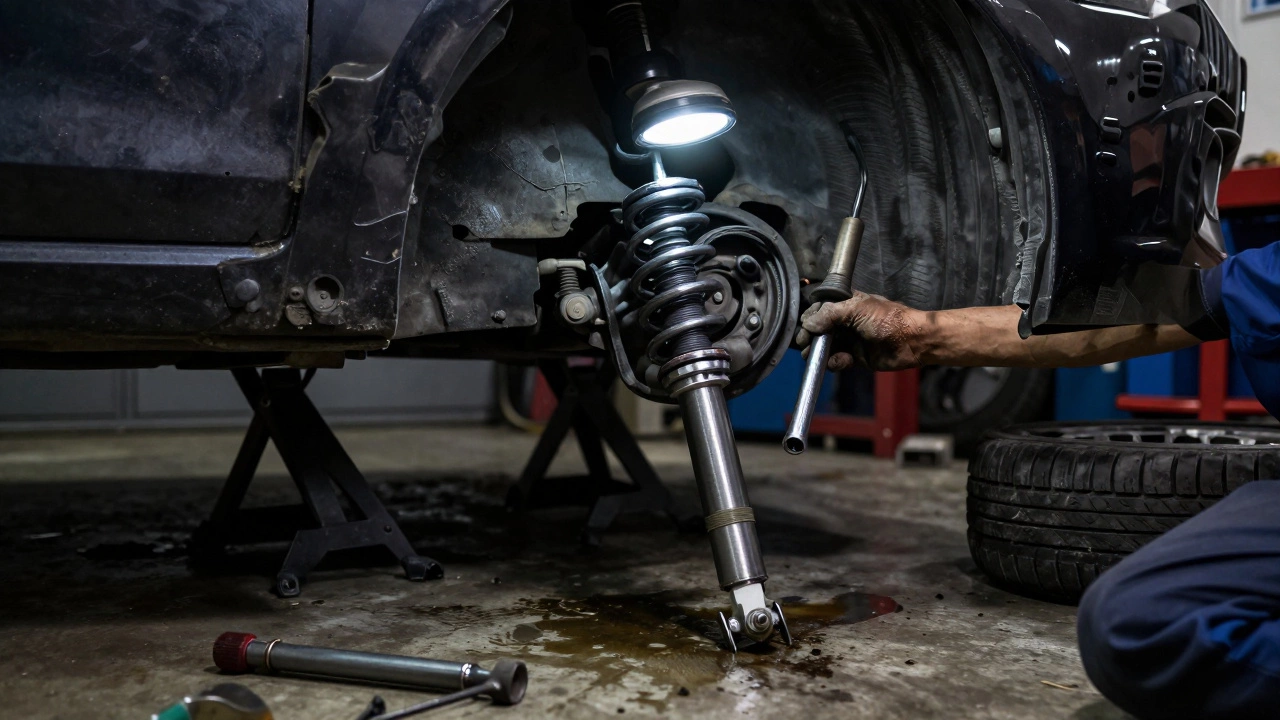
When your bad suspension, a system that absorbs road shocks and keeps tires in contact with the surface. Also known as worn suspension components, it's not just about comfort—it's about control, safety, and stopping power. A failing suspension doesn’t just make your ride rough. It turns every bump into a risk. Your tires lose grip. Your brakes take longer. Your steering feels loose or pulls to one side. And if you keep driving, you’re not just wearing out your shocks—you’re damaging your tires, wheels, and even your steering system.
Most people don’t realize their shock absorbers, parts that dampen spring movement to prevent bouncing are gone until they hear a loud clunk over a speed bump. By then, the struts, combined shock and spring units that support the vehicle’s weight might be cracked, the bushings, rubber or polyurethane mounts that connect suspension parts and absorb vibration are crumbling, or the wheel alignment, the angle at which tires meet the road is off by degrees. These aren’t separate issues—they’re connected. A bad shock makes your tires wear unevenly. Uneven tires pull your car sideways. That pull strains your steering. And before you know it, you’re paying for more than just suspension repair.
You can’t fix a bad suspension with a quick tweak or a cheap part. Replacing just one shock? That’s a trap. It creates imbalance. Your car will lean, handle poorly, and wear out the new part faster. The right fix means checking the whole system: shocks, struts, bushings, control arms, and alignment. You don’t need to replace everything at once—but you do need to know what’s actually worn. A professional inspection takes less than an hour and can save you hundreds in hidden damage.
Ignore a bad suspension, and you’re gambling with your safety. Braking distances grow. Cornering becomes unpredictable. In wet or icy conditions, your car might not respond when you need it most. And if you’ve ever felt your car bottom out on a driveway or heard a metal-on-metal clank? That’s not just noise—it’s metal fatigue waiting to break.
Below, you’ll find real stories from drivers who ignored the signs—and those who acted early. You’ll see what symptoms to watch for, what repairs actually work, and how to avoid being upsold on parts you don’t need. This isn’t theory. These are fixes that work on everyday cars in Northwich, on pothole-ridden roads and motorway bumps alike. Let’s get you back on solid ground.
 4 December 2025
Learn how to diagnose and fix a bad car suspension with step-by-step guidance on replacing shocks, struts, ball joints, and bushings. Save money and stay safe with proven DIY tips and part recommendations.
©2026 northwichtyrescentre.co.uk. All rights reserved

0