Spark Plug Replacement Estimator
Your Analysis
Quick Summary: Spark Plug Replacement Windows
- Copper Plugs: Typically last 20,000 to 30,000 miles.
- Platinum Plugs: Generally last 60,000 to 100,000 miles.
- Iridium Plugs: Can go 100,000 to 120,000 miles or more.
- Signs of Wear: Rough idling, poor fuel economy, and difficulty starting.
- Impact: Worn plugs cause engine misfires and put extra stress on the ignition coil.
Understanding the Central Role of Spark Plugs
Before we talk about how long they last, we need to understand what we're dealing with. Spark Plugs is a device for delivering an electric spark to the combustion chamber of an internal combustion engine. Essentially, they act as a bridge. The Ignition System sends a high-voltage burst of electricity to the plug, which jumps the gap at the tip, creating a tiny bolt of lightning. This spark ignites the compressed air and fuel mixture, pushing the piston down and moving your car forward.
If that spark is weak or inconsistent, your engine doesn't run on all cylinders. You might feel a slight vibration at a red light or notice that your fuel gauge is dropping faster than usual. Because the plug is exposed to extreme heat and thousands of explosions per minute, it's only a matter of time before the metal erodes.
The Material Difference: Why Some Last Longer
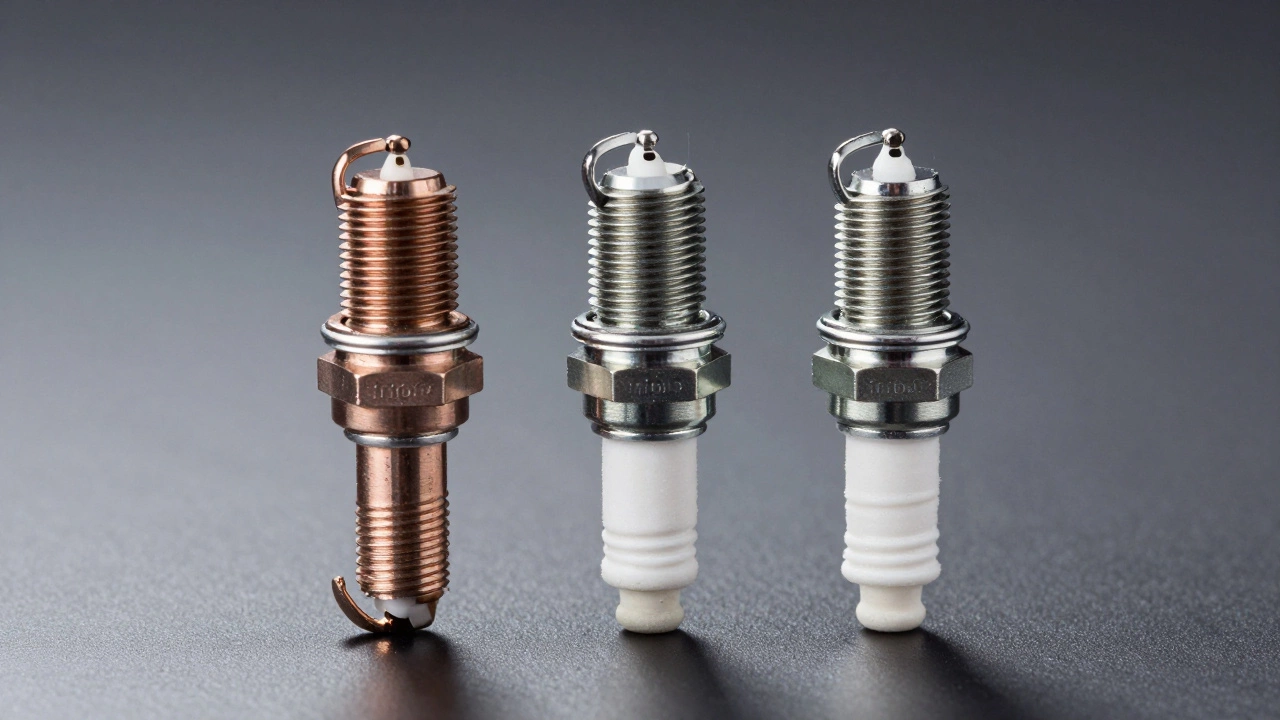
Not all spark plugs are created equal. The lifespan depends almost entirely on what the center electrode is made of. If you're buying cheap copper plugs, you're getting a great spark, but they wear down quickly. If you opt for precious metals, you're paying more upfront for a much longer service life.
| Material | Average Lifespan | Pros | Cons |
|---|---|---|---|
| Copper | 20k - 30k Miles | Excellent conductivity | Very short life |
| Platinum | 60k - 100k Miles | Harder wearing than copper | More expensive |
| Iridium | 100k - 120k Miles | Highest melting point, very durable | Highest initial cost |
Iridium Spark Plugs are often the gold standard for modern vehicles. Iridium is an incredibly hard, noble metal with a very high melting point. This allows the center electrode to be thinner, which requires less voltage to spark and creates a more efficient burn. While a copper plug might erode its gap in a few years, an iridium plug keeps its shape for a decade in some driving conditions.
Signs Your Spark Plugs Are Dying
You don't always have to rely on the odometer. Your car will usually tell you when it's struggling. One of the most common symptoms is a Engine Misfire. This happens when the spark plug fails to ignite the fuel, causing a "hiccup" in the engine's rhythm. You'll feel it as a jerk during acceleration or a shaky vibration while idling at a stop sign.
Another red flag is a sudden drop in fuel efficiency. When your spark plug lifespan is nearing its end, the combustion process becomes incomplete. This means some fuel is wasted, forcing the engine to work harder and burn more petrol to maintain the same speed. If you've noticed your MPG dropping despite no change in your driving habits, it's time to pull the plugs.
Finally, watch for the "Check Engine" light. Modern cars use an On-Board Diagnostics (OBD-II) system to monitor engine health. If the computer detects too many misfires, it will trigger a code (often P0300 through P0308) to let you know which cylinder is acting up.
Factors That Kill Spark Plugs Faster
The numbers I mentioned earlier are averages, but your specific driving style can slash those figures in half. If you spend most of your time in stop-and-go city traffic, your engine spends more time warming up and cooling down, which can lead to carbon buildup on the electrodes. This soot acts as an insulator, making it harder for the spark to jump the gap.
Engine health also plays a massive role. If your Piston Rings are worn or you have a leak in your valve seals, oil can seep into the combustion chamber. This oil coats the spark plug, creating a "fouled" plug. Once a plug is oil-fouled, it usually can't be cleaned; it has to be replaced regardless of how many miles it has covered.
Then there's the issue of the Ignition Coil. The coil is responsible for stepping up the battery's 12 volts to thousands of volts. If the coil is failing, it can actually damage the spark plug's electrode through erratic voltage spikes, or conversely, a worn plug can cause the coil to overheat because it's fighting too much resistance to create a spark.
How to Properly Replace and Gap Your Plugs
Replacing plugs is a straightforward job, but a few mistakes can turn a 30-minute task into a weekend nightmare. The most critical part isn't just putting in a new plug-it's ensuring the gap is correct.
- Choose the right plug: Always check your owner's manual. Putting an iridium plug in an engine designed specifically for copper can sometimes cause issues with the computer's timing.
- Inspect the gap: The gap is the tiny space between the center electrode and the ground electrode. If the gap is too wide, the spark can't jump. If it's too narrow, the spark is too weak to ignite the fuel. Use a feeler gauge or a gap tool to verify the distance matches your manufacturer's specs.
- Avoid over-tightening: Spark plugs are threaded into the cylinder head, which is often made of aluminum. If you crank the plug too hard, you risk stripping the threads. Use a torque wrench to ensure you hit the exact specification.
- Check the boots: While you're in there, inspect the rubber boots of the ignition coils for cracks. If air or moisture gets in, you'll have a spark leak, and your brand-new plugs won't matter.

The Long-Term Cost of Neglect
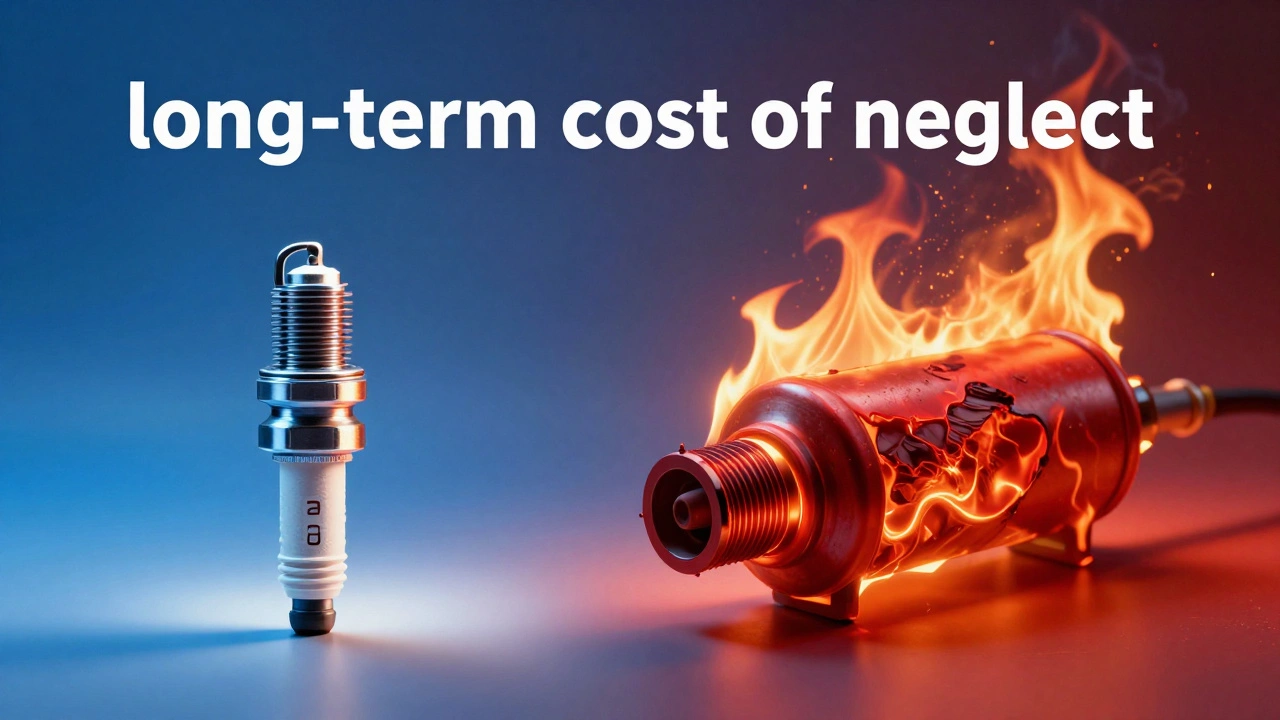
You might think, "Why spend money on plugs if the car is still running?" The problem is that worn plugs don't just affect the plugs themselves. When a plug fails to ignite fuel properly, that unburnt fuel is pushed into the Catalytic Converter. The converter is designed to burn off pollutants, but it can't handle raw fuel. This fuel ignites inside the converter, causing it to overheat and melt internally.
Replacing a set of spark plugs might cost you 50 quid and an hour of your time. Replacing a melted catalytic converter can cost hundreds, if not thousands, of pounds. It's a classic case of "pay a little now or pay a lot later." Keeping your ignition system fresh ensures that the engine runs lean and clean, protecting the more expensive components downstream.
Can I just clean my spark plugs instead of replacing them?
You can technically clean carbon deposits off a plug with a wire brush or a specialized cleaner, but it's usually a temporary fix. Once the metal electrode has physically eroded (worn down), no amount of cleaning will bring back the original gap. For modern platinum or iridium plugs, cleaning is almost never recommended as you might damage the precious metal coating.
Why do some cars have 6 or 8 spark plugs if they only have 4 cylinders?
This is called a "Twin Spark" or dual-ignition system. By using two plugs per cylinder, the engine can ignite the fuel from two different points. This creates a faster, more complete burn, which improves efficiency and reduces emissions. If you have this system, remember that you have twice as many plugs to replace!
Will upgrading to Iridium plugs give me more horsepower?
Generally, no. Spark plugs don't "create" power; they just facilitate the ignition of fuel. However, if your current plugs are worn out, switching to a fresh set of iridium plugs will restore your engine to its original power and efficiency. You won't get more power than the engine was designed for, but you'll stop losing power due to poor combustion.
Can a bad spark plug cause my car to shake at a red light?
Yes. When you're idling at a red light, the engine is running at its lowest RPM. If one cylinder is misfiring because of a worn plug, the imbalance becomes very obvious, resulting in a noticeable shudder or vibration through the steering wheel and seat.
How do I know if my plugs are oil-fouled?
When you pull the plug out, look at the tip. A healthy plug is usually a light tan or greyish color. An oil-fouled plug will look black and feel greasy or wet to the touch. This is usually a sign of a deeper engine problem, like worn valve stem seals or piston rings, and simply changing the plug won't fix the underlying cause.
Next Steps for Car Owners
If you're unsure when your plugs were last changed, check your service records or look for a sticker under the bonnet. If it's been over 60,000 miles and you're running platinum or iridium, it's worth a visual inspection. For those who enjoy DIY, start by getting a quality socket set and a gap gauge. If you're not comfortable working on the engine, a quick check during your next oil change is a great way to stay ahead of the curve. Don't wait for the engine light to pop up-proactive replacement is the cheapest way to keep your car on the road.