Spark Plug Health & Symptom Checker
Report Symptoms
Select the issues you are experiencing with your vehicle.
Visual Inspection (If accessible):
Diagnostic Result
Select symptoms above to generate a diagnostic report.
There is nothing quite as frustrating as an engine that runs rough for no obvious reason. You check the oil, you top up the fuel, and everything looks fine under the hood. Yet, your car still hesitates on acceleration or idles like it’s trying to shake off a cold chill. Often, the culprit is hiding in plain sight inside your engine bay: a cracked spark plug.
A spark plug is a critical ignition component that delivers high-voltage electricity from the ignition coil to the engine's combustion chamber, creating the spark needed to ignite the air-fuel mixture. When the ceramic insulator of this small but vital part develops a crack, it disrupts the entire ignition sequence. This isn't just about convenience; a compromised spark plug can lead to poor fuel economy, increased emissions, and even severe engine damage if left unchecked.
The Visual Signs of a Cracked Insulator
The most reliable way to know if your spark plugs are cracked is to look at them. However, you cannot see them while they are installed in the engine block. You need to remove them first. If you have never done this before, it is a straightforward process that requires a basic socket set and a spark plug socket. Once removed, hold the plug up to natural light and inspect it closely.
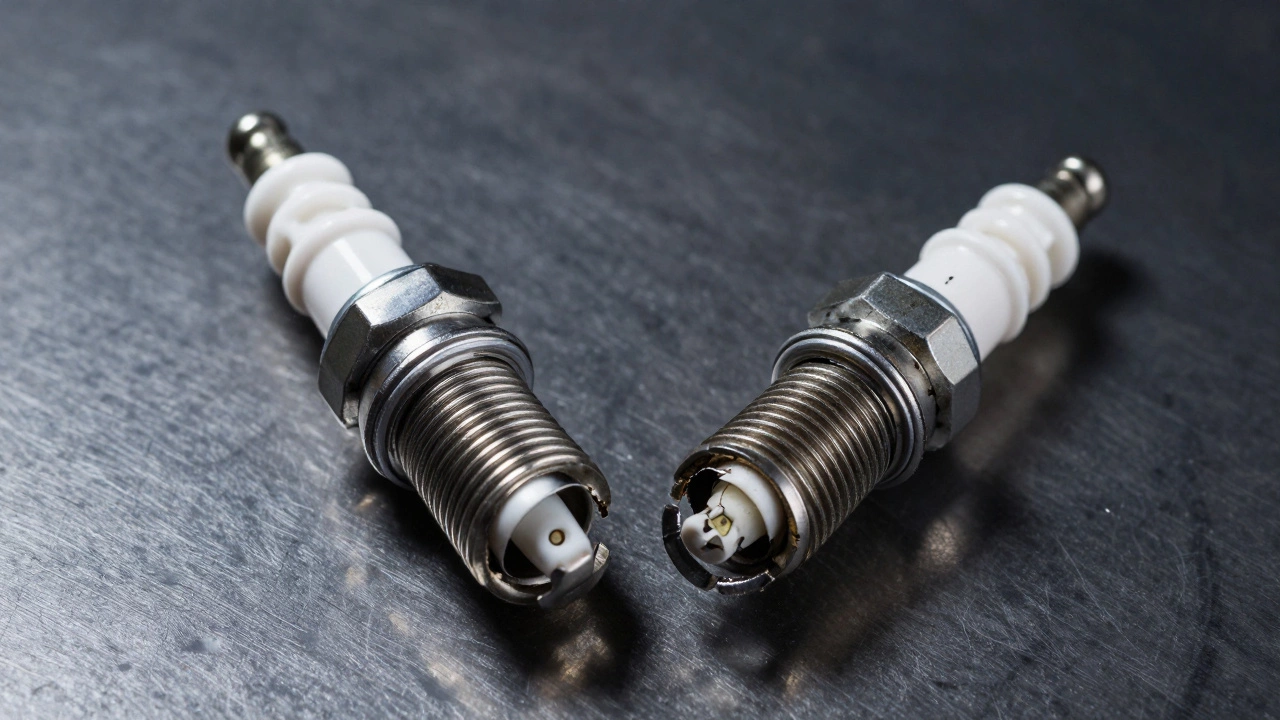
The primary area to examine is the white ceramic insulator that surrounds the center electrode. In a healthy plug, this surface should be smooth, glossy, and free of any lines or chips. A crack often appears as a thin, hairline fracture running along the length of the ceramic body. Sometimes, these cracks are subtle and easy to miss. Look for discoloration around the base of the ceramic where it meets the metal shell; black soot or carbon tracking in this area often indicates that electricity is leaking out through a crack rather than jumping across the gap to create a spark.
You might also notice physical damage to the threads or the hexagonal nut section, but these issues usually stem from improper installation torque rather than internal failure. Focus your attention on the ceramic. If you see a break in the continuity of the white surface, especially one that seems to go deep into the material, the plug is compromised. Even a tiny chip on the nose of the insulator can weaken the structural integrity, making it prone to shattering under the extreme heat and pressure of combustion.
Symptoms That Suggest Internal Damage
Not all cracks are visible from the outside immediately, and some damage occurs internally within the combustion chamber. If you cannot remove the plugs right away, pay attention to how your vehicle behaves. The engine control unit (ECU) monitors the efficiency of each cylinder. When a spark plug fails to fire correctly due to a crack, the ECU detects a misfire.
- Rough Idling: If your car shakes or vibrates noticeably when stopped at a traffic light, one or more cylinders may not be firing properly. This uneven power delivery is a classic sign of ignition trouble.
- Hesitation During Acceleration: Pressing the gas pedal should result in immediate response. If the car stutters or lurches forward, the air-fuel mixture in one cylinder is likely not igniting at the right moment.
- Poor Fuel Economy: A cracked plug causes incomplete combustion. Unburned fuel exits through the exhaust, meaning you are paying for gas that provides zero power. You might find yourself filling the tank more frequently without changing your driving habits.
- Check Engine Light: Modern vehicles are equipped with sensors that detect misfires. The dashboard warning light will often illuminate, storing a diagnostic trouble code such as P0300 (random misfire) or P0301-P0308 (specific cylinder misfire).
These symptoms are not exclusive to cracked spark plugs; worn wires or failing coils can cause similar issues. However, if you have recently replaced the coils and wires, the plugs themselves become the prime suspect.
Why Do Spark Plugs Crack?
Understanding the root cause helps prevent future occurrences. Ceramic is brittle by nature, designed to withstand high heat but vulnerable to thermal shock and mechanical stress. Several factors contribute to cracking:
Thermal Shock occurs when there is a rapid change in temperature. For example, pouring cold water onto a hot engine block or washing a very hot engine with cold spray can cause the ceramic insulator to expand or contract too quickly, leading to fractures. This is why mechanics advise against hosing down a hot engine.
Improper Installation is another common culprit. Over-tightening the spark plug can crush the ceramic or strip the threads in the cylinder head. Conversely, under-tightening allows the plug to vibrate excessively within the seat, causing micro-fractures over time. Always use a torque wrench and follow the manufacturer's specifications, which typically range between 10 to 20 foot-pounds depending on the thread size and material.
Pre-Ignition and Detonation create abnormal pressure spikes inside the combustion chamber. These explosions exert force far beyond normal operating conditions, potentially shattering the insulator. This is often linked to using the wrong octane fuel or having timing issues in older mechanical engines.

Comparing Spark Plug Conditions
| Condition | Appearance | Likely Cause | Action Required |
|---|---|---|---|
| Healthy | Tan or light gray electrodes, clean white ceramic | Normal operation | Replace at recommended interval |
| Cracked Insulator | Visible hairline fractures, black soot at base | Thermal shock, impact, or age | Immediate replacement |
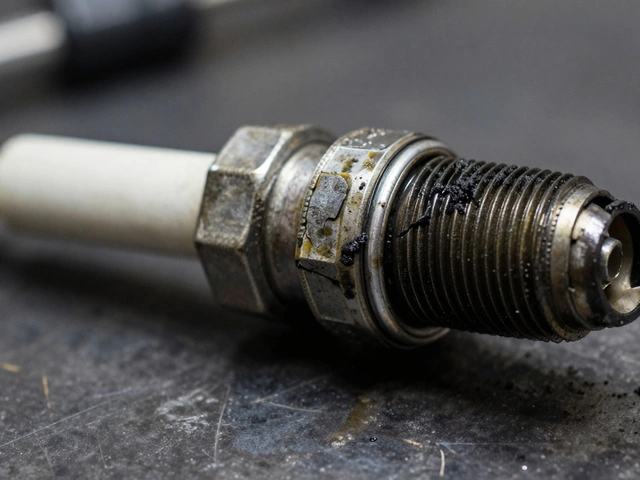
| Fouled (Carbon) | Black, dry powder coating on electrodes | Rich fuel mixture, short trips | Clean or replace; check fuel system |
| Eroded Electrodes | Gapped or rounded center electrode | Normal wear over time | Replace |
| Oil-Fouled | Wet, oily residue on threads and insulator | Leaking valve seals or piston rings | Inspect engine internals |
The Risks of Ignoring a Crack
You might think that if the car is still running, a small crack is not a big deal. This is a dangerous assumption. A crack in the insulator creates a path of least resistance for the high-voltage current. Instead of jumping the gap to ignite the fuel, the electricity arcs through the crack and grounds itself against the engine block. This phenomenon is known as "flashover."
Flashover leads to several cascading problems. First, the cylinder associated with that plug will misfire consistently. Unburned fuel enters the catalytic converter, which operates at extremely high temperatures. The excess fuel can ignite inside the converter, melting its internal honeycomb structure. Replacing a catalytic converter costs significantly more than replacing a set of spark plugs.
Second, the unburned fuel can wash away the lubricating oil film on the cylinder walls. This increases friction and wear on the pistons and rings, potentially leading to premature engine failure. In severe cases, a piece of the shattered ceramic can break off and fall into the cylinder. This hard debris can score the cylinder wall or damage the piston crown, requiring a complete engine rebuild.
Step-by-Step Inspection Process
To accurately diagnose cracked spark plugs, follow this systematic approach. Ensure the engine is cool to avoid burns and to allow the metal components to contract slightly for easier removal.
- Disconnect the Battery: Safety first. Disconnect the negative terminal to prevent accidental short circuits while working near ignition components.
- Remove Ignition Coils: On modern direct-injection engines, remove the plastic cover and unscrew the bolts holding the ignition coils. Pull the coils straight up.
- Clean the Area: Use compressed air or a vacuum to clear out any dirt or debris around the spark plug wells. Preventing foreign objects from falling into the engine is crucial.
- Extract the Plugs: Use a spark plug socket and ratchet to loosen each plug. Turn counter-clockwise slowly. Once loose, hand-tighten to ensure the socket grips firmly, then remove completely.
- Inspect Visually: Examine each plug under good lighting. Rotate the plug to check all sides of the ceramic insulator. Look for cracks, chips, or carbon tracking.
- Check the Gap: While you have them out, verify the electrode gap with a feeler gauge. Compare it to the manufacturer's specification listed in your owner's manual.
- Reinstall or Replace: If a plug is cracked, discard it. Install new plugs, hand-threading them first to avoid cross-threading, then torquing to specification. Reattach coils and reconnect the battery.
Choosing the Right Replacement
When replacing cracked plugs, do not simply buy the cheapest option available. Different engines require specific types of plugs based on heat range, reach, and thread diameter. Using the wrong plug can exacerbate the problem.
Standard copper plugs conduct electricity well but erode quickly, requiring replacement every 30,000 miles. Iridium and platinum plugs offer superior durability and performance, lasting up to 100,000 miles. They maintain a precise gap longer and resist fouling better. If your previous plugs cracked due to thermal stress, consider upgrading to a higher-quality iridium plug, which often has a finer center electrode that requires less voltage to fire, reducing stress on the ignition system.
Always consult your vehicle's service manual or a reputable parts database to find the exact part number. Generic "fits most cars" kits can sometimes include incorrect heat ranges, leading to pre-ignition or fouling.
Can you fix a cracked spark plug?
No, you cannot repair a cracked spark plug. The ceramic insulator is integral to the plug's function, and once fractured, its structural integrity is lost. Attempting to glue or seal the crack will fail under the extreme heat and pressure of the combustion chamber. The only safe solution is immediate replacement.
How much does it cost to replace cracked spark plugs?
The cost varies depending on the type of plug and labor rates. Parts alone can range from $5 to $30 per plug for standard to premium iridium types. Labor costs depend on accessibility; simple engines may cost $50-$100 total, while complex V8 or turbocharged engines with tight spaces can exceed $200-$400 due to the time required to access the plugs.
Will a cracked spark plug trigger the check engine light?
Yes, it is highly likely. A cracked plug causes a misfire, which the engine control module detects almost instantly. The check engine light will illuminate, and a diagnostic scan will reveal a misfire code corresponding to the affected cylinder. Ignoring this light can lead to further damage to the catalytic converter.
How often should spark plugs be inspected?
Most manufacturers recommend replacing spark plugs every 30,000 to 100,000 miles, depending on the material. However, visual inspections should be performed during major tune-ups or if you experience symptoms like rough idling or reduced fuel economy. Regular inspection helps catch minor issues before they escalate into major engine problems.
Can a broken spark plug fragment damage the engine?
Yes, if a piece of the ceramic insulator or metal electrode breaks off and falls into the cylinder, it can cause catastrophic damage. The hard ceramic can scratch the cylinder walls, damage the piston, or clog valves. If you suspect a fragment has fallen in, do not start the engine. Consult a mechanic immediately to retrieve the debris.