Air Filter Health & Cost Estimator
Use this tool to check if your air filters need changing based on current symptoms and see how much you could save on gas by replacing a clogged engine filter.
Select all symptoms that apply to your vehicle:
Replacing a severely clogged engine filter can improve fuel economy by up to 14%. Enter your details to see potential annual savings.
You’re driving down the highway, and something feels off. The car isn’t pulling quite like it used to. Maybe the check engine light just blinked on for no obvious reason. Or perhaps you noticed your gas mileage dropping despite your usual commute staying exactly the same. These are classic red flags that point to one of the most overlooked maintenance items under your hood: the engine air filter. It’s a simple component, but when it gets clogged with dirt, leaves, and road grime, it chokes your engine’s ability to breathe.
Most drivers ignore this part until a mechanic points it out during an oil change. But waiting that long can cost you money in wasted fuel and reduced power. So, how do you know if it’s time to swap it out? You don’t need a degree in automotive engineering to figure it out. In fact, checking your air filter is one of the easiest DIY inspections you can do at home. Let’s break down the signs, the inspection process, and the difference between the two main types of filters so you never have to guess again.
The Two Types of Air Filters in Your Car
Before you pop open your hood or glovebox, you need to know which filter we’re talking about. Cars actually have two distinct air filters, and they serve completely different purposes. Confusing them is a common mistake.
The first is the engine air filter. This lives inside a black plastic box near the front of the engine bay. Its job is critical: it cleans the air going into the combustion chamber. If this air is dirty, abrasive particles wear down your engine’s internal parts. A clogged engine filter restricts airflow, making the engine work harder to pull in oxygen.
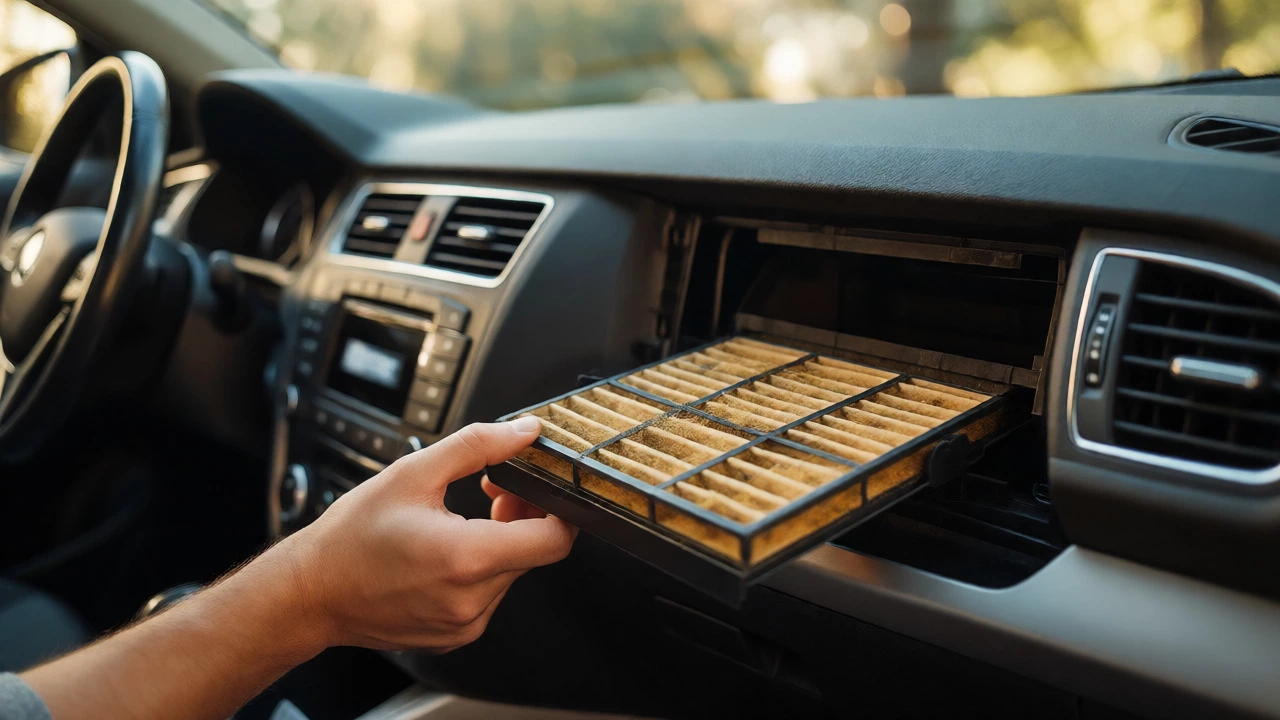
The second is the cabin air filter. This one sits behind your glove compartment or under the dashboard. It doesn’t touch the engine. Instead, it cleans the air coming through your vents. If you’ve ever smelled mold, pollen, or exhaust fumes inside the car, this is the culprit. While both need regular changing, their symptoms are totally different.
| Feature | Engine Air Filter | Cabin Air Filter |
|---|---|---|
| Location | Engine Bay (near intake) | Behind Glove Box / Dashboard |
| Main Function | Cleans air for combustion | Cleans air for passengers |
| Symptoms of Clog | Poor acceleration, rough idle | Bad odors, weak AC airflow |
| Affects Fuel Economy? | Yes | No |
| Typical Interval | 15,000-30,000 miles | 15,000-30,000 miles |
Physical Inspection: The Visual Check
The most reliable way to know if your engine air filter needs changing is to look at it. Don’t rely solely on the mileage counter on your dashboard. Driving conditions matter more than odometer readings. If you drive on dusty backroads or live in a city with heavy construction, your filter might be trashed after just 10,000 miles. Conversely, highway driving keeps filters cleaner for longer.
Here’s how to check it yourself. Pop the hood and locate the large black plastic box connected to a wide rubber hose. That’s the air filter housing. Most modern cars use metal clips or screws to hold the lid on. Loosen these carefully-don’t force them, as the plastic can become brittle over time. Once the lid is off, lift out the filter element.
Hold the filter up to a bright light source, like sunlight or a garage lamp. A healthy paper-based air filter will allow light to pass through the pleats evenly. If the paper looks dark gray, brown, or black, it’s saturated with dirt. You should also look for debris stuck in the folds. Dead bugs, small leaves, and twigs are obvious signs. If you see holes or tears in the paper material, replace it immediately. Even a tiny hole lets unfiltered grit straight into your engine, which acts like sandpaper on your cylinders.

Performance Symptoms: What Your Engine Is Telling You
Sometimes, you can’t get to the filter right away, but your car is screaming for help. Modern engines are computer-controlled, so when airflow drops below optimal levels, the engine control unit (ECU) tries to compensate. This leads to noticeable changes in how the vehicle behaves.
The most common sign is sluggish acceleration. If you press the gas pedal and the car hesitates or struggles to gain speed, especially when merging onto highways, restricted airflow is likely the cause. Think of it like trying to run while breathing through a straw. The engine can’t get enough oxygen to burn fuel efficiently, so power output drops.
Another clear indicator is a drop in fuel economy. When the ECU detects low airflow, it often injects more fuel to maintain power, creating a rich fuel mixture. This wastes gasoline. If you’re visiting the pump 10% more often than usual without changing your driving habits, check the filter. It’s a cheap fix compared to the cumulative cost of wasted fuel.
You might also notice unusual noises. A severely clogged filter can cause the engine to make a whistling sound during intake. In some cases, unburned fuel can accumulate in the cylinders, leading to misfires. This results in a rough idle or shaking at stoplights. If your check engine light comes on with codes related to "mass airflow sensor" or "lean/rich mixture," the air filter is the first thing any smart mechanic will inspect.
Cabin Filter Signs: Smell and Airflow Issues
If your engine runs fine but the interior of your car feels unpleasant, look at the cabin air filter. Unlike the engine filter, a bad cabin filter doesn’t hurt the mechanical health of the car. It hurts your comfort and health.
The number one symptom is a musty or sour smell when you turn on the AC or heat. This odor usually means moisture has trapped bacteria and mold spores in the filter media. Another telltale sign is weak airflow from the vents. If you have the fan on max but barely feel air hitting your face, the filter is likely blocked by dust and pollen.
Allergy sufferers will notice immediate relief after replacing a dirty cabin filter. Sneezing, itchy eyes, and congestion inside the car are direct results of poor filtration. If you have pets, hair accumulation in the filter is another visual cue. During winter, foggy windows that take forever to clear can also indicate a clogged cabin filter, as dehumidification relies on proper airflow.
When to Replace: Mileage vs. Condition
So, how often should you change them? Manufacturer recommendations vary, but a good rule of thumb is every 15,000 to 30,000 miles for standard paper filters. However, treat this as a maximum limit, not a deadline. Severe driving conditions cut this interval in half.
- Dusty Environments: Unpaved roads, desert areas, or agricultural zones require checks every 10,000 miles.
- Urban Traffic: Stop-and-go traffic increases exposure to brake dust and tire particles.
- Polluted Areas: High smog levels accelerate filter saturation.
Some high-performance vehicles use reusable cotton gauze filters, like those made by K&N. These don’t need replacing; they need cleaning. If you have one of these, wash it according to the manufacturer’s instructions and re-oil it. Never put a dry, oiled filter back in-it won’t seal properly and will let dirt in.
For standard disposable filters, do not try to clean them with compressed air. The pressure blows apart the microscopic fibers in the paper, creating larger gaps that let dirt through. Once it’s dirty, toss it. They are inexpensive, typically costing between $15 and $30 depending on the brand and vehicle model.
DIY Replacement Tips
Changing either filter takes less than ten minutes. For the engine filter, wipe out the housing before inserting the new one. Use a damp cloth to remove loose debris. Make sure the new filter fits snugly. If it rattles or doesn’t sit flush against the gasket, air will bypass the filter entirely, rendering it useless.
For the cabin filter, consult your owner’s manual for the exact location. Some cars require removing the glove box entirely; others have a simple access panel under the windshield cowl. Pay attention to the airflow arrow printed on the side of the new filter. Install it pointing in the direction of airflow (usually downward). Putting it in backward reduces efficiency significantly.
After installation, start the car and listen. The engine should sound smoother, and idle should stabilize. Take a short test drive. You shouldn’t expect a massive horsepower boost, but the throttle response should feel sharper and more linear. If the problem persists, the issue might lie elsewhere, such as a faulty mass airflow sensor or spark plugs.
Can I drive with a dirty air filter?
Yes, you can drive short distances with a moderately dirty air filter, but it’s not recommended for long-term use. A clogged filter reduces engine efficiency, lowers fuel economy, and decreases power. Over time, it can cause carbon buildup on spark plugs and valves. If the filter is severely torn or missing, avoid driving, as unfiltered debris can cause permanent engine damage.
How much does it cost to replace an air filter?
The part itself costs between $15 and $40 for most vehicles. If you do it yourself, that’s all you pay. At a shop, labor adds another $20 to $50, bringing the total to roughly $40 to $90. Since the job takes only a few minutes, doing it yourself saves significant money over the life of the car.
Do electric cars have air filters?
Electric vehicles (EVs) do not have an engine air filter because they lack an internal combustion engine. However, they do have a cabin air filter to clean the air entering the passenger compartment. Some EVs also have battery cooling system filters, but these are less commonly serviced by owners.
Will a new air filter improve my gas mileage?
Replacing a very dirty air filter can improve fuel economy by up to 10-14%, according to Department of Energy estimates. However, if your current filter is only mildly dirty, the improvement may be negligible. Regular maintenance ensures you consistently get the best possible mileage, rather than experiencing sudden drops.
How do I know if my cabin air filter is dirty?
Look for three main signs: reduced airflow from the HVAC vents, strange odors (musty or sour) when the system runs, and increased window fogging. Visually, the filter will appear gray, brown, or covered in debris like leaves and pet hair. If you haven’t changed it in over a year or 15,000 miles, it’s likely due for replacement.