Brake Pad vs. Rotor Replacement Advisor
Enter your current brake conditions below to receive a personalized recommendation on whether to replace just the pads or perform a full brake job.
You are driving along, and suddenly you hear that familiar grinding or squealing noise. It is the sound every driver dreads because it usually means your brake pads are worn down to the metal backing plate. Your first instinct might be to rush to a mechanic, but then the quote comes back with a hefty price tag for replacing both the pads and the rotors. You start wondering: do I really need new rotors? Can I just swap out the pads and call it a day?
The short answer is: sometimes yes, but often no. It depends entirely on the condition of your rotors. Replacing only the pads can save you money upfront, but if done incorrectly, it can lead to poor braking performance, increased noise, and even premature wear on the new parts. Let’s break down exactly when you can get away with pad-only replacements and when you absolutely must replace the discs.
How Brakes Actually Work
To understand why this decision matters, you need to know what is happening inside your wheel well. Your car uses friction to stop. When you press the pedal, hydraulic pressure forces the caliper to squeeze the brake pads against the spinning rotor. This friction converts kinetic energy into heat, slowing the vehicle down.
Because this process involves intense heat and physical contact, both components wear down over time. The pads are softer materials designed to sacrifice themselves to protect the harder steel rotors. However, once the pads are gone, the metal-on-metal contact damages the rotor surface rapidly. If you ignore the noise too long, you aren’t just buying new pads; you are committing to a full brake job.
The Case For Pad-Only Replacement
There are specific scenarios where skipping the rotor replacement makes sense. If your rotors are still within their minimum thickness specification and have a smooth, even surface, you can likely reuse them. How do you check this? Look at the edge of the rotor. There is usually a small lip formed by the pads wearing a groove into the disc. If that lip is minimal-less than 1mm-you are probably fine.
Also, consider the mileage. If you change your pads every 30,000 miles but your rotors last until 60,000 miles, there is a window where pad-only replacement is standard practice. Many modern cars use high-quality rotors that last twice as long as the pads. In these cases, replacing rotors prematurely is just throwing money away.
When You Must Replace Rotors
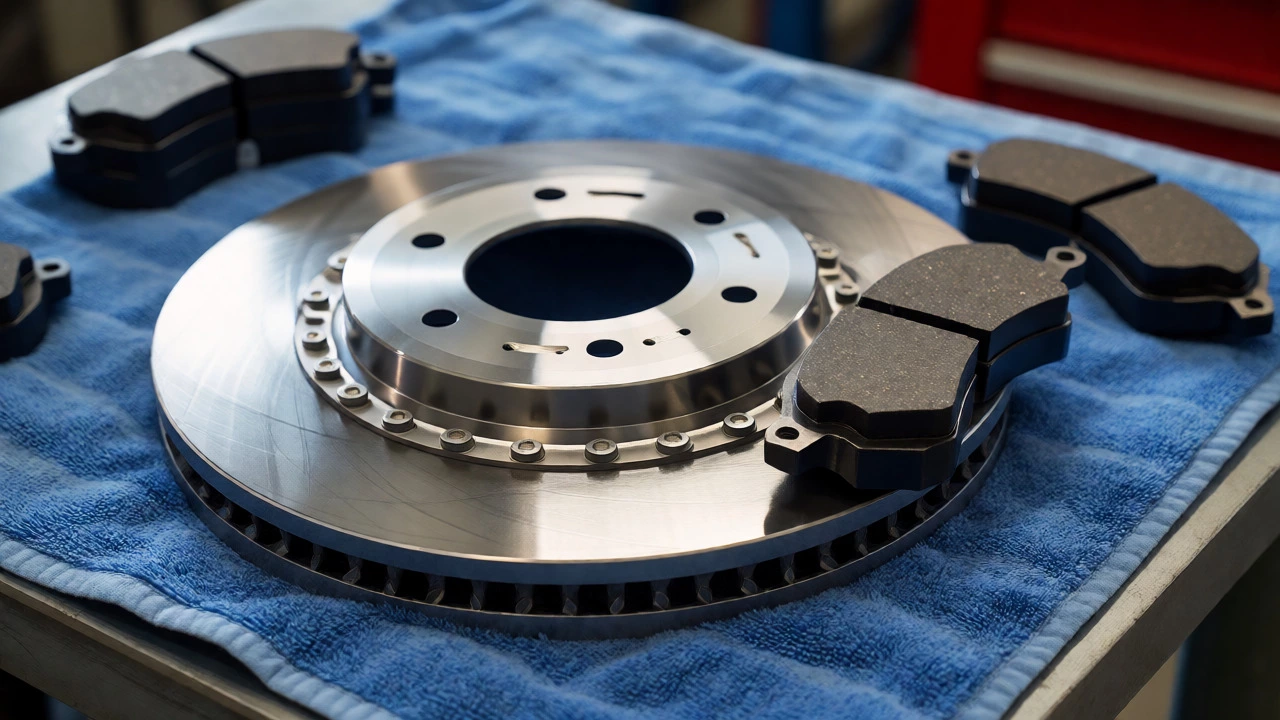
Here is where things get tricky. If you look at your old rotors and see deep grooves, blue spots (indicating overheating), or significant rust pitting, you cannot reuse them. New pads need a flat, clean surface to bite into. If you put fresh pads on warped or scored rotors, they will never make full contact. This leads to pulsing in the brake pedal and reduced stopping power.
Another critical factor is runout. Over time, rotors warp due to heat cycles. Even if they look okay visually, they might be slightly oval-shaped. This causes vibration when you brake. Unless you have access to a brake lathe to resurface them, a new set of rotors is the safer bet. Remember, safety is not the place to cut corners if the data suggests the component is failing.
| Condition | Action | Reason |
|---|---|---|
| Smooth surface, no deep scratches | Replace Pads Only | Pads will seat correctly on existing surface. |
| Deep grooves or scoring (>1mm) | Replace Rotors & Pads | New pads will chatter and wear unevenly. |
| Visible warping or pedal pulse | Replace Rotors & Pads | Vibration indicates structural failure. |
| Rotor below minimum thickness | Replace Rotors & Pads | Safety risk; rotor may crack under heat. |
| Heavy rust on mounting surface | Clean or Replace | Rust prevents proper seating, causing runout. |

The Importance Of Bedding-In
If you decide to replace only the pads, you have extra work to do. You must bed-in the new pads. This process transfers a thin layer of pad material onto the old rotor surface, creating a uniform friction interface. If you skip this, your brakes might feel spongy or noisy for weeks.
How do you bed them in? After installing the new pads, drive to a safe, empty road. Accelerate to about 40 mph, then brake firmly down to 10 mph without coming to a complete stop. Repeat this five times. Then, accelerate to 50 mph and brake gently to 20 mph. Do this three times. Finally, let the brakes cool by driving normally for ten minutes without heavy braking. This step is non-negotiable if you want quiet, effective brakes.
Cost And Time Analysis
Let’s talk numbers. A set of quality ceramic brake pads costs between £30 and £60 per axle. Rotors add another £40 to £80 per axle. Labor costs also double if you replace rotors because removing the caliper bracket and cleaning the hub takes extra time. For a typical family car, doing pads only might cost £100-£150, while a full job could hit £250-£350.
However, consider the long-term view. If you install cheap pads on worn rotors, you might end up replacing the pads again in 10,000 miles instead of 30,000. That saves nothing. Conversely, if your rotors are near the end of their life, replacing them now avoids having to tear everything apart again in six months. It is always cheaper to do it once than twice.
DIY Tips For Success
If you plan to tackle this yourself, preparation is key. First, always replace pads in axle sets. Never do one side only. This ensures even braking force. Second, inspect the caliper slides. If they are stuck, your new pads will wear unevenly. Lubricate them with high-temp silicone grease. Third, check the hardware. Shims and clips are cheap but essential for preventing noise. Don’t reuse old, deformed clips.
One common mistake is forgetting to compress the caliper piston. On many cars, you can push it back with a C-clamp. But on some modern vehicles with electronic parking brakes, you need a diagnostic tool to retract the piston. Check your service manual before starting. Forcing it can damage the ABS module.
Frequently Asked Questions
Do I need to replace rotors every time I change brake pads?
No, not necessarily. If the rotors are within manufacturer specifications for thickness and have a smooth surface, you can reuse them. However, if they are warped, scored, or close to their minimum thickness limit, replacement is recommended for optimal performance and safety.
What happens if I put new pads on old rotors?
If the old rotors are in good condition, new pads will perform well after proper bedding-in. If the rotors are damaged or worn unevenly, the new pads will not make consistent contact. This results in reduced braking efficiency, noise, vibration, and potentially faster wear on the new pads.
How long do brake rotors typically last compared to pads?
Generally, rotors last two to three times longer than brake pads. Depending on driving habits and vehicle type, pads might last 30,000 to 50,000 miles, while rotors could last 60,000 to 90,000 miles. Aggressive driving and city traffic shorten the lifespan of both components.
Is it safe to drive with worn brake pads?
It is risky. Once the friction material is gone, the metal backing plate grinds against the rotor. This reduces braking power significantly and generates excessive heat, which can boil brake fluid and cause brake fade. You should replace pads immediately upon hearing grinding noises.
Can I resurface my brake rotors instead of replacing them?
Yes, if the rotors have enough material left above the minimum thickness stamp. Resurfacing removes imperfections and restores a flat surface. However, many modern cars use thinner rotors that may not have enough material to survive resurfacing, making replacement the more viable option.