Engine Damage Timeline Calculator
WARNING
Driving with a cracked radiator is extremely dangerous. This calculator shows potential damage progression but DO NOT DRIVE if you suspect a radiator crack.
Current Damage Stage
Estimated Repair Cost
£0
Cost of New Radiator
£320
Driving a car with a cracked radiator is like driving with a leaky water bottle strapped to your engine. It might seem fine at first, but the longer you wait, the worse it gets-until something breaks for good. Most people don’t realize how fast a small crack can turn into a total engine failure. If you’ve noticed steam coming from under the hood, or your temperature gauge is climbing even after a short drive, that crack isn’t just a nuisance. It’s a countdown.
What a Cracked Radiator Actually Does
Your radiator isn’t just a metal box with hoses. It’s the main cooling system for your engine. It pulls heat away from the coolant, which circulates through the engine block, and releases that heat into the air. A crack-even a tiny one-lets coolant escape. Once the coolant level drops below a certain point, the engine can’t regulate its temperature. That’s when things start to go wrong.
Modern engines run hot. A typical gasoline engine operates between 195°F and 220°F. If the coolant leaks out and the engine hits 240°F or higher, metal parts begin to warp. The cylinder head can crack. The head gasket can blow. And once that happens, you’re looking at a repair bill that could cost more than your car is worth.
What Happens When You Keep Driving
Some drivers think they can make it to the next gas station. Others assume a little coolant loss won’t hurt. Here’s what actually happens if you keep driving:
- Within 10-15 minutes: The engine starts to overheat. The temperature gauge spikes. You might hear a hissing sound from under the hood.
- After 20-30 minutes: The coolant level drops too low. The water pump can’t circulate what’s left. Air pockets form in the engine block, causing hot spots.
- After 45 minutes: Aluminum parts begin to soften. The cylinder head warps. The head gasket fails. Oil and coolant mix. White smoke comes out the exhaust.
- After an hour: Severe engine damage is likely. Pistons seize. Valves bend. The engine may lock up completely.
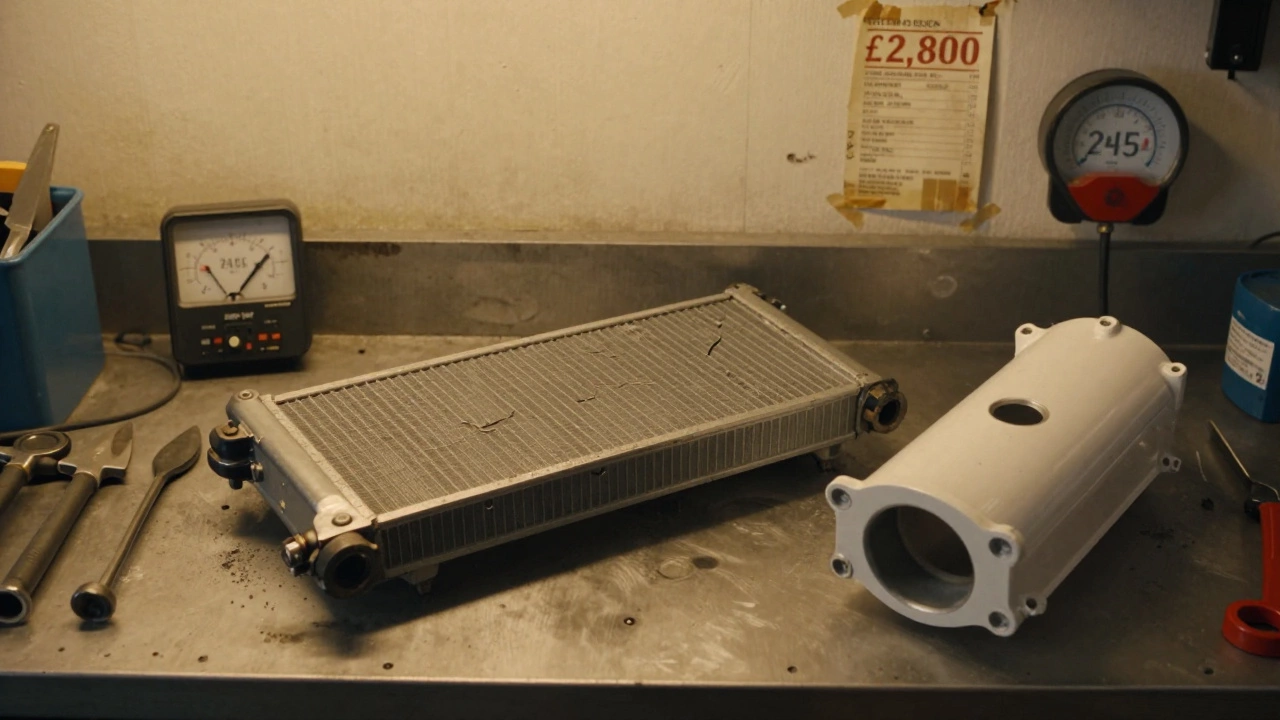
Real-world example: In Bristol, a mechanic told me about a driver who made it 12 miles with a cracked radiator. He kept adding water from a bottle. By the time he pulled into the garage, the engine had seized. The repair cost £2,800. A new radiator would’ve been £320.
Signs You Have a Cracked Radiator
You don’t need a mechanic to spot a cracked radiator. Here’s what to look for:
- Coolant puddles under the car: Bright green, orange, or pink fluid on the ground. Not oil. Not brake fluid. Coolant smells sweet.
- Low coolant level: Check the reservoir when the engine is cold. If it’s consistently low, something’s leaking.
- Overheating warning light: Don’t ignore it. Even if the car cools down after stopping, the damage is already happening.
- Steam or smoke from the engine: That’s not normal. That’s coolant turning to steam under pressure.
- Bubbles in the coolant reservoir: This can mean combustion gases are leaking into the cooling system-a sign of a blown head gasket, often caused by overheating.
Can You Temporarily Fix It?
Some people try radiator sealants or epoxy patches. They work-sometimes. But only as a last resort, and only for a few days.
Sealants like Bar’s Leaks or BlueDevil can plug small pinholes or hairline cracks. But they won’t fix a crack near a hose connection, a seam, or a corner under pressure. Worse, they can clog your heater core or water pump. I’ve seen three cars in the last year that needed a full cooling system flush because someone used a sealant and didn’t replace the radiator afterward.
Emergency fix? Only if you’re stranded. Add coolant. Drive slowly. Keep the heater on full blast-it helps pull heat out of the engine. Stop every 5 miles. Let it cool. Don’t open the radiator cap while hot. That’s how you get scalded.
What You Should Do Instead
If you’ve got a cracked radiator, here’s the only smart move:
- Stop driving immediately. Even if the engine hasn’t overheated yet, the crack is getting worse.
- Call a tow truck. Don’t risk it. Towing costs £50-£100. Engine replacement costs £2,000-£6,000.
- Get a new radiator. Aftermarket radiators from brands like Valeo, Denso, or Spectra are reliable and cost £150-£400. OEM parts are pricier but match factory specs exactly.
- Flush the cooling system. Old coolant can corrode new parts. Replace it with a 50/50 mix of antifreeze and distilled water.
- Check the hoses and thermostat. A cracked radiator often means other parts are worn out too.
How Long Does a Radiator Last?
Most radiators last 8-12 years or 100,000-150,000 miles. But that’s only if you maintain the coolant. Old or dirty coolant turns acidic. It eats away at metal and plastic over time. That’s why so many older cars have radiator failures.
Check your coolant every 15,000 miles. Replace it every 3-5 years, even if the manual says longer. Use the right type-your car’s manual will tell you. Mixing types can cause gelling or corrosion.
Why This Isn’t a "Wait and See" Problem
People think car problems are like a leaky faucet. You can wait. You can ignore it. But engines aren’t faucets. They’re precision machines running at extreme temperatures. A cracked radiator isn’t a warning sign. It’s an active failure.
And it’s not just about money. Overheating engines can catch fire. I’ve seen it twice in Bristol. One was a 2018 Ford Focus. The driver kept driving after the warning light came on. The engine caught fire at a red light. No one was hurt-but the car was totaled.
What to Do If You Can’t Afford a New Radiator
Money’s tight? You’re not alone. But here’s the truth: you can’t afford not to fix it.
Look into:
- Local auto parts stores: Many sell rebuilt or used radiators for half the price of new ones.
- Community workshops: Some towns have nonprofit auto shops that do repairs for low-income drivers.
- Payment plans: Many garages offer 0% financing for repairs over 6-12 months.
Don’t trade safety for savings. A cracked radiator isn’t a repair you delay. It’s a repair you prioritize.
Final Thought: It’s Not a Question of Can You-It’s a Question of Should You
You technically can drive a car with a cracked radiator. But should you? No. Not even for five minutes. The risk isn’t worth it. The cost isn’t worth it. The danger isn’t worth it.
Fix it now. Or don’t drive it at all. Either way, don’t pretend it’s okay. Your engine didn’t ask for this. And neither did your wallet.
Can a cracked radiator cause engine damage?
Yes. A cracked radiator causes coolant loss, which leads to overheating. Overheating warps engine parts, blows head gaskets, and can seize pistons. Damage can happen in under an hour.
Is radiator sealant a permanent fix?
No. Sealants are temporary at best. They might plug a tiny crack for a few days, but they don’t fix the structural damage. They can also clog your heater core or water pump, causing more problems.
How much does it cost to replace a radiator?
A new radiator costs £150-£400 depending on your car model. Labor adds another £100-£250. Total repair is usually under £600. Compare that to a £3,000 engine rebuild.
Can I drive my car if the radiator is cracked but the coolant level is full?
No. Even if the coolant looks full now, the crack will keep leaking. Pressure from the engine will push coolant out faster as it heats up. You’re just buying time before failure.
How do I know if my radiator is cracked?
Look for coolant leaks under the car, low coolant levels, steam from the engine, or a temperature gauge that spikes. A visual inspection under the hood may show a crack, but some are too small to see without pressure testing.
Should I replace just the radiator or the whole cooling system?
Replace the radiator first. But always flush the cooling system and check hoses, thermostat, and water pump. These parts wear out together. Replacing just the radiator without checking the rest can lead to repeat failures.