Engine Oil Level Simulator & Guide
Use this simulator to understand how oil levels affect your engine. Adjust the current oil level, add oil in increments, and see real-time feedback on safety and recommended actions.
- 0-15%: Critical Low (Stop Driving)
- 16-25%: Low (Top Up Soon)
- 26-95%: Optimal Range
- 96-100%: Full
- >100%: Overfilled (Risk!)
Status: Checking...
Move the slider to begin simulation.
Recommended Action:
- Park on level ground & let engine cool.
- Check dipstick for Min/Max marks.
- Add oil gradually if below Min.
- Recheck level after adding.
- Drive normally if within range.
You’re driving down the motorway, minding your own business, when suddenly that ominous orange teapot icon lights up on your dashboard. Panic sets in. Do you stop immediately? Do you keep going? The answer isn't always a simple yes or no, but knowing can I add oil to my car if it's low is the difference between a minor inconvenience and a catastrophic engine failure.
The short answer is yes, you absolutely can-and often should-add oil to your car if the level is low. But it’s not as simple as grabbing any bottle from the garage shelf and pouring it in until the light goes off. Doing it wrong can cause just as much damage as running with too little oil. This guide breaks down exactly how to handle a low oil situation safely, what type of oil to use, and when topping up is actually a sign of a bigger problem.
Understanding the Difference Between Low Level and Low Pressure
Before you pop the bonnet, you need to know which warning light you’re seeing. Most drivers confuse the two, but they mean very different things for your engine's health.
In contrast, the Low Oil Level Indicator usually looks like an oil can with a horizontal line across it or simply says "Check Oil" in text. This means there is enough oil to maintain pressure, but the volume in the sump is getting too low. You have time to drive carefully to a service station or home to top it up, provided the pressure remains stable.
How to Safely Top Up Your Engine Oil
If you’ve confirmed it’s a low-level issue, here is the step-by-step process to adding oil without making a mess or damaging your engine.
- Park on level ground: Never check or add oil on a hill. The dipstick will give a false reading, leading you to overfill or underfill the engine.
- Let the engine cool slightly: Wait about 5-10 minutes after turning off the ignition. This allows the oil to drain back into the oil pan (sump) for an accurate reading. Hot oil can also burn you.
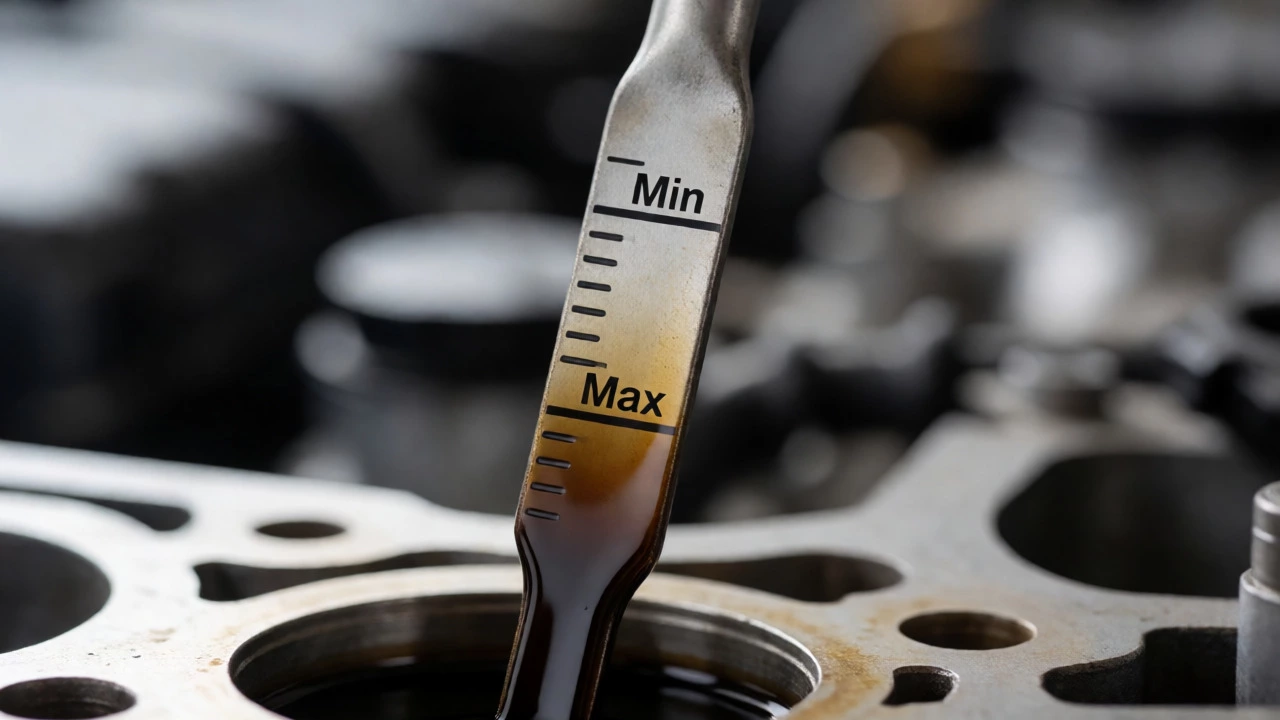
- Check the current level: Pull out the dipstick, wipe it clean with a rag, reinsert it fully, and pull it out again. Look for the markings. Usually, there are two dots or lines labeled "Min" and "Max." If the oil is below the "Min" mark, you need to add more.
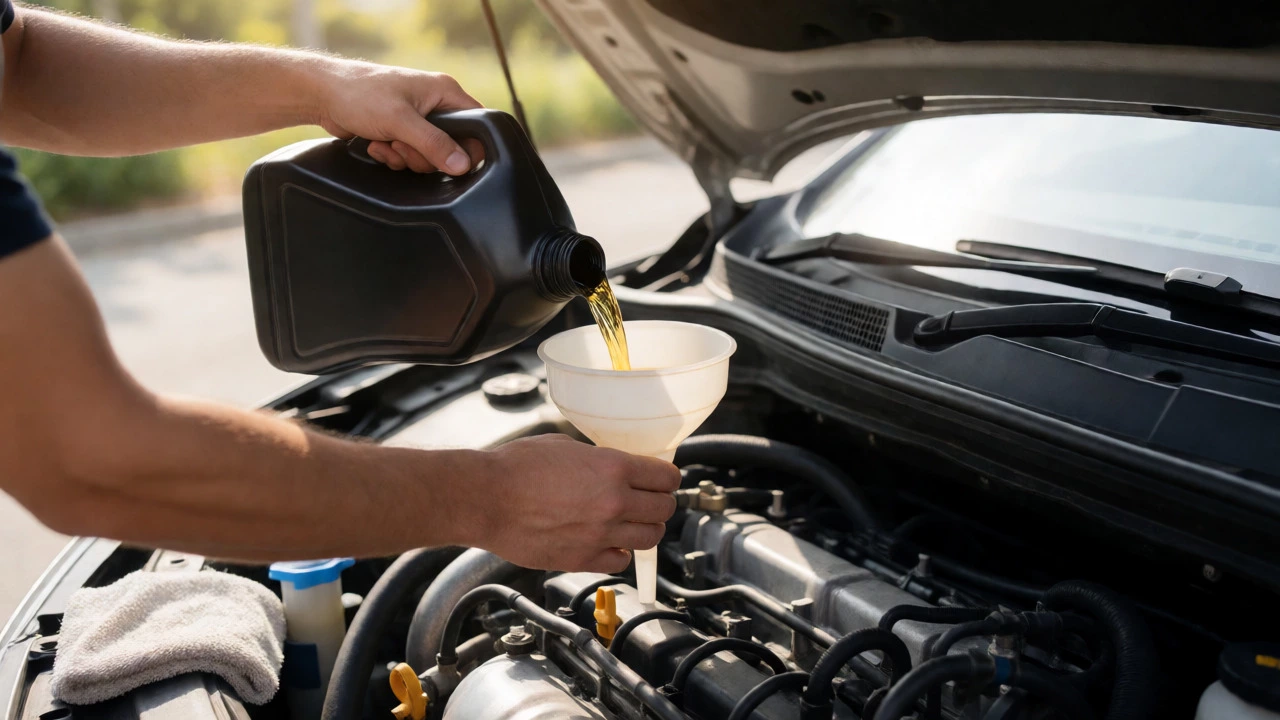
- Add oil gradually: Remove the oil filler cap (usually marked with an oil can symbol). Pour in small amounts-about 0.5 liters (roughly half a pint) at a time. Use a funnel to avoid spills on hot engine components.
- Recheck the level: Wait another minute for the oil to settle, then check the dipstick again. Repeat until the level is between the Min and Max marks.
- Do not overfill: Staying below the "Max" line is crucial. Overfilling causes foaming, which reduces lubrication efficiency and can blow seals.
Choosing the Right Type of Oil
Not all oils are created equal. Pouring the wrong viscosity or specification into your engine can lead to increased wear, poor fuel economy, or even warranty voidance.
| Viscosity Grade | Best For | Characteristics |
|---|---|---|
| 0W-20 | Modern hybrids and small turbocharged engines | Very thin; improves fuel economy but offers less protection under high heat |
| 5W-30 | Most modern petrol and diesel cars | Balanced performance; good cold-start flow and high-temp protection |
| 10W-40 | Older vehicles or high-mileage engines | Thicker at operating temperature; helps seal worn piston rings |
Always consult your owner’s manual first. If you can’t find it, look for the sticker inside the driver’s door jamb or under the bonnet near the radiator support. In an emergency, using a different brand of the same viscosity grade (e.g., mixing Castrol 5W-30 with Shell 5W-30) is generally acceptable for a short period, though sticking to one brand is ideal for long-term consistency.
Why Is My Oil Low? Identifying the Root Cause
Topping up oil is a temporary fix, not a cure. Engines do not consume significant amounts of oil during normal operation unless they are old or poorly maintained. If you find yourself adding oil every few weeks, something is wrong.
- External Leaks: Check the ground under your car after parking. Puddles of dark brown or black fluid indicate leaks from the oil pan gasket, valve cover gasket, or oil filter housing. These are common repairs and relatively inexpensive if caught early.
- Internal Consumption: If there are no leaks, the engine might be burning oil. This is common in older vehicles where piston rings or valve stem seals have worn out. Blue smoke from the exhaust tailpipe during acceleration is a classic sign.
- PCV Valve Failure: The Positive Crankcase Ventilation (PCV) system recycles blow-by gases. If the PCV valve gets stuck open, it can suck oil vapor into the intake manifold, causing rapid oil consumption.
- Turbocharger Issues: On turbocharged cars, worn turbo seals can leak oil into the intercooler or exhaust. This often requires a specialized inspection.
Risks of Ignoring Low Oil Levels
You might think, "I'll just ignore it until my next service." That’s a risky gamble. Modern engines operate with tighter tolerances than those from twenty years ago. They rely on precise oil film thickness to prevent friction.
Running an engine with oil levels below the minimum mark increases the risk of cavitation. This occurs when the oil pump sucks in air along with oil, creating bubbles that collapse under pressure. These collapsing bubbles erode metal surfaces, particularly on the crankshaft bearings. Once bearing damage starts, it rarely stops until the engine seizes. Replacing a seized engine costs thousands, whereas a £10 bottle of oil and a quick trip to the garage could have saved you months of payments.
When to See a Mechanic
While DIY topping up is fine for emergencies or minor top-ups, certain scenarios demand professional attention.
- Frequent Topping Up: If you’re adding more than 1 liter every 1,000 miles, get a compression test or leak-down test.
- Warning Lights Persist: If the oil pressure light stays on after topping up, or flashes intermittently, stop driving. The oil pump may be failing.
- Contaminated Oil: If the oil on the dipstick looks milky (like coffee with milk), coolant has mixed with the oil. This usually signals a blown head gasket-a major repair job.
- Gritty Texture: Rub a drop of oil between your fingers. If it feels gritty or metallic, internal wear is already happening.
Pro Tips for Bristol Drivers and Beyond
Living in a place like Bristol, with its mix of steep hills and stop-start city traffic, puts extra stress on your engine. Frequent idling in traffic jams prevents oil from cooling effectively, accelerating degradation. If you drive mostly short distances, consider switching to a full synthetic oil. It resists thermal breakdown better than semi-synthetic or mineral oils, keeping your engine cleaner and protected for longer intervals.
Also, keep a spare litre of the correct oil in your boot. It weighs almost nothing and takes up minimal space. Knowing you have it removes the anxiety of being stranded far from a service station. Just remember to check the expiry date occasionally; oil degrades over time, especially if exposed to extreme temperatures.
Is it bad to mix different brands of engine oil?
Mixing different brands of the same viscosity grade (e.g., both 5W-30) is generally safe for short periods. All reputable oils meet industry standards (API or ACEA), so their chemical bases are compatible. However, for optimal performance and warranty compliance, try to stick to one brand once you've topped up, or perform a full oil change sooner rather than later.
Can I drive if the oil level is below the minimum mark?
You can drive cautiously if the oil pressure light is not on, but you should limit your distance and speed. The oil pump needs a certain depth of oil to function correctly. Driving aggressively or uphill with low oil risks sucking air into the pump, leading to loss of pressure and potential engine damage. Top it up as soon as possible.
What happens if I overfill my engine oil?
Overfilling causes the rotating crankshaft to whip the excess oil into a froth. Air bubbles in the oil reduce its ability to lubricate and cool. This can lead to overheating, seal blowouts (causing leaks), and in severe cases, hydrostatic lock where liquid enters the cylinders. Always remove excess oil via the drain plug or an extraction pump if you go over the max line.
How often should I check my oil level?
It is wise to check your oil level at least once a month or every 1,000 miles, whichever comes first. Older cars or those known to consume oil may need weekly checks. Checking regularly helps you spot trends early before they become emergencies.
Does topping up oil replace an oil change?
No. Topping up adds fresh oil to dilute contaminants, but it does not remove the dirty, degraded oil already in the system. Sludge and acidic byproducts remain. You must still adhere to your manufacturer's recommended service interval for a complete drain-and-fill replacement.