Clutch vs. Transmission Diagnostic Tool
Select the symptom you are experiencing to determine if it is likely a clutch issue or a transmission problem.
Likely Clutch Issue (Slipping)
Diagnosis: This is a classic sign of a worn clutch disc. The friction material is no longer gripping the flywheel tightly enough to transfer power efficiently.
Action: Replace clutch kit immediately. Do not drive long distances as this accelerates transmission wear.
Possible Clutch Drag or Synchro Wear
Diagnosis: If grinding happens mostly when moving, your clutch may not be fully disengaging (drag). This forces synchronizers to work harder than designed.
Action: Adjust clutch linkage or replace slave cylinder. Avoid forcing gears to prevent further synchro damage.
Clutch Overheating
Diagnosis: The burning smell indicates overheated friction material. This confirms slipping or excessive riding of the clutch pedal.
Action: Stop driving if possible. Allow to cool. Plan for clutch replacement soon to save the gearbox.
Likely Transmission Issue
Diagnosis: A whine in neutral often points to the input shaft bearing inside the transmission. If the noise changes when you press the clutch pedal, it confirms the bearing is under load/unload.
Action: Have a mechanic check transmission fluid levels and condition. May require transmission service.
Seal Leak (Clutch or Transmission)
Diagnosis: Leaks here are tricky. It could be the rear main engine seal (contaminating clutch) or the transmission input shaft seal (caused by wear/vibration).
Action: Clean area and monitor. Identify source. Fix leaks promptly to prevent contamination or dry running.
Clutch Not Disengaging Fully
Diagnosis: If the car lurches forward when started in gear with the pedal down, the clutch is dragging. It hasn't fully separated the engine from the transmission.
Action: Bleed hydraulic system or adjust cable. Driving like this puts immense stress on drivetrain mounts and gearbox internals.
You’re driving along, maybe shifting gears for a hill climb or just cruising on the motorway, and suddenly that familiar resistance in the gear stick feels… wrong. Maybe there’s a grinding noise, or perhaps the revs shoot up while your speed stays stubbornly low. Your gut tells you something is off with the clutch, but your wallet starts sweating because you know transmission repairs are expensive. So, can a bad clutch actually damage the transmission? The short answer is yes, but it’s rarely a direct smash-and-grab scenario. It’s more like a slow leak that eventually floods the engine bay.
Living here in Bristol, I’ve seen plenty of cars come into the garage with what looks like a simple clutch issue that has quietly chewed up parts of the gearbox over thousands of miles. If you drive a manual car, understanding this relationship isn’t just about saving money-it’s about knowing when to act before a £300 fix turns into a £1,500 nightmare. Let’s break down exactly how these two components interact, where things go wrong, and how to spot the warning signs before they become critical failures.
The Mechanical Handshake: How They Work Together
To understand why one might hurt the other, you first need to picture how they connect. Think of the engine as the muscle and the transmission as the brain that decides which gear to use. The clutch sits right between them, acting as the gatekeeper. When you press the pedal, you disconnect the engine from the transmission, allowing you to change gears smoothly. When you release the pedal, the friction disc clamps onto the flywheel, locking the engine and transmission together so power flows through the wheels.
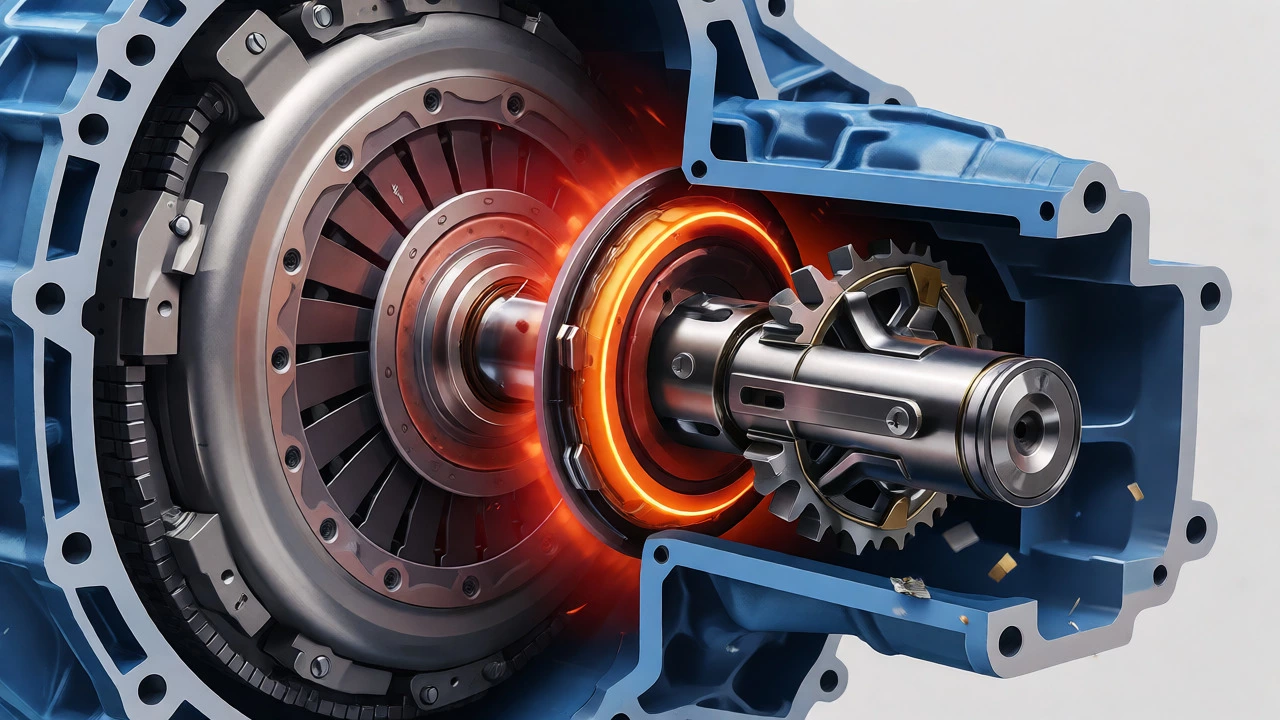
This connection happens inside the bell housing, a metal casing that bolts the transmission to the engine block. Inside this tight space live three main players: the flywheel (attached to the engine), the pressure plate (part of the clutch kit), and the friction disc. The input shaft of the transmission pokes through the center of the clutch disc. This shaft is constantly spinning whenever the engine runs, even if the car is stationary in neutral. If the clutch isn’t doing its job perfectly, that constant spin becomes a source of friction, heat, and wear on the transmission’s internal bearings and synchronizers.
The Slippery Slope: When the Clutch Slips
The most common way a bad clutch harms the transmission is through slipping. A healthy clutch grips tightly. A worn-out clutch-where the friction material is thin or glazed-starts to slip. You’ll notice this when you accelerate hard; the engine RPM climbs rapidly, but the car doesn’t speed up proportionally. It feels like you’re pressing the gas pedal into the floorboard while the car drags its feet.
Here is where the damage occurs. Every time the clutch slips, kinetic energy isn’t being transferred efficiently to the wheels. Instead, that energy converts into intense heat. This heat doesn’t stay contained within the clutch plates. It radiates outward into the surrounding metal components, including the transmission input shaft bearing and the pilot bearing.
Overheating is the silent killer of gearboxes. Bearings rely on grease to stay lubricated. When temperatures spike due to clutch slippage, that grease breaks down, becoming thin and ineffective. Once the lubrication fails, metal-on-metal contact begins. Suddenly, your transmission input shaft bearing starts to grind. This wear creates metal shavings that circulate in the transmission fluid, potentially damaging synchronizers and gears further down the line. You aren’t just replacing a clutch anymore; you’re looking at a transmission overhaul because the heat destroyed the internal lubrication system.
Drag and Grind: The Incomplete Disengagement Problem
If slipping is the slow burn, dragging is the immediate pain. Dragging happens when the clutch fails to fully separate the engine from the transmission when you press the pedal all the way down. Ideally, when you hit the floor, the connection should be zero. But if the hydraulic slave cylinder leaks, the cable stretches, or the pressure plate warps, some connection remains.
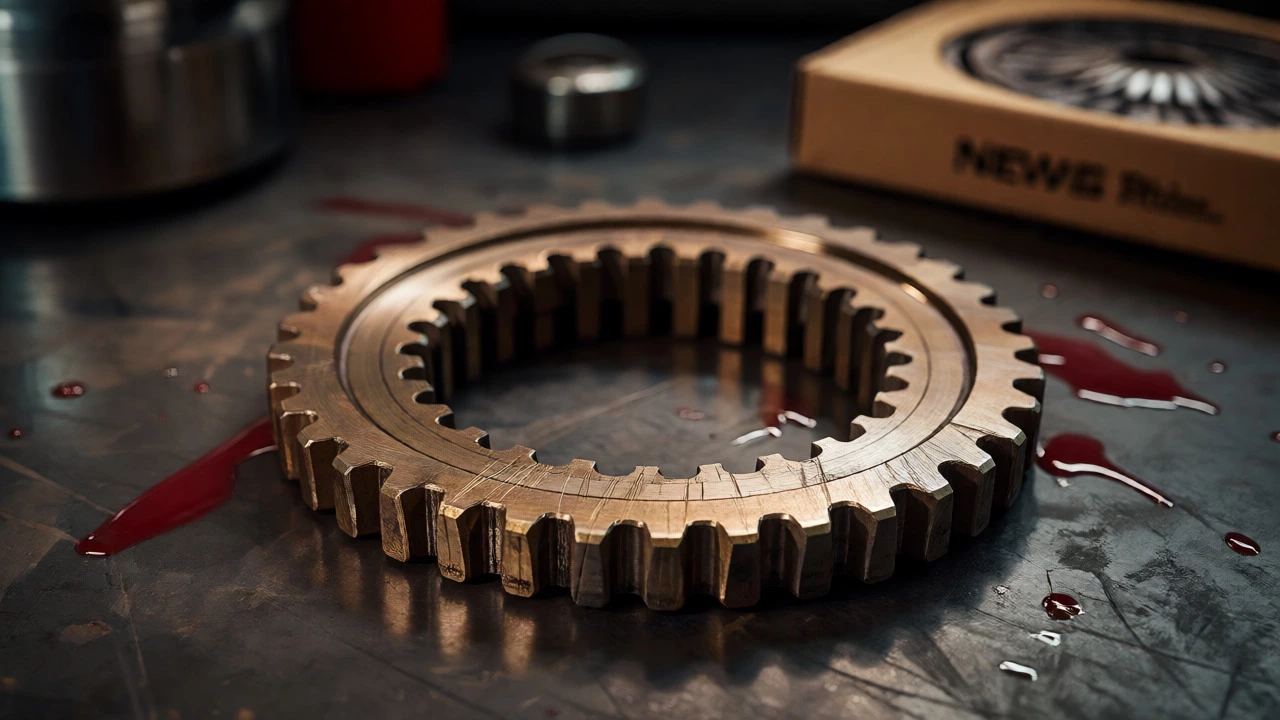
What does this feel like? Have you ever tried to force a gear into place while moving, only to hear that horrible crunching sound? That’s drag. The transmission input shaft is still spinning slightly because the clutch hasn’t let go. When you try to engage a new gear, the synchronizers-which are designed to match speeds-have to work overtime against an engine that won’t stop pushing power through. This puts immense stress on the brass synchronizer rings inside the gearbox.
Repeated forcing of gears under drag conditions wears down these synchronizers prematurely. Once a synchro ring is shot, that specific gear will grind every single time you shift into it, regardless of how good your clutch is later. So, a faulty clutch mechanism doesn’t just annoy you; it physically grinds away the precision components inside your transmission case. If you ignore a spongy pedal or a hard-to-shift lever, you are actively destroying your gearbox internals.
Vibration and Shudder: The Flywheel Factor
Sometimes the problem isn’t the clutch disc itself, but the surface it presses against: the flywheel. Modern dual-mass flywheels are complex pieces of engineering designed to dampen engine vibrations. Over time, the springs inside these flywheels can weaken or break. When this happens, the flywheel develops play, causing it to wobble or shudder under load.
This vibration transfers directly into the transmission input shaft. Imagine trying to balance a spinning top on a shaking table. The constant oscillation stresses the bearings and seals within the gearbox. In severe cases, this vibration can cause premature failure of the output shaft seal, leading to transmission fluid leaks. Low fluid levels mean poor cooling and lubrication, bringing us back to the overheating cycle mentioned earlier.
Furthermore, if a single-mass flywheel gets deeply grooved by a worn clutch disc, the replacement clutch won’t seat properly. Mechanics often recommend resurfacing or replacing the flywheel alongside the clutch kit. Skipping this step to save money can result in a new clutch failing quickly, continuing the cycle of vibration and potential transmission stress.
Identifying the Culprit: Diagnostic Checklist
Distinguishing between a dying clutch and a dying transmission can be tricky because their symptoms overlap. However, certain signs point specifically to the clutch causing the issue. Use this checklist to diagnose your vehicle before heading to the mechanic.
- High Revs, Low Speed: If you floor the accelerator in 4th or 5th gear and the RPMs jump but speed lags, your clutch is slipping. Check for a burning smell, which indicates overheated friction material.
- Hard Starting in Gear: If the car jerks forward violently when you start the engine while it’s in gear (and the clutch pedal is pressed), the clutch may not be fully disengaging.
- Grinding Only When Moving: If gears grind only when you are moving slowly or stopping, it’s likely a synchronization issue exacerbated by clutch drag. If they grind even when stopped, the transmission synchros might already be damaged.
- Fluid Leaks Near Bell Housing: Inspect the area where the engine meets the transmission. Wetness here could indicate a rear main engine seal leak contaminating the clutch, or a transmission input shaft seal leak caused by excessive wear.
- Pedal Feel Changes: A pedal that goes to the floor and stays there suggests hydraulic failure (master/slave cylinder). A pedal that vibrates excessively points to a warped flywheel or pressure plate.
| Symptom | Likely Clutch Issue | Likely Transmission Issue |
|---|---|---|
| RPM rises without acceleration | Yes (Slipping) | No |
| Grinding when shifting | Yes (Drag/Synchro wear) | Yes (Worn Synchros) |
| Burning rubber smell | Yes (Overheating) | No |
| Whining noise in Neutral | No | Yes (Input Shaft Bearing) |
| Leak behind engine | Yes (Rear Main Seal) | Yes (Input Shaft Seal) |
Prevention and Repair Strategy
If you catch the problem early, you can usually save the transmission. The golden rule is simple: never ignore a slipping or dragging clutch. Continuing to drive on a slipping clutch generates heat that cooks the transmission fluid. Once the fluid degrades, the damage spreads.
When it comes time for repair, do not skimp on the quality of the Clutch Kit. Reputable brands like LuK, Sachs, or Valeo engineer their kits to handle the thermal loads that cheap aftermarket alternatives cannot. A high-quality kit ensures proper clamp load and heat dissipation, protecting your gearbox.
Always replace the pilot bearing and throw-out bearing at the same time. These small components are cheap compared to labor costs. If you leave an old pilot bearing in place, it can seize up later, causing immediate drag and stressing the transmission input shaft again. Think of it as preventative maintenance for your gearbox’s entry point.
Finally, adjust your driving habits. Riding the clutch-keeping your foot resting lightly on the pedal while driving-is a major contributor to premature wear. It keeps the pressure plate partially engaged, creating constant micro-slipping and heat. Keep your left foot firmly on the floor unless you are actively changing gears. This simple habit extends the life of both your clutch and your transmission significantly.
Frequently Asked Questions
How long can I drive with a slipping clutch?
You should limit driving to essential trips only. Every mile driven with a slipping clutch generates excess heat that damages transmission bearings and fluid. Driving hundreds of miles in this state can turn a clutch replacement into a full transmission rebuild.
Does a bad clutch cause transmission fluid leaks?
Indirectly, yes. Excessive heat from a slipping clutch can degrade the seals around the transmission input shaft. Additionally, if the clutch assembly vibrates excessively due to a warped flywheel, it can loosen seal fittings, leading to leaks.
Is it cheaper to fix the clutch or the transmission?
Fixing the clutch is almost always cheaper. A clutch replacement typically costs between £400-£800 depending on the vehicle. A transmission repair or replacement can range from £1,500 to over £3,000. Addressing clutch issues early prevents the more expensive transmission damage.
Can a bad clutch ruin my engine?
It’s rare for a bad clutch to destroy the engine itself, but it can damage the flywheel, which is bolted to the crankshaft. If a dual-mass flywheel fails catastrophically, fragments can potentially damage nearby components, though this is uncommon.
Why does my car jerk when releasing the clutch?
Jerking upon release often indicates a worn or contaminated clutch disc, a warped flywheel, or a sticking slave cylinder. While it doesn’t immediately break the transmission, the sudden shock loads put unnecessary stress on the drivetrain mounts and gearbox internals.