Brake Pad Replacement Cost Estimator
Enter your details below to get a realistic estimate for your brake job in 2026.
You pull into the driveway, hear that familiar squeal, and dread the upcoming repair bill. How much does a set of 4 brake pads actually cost? The short answer is it varies wildly, but knowing the breakdown saves you from getting ripped off at the shop.
Most drivers underestimate this expense because they only look at the part price. In reality, labor makes up nearly half the total check. For a standard sedan in 2026, expect to pay between $150 and $300 per axle for parts alone. If you are replacing all four wheels (two axles), the parts alone range from $300 to $600. Add labor, which typically costs $80 to $150 per hour depending on your location, and the total job often lands between $400 and $800.
The Real Breakdown: Parts vs. Labor
When mechanics quote you, they split the bill into two distinct buckets: hardware and human effort. Understanding this distinction helps you negotiate better deals.
Ceramic brake pads are the most common choice for daily drivers today. They offer quiet operation and low dust production. A full set of four ceramic pads for a mid-size car like a Toyota Camry or Honda Accord usually costs between $120 and $200 online. Dealership brands might charge double that amount for the exact same quality.
Labor is trickier. Replacing front brakes is straightforward-remove the caliper, swap the pads, reassemble. Rear brakes can be more complex, especially if your car has electronic parking brakes (EPB). Many modern vehicles require a scan tool to retract the rear pistons before installing new pads. This extra step adds time, meaning higher labor costs. You might pay an extra $50-$100 just to reset those electronic components.
Factors That Swing the Price Tag
Why did your neighbor pay $300 while you quoted $700? Several variables dictate the final number.
- Vehicle Type: Luxury cars like BMWs or Audis use larger rotors and specialized pad compounds. Their parts cost significantly more than economy cars. High-performance vehicles with multi-piston calipers also drive up labor hours.
- Pad Material: Organic pads are cheap ($50-$100 for a set) but wear out fast and create dust. Semi-metallic pads are durable but noisy. Ceramic sits in the middle regarding price but offers the best balance for street driving.
- Geographic Location: Labor rates in New York City differ vastly from rural Ohio. Urban shops have higher overhead, reflected in hourly rates ranging from $100 to over $200 per hour.
- Shop Type: Independent garages generally charge less than dealerships. However, dealerships sometimes include software updates or warranty perks that justify the premium for newer cars still under factory coverage.
Do You Need Rotors Too?
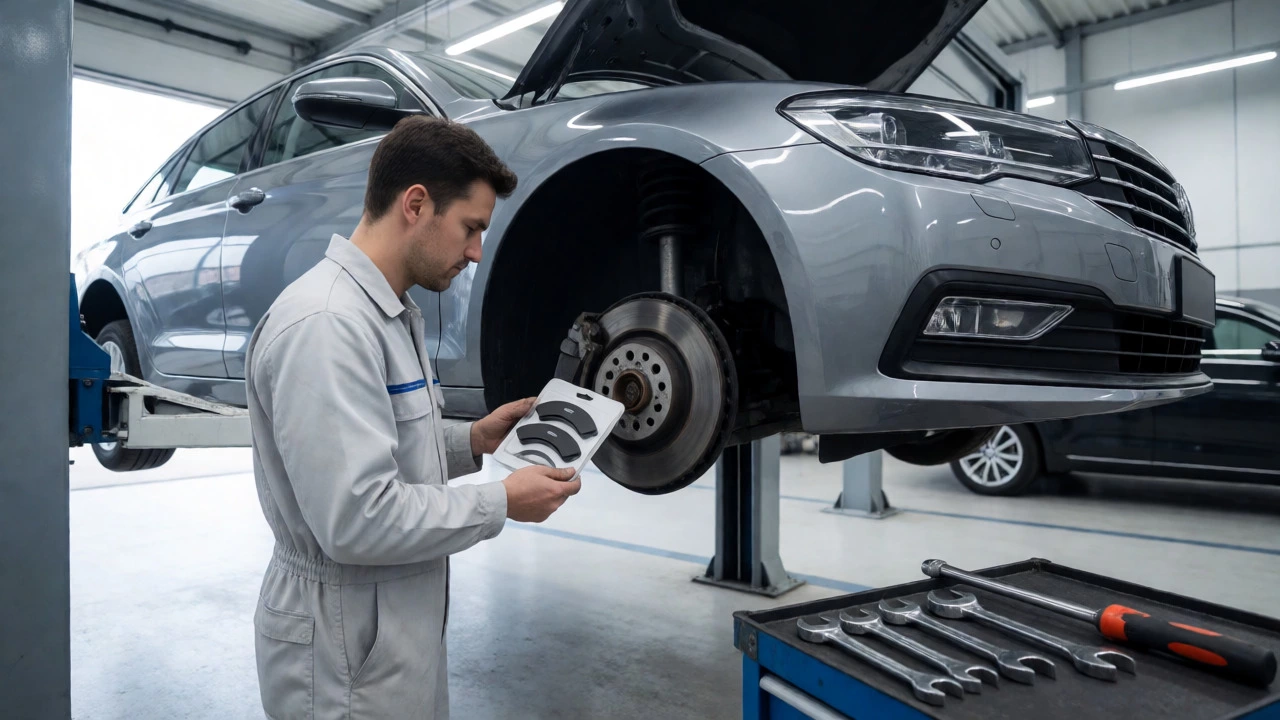
This is where budgets explode. While the question asks about pads, mechanics will almost always recommend replacing brake rotors simultaneously. Why? Because old rotors have grooves that prevent new pads from seating properly. If you skip rotor replacement, your new pads might not last as long, and you could experience vibration during braking.
A set of four rotors adds another $150 to $400 to the parts bill, depending on material. Standard cast iron rotors are affordable; coated or drilled-and-slotted rotors cost more. If your current rotors are thick enough and smooth, you might get away with "turning" them (resurfacing) instead of replacing. This costs $20-$40 per rotor but requires specific equipment many quick-lube shops lack.
| Vehicle Class | Parts Only (Pads & Rotors) | Labor Estimate | Total Estimated Cost |
|---|---|---|---|
| Economy Sedan (e.g., Corolla) | $250 - $350 | $150 - $250 | $400 - $600 |
| Mid-Size SUV (e.g., RAV4) | $350 - $500 | $200 - $300 | $550 - $800 |
| Luxury Sedan (e.g., BMW 3 Series) | $500 - $800 | $300 - $500 | $800 - $1,300 |
| Truck/SUV Heavy Duty | $400 - $600 | $250 - $400 | $650 - $1,000 |
DIY vs. Professional Installation
If you own basic tools-a jack, stands, wrenches, and a C-clamp-you can save the labor cost entirely. Buying a set of four high-quality ceramic pads online might cost you $150 total. Doing it yourself takes about 2-3 hours for a beginner. But here’s the catch: mistakes can be dangerous. Improper torque specs or failing to bleed the brakes (if you touched lines) leads to poor stopping power.
For most people, paying a professional is worth the peace of mind. Plus, reputable shops offer warranties on both parts and labor, often lasting 12 months or 12,000 miles. DIY voids any manufacturer warranty on the parts themselves if installation errors occur.
Hidden Costs You Might Miss
Quotations rarely cover everything upfront. Watch out for these add-ons:
- Caliper Service: If your calipers are stuck or leaking, they need rebuilding or replacement. This adds $100-$200 per corner.
- Sensor Replacement: Modern cars have wear sensors embedded in the pads. When the light comes on, you must replace the sensor too. These cost $10-$30 each but are essential for accurate monitoring.
- Fluid Flush: Some mechanics recommend flushing brake fluid every 2-3 years. This is good practice but optional unless the fluid is contaminated. It adds $80-$120 to the bill.
How to Save Money Without Sacrificing Safety
You don’t need to buy the most expensive brand to stay safe. Stick to major manufacturers like Brembo, Akebono, or Wagner. Avoid no-name brands sold in bulk bins at auto parts stores-they may contain excessive metal shards that grind down rotors faster.
Consider buying parts yourself and having a local mechanic install them. Some independent shops charge a flat fee for installation if you supply the parts, though they won’t warranty the parts themselves. Always ask for a written estimate before work begins. And never let a shop pressure you into replacing "everything" when only pads are worn. Check the thickness of your rotors first; many cars can go through two sets of pads on one set of rotors.
Is it cheaper to replace brakes in pairs or all four?
Replacing in pairs (both fronts or both rears) is standard and safer than doing just one wheel. Replacing all four at once is convenient and ensures even braking performance, but it doubles the immediate cost. If your front brakes wear faster (which they do), you might replace fronts now and rears later, spreading out the expense.
How long do brake pads last?
Typically, brake pads last between 30,000 and 70,000 miles. City driving with frequent stops wears them out faster than highway cruising. Aggressive driving habits, such as hard braking, can reduce lifespan by 20% or more.
Can I drive with bad brake pads?
You can drive briefly if there is still material left, but it’s risky. Once the metal backing plate touches the rotor, you’ll hear grinding noises. Continuing to drive then damages the rotor, turning a $300 job into a $600+ job. Never ignore the warning light or grinding sound.
What is the average labor rate for brake jobs?
As of 2026, average labor rates range from $80 to $150 per hour nationally. Major metropolitan areas often exceed $150/hour. Most brake jobs take 1-2 hours per axle, so labor costs typically fall between $150 and $300 for a full four-wheel replacement.
Are OEM brake pads worth the extra cost?
OEM (Original Equipment Manufacturer) pads match exactly what came on your car from the factory. They ensure perfect fitment and performance consistency. However, aftermarket brands often provide equivalent quality at 30-50% lower prices. Unless your car has specific regulatory requirements, high-quality aftermarket pads are usually sufficient.