
Fuel Pump Diagnostic Wizard
Follow the steps below to isolate the cause of your starting or running issues. Answer honestly based on your observations.
Recommended Next Steps
You turn the key. The engine cranks with that familiar, energetic whirring sound, but it just won't catch. Or maybe it starts fine on a cold morning, only to sputter and die when you try to accelerate up a steep hill. Your mind immediately jumps to the worst-case scenario: a dead fuel pump. It’s a scary thought because replacing one can cost hundreds of pounds in parts and labour. But here is the truth most mechanics won’t tell you upfront: roughly half the time, a "bad fuel pump" diagnosis is actually wrong. It’s often a clogged filter, a failing relay, or even a simple wiring issue masquerading as a pump failure.
Before you start draining your tank or quoting yourself for a new part, you need to play detective. Ruling out a bad pump isn't about guessing; it's about systematic elimination. You don't need a professional garage bay to do this. With a few basic tools and some patience, you can isolate the problem in your driveway. This guide walks you through exactly how to confirm if your pump is truly the culprit, or if something simpler is stealing your engine's breath.
The Classic Symptoms That Raise Red Flags
A failing fuel pump rarely dies instantly without warning. It usually sends distress signals over weeks or months. If you notice any of these signs, pay attention:
- Difficulty Starting: The engine cranks longer than usual before firing. This happens because the pump can't build enough initial pressure to prime the injectors.
- Sputtering at High Speeds: The car runs fine in town but jerks or stutters on the motorway. The pump struggles to maintain flow under high demand.
- Loss of Power Under Load: Climbing a hill or towing feels like the car is losing its will to live. The engine starves for fuel when asked to work hard.
- Whining Noise from the Rear: A loud hum coming from under the back seat or trunk area. Healthy pumps are quiet; dying ones get noisy as internal bearings wear out.
- Engine Stalling After Sitting: The car starts, runs for ten minutes, then dies. Let it cool down, and it starts again. This suggests the pump overheats and cuts out.
While these point toward the pump, they aren't exclusive to it. A dirty air filter or a faulty spark plug can mimic power loss. That’s why we move to testing.
The Listening Test: Your First Line of Defence
This is the simplest check and should always be step one. Most modern cars use electric fuel pumps located inside the fuel tank. When you turn the ignition key to the "On" position (before starting the engine), the pump primes the system for two to three seconds.
Get into the driver’s seat, close the doors, and roll down the windows slightly to reduce wind noise. Turn the key to "On." Listen carefully for a brief hum or buzz from the rear of the vehicle.
| Sound Observed | Likely Cause | Next Step |
|---|---|---|
| Clear, short hum (2-3 secs) | Pump is working correctly | Check spark plugs or fuel pressure regulator |
| No sound at all | Electrical fault or dead pump | Check fuses, relays, and voltage |
| Loud whine or grinding | Worn bearings or debris | Inspect fuel filter and replace pump |
| Intermittent buzzing | Failing electrical connection | Inspect wiring harness and connectors |
If you hear nothing, don't panic. It doesn't automatically mean the pump is broken. It could mean the fuse is blown, the relay is stuck, or the wiring is corroded. We'll tackle those next. If you hear a loud, strained whine, the pump is likely struggling against resistance-often due to a clogged filter-or wearing out internally.
Ruling Out Electrical Gremlins: Fuses and Relays
Before condemning the mechanical component, verify the electricity reaching it. Electric fuel pumps are robust; they don't fail electrically very often unless there's an external issue. Start with the fuel pump relay, which is a small switch that controls power to the pump based on signals from the engine computer.
Locate your fuse box (usually under the dashboard or in the engine bay). Consult your owner’s manual to identify the fuel pump relay. Many cars allow you to swap this relay with an identical one from another circuit, like the horn or AC fan. Swap them and try to start the car. If the car starts, the old relay was faulty. Problem solved for £10.
If swapping the relay doesn't help, check the fuse. Pull it out and inspect the metal strip inside. If it's broken, replace it. If the new fuse blows immediately upon turning the key, you have a short circuit in the wiring, not a bad pump. This requires tracing wires, which is a different beast entirely.
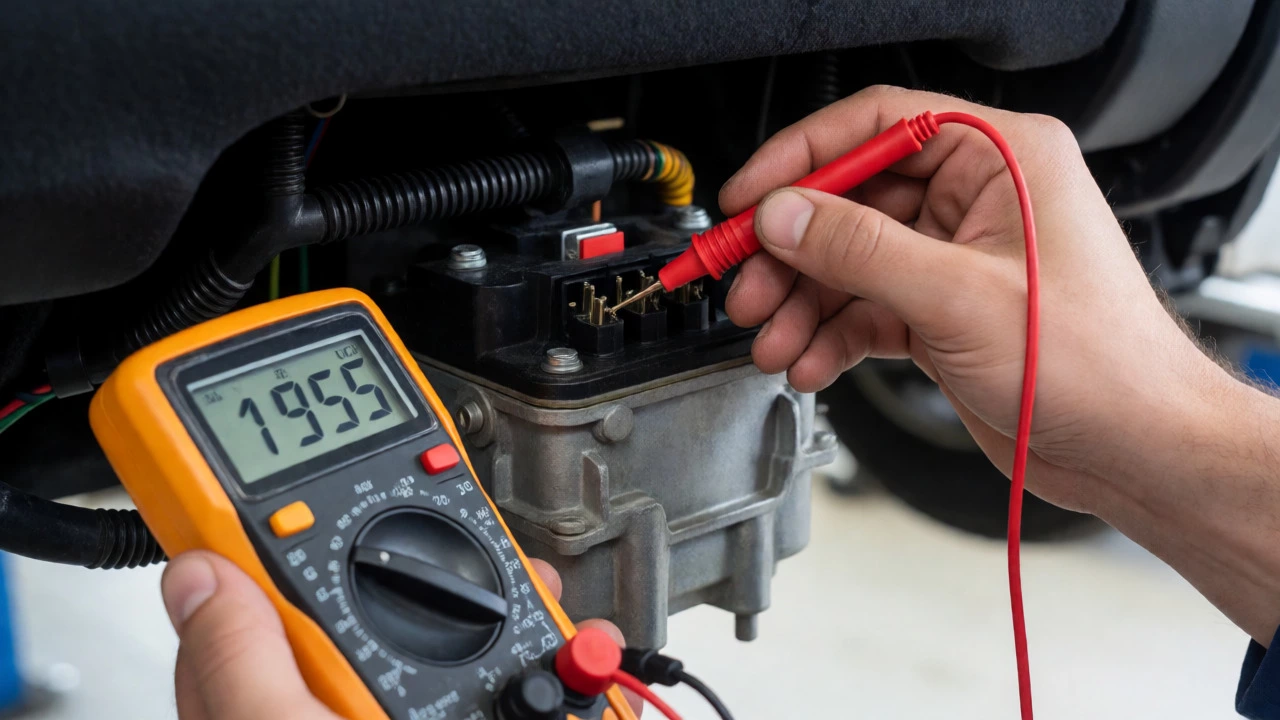
For a more definitive electrical test, use a multimeter. Access the fuel pump connector (often found under the rear seat access panel). Set your multimeter to DC Volts. Have an assistant turn the key to "On" while you probe the power pin. You should see battery voltage (around 12V) for those first few seconds. If you have voltage but no pump noise, the pump is dead. If you have no voltage, the problem is upstream-in the relay, fuse, or wiring.
The Pressure Test: The Gold Standard for Diagnosis
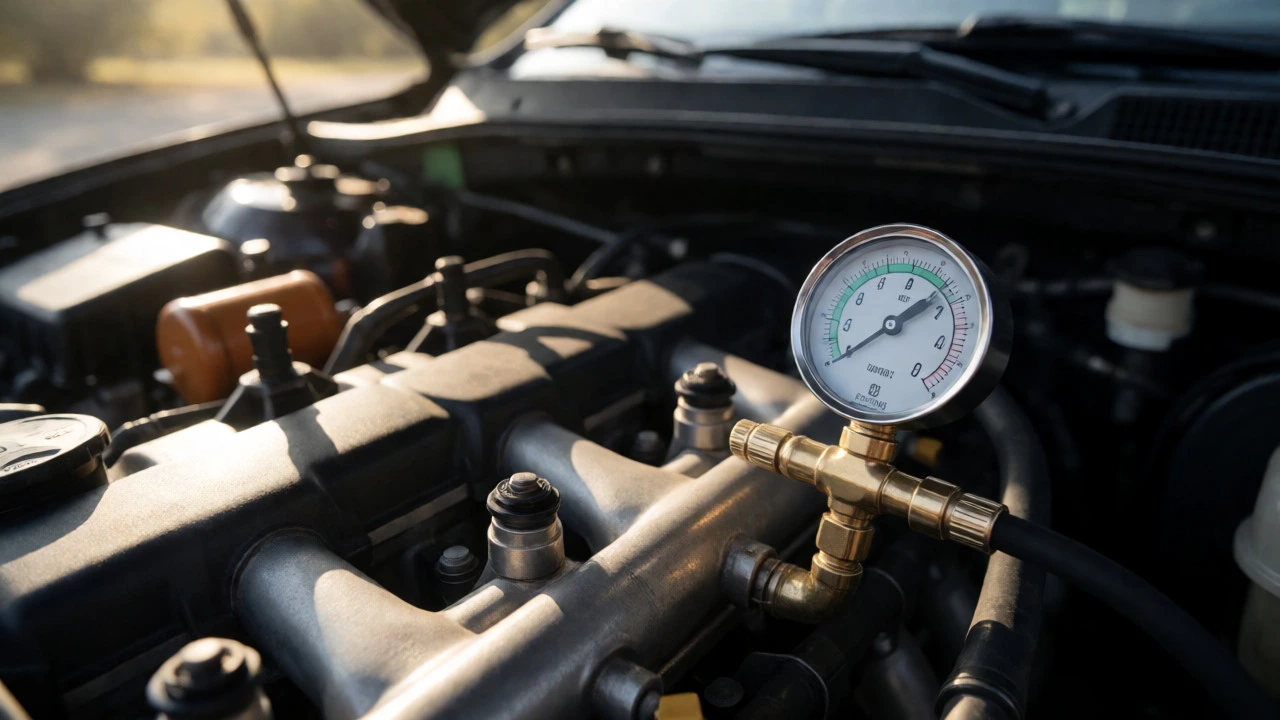
If the electrical checks pass but the car still misbehaves, you need to measure what the pump is actually doing. This requires a fuel pressure gauge. These are inexpensive tools available at any auto parts store.
Most cars have a Schrader valve on the fuel rail (the pipe feeding the injectors), similar to a tyre valve. Connect your gauge here. Turn the key to "On" without starting the engine. Watch the needle rise. Every car has specific specifications, typically between 30 and 65 PSI depending on whether it uses port injection or direct injection. Check your service manual for the exact number.
Here is how to interpret the results:
- Pressure is too low: The pump isn't pushing hard enough. This confirms a weak pump or a severely clogged filter restricting flow.
- Pressure rises but drops quickly after turning off: The check valve inside the pump is leaking. Fuel drains back into the tank, causing long crank times.
- Pressure fluctuates wildly while running: The pump is inconsistent. Internal components are breaking down, sending erratic pulses of fuel.
- Pressure is normal: The pump is likely healthy. Look elsewhere-injectors, spark plugs, or sensors.
Don't skip the filter inspection during this stage. A blocked fuel filter creates back-pressure that kills pumps. If the filter is dirty, replace it first. A new filter might restore perfect pressure, saving you from replacing the pump unnecessarily.
Distinguishing Between Pump Failure and Other Issues
It’s frustrating when tests come back inconclusive. Here are common culprits that look like pump failures:
Clogged Catalytic Converter: If exhaust gases can't escape, the engine chokes. This causes power loss at high speeds, just like a weak pump. A quick way to rule this out: remove the front oxygen sensor temporarily. If power returns, it's the cat, not the pump.
Faulty Crankshaft Position Sensor: This sensor tells the computer where the pistons are. If it fails, the computer doesn't know when to fire the spark or open the injectors. The engine cranks but never starts. Unlike a pump issue, you’ll usually find no fuel spray when checking injectors.
Vacuum Leaks: Too much air entering the engine leans out the mixture, causing rough idling and stalling. Use carburettor cleaner around intake hoses while the engine runs. If the RPMs change, you’ve found a leak.
When to Replace vs. Repair
If you've confirmed the pump is bad via listening tests and pressure readings, replacement is usually the only option. In-tank pumps are sealed units; trying to rebuild them is rarely worth the effort compared to buying a new assembly.
However, consider the context. If your car is older with high mileage, replacing the pump alone might not solve everything. Often, mechanics recommend replacing the fuel filter and cleaning the tank strainer at the same time. Debris from the old pump can contaminate the tank, leading to premature failure of the new unit.
Also, check the wiring harness. Old rubber insulation cracks over time. If you're dropping the tank to replace the pump, take five minutes to inspect the connector pins for corrosion. Cleaning them now prevents future headaches.
Pro Tips for DIY Diagnostics
- Tap Test: Sometimes, lightly tapping the bottom of the fuel tank with a hammer while someone turns the key can jolt a stuck pump into action. If the car starts after tapping, the pump is definitely failing.
- Smell for Gasoline: A strong smell of raw petrol near the filler cap or under the rear seats can indicate a leaking seal or cracked line, not necessarily a pump failure. Inspect visually before assuming the worst.
- Check the Ground Strap: Corroded ground connections can cause intermittent electrical faults that mimic pump issues. Clean the body-to-engine ground points.
Ruling out a bad fuel pump is about eliminating variables. Start with the free checks-listening and swapping relays. Move to the cheap fixes-fuses and filters. Only commit to the expensive repair when the data supports it. By following this logical path, you save money and avoid replacing perfectly good parts.
Can I drive my car with a bad fuel pump?
You can drive short distances, but it is risky. A failing pump may cut out suddenly, leaving you stranded in traffic. Additionally, if the pump is shedding internal debris, that junk can clog your fuel injectors, turning a £100 pump job into a £500 injector cleaning bill. Limit driving until repaired.
How much does it cost to replace a fuel pump?
In the UK, parts typically range from £80 to £250 depending on the vehicle model. Labour adds another £100 to £200 because accessing the pump often requires removing the fuel tank. Total costs usually fall between £200 and £450. DIY replacement saves the labour cost but requires safety precautions regarding flammable fuel.
What does a bad fuel pump sound like?
A healthy pump makes a faint, consistent hum. A bad one often produces a louder whining, groaning, or grinding noise. If you hear silence when the key is turned to 'On', the pump may be completely dead or not receiving power. Intermittent buzzing suggests loose wiring or a failing relay.
Does a bad fuel pump throw a code?
Not directly. There is no sensor specifically monitoring the pump's health. However, a weak pump causes lean fuel conditions, which triggers codes like P0171 (System Too Lean) or P0087 (Fuel Rail/System Pressure Too Low). These codes point to the symptom, not the root cause, so further testing is required.
Can a clogged fuel filter damage the pump?
Yes, absolutely. A clogged filter restricts flow, forcing the pump to work harder to push fuel through. This generates excess heat and wears out the pump's internal bearings prematurely. Replacing the filter regularly extends the life of the pump significantly.