Spark Plug Replacement Calculator
Spark Plug Condition
Estimated Time
Estimated Savings
Required Tools
- Spark plug socket (5/8" or 16mm)
- Ratchet with extension
- Torque wrench (recommended)
- New spark plugs (exact type)
Recommendation
Changing spark plugs sounds like one of those car chores that only mechanics do-expensive, complicated, maybe even dangerous. But here’s the truth: for most cars, it’s one of the easiest things you can do yourself. No special engineering degree. No fancy tools beyond what’s in a basic toolkit. And you can save yourself over $100 in labor costs if you do it right.
Why Spark Plugs Matter
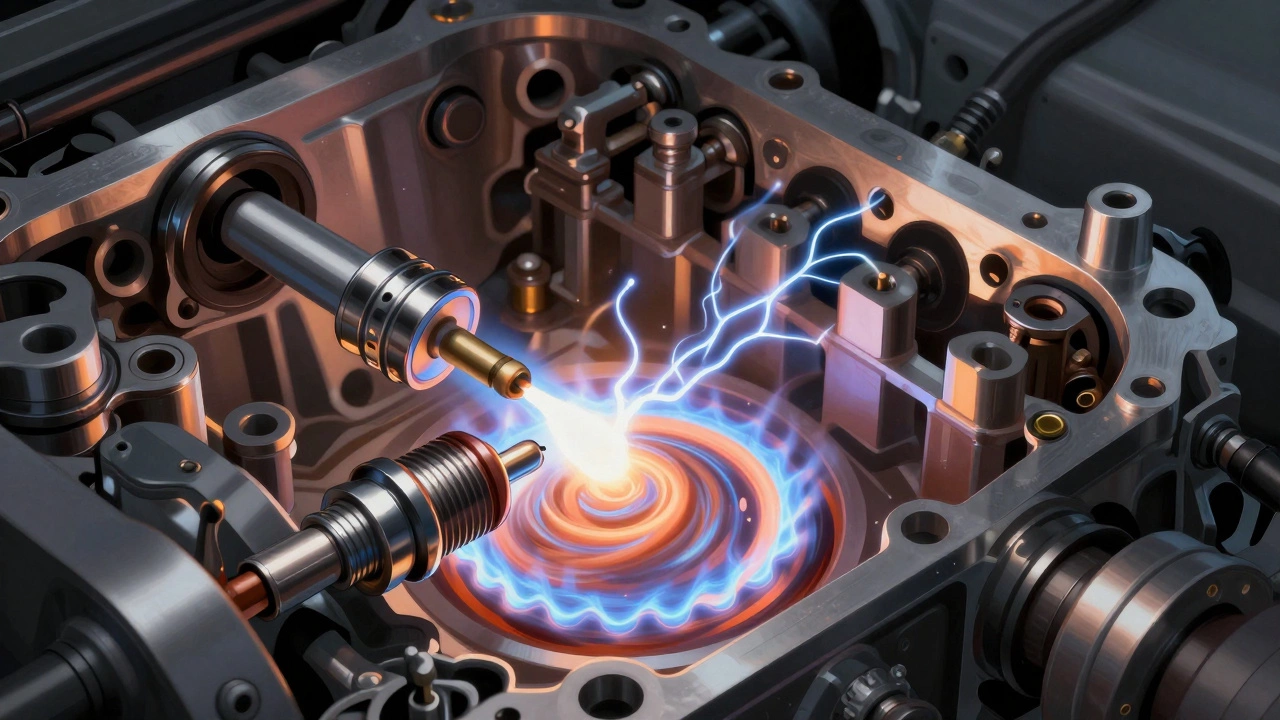
Spark plugs aren’t just little metal parts stuck in your engine. They’re the heart of combustion. Every time your engine fires, a spark plug sends a high-voltage pulse across a tiny gap, igniting the fuel-air mixture. If they’re worn out, dirty, or misfiring, your car runs rough, loses power, and burns more fuel. Some drivers don’t notice until their check engine light flashes or they hear a knocking sound from the engine. Others wait until their car won’t start at all. Neither scenario is fun.
Most manufacturers recommend replacing spark plugs every 30,000 to 100,000 miles, depending on the type. Standard copper plugs last around 30,000 miles. Platinum and iridium plugs, which are more common in newer cars, can go up to 100,000. But if you drive in stop-and-go traffic, haul heavy loads, or live in a dusty area, they wear out faster. Don’t wait for failure-check your owner’s manual.
Is It Really That Easy?
Yes. But with conditions.
The biggest factor is engine layout. If your car has a transverse-mounted engine (most modern sedans and SUVs), the spark plugs are usually on top of the engine, easy to see and reach. You can change them in under an hour with basic tools. If you have an older V6 or V8 with a longitudinal engine (like many trucks or older muscle cars), some plugs might be tucked behind the intake manifold or hard to reach. Those take more time, sometimes an extra hour or two.
Here’s how it breaks down:
- Easy: 4-cylinder engines, modern compact cars, front-wheel drive models (Honda Civic, Toyota Corolla, Ford Focus)
- Medium: V6 engines with decent clearance (Honda Accord, Toyota Camry)
- Hard: V8 engines, rear-wheel drive cars with tight engine bays (Chevy Camaro, Ford Mustang), or engines with intake manifolds covering the plugs
Most people fall into the first two categories. If you’re not sure, look up your car model online. YouTube has thousands of videos showing exactly how the spark plugs are positioned in your exact car.
What You Need
You don’t need a full garage. Just these tools:
- A spark plug socket (usually 5/8 inch or 16mm-check your plug size)
- A ratchet (6-inch extension helps)
- A torque wrench (optional but highly recommended)
- New spark plugs (exact type for your car)
- Gap tool
- Compressed air or a brush (to clean around the plugs)
- Anti-seize compound (optional, but good for aluminum heads)
Don’t skip the spark plug socket. It’s rubber-lined to grip the plug without cracking the ceramic insulator. A regular socket will ruin your new plugs before you even install them.
Buy the right plugs. Don’t guess. Use your VIN or model year on a site like RockAuto or AutoZone’s online tool. If you buy the wrong heat range or thread size, you can damage the cylinder head. I’ve seen it happen-someone put iridium plugs in an old Chevy with a cast-iron head, and the threads stripped after 2,000 miles.
Step-by-Step: How to Change Spark Plugs
Here’s the real deal, no fluff:
- Let the engine cool. Hot engines can warp threads or burn you. Wait at least 30 minutes after driving.
- Disconnect the battery. It’s not always required, but it prevents accidental sparks or electrical damage while you work.
- Remove the ignition coils or wires. On newer cars, each plug has its own coil pack. Unplug the electrical connector and unscrew the bolt holding the coil. Gently pull it straight up. On older cars, pull the boot off the plug-don’t yank the wire. Use a twisting motion.
- Clean the area. Use compressed air or a brush to blow debris away from the plug hole. If dirt falls in, you’ll scratch the cylinder wall. That’s expensive to fix.
- Remove the old plug. Put the socket on the plug, attach the ratchet, and turn counterclockwise. If it’s stuck, spray a little penetrating oil around the base and wait 10 minutes. Don’t force it.
- Check the gap on the new plug. Even if the box says “pre-gapped,” always check. Use a feeler gauge. Most modern engines need 0.028 to 0.032 inches. Adjust if needed.
- Install the new plug. Hand-tighten first. Then use the torque wrench to tighten to the spec in your manual-usually 15-20 lb-ft. If you don’t have a torque wrench, snug it, then give it a quarter-turn more. Over-tightening cracks the plug. Under-tightening causes leaks.
- Reattach the coil or wire. Push it down until it clicks. Plug in the connector.
- Repeat for all plugs. Do one at a time. Don’t remove all at once. You might mix up the firing order.
- Reconnect the battery. Start the car. Listen. It should idle smoother. If it doesn’t, double-check connections.
Common Mistakes (And How to Avoid Them)
Even experienced DIYers mess this up. Here’s what goes wrong:
- Using the wrong plug type. Always match the heat range, thread reach, and electrode type. A plug that’s too cold won’t self-clean. One that’s too hot can cause pre-ignition.
- Not checking the gap. Some manufacturers ship plugs pre-gapped, but shipping and handling can change it. Always verify.
- Over-tightening. Aluminum heads are soft. Too much torque strips threads. You’ll need a helicoil repair, which costs $300+.
- Forgetting to clean debris. A single grain of dirt falling into the cylinder can score the piston. Use air, not your mouth.
- Replacing only half the plugs. If one’s worn, the others are close behind. Replace them all.
When You Shouldn’t Do It Yourself
There are exceptions. If your car has:
- Plugs buried under the intake manifold (common on some V6 Fords and GMs)
- Electronic throttle bodies that require relearning after disconnecting
- Coil-on-plug systems with fragile wiring harnesses
Then it’s smarter to let a pro handle it. Some jobs take 3+ hours and require removing the intake, fuel rails, or even the throttle body. That’s not worth the risk unless you’re comfortable with engine disassembly.
Still, for 80% of cars on the road today, changing spark plugs is a 45-minute job. You’ll know you did it right when your car idles smoother, accelerates quicker, and gets better fuel economy. I’ve tested this myself on my 2018 Toyota Camry. After replacing the plugs, my highway MPG jumped from 31 to 34. That’s $15 a month in savings.
How Often Should You Really Change Them?
Don’t just follow the manual blindly. Track your driving habits. If you:
- Take short trips under 5 miles (engine never warms up fully)
- Drive in heavy traffic with frequent idling
- Live in a humid or dusty climate
Then consider replacing them at 60,000 miles, even if the manual says 100,000. Carbon buildup from cold starts kills plugs faster than you think. I’ve pulled out plugs from cars with 80,000 miles that looked like they’d been in a coal mine.
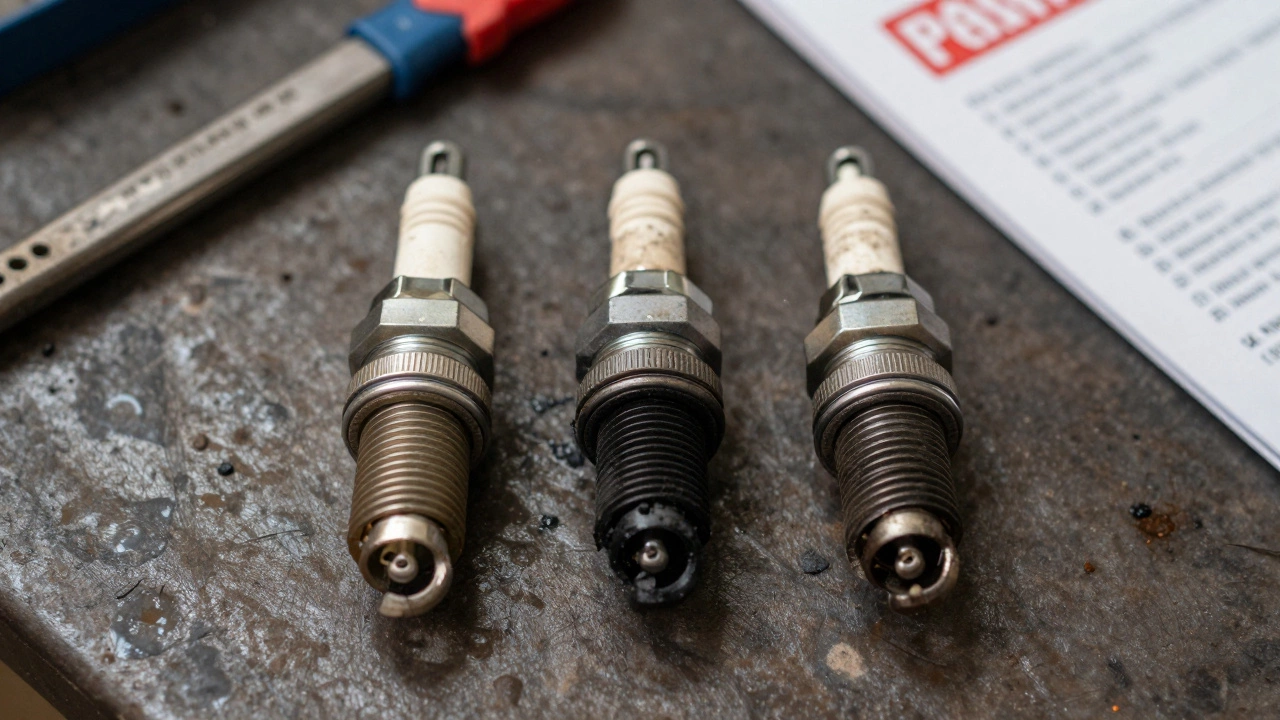
And if you’re unsure if yours are bad? Pull one out. Look for:
- Black, sooty deposits (rich fuel mixture)
- White or blistered electrodes (overheating)
- Worn or eroded electrodes (normal wear)
- Oil residue (valve seal leak)
A clean, light brown plug is perfect. Anything else? Time to replace.
Final Thoughts
Changing spark plugs isn’t magic. It’s mechanics 101. You don’t need to be a genius. You just need patience, the right tools, and the willingness to look under the hood. It’s one of the few maintenance tasks that gives you immediate feedback-better performance, smoother ride, lower fuel bills.
Grab the tools. Watch one video of your exact car model. Do it on a weekend. You’ll feel smarter. And your engine will thank you.