Car Radiator Health Check
Answer the questions below to estimate the health of your car's radiator and cooling system.
Maintenance History
Current Symptoms
You’re driving along, minding your own business, when suddenly the temperature gauge starts climbing. Maybe you see steam hissing from under the bonnet, or perhaps a puddle of green or pink fluid appears on your driveway. It’s stressful, expensive, and confusing. Most drivers assume their car radiator just "wore out" after a certain number of miles. But that’s rarely the whole story. Radiators don’t usually fail because they get old; they fail because something else in the cooling system went wrong first.
If you want to avoid a tow truck bill next summer, you need to understand what actually kills these components. It’s not just age. It’s chemistry, pressure, and neglect. Let’s break down exactly why radiators die and how you can spot the trouble before it leaves you stranded.
The Silent Killer: Corrosion and Electrolysis
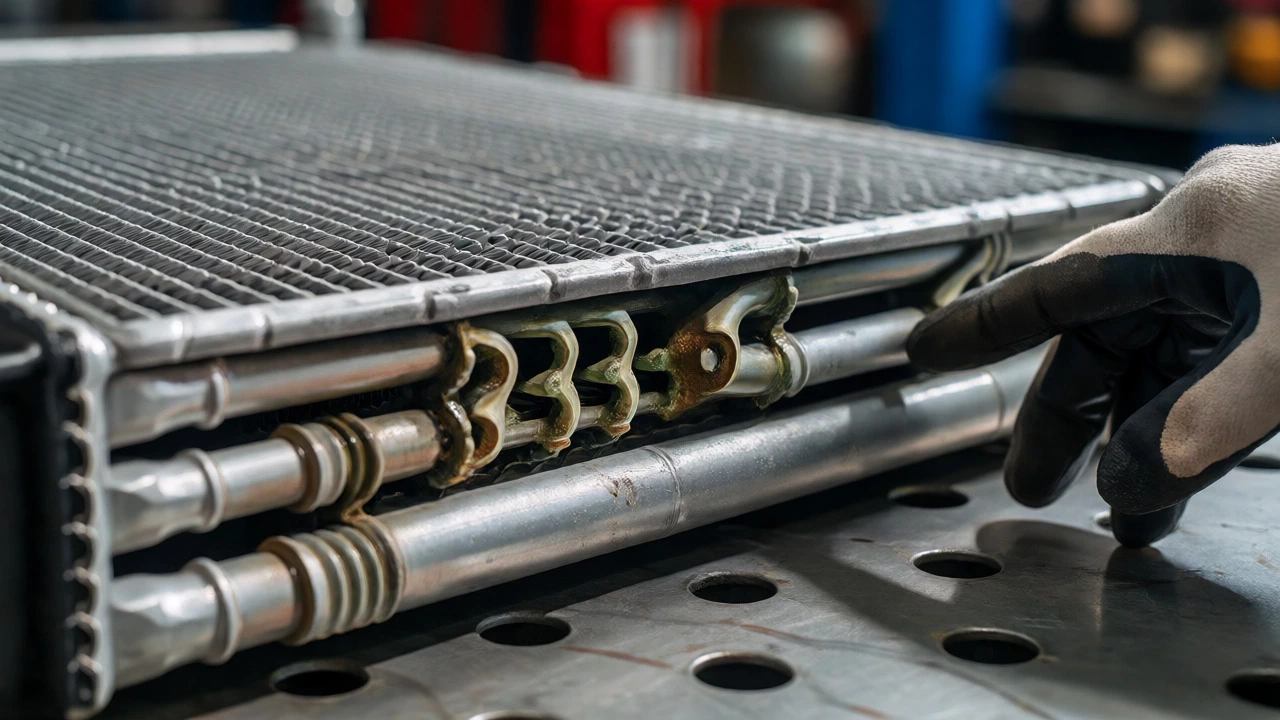
Think of your cooling system as a closed loop of metal and fluid. When different metals meet-like aluminium in the radiator and copper or brass in older heater cores-they create a tiny battery effect. This is called electrolysis. Over time, this electrical current eats away at the metal walls of the radiator tubes from the inside out.
You might think, "I use proper antifreeze, so I’m safe." Not necessarily. Coolant contains inhibitors that protect against corrosion, but these additives degrade. If you haven’t changed your coolant in five years, those protective chemicals are gone. The fluid turns acidic. Suddenly, your radiator isn’t being protected; it’s being dissolved. This process creates sludge that clogs the narrow fins, reducing efficiency long before a hole actually forms.
| Issue | Cause | Result |
|---|---|---|
| Acidic Coolant | Expired inhibitor package | Internal pitting and holes |
| Mixing Coolants | Incompatible chemical bases (e.g., OAT vs. HOAT) | Gel formation and blockages |
| Hard Water | High mineral content (calcium/magnesium) | Scale buildup on fins |
Physical Damage: Debris and Impact
Radiators sit at the very front of your car. They are the first line of defence against the road. Every pebble kicked up by the car in front of you, every bug splatter, and every bit of plastic shopping bag caught in the grille puts stress on those delicate aluminium fins.
Small dents might seem harmless, but if enough fins get bent over a section of the core, air can’t flow through properly. The radiator works harder to dissipate heat, causing hot spots. These hot spots weaken the solder joints holding the tubes to the end tanks. Eventually, one of those joints cracks, and you get a slow leak that’s hard to find until it becomes a spray.
Then there’s the big impact. A stone hitting the core at 70 mph can puncture a tube instantly. Or, if you’ve had a minor front-end collision-even a low-speed bumper tap-the mounting tabs can crack. If the radiator shifts even slightly, the rubber hoses connecting to it get twisted. A twisted hose restricts flow and pulls on the radiator neck, eventually cracking the plastic tank where the hose attaches.
The Pressure Problem: Bad Caps and Blocked Systems
Here’s a fact many people miss: your cooling system is pressurised. The radiator cap isn’t just a lid; it’s a pressure relief valve. It keeps the boiling point of the coolant high (around 120°C instead of 100°C) by maintaining pressure within the system.
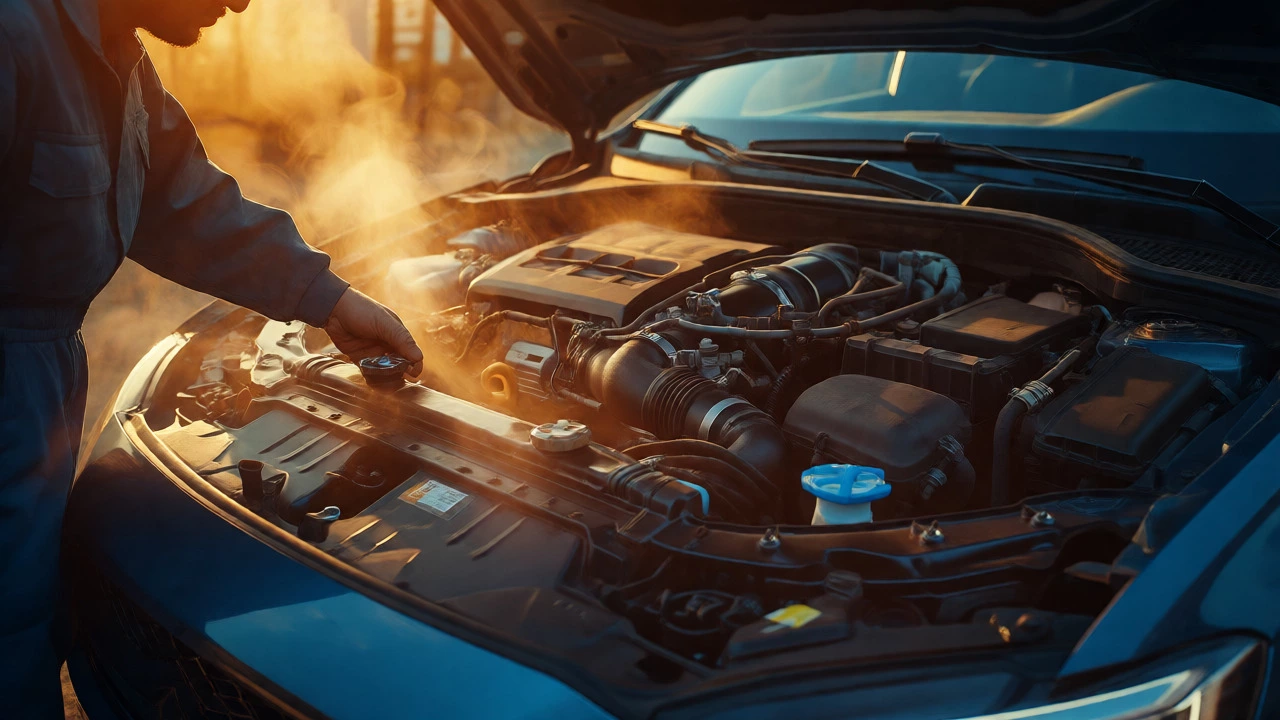
If the spring in that cap weakens, the system loses pressure. The coolant boils at a lower temperature, creating vapour pockets. Vapour doesn’t transfer heat like liquid does. Your engine overheats, but the radiator itself might be fine initially. However, the sudden expansion of steam can blow out the side tanks or force coolant past seals that weren’t designed for that kind of surge.
Conversely, if the vacuum valve in the cap fails, it won’t let coolant return from the overflow tank when the engine cools down. This causes airlocks. Air bubbles trapped in the radiator stop it from filling completely. You run with less coolant than you should, leading to localized overheating and eventual warping of the aluminium core.
Contamination: The Head Gasket Connection
Sometimes, the radiator isn’t the culprit-it’s the victim. One of the most common reasons for premature radiator replacement is a leaking head gasket.
When a head gasket fails, combustion gases escape into the cooling channels. These gases are extremely hot and highly pressurised. They bubble through the coolant, turning it into a foamy mess that looks like chocolate milkshake. Worse, the exhaust gases contain sulphur compounds that react with the coolant to form sulfuric acid.
This acid attacks the internal surfaces of the radiator aggressively. It also degrades the rubber hoses and water pump seals. If you replace a radiator without fixing the head gasket, the new unit will likely fail within months due to this chemical attack. Always check for hydrocarbons in the coolant using a test kit before blaming the radiator itself.
Neglect and Maintenance Mistakes
It sounds obvious, but running an engine with low coolant is a death sentence for the radiator. When the level drops, the top part of the radiator runs dry. Dry aluminium heats up much faster than wet aluminium. This thermal shock can warp the core plates. Once warped, the seal between the tubes and the header tanks breaks. Now you have a leak that started because someone forgot to top up the reservoir.
Another common mistake is topping up with plain tap water in hard water areas. In Bristol, for example, the water has significant mineral content. Tap water leaves calcium deposits inside the radiator. These deposits act like insulation, preventing heat from transferring from the metal to the air. The radiator gets hotter internally, weakening the solder joints over time. Use distilled water or pre-mixed coolant to keep the internals clean.
How to Spot Trouble Early
You don’t need to wait for steam to know something is wrong. Here is what to look for during your monthly walk-around:
- Discoloured Fluid: Fresh coolant is bright green, orange, or pink. If it looks rusty, brown, or oily, contamination is happening.
- Damp Spots: Check behind the front grille. Look for white or crusty residue around the hose connections. This indicates a slow weep.
- Bent Fins: Use a flashlight to look through the grille. Are large sections of fins flattened? Clean them gently with a soft brush or compressed air (from the back).
- Temperature Fluctuations: If your needle jumps erratically while idling in traffic, it could mean poor airflow across the radiator or a failing thermostat, both of which stress the system.
Remember, the radiator is the heart of your cooling system, but it relies on the rest of the body to function correctly. Keep the coolant fresh, check the cap regularly, and fix leaks immediately. Your wallet-and your engine-will thank you.
Can I drive with a small radiator leak?
You can drive short distances if the leak is very slow and you monitor the temperature gauge constantly. However, you must top up the coolant frequently. Driving with a low coolant level risks overheating, which can warp the cylinder head and cause far more expensive damage than replacing the radiator.
How often should I change my coolant?
Most manufacturers recommend changing coolant every 5 years or 60,000 miles, whichever comes first. Some modern long-life coolants last up to 10 years. Check your owner's manual for the specific interval. Never guess; expired coolant loses its anti-corrosion properties, leading to internal radiator decay.
Is it cheaper to repair or replace a radiator?
For modern aluminium radiators, replacement is almost always cheaper and more reliable. Repairing plastic tanks or welding thin aluminium tubes requires specialised skills and labour costs that often exceed the price of a new aftermarket unit. Repairs are typically only cost-effective for classic cars or rare vehicles where original parts are unavailable.
What causes white smoke from the radiator?
White smoke or steam coming from the radiator area usually means the coolant is boiling over due to overheating. This can be caused by a blocked radiator, a failed fan, a stuck thermostat, or a blown head gasket allowing combustion gases into the system. Stop driving immediately to prevent engine seizure.
Does mixing different types of coolant ruin the radiator?
Yes, it can. Different coolants use different chemical bases (such as silicate-based vs. organic acid technology). Mixing them can cause the additives to react, forming a gel or sludge. This sludge blocks the narrow passages in the radiator, reducing cooling efficiency and potentially causing overheating. Always flush the system thoroughly before switching coolant types.