Spark Plug Replacement Diagnostic & Savings Calculator
Enter your vehicle details and current symptoms below to estimate annual fuel savings and check for common post-installation issues.
Awaiting Input
Fill out the form to see estimated savings and diagnostic advice.
You just spent the afternoon under the hood, hands greasy, swapping out those old, carbon-crusted spark plugs for shiny new ones. You close the bonnet, turn the key, and expect your car to feel like a completely different machine. But does it? The reality is often more subtle than the internet promises. While some drivers notice an immediate surge in power, others find their car feels exactly the same-or even slightly rougher-for a few days.
Why does this happen? Is your installation wrong, or is there a normal "break-in" period? This guide cuts through the myths to tell you exactly what physical changes you should expect in throttle response, fuel consumption, and idle quality after replacing your ignition components. We’ll also cover the red flags that mean something went wrong during the swap.
The Immediate Sensory Changes
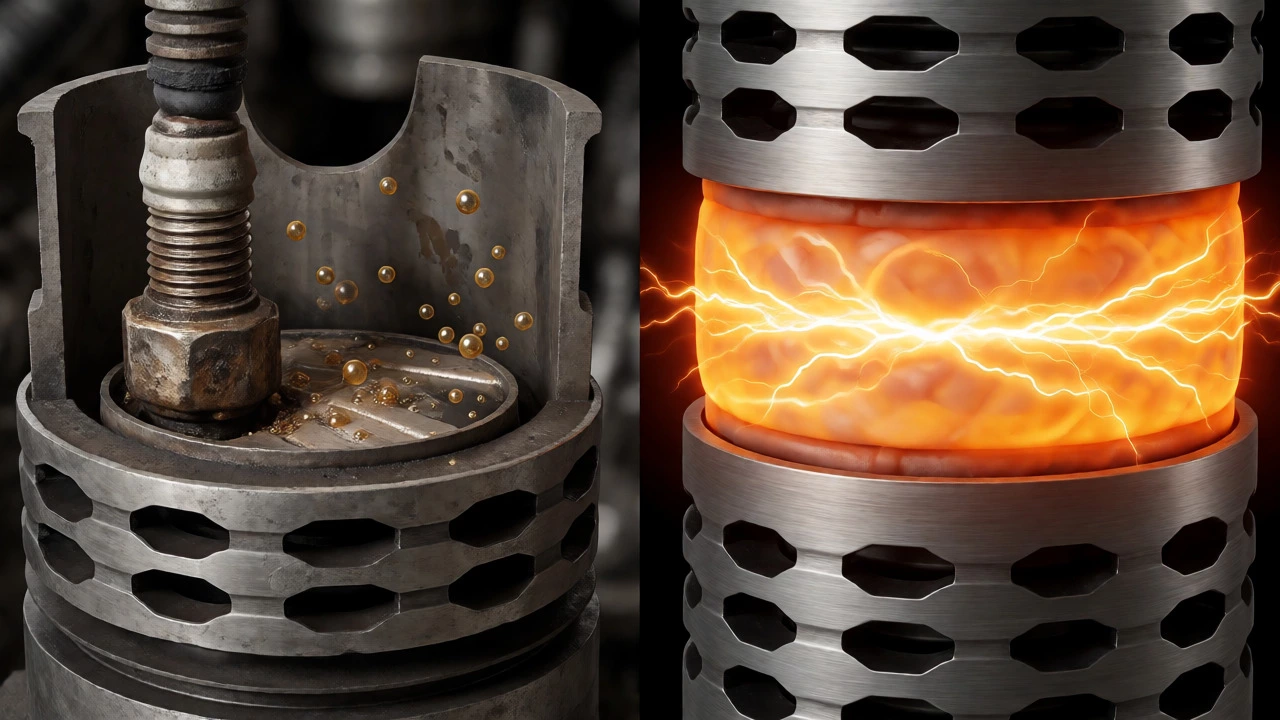
Let’s start with what you can feel right away. When spark plugs are worn, they create a weaker spark due to increased gap distance and electrode erosion. This leads to incomplete combustion. Replacing them restores the precise electrical arc needed to ignite the air-fuel mixture efficiently.
Most drivers report three immediate improvements:
- Smoother Idle: If your car had a slight shudder at traffic lights before, that vibration should vanish. A consistent spark means each cylinder fires at the exact same time, balancing the engine’s rotation.
- Crisper Throttle Response: Pressing the accelerator pedal results in less lag. You aren’t necessarily getting more horsepower (unless you were losing significant efficiency), but you are getting more of the power your engine was already capable of producing.
- Easier Cold Starts: Worn plugs struggle to generate enough heat and voltage to ignite cold, dense fuel mixtures. New plugs, especially if they match the manufacturer's heat range specifications, make morning starts instant.
However, don’t expect a rocket ship. If your car was running fine before, the difference might be marginal. The biggest gains come when the old plugs were severely degraded-say, beyond 60,000 miles on standard copper plugs or showing visible damage.
Fuel Economy: The Slow Burn Improvement
Here is where patience pays off. You won’t see a jump in your MPG gauge the moment you pull out of the driveway. Fuel efficiency improvements from spark plug replacement are cumulative and depend heavily on driving habits.
Incomplete combustion wastes fuel. Instead of turning into energy, unburnt hydrocarbons exit through the exhaust. By fixing the spark, you stop wasting gas. According to general automotive data, replacing worn plugs can improve fuel economy by up to 3-4%. On a typical UK family car doing 10,000 miles a year, that’s a saving of roughly £50-£80 annually. It doesn’t sound massive, but it adds up.
To actually track this, reset your trip computer immediately after the job. Drive normally for two weeks. If you haven’t changed your route or style, you should see a gradual uptick in miles per gallon. If you see no change, check your tire pressure and air filter first; those factors often mask spark plug benefits.
| Metric | Normal Expectation | Warning Sign |
|---|---|---|
| Idle Quality | Steady, low vibration | Rough, fluctuating RPMs |
| Acceleration | Linear, responsive pull | Hesitation or stumbling under load |
| Engine Noise | Slightly quieter, smoother hum | New ticking or knocking sounds |
| Fuel Consumption | Gradual decrease over weeks | Immediate increase in usage |
| Check Engine Light | Off (or clears after drive cycle) | Flashing or persistent code P030x |
The "Break-In" Period Myth
A common question I hear in workshops here in Bristol is whether new plugs need to "bed in." Unlike brake pads or piston rings, spark plugs do not require a mechanical break-in period. They are static electrical components. Once installed correctly, they work at 100% efficiency immediately.
So why do some people say it takes a week to notice the difference? It’s psychological and adaptive. Your brain gets used to the subtle misfires of old plugs. When they’re fixed, the engine behaves differently, and it takes a few drives to recalibrate your expectations. Additionally, if your engine control unit (ECU) has learned long-term fuel trims to compensate for poor combustion, it may take a few dozen drive cycles for the ECU to relearn optimal settings. This is called "relearning," and it’s why the car might feel slightly off for the first 50 miles.

Troubleshooting: What If It Feels Worse?
If your car runs worse after the swap, you likely have an installation error. Here are the most common culprits, ranked by likelihood:
1. Cross-Threading or Incorrect Torque
This is the classic DIY mistake. If you started threading the plug by hand and forced it, you might have cross-threaded the aluminum head. This causes compression leaks. Alternatively, overtightening can crack the ceramic insulator or strip the threads. Under-tightening allows hot gases to blow past the plug seat, causing overheating and pre-ignition.
The Fix: Use a torque wrench. Most modern cars specify between 15-25 Nm (11-18 ft-lbs). Check your service manual. Never guess.
2. Gap Mismatch
Even "pre-gapped" plugs sometimes arrive with gaps slightly off spec. If the gap is too wide, the coil pack can’t generate enough voltage to jump it, causing misfires. If it’s too narrow, the spark is weak.
The Fix: Measure the gap with a feeler gauge before installing. Adjust gently with a gap tool if necessary. Do not bend the center electrode; always adjust the ground strap.
3. Coil Pack Damage
Old, resistant spark plugs force ignition coils to work harder. Sometimes, removing a stubborn plug damages the coil boot (the rubber sleeve). Or, the act of pulling the coil off snaps a fragile connector tab.
The Fix: Inspect coil boots for cracks or oil contamination. Swap the suspect coil with another cylinder to see if the misfire moves. If it does, replace the coil.
4. Wrong Heat Range
Spark plugs come in different heat ranges. A plug that is too "cold" for your engine will foul up quickly because it doesn’t get hot enough to burn off deposits. A plug that is too "hot" will cause pre-ignition (pinging).
The Fix: Verify part numbers against your VIN. Don’t assume all plugs for a "Ford Focus" are identical across years and engine variants.
Long-Term Benefits Beyond Performance
While the immediate feel is nice, the long-term value of fresh plugs protects other expensive parts. Misfires dump raw fuel into the catalytic converter, which can overheat and melt its internal substrate. Replacing a catalytic converter costs hundreds, sometimes thousands, of pounds. Fresh plugs prevent this thermal shock.
Furthermore, clean combustion reduces carbon buildup on intake valves (in port-injected engines) and keeps oxygen sensors reading accurately. Bad O2 sensor readings can lead to poor fuel mapping, creating a vicious cycle of inefficiency.
When Should You Actually Change Them?
Don’t just change plugs based on mileage alone. Inspect them. Modern iridium or platinum plugs last 60,000 to 100,000 miles. Copper plugs last 30,000. However, driving conditions matter. Frequent short trips (common in city driving) prevent the engine from reaching full operating temperature, leading to wet fouling. In these cases, change them sooner.
Signs you are overdue include:
- Hard starting in the morning.
- Jerking or hesitation during acceleration.
- Illuminated Check Engine Light with codes P0300-P0308 (random or specific cylinder misfires).
- Poor fuel economy despite good maintenance.
Pro Tips for a Perfect Install
Want to ensure you get the best result? Follow these rules:
- One Cylinder at a Time: Remove one old plug, install one new plug, then move to the next. This prevents debris from falling into open cylinders and ensures you never mix up firing order connections.
- Use Anti-Seize Sparingly: Apply a tiny amount of anti-seize compound only to the threads, not the electrode tip. Too much can affect torque readings and cause heat transfer issues.
- Check the Boot Seal: Ensure the rubber boot clicks securely onto the plug. Moisture ingress is the enemy of ignition systems.
- Clear Codes: If your Check Engine Light was on, use an OBDII scanner to clear the history after the fix. Some cars need a "drive cycle" to fully reset monitors.
Do new spark plugs need a break-in period?
No, spark plugs do not have a mechanical break-in period. They function at peak efficiency immediately upon installation. Any perceived delay in performance improvement is usually due to the ECU relearning fuel trim maps or driver adaptation to the smoother engine operation.
Can changing spark plugs damage my engine?
Yes, if done incorrectly. Common risks include cross-threading the plug into the aluminum cylinder head, cracking the ceramic insulator by overtightening, or damaging the ignition coil boot during removal. Using a torque wrench and following proper procedure mitigates these risks.
How long does it take to notice better fuel economy after changing spark plugs?
You typically won't see immediate changes on the dashboard. Allow for 2-4 weeks of normal driving (approx. 500-1,000 miles) for the ECU to adjust fuel delivery parameters and for the statistical average of your fuel consumption to reflect the improved combustion efficiency.
Why does my car run rough after changing spark plugs?
Rough running usually indicates a misfire. Causes include incorrect plug gap, damaged ignition coil boots, loose connections, or using plugs with the wrong heat range. Check that all connectors are seated firmly and verify the gap on the new plugs matches the vehicle specification.
Are expensive iridium spark plugs worth it?
For modern vehicles designed for long intervals, yes. Iridium tips are harder and finer than copper, providing a more consistent spark and lasting 60,000-100,000 miles. For older cars with short service intervals, standard copper plugs are cost-effective and perform similarly when new.