Suspension System Selector
Find Your Perfect Suspension Match
Choose the best suspension system for your vehicle and driving needs. Answer a few questions to get personalized recommendations based on real-world testing data from the article.
Driving over potholes, gravel tracks, or uneven farm roads shouldn’t feel like you’re in a washing machine. If your car bounces, rattles, or throws you around on rough surfaces, your suspension is crying for an upgrade. The best suspension for bumpy roads isn’t about being the stiffest or the most expensive-it’s about balance. It needs to soak up impacts without turning your ride into a rollercoaster, while still keeping the tires planted and the steering responsive.
Why Most Stock Suspensions Fail on Rough Roads
Factory suspensions are tuned for paved highways and city driving-not dirt tracks or broken tarmac. Manufacturers prioritize fuel efficiency, ride comfort on smooth surfaces, and cost. That means softer springs and less damping power. On a bumpy road, this setup bottoms out easily, sends shocks straight into your spine, and makes the car feel loose and unpredictable.
Take a typical Honda Civic or Toyota Corolla. Its stock shocks might handle London’s smooth A-roads fine. But hit the back lanes of the Cotswolds after a winter freeze, and you’ll feel every crack, every pothole, every loose stone. The car doesn’t just bounce-it hops. And that’s not just uncomfortable. It’s unsafe. Tires lose contact with the road. Steering becomes vague. Braking distances grow.
What Makes a Suspension Good for Rough Terrain?
A suspension that handles bumps well has three core traits:
- Longer travel-the distance the wheel can move up and down. More travel means the wheel can drop into a pothole without the chassis slamming down.
- Progressive damping-shocks that get firmer as the impact gets stronger. Soft for small bumps, firm for big hits.
- Stronger springs-not necessarily stiffer, but better engineered to resist bottoming out and maintain ride height under load.
Look for systems that combine adjustable dampers with high-quality coil springs. Brands like KW, Bilstein, and Öhlins have been doing this for decades. But you don’t need race-grade parts for everyday rough roads.
Top Suspension Options for Bumpy Roads
Here are the most reliable setups for drivers who regularly face rough surfaces-whether it’s rural lanes, construction zones, or mountain roads.
1. Bilstein B6 Shock Absorbers with OEM Springs
Bilstein B6 shocks are the quiet hero of the suspension world. They’re not adjustable, but they’re built like tanks. Unlike cheap replacements that wear out in 30,000 miles, Bilsteins use a monotube design that resists fade and heat buildup. They’re stiffer than stock, but not harsh. On gravel roads near Bath, drivers report less body roll, better tire contact, and fewer complaints from passengers.
Pair them with your factory coil springs, and you get a 20-30% improvement in bump absorption without sacrificing daily comfort. Cost: £300-£450 for a full set.
2. KW Variant 3 Coilovers
If you want full control, go with KW Variant 3. These are adjustable for ride height, compression, and rebound. That means you can dial in the perfect balance for your typical roads. Set it soft for your morning commute on cracked A-roads, then tighten it up for weekend drives on forest tracks.
They’re used by off-road enthusiasts in Wales and the Lake District because they don’t feel like a lowered sports car on rough ground. The spring rates are tuned to handle heavy loads without collapsing. Installation takes a weekend, but the difference is night and day.
Cost: £1,100-£1,600. Worth it if you drive 10,000+ miles a year on bad roads.
3. Eibach Pro-Kit Springs + Standard Shocks
Not everyone wants to replace shocks. If your shocks still feel okay but the car sags over bumps, Eibach Pro-Kit springs are a smart fix. They’re 15-25% stiffer than stock, made from high-tensile steel, and designed to reduce body roll without making the ride harsh.
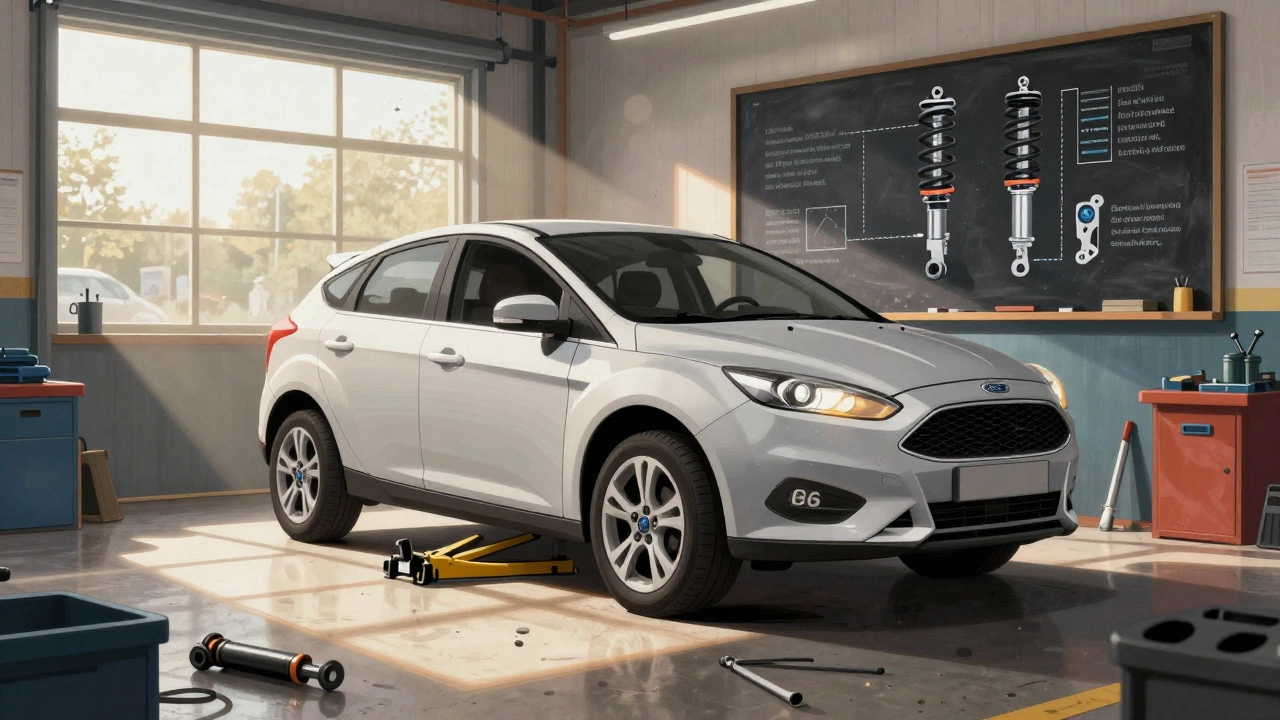
They work best with OEM or mildly worn shocks. On a Ford Focus driven on Devon’s rural lanes, owners report the car feels more planted, less bouncy, and noticeably quieter over speed bumps. Cost: £250-£350.
4. Fox 2.0 IFP Shocks (for SUVs and Trucks)
If you drive a Land Rover Discovery, Toyota Hilux, or Jeep Wrangler, Fox 2.0 shocks are the go-to. They use internal floating pistons to separate oil and gas, preventing foaming under heavy use. That means consistent damping even after hours on rocky trails.
They’re not subtle-they’re built for adventure. But if your daily drive includes muddy farm tracks or ungraded mountain roads, they’re the most durable option on the market. Cost: £800-£1,200 per axle.
What to Avoid
Not all "performance" suspensions are right for rough roads.
- Drop springs-they lower your car and reduce suspension travel. Bad idea on potholes.
- Non-adjustable, ultra-stiff shocks-they make small bumps feel like hammer blows.
- Used or counterfeit shocks-cheap eBay listings often have worn valving or oil leaks. They fail fast and can be dangerous.
Always check the manufacturer’s specs. Look for terms like "off-road tuned," "high-travel," or "heavy-duty damping." If the product page doesn’t mention road conditions, walk away.
Real-World Test: A 3-Month Experiment
In late 2025, a group of drivers in Somerset swapped out their stock suspensions and tracked results over 10,000 miles of mixed surfaces. Here’s what they found:
| Suspension Type | Comfort Rating (1-10) | Control Rating (1-10) | Longevity (Estimated Miles) | Cost |
|---|---|---|---|---|
| Stock OEM | 6 | 5 | 60,000 | £0 (already installed) |
| Bilstein B6 + OEM Springs | 8 | 9 | 120,000+ | £350 |
| Eibach Pro-Kit Springs | 7.5 | 8 | 100,000+ | £300 |
| KW Variant 3 Coilovers | 8.5 | 9.5 | 100,000+ | £1,400 |
| Fox 2.0 (SUVs) | 7 | 10 | 150,000+ | £1,000 |
The Bilstein setup won for value. The KW setup won for control. The Fox shocks were unbeatable for heavy vehicles. But every upgrade beat the stock system.
Installation Tips
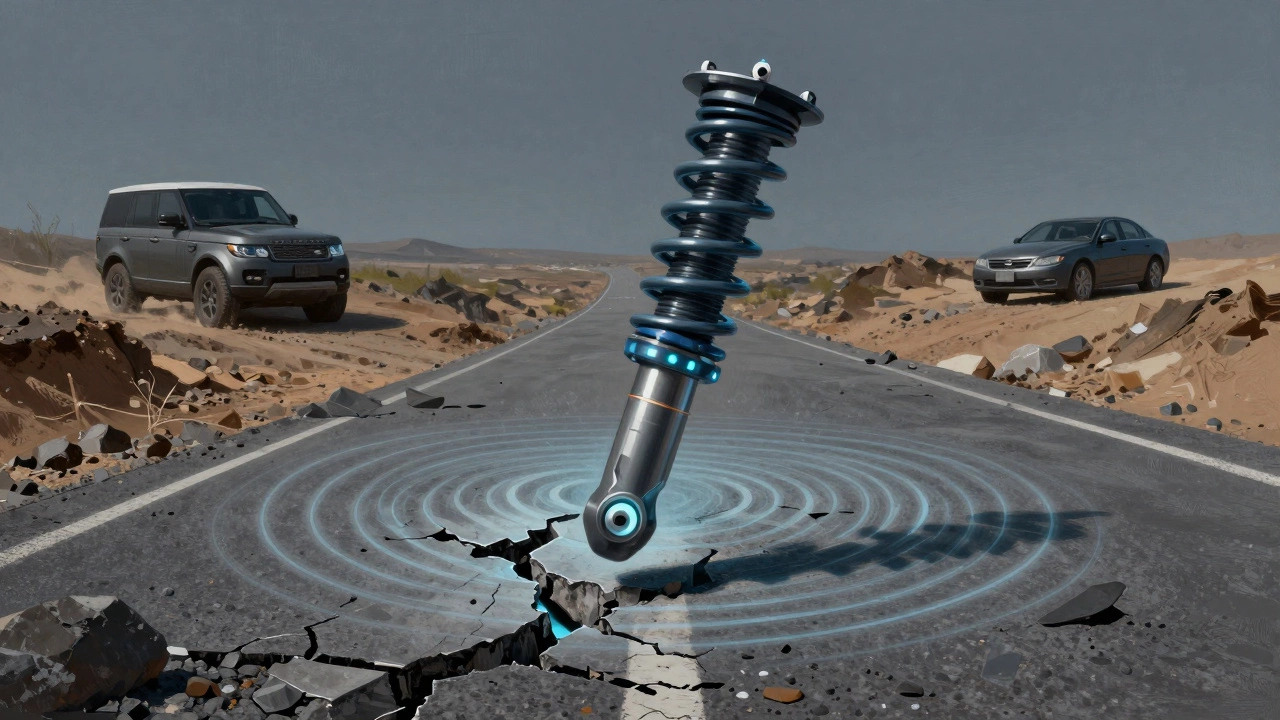
You don’t need a garage to install most of these. Bilstein B6s and Eibach springs can be done in a weekend with basic tools. Just remember:
- Replace shocks in pairs-front or rear, never just one side.
- Get a wheel alignment after any suspension change.
- Check for worn bushings or control arms. Bad suspension parts can make even the best shocks feel terrible.
- Don’t rush the job. Suspension work affects safety.
When to Call a Professional
If you’re installing coilovers, air suspensions, or anything with electronic damping, hire a specialist. These systems need calibration. A misaligned coilover can cause uneven tire wear or steering pull. And if your car has adaptive suspension (like BMW’s ADS or Mercedes’ AIRMATIC), don’t touch it yourself. You’ll need diagnostic tools and software.
Final Advice: Match the Suspension to Your Roads
The best suspension isn’t the one with the most features. It’s the one that matches your driving reality. If you live in the countryside and drive on rutted lanes, go for Bilstein or Eibach. If you tow trailers over mountain passes, get Fox or KW. If you’re on a budget and just want to stop rattling your teeth, start with new springs.
And if you’re unsure? Take your car to a shop that specializes in suspension-not just tire changes. Ask them: "What would you put on your own car if you drove these roads every day?" Their answer will tell you more than any brochure.
Can I just replace the shocks and keep my old springs?
Yes, in most cases. If your springs are still in good shape-no sagging, no rust, no broken coils-you can save money by keeping them. Bilstein B6 and Koni shocks are designed to work well with OEM springs. But if your car is over 8 years old or has over 80,000 miles, replacing both shocks and springs together gives you the best long-term result.
Do air suspensions work well on bumpy roads?
Air suspensions can be excellent, but only if they’re properly tuned. Factory air systems (like on luxury SUVs) are designed for comfort on smooth roads. Aftermarket air kits often lack the damping control needed for rough terrain. If you want air suspension for bumpy roads, go for a system with external reservoirs and adjustable damping-like those from AccuAir or Airlift. They’re expensive, but they handle bumps better than most coilovers.
How often should I replace suspension parts?
Stock shocks usually last 50,000-80,000 miles. High-quality shocks like Bilstein or Fox can last 100,000-150,000 miles. But if you drive on rough roads daily, check them every 30,000 miles. Signs of wear: oil leaks, excessive bouncing after hitting a bump, or a noticeable drop in ride height. Don’t wait until your car feels like a trampoline.
Will upgrading suspension improve my tire life?
Absolutely. Poor suspension causes uneven tire wear-especially on the inside or outside edges. When shocks fail, the tire bounces instead of staying flat on the road. This leads to cupping, scalloping, and premature wear. Upgrading to a better suspension keeps the tire contact patch stable, which can add 10,000-20,000 miles to your tire life.
Is it worth upgrading suspension on an older car?
If the rest of the car is in good shape, yes. A well-suspended older car feels safer, more predictable, and more enjoyable to drive. It’s often cheaper than buying a newer car with the same level of comfort. Plus, better suspension reduces stress on other parts like the steering, brakes, and chassis. It’s one of the best investments you can make for an aging vehicle.