Exhaust Sound Match Calculator
Find Your Perfect Exhaust Sound Match
Select your car to see ideal sound characteristics and brand recommendations
Recommended Sound Profile
Select your car to see recommendations
Recommended brands:
⚠️ Note: Avoid systems that create excessive drone at highway speeds
There’s no sound in cars that gets people’s hearts racing like a well-tuned exhaust note. Whether you’re rolling through a backroad at dusk or idling at a traffic light, the right exhaust doesn’t just move air-it makes a statement. But here’s the truth: there’s no single "best" exhaust sound. What sounds epic to one person sounds annoying to another. The trick is matching the sound to your car, your driving style, and what you actually live with day to day.
It’s Not Just About Loudness
A lot of people think the best exhaust sound means maximum volume. That’s a myth. Some of the most respected exhaust notes in the car world come from systems that aren’t deafening. Take the BMW M3 is a high-performance sports sedan known for its naturally aspirated engine and crisp, high-revving exhaust note. Its 4.0L V8 doesn’t rattle windows-it sings. The sound is clear, layered, and climbs in pitch like a race engine. It’s loud enough to feel alive, but quiet enough to drive to work without annoying neighbors.
On the flip side, a cheap, overly aggressive cat-back system on a daily driver can turn your commute into a headache. You’ll hear drone-a low, constant hum at highway speeds-that makes long drives exhausting. It’s not just annoying; it’s a real design flaw in many budget exhausts.
Types of Exhaust Systems and Their Sounds
Not all exhausts are created equal. The system you choose changes the sound more than any single brand. Here’s how they break down:
- Stock exhaust: Designed for quiet operation and emissions compliance. Sounds dull, but reliable. You’ll hear a faint rumble under hard acceleration, but nothing special.
- Cat-back exhaust: Replaces everything from the catalytic converter back. This is the most popular upgrade. It gives you noticeable tone changes without touching emissions-critical parts. Good balance of sound, cost, and legality.
- Axle-back exhaust: Only replaces the last section near the tips. Minimal sound change. Mostly for looks unless you pair it with performance mufflers.
- Full system (headers + cat-back): Replaces the entire exhaust from the engine. Gives the most dramatic change. Often used on track cars. Can be too loud for street use.
- Resonator delete: Removes sound-dampening chambers. Adds rasp and volume. Popular on modified Hondas and Toyotas. Can cause drone if not paired with the right muffler.
Most people who want a better sound go with a cat-back system. It’s the sweet spot between performance, legality, and daily drivability.
What Makes a Sound "Good"?
Good exhaust sound isn’t about volume-it’s about character. Think of it like music: a bass line, a midrange presence, and a clean top end. The best exhaust notes have:
- Depth: A low rumble that you feel in your chest, not just your ears. Think Mazda RX-7 is a rotary-powered sports car with a high-pitched, screaming exhaust note that becomes iconic at redline-it’s not deep, but it’s unmistakable.
- Clarity: You can hear individual pops and burbles, not just a wall of noise. This comes from good tuning of the pipes and muffler design.
- Reversibility: The sound should change with RPM. A good system gets louder and more aggressive as you rev, not just constantly loud.
- Drone control: No constant 2,000 RPM buzz on the highway. This is where many cheap systems fail.
Brands like Milltek is a UK-based performance exhaust manufacturer known for its hand-built stainless steel systems and refined sound profiles and Akrapovič is a Slovenian company producing high-end titanium exhaust systems used by Porsche, BMW, and Ducati for their signature crisp, metallic tone have spent years tuning these factors. Their systems don’t just make noise-they make music.
Car-Specific Sound Profiles
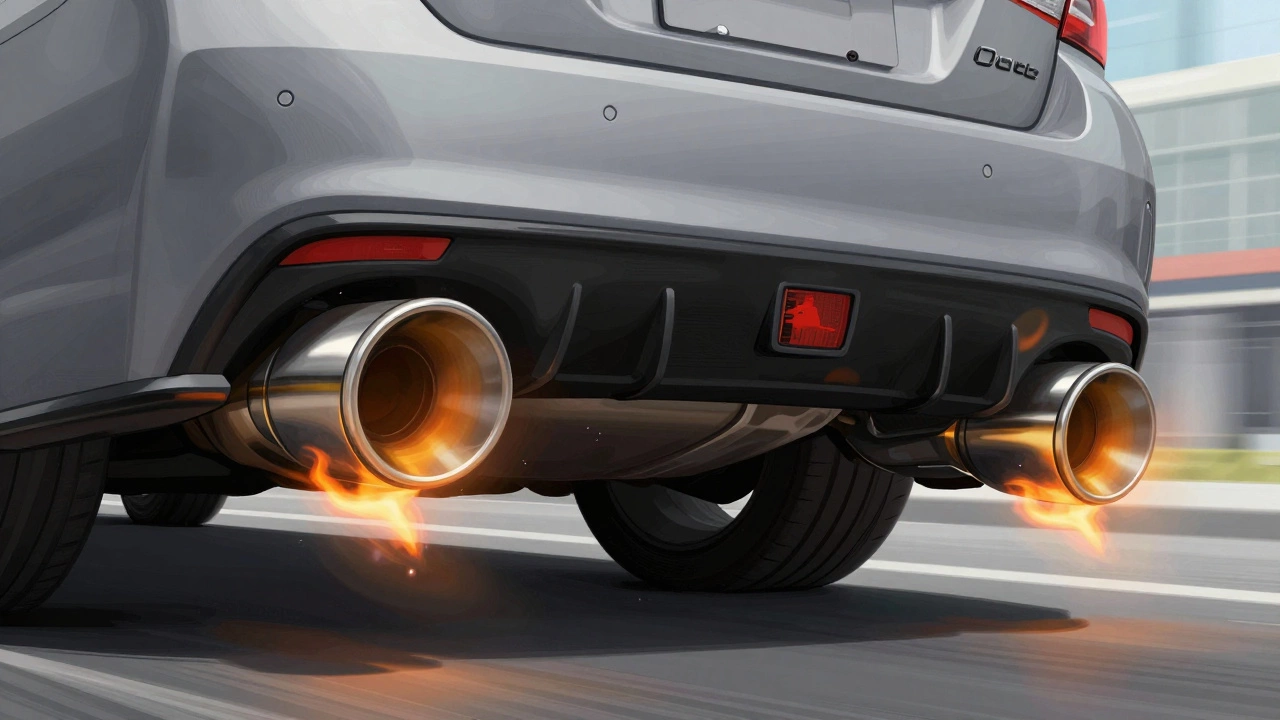
Not every exhaust sounds right on every car. A system that sounds perfect on a Subaru WRX is a turbocharged performance hatchback known for its aggressive, flat-four exhaust bark might sound harsh on a Toyota Supra is a rear-wheel-drive sports car with a turbocharged inline-six engine that produces a deep, growling exhaust note.
Here’s what works best for common setups:
| Car Model | Engine Type | Recommended Exhaust Sound | Top Brand Examples |
|---|---|---|---|
| Subaru WRX | 2.0L Turbo Flat-4 | Aggressive bark with crackles | Invidia, GReddy |
| Toyota Supra | 3.0L Turbo Inline-6 | Deep growl with metallic ring | Akrapovič, Milltek |
| BMW 3 Series | 2.0L Turbo Inline-4 / 3.0L Turbo Inline-6 | Crisp, high-revving tone | Akrapovič, Eisenmann |
| Ford Mustang | 5.0L V8 | Throaty, rumbling V8 | Borla, Corsa |
| Honda Civic Type R | 2.0L Turbo Inline-4 | Sharp, snappy exhaust pops | Remus, GReddy |
These pairings aren’t random. They’re based on how the engine breathes, the number of cylinders, and the firing order. A V8 needs room to breathe and a deep chamber to resonate. A turbo four-cylinder needs precision tuning to avoid harshness.
What to Avoid
There are a few traps most people fall into:
- Buying based on YouTube videos: Those clips are often edited. The sound you hear in a 10-second clip won’t be the same at 70 mph on real pavement.
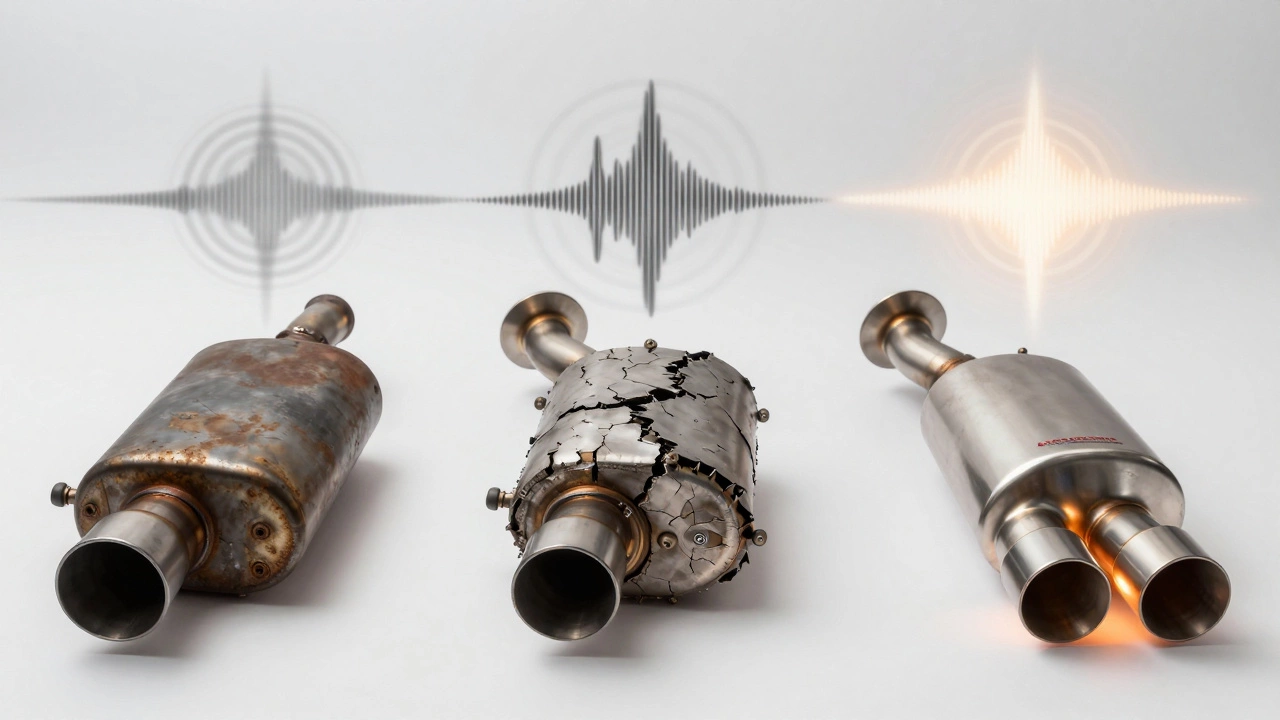
- Choosing the cheapest option: Budget exhausts use thin steel, poor welding, and cheap muffler packing. They rattle, rust, and drone within a year.
- Ignoring local noise laws: In the UK, exhausts must meet EU noise standards. A system that’s too loud can fail an MOT or get you pulled over.
- Assuming louder = better: A 100dB exhaust might impress at a car show, but it’ll make your commute unbearable.
One guy in Bristol replaced his WRX’s stock exhaust with a $400 no-name system. Two months later, the tips rusted, the muffler started rattling, and he could barely hear his phone ring over the drone. He ended up spending twice as much on a proper Milltek system. Don’t be that guy.
How to Test Before You Buy
Don’t just order online. Here’s how to make sure you’re getting the right sound:
- Find local owners with the same car and exhaust. Ask to ride with them. Listen at idle, under acceleration, and at highway speed.
- Visit a shop that has demo units. Many performance shops let you hear systems on rolling dynos.
- Ask for real-world recordings-not studio clips. A video taken on a quiet country road tells you more than one from a drag strip.
- Check forums. Look for posts from owners who’ve had the system for over a year. What do they say about drone? Reliability? Resale value?
There’s no substitute for real-world experience. What sounds amazing on a cold morning in February might be unbearable in July with the windows down.
Final Thought: The Best Sound Is the One You Live With
There’s no perfect exhaust sound. Only the one that fits your car, your life, and your ears. If you drive 50 miles a day, comfort matters more than volume. If you track your car on weekends, you can afford to be louder. If you care about resale value, go for something tasteful.
Some people spend years tweaking their exhausts. Others find their perfect match on the first try. The key is knowing what you want-not what the internet tells you to want.
What exhaust gives the best sound for a daily driver?
For a daily driver, a cat-back exhaust from a reputable brand like Milltek, Akrapovič, or Borla is ideal. These systems offer a rich, refined tone without excessive drone or noise. They’re designed to be loud enough to feel sporty but quiet enough for long commutes and neighborhood driving. Avoid cheap, overly aggressive systems-they’ll ruin your peace and your wallet.
Is a louder exhaust always better?
No. Loudness doesn’t equal quality. A system that’s too loud often has drone-a constant low-frequency buzz at highway speeds that causes fatigue. It can also violate noise ordinances and hurt resale value. The best exhausts are those that sound powerful without being obnoxious. Think depth and clarity, not just decibels.
Can I install an aftermarket exhaust myself?
Yes, if you have basic tools and experience with car lifts or jack stands. Cat-back systems usually bolt on with minimal cutting or welding. But if you’re replacing headers or removing catalytic converters, you’ll need professional help. Improper installation can cause leaks, rattles, or even damage to your engine’s sensors. Always follow the manufacturer’s instructions.
Do exhaust systems affect performance?
Yes, but not always in the way you think. A well-designed exhaust reduces backpressure, allowing the engine to breathe better. This can add 5-15 horsepower, depending on the car. But the biggest gains come from improved throttle response and a more efficient engine tune-not just the sound. A poorly designed system can actually hurt performance by creating turbulence or restricting flow.
Are titanium exhausts worth the cost?
Titanium exhausts, like those from Akrapovič, are lighter and more corrosion-resistant than stainless steel. They’re worth it if you care about weight savings (especially for track use) and want a long-lasting, premium look. But for most street drivers, high-quality stainless steel offers 90% of the benefit at half the price. Titanium is more about prestige than performance on daily cars.