Suspension Noise Diagnostic Tool
Diagnosis Results
Most Likely Cause:
Severity:
Estimated Repair Cost:
Critical Safety Notice:
Ever heard a weird clunk, squeak, or rattle when you hit a bump and wondered if it was your suspension? You’re not alone. A failing suspension doesn’t always throw a warning light - it just starts making noise. And those sounds? They’re your car’s way of screaming for help before something breaks completely.
Clunking Over Bumps
If your car makes a loud clunk or thud every time you go over a speed bump or pothole, the most likely culprit is worn control arm bushings or loose ball joints. These parts hold the suspension together. When they wear out, metal starts hitting metal. It’s not just annoying - it’s dangerous. A loose ball joint can let your wheel fall out while driving. I’ve seen it happen on older Ford Fiestas and VW Golfs - both common in the UK. The noise gets louder over time, and the steering starts to feel sloppy. If you hear this, don’t wait. Get it checked before you lose control on a corner.
Squeaking or Creaking When Turning
A high-pitched squeak or creak when you turn the wheel at low speeds - like pulling out of a driveway - usually points to dried-out or cracked sway bar links or end links. These small parts connect the sway bar to the suspension. They’re made of rubber and metal, and when the rubber dries out, the metal grinds against the mounting point. In Bristol’s damp climate, moisture accelerates rubber degradation. You might think it’s just the weather, but it’s not. A squeak like this is a sign the part is failing. Replace it early, and you’ll save yourself a much bigger repair later. It’s a cheap fix - under £50 for parts - but ignoring it can lead to uneven tire wear or even a broken sway bar.
Knocking or Popping During Cornering
When you take a sharp turn and hear a sharp knock or pop, especially from the front, you’re likely dealing with worn strut mounts or damaged coil springs. Strut mounts hold the shock absorber to the car’s body. When the rubber inside wears out, the metal plate rattles against the spring seat. You’ll also notice the car feels bouncier than usual, and the steering might vibrate. I once helped a customer who thought his tires were unbalanced - turns out, the strut mount had completely shattered. He didn’t realize the noise was coming from the top of the suspension, not the wheels. If you hear this, don’t assume it’s tires. Check the struts.
Humming or Rumbling at Highway Speeds
A low hum or rumble that gets louder as you speed up might sound like a bad wheel bearing - and sometimes it is. But it can also be a worn shock absorber. When shocks fail, they don’t just lose damping - they start to bounce uncontrollably. That constant up-and-down motion creates a rhythmic vibration that travels through the chassis. It’s easy to mistake for tire noise, especially on older cars with worn tread. But here’s the trick: if the noise changes when you shift weight - like braking or accelerating - it’s suspension. A bad wheel bearing hums steadily, no matter what you do. If you’re unsure, jack up the wheel and shake it. If it moves side to side, it’s the bearing. If it just feels loose and bouncy, it’s the shock.
Grinding or Metallic Scraping
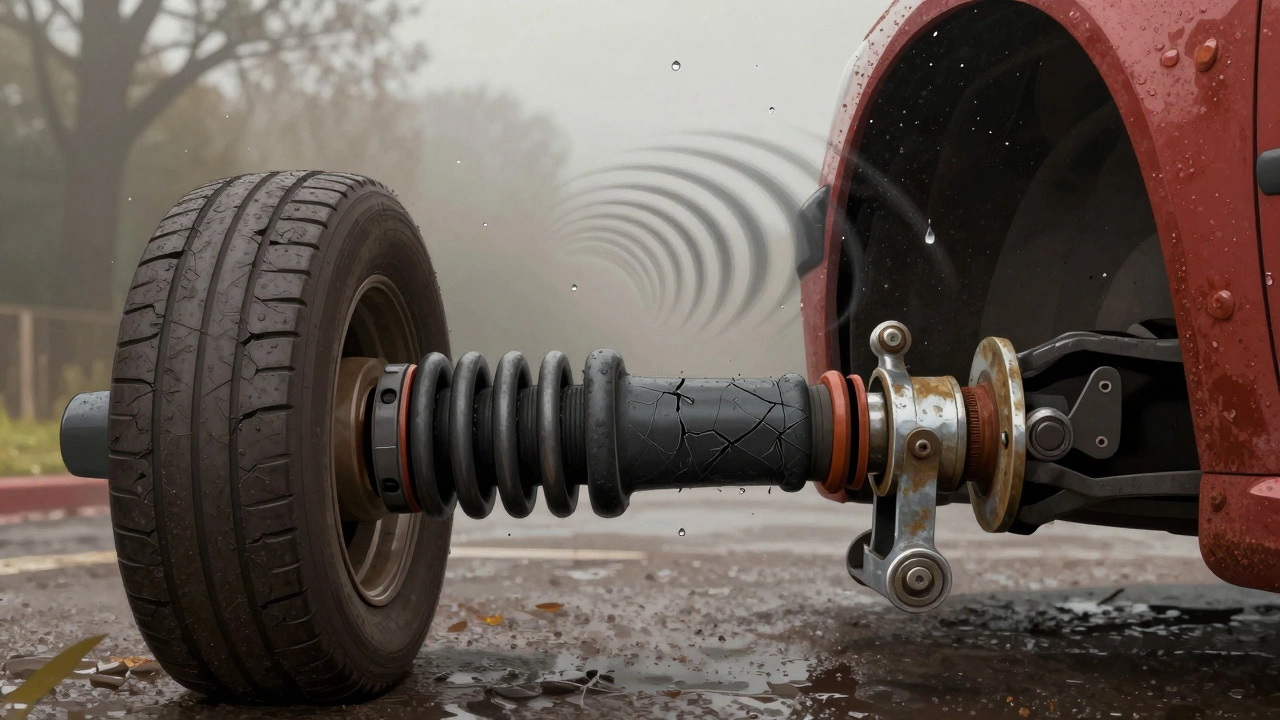
A grinding or metallic scraping sound is the worst kind of suspension noise. It means something is wearing down to bare metal. This usually happens with severely damaged control arms, broken spring seats, or collapsed shock absorbers. In extreme cases, the spring can come loose and scrape against the fender or frame. I saw a Renault Clio last year where the rear spring had snapped and was dragging on the axle. The driver thought it was the exhaust - until smoke started coming from under the car. Grinding noises are an emergency. Drive slowly, avoid bumps, and get it towed. Continuing to drive can destroy your wheels, tires, and even the chassis.
Why Suspension Noise Gets Worse in Cold Weather
If you notice your suspension sounds louder in winter, it’s not your imagination. Cold temperatures make rubber bushings stiff. Metal contracts. Oil thickens. All of this turns small gaps into loud clunks. A bushing that’s 70% worn might be silent in summer, but in January, it starts banging like a drum. That’s why many people think their suspension suddenly went bad - it didn’t. It was already failing, and the cold just made it obvious. If your car started making noise when the temperature dropped, don’t assume it’s a seasonal issue. It’s a warning.
What to Do When You Hear Suspicious Noise
Don’t ignore it. Don’t just spray lubricant on it and hope it goes away. Here’s what to do:
- Listen carefully. Note when the noise happens - over bumps, during turns, at certain speeds.
- Check for visible damage. Look under the car for cracked rubber, broken springs, or leaking shock absorbers.
- Do the bounce test. Push down hard on each corner of the car. If it bounces more than once or twice, your shocks are worn.
- Get a professional inspection. A mechanic can lift the car and check bushings, ball joints, and mounts with tools you don’t have.
Most of these issues are fixable for under £300 if caught early. Wait too long, and you’ll be looking at £800+ in damage to tires, steering components, or even the frame.
Common Myths About Suspension Noise
Myth: “It’s just the road.” - Bad roads wear out suspension faster, but they don’t make new noises. If it’s new, it’s broken.
Myth: “Lubricating it will fix it.” - Grease might quiet a squeak temporarily, but if the bushing is cracked or the ball joint is loose, grease won’t hold it together.
Myth: “Only sports cars have suspension problems.” - No. Everyday cars like the Toyota Corolla, Honda Civic, and Vauxhall Astra suffer just as much. In fact, older models with higher mileage are more prone.
When to Replace vs. Repair
Some parts can be repaired. Others need full replacement.
| Noise | Most Likely Cause | Repair or Replace? | Average Cost (UK) |
|---|---|---|---|
| Clunk over bumps | Worn control arm bushings or ball joints | Replace | £120-£250 |
| Squeak when turning | Failed sway bar end links | Replace | £40-£80 |
| Knock during cornering | Worn strut mounts | Replace | £150-£300 |
| Hum at highway speeds | Worn shock absorbers | Replace in pairs | £200-£400 per axle |
| Grinding or scraping | Broken spring or collapsed strut | Replace immediately | £300-£700 |
Always replace shocks or struts in pairs. If one side is worn, the other isn’t far behind. Driving with mismatched suspension creates uneven handling and wears out tires faster.
How Long Do Suspension Parts Last?
There’s no fixed lifespan. It depends on your driving. If you drive mostly on smooth roads, your shocks might last 80,000 miles. If you drive on rough rural lanes or pothole-filled city streets - like in Bristol - you might need new shocks by 50,000 miles. Bushings and links wear faster if you carry heavy loads or tow regularly. Check your suspension every 20,000 miles if you drive in tough conditions. Don’t wait for the noise - get it checked.
What Happens If You Ignore It?
Ignoring suspension noise doesn’t just make your ride uncomfortable - it makes it unsafe. A failing suspension affects:
- Braking - Your car dives forward harder, increasing stopping distance.
- Steering - The car wanders or pulls to one side.
- Tire wear - Uneven tread means you’ll need new tires every 20,000 miles instead of 40,000.
- Other components - Worn suspension puts extra stress on steering links, CV joints, and even the engine mounts.
One customer brought in his Vauxhall Insignia because the steering felt loose. We found the front lower control arm bushings were completely gone. The ball joint was grinding against the subframe. He’d driven 12,000 miles like that. The repair cost £450. The damage to the subframe? £1,200. That’s the price of waiting.
Can a damaged suspension make noise only when it’s raining?
No. Rain doesn’t cause suspension noise - but it can make existing noise louder. Wet roads reduce traction, so worn suspension parts move more violently. Also, water can wash away old grease, letting metal parts rub together. If you hear more noise in the rain, it’s not the weather - it’s the worn bushings or joints.
Is it safe to drive with a noisy suspension?
It depends on the noise. A slight squeak from a sway bar link is low risk - but still needs fixing. A clunk or knock means parts are loose. That’s unsafe. If you feel the car wobbling, pulling, or bouncing uncontrollably, stop driving. A failed suspension can cause you to lose control, especially in emergencies. Don’t gamble with your safety.
Can I diagnose suspension noise myself?
Yes, to a point. You can do the bounce test, check for visible cracks or leaks, and listen carefully to when the noise happens. But you can’t see worn bushings or ball joints without lifting the car. A mechanic has the tools and experience to find hidden damage. If you’re unsure, get a professional inspection. It’s cheaper than replacing a broken wheel or damaged steering.
Do I need to replace all four shocks at once?
You should replace shocks in pairs - front or rear together. If one shock is worn, the other side is close behind. Mixing old and new shocks creates uneven handling and makes the car pull to one side. For the best ride and safety, replace all four at the same time, especially if your car has over 60,000 miles.
Why does my suspension sound worse after I replaced the tires?
New tires don’t cause suspension noise - but they make it more obvious. Old tires with worn tread absorb some vibrations. New tires have firmer tread blocks and better grip, so they transfer more road noise and suspension movement to the chassis. If you hear new noises after tire replacement, your suspension was already worn. The tires just made it louder.
Final Thought
Your suspension doesn’t just make your ride smooth - it keeps you safe. The sounds it makes are early warnings. Clunks, squeaks, and knocks aren’t just annoyances. They’re signs of parts that are about to fail. Fix them early, and you’ll save money, tires, and maybe even your life. Don’t wait for the noise to get worse. Listen now - before it’s too late.