Suspension Health Checker
Check Your Suspension
This tool helps you assess your vehicle's suspension condition based on common warning signs. Answer the questions below to get your results.
This is a placeholder for your results.
Select your symptoms above to see your assessment
Your car doesn’t scream when the suspension is failing. It doesn’t flash a warning light or beep like a low tire. Instead, it just starts to feel… off. The ride gets bouncier. Corners feel loose. You hear clunks over speed bumps you used to glide over. If you’ve noticed any of that, you’re not imagining it. Your suspension is wearing out-and ignoring it could cost you more than just comfort.
It Feels Like You’re Riding a Bumper Car
Normal suspension absorbs bumps smoothly. Bad suspension doesn’t. If your car bounces more than once after hitting a pothole or speed bump, your shocks or struts are done. Try the bounce test: push down hard on one corner of the car and let go. If it rebounds two or three times before settling, the shock absorbers are worn out. A healthy system stops the bounce in one or two movements.
This isn’t just about comfort. Worn shocks reduce tire contact with the road. That means less grip, longer stopping distances, and more risk of hydroplaning in rain. A 2023 study by the National Highway Traffic Safety Administration found that vehicles with worn suspension took up to 20% longer to stop in wet conditions compared to those with good shocks.
You Hear Clunks, Knocking, or Rattling
That clunk when you go over a bump? It’s not just noise-it’s metal hitting metal. Bad suspension parts let components move where they shouldn’t. Control arm bushings crack. Ball joints loosen. Strut mounts break. All of these create knocking sounds that get louder over time.
Pay attention to where the noise comes from. A front-end clunk usually points to worn control arms or ball joints. A rear thump could mean broken spring seats or worn shock mounts. If you hear a rattling sound when turning, it’s likely a loose sway bar link. These aren’t just annoyances. A failed ball joint can cause your wheel to detach while driving. That’s not a hypothetical risk-it’s happened to real drivers.
Your Tires Are Wearing Unevenly
Look at your tires. If one side is bald while the other still has tread, or if you see cupping (scalloped dips along the tread), your suspension is misaligned. Worn shocks or struts don’t keep the tire flat on the road. Instead, the tire bounces as it rolls, wearing patches unevenly.
This isn’t just a tire problem. It’s a suspension problem. Replacing tires without fixing the suspension means your new tires will wear out in months. A set of tires costs $600-$1,200. Replacing shocks and struts? $400-$900 total. Fix the root cause first.
The Car Sinks or Leans Too Much in Turns
When you take a corner at moderate speed, your car should stay level. If it leans heavily to one side-like it’s tipping over-it’s a sign the suspension can’t handle lateral forces. This happens when springs are weak or shocks are too worn to control body roll.
It’s not just about feeling unstable. Excessive lean reduces traction on the outer tires, making the car more likely to slide. Drivers who’ve replaced worn suspension after noticing this often say, “It felt like the car was finally connected to the road again.”
Braking Feels Different
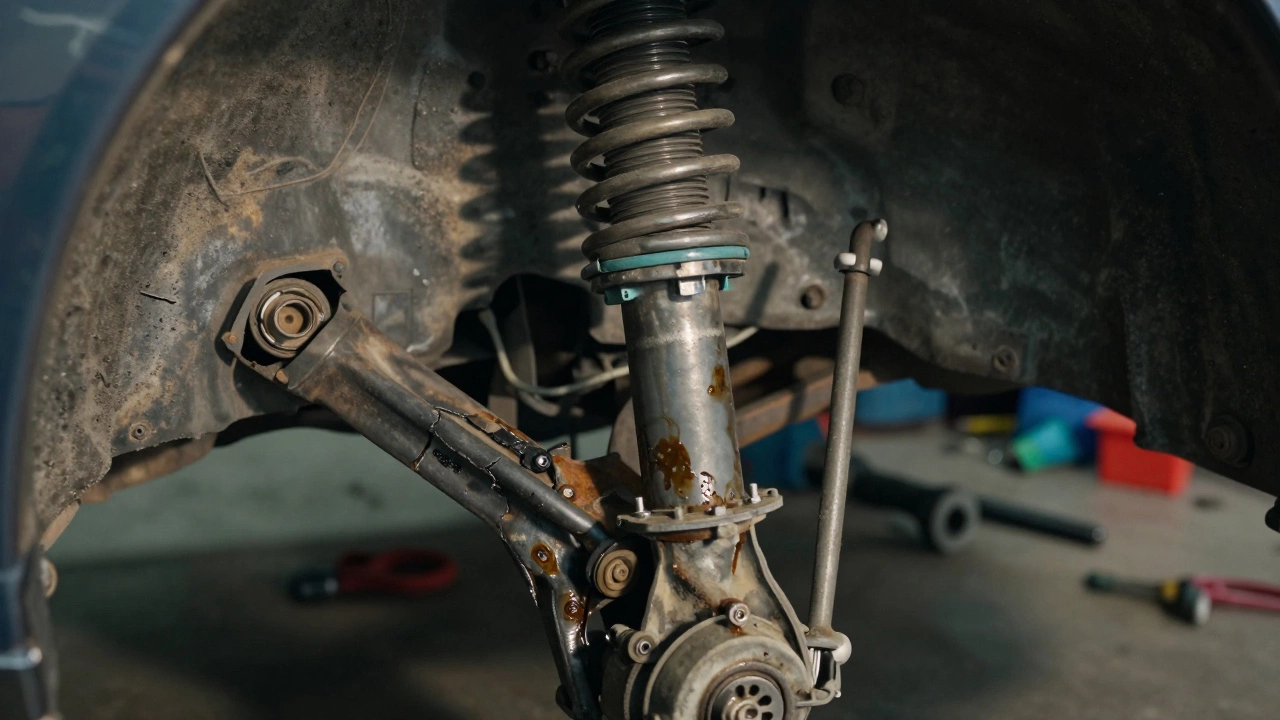
When you hit the brakes, your car should stop in a straight line. If it dives forward violently-nose dipping like a diving board-or pulls to one side, your suspension is struggling to manage weight transfer. Worn shocks can’t control the front-end dive, which reduces rear tire grip and increases stopping distance.
Some drivers mistake this for brake problems. But if you’ve had your brakes checked and they’re fine, the culprit is likely the suspension. A 2024 test by Consumer Reports showed cars with degraded shocks had 12-15 feet longer stopping distances at 60 mph compared to identical cars with new suspension.
Steering Feels Loose or Wobbly
Does your car drift left or right on straight roads? Do you have to constantly correct the steering wheel? Is the steering wheel vibrating at highway speeds? These aren’t alignment issues alone. They’re signs that suspension components are worn out.
Worn tie rod ends, ball joints, or control arm bushings create play in the steering system. That play turns small road imperfections into steering tugs. Over time, this makes driving tiring and dangerous. If you’re constantly fighting the wheel, it’s time to check the suspension.
Fluid Leaks Around the Shocks
Shocks and struts are filled with hydraulic fluid. If you see oil stains or wetness around the shock body, it’s leaking. That fluid keeps the shock working. Once it’s gone, the shock stops damping. You might not notice right away, but the ride will get bouncier over time.
Leaking shocks don’t always drip heavily. Sometimes it’s just a thin film of oil. Wipe the shock with a clean rag and check again in a day. If it’s dirty again, replace it. Don’t wait until the shock fails completely.
It’s Been 50,000-100,000 Miles
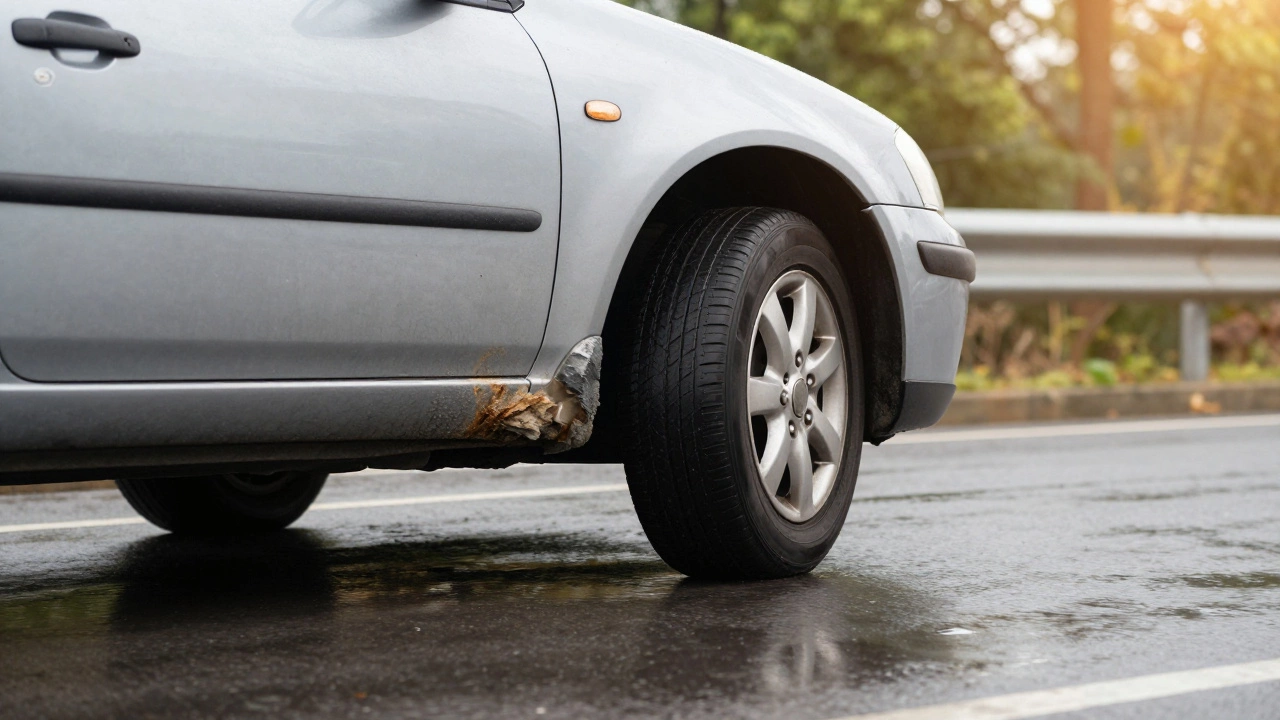
Even if everything feels fine, suspension parts wear out with time. Most manufacturers recommend inspecting shocks and struts every 50,000 miles. By 100,000 miles, most need replacement-even if they don’t show obvious signs.
Why? Because suspension parts degrade gradually. The rubber bushings dry out. The internal valves wear down. The fluid breaks down. You don’t feel it day by day, but the performance drops steadily. Waiting until you hear clunks or see tire wear means you’ve already driven for months with compromised safety.
What Happens If You Don’t Replace It?
Driving with bad suspension doesn’t just make your ride rough. It puts stress on other parts of your car. Wheels, tires, brakes, and even the frame take extra punishment. That leads to more expensive repairs down the line.
Worn suspension also increases your risk of losing control. In emergency maneuvers-like swerving to avoid a child or animal-the car won’t respond as expected. Insurance claims data from 2025 shows that vehicles with known suspension issues were 34% more likely to be involved in single-vehicle crashes.
And here’s the kicker: bad suspension lowers your car’s resale value. Buyers notice the ride. They hear the noise. They see the tire wear. They walk away.
What to Do Next
If you’ve noticed even one of these signs, get your suspension checked. Don’t wait for multiple symptoms. A professional inspection costs $50-$100 and takes less than an hour. Most shops will give you a written report with photos of worn parts.
Replace shocks and struts in pairs-front or rear, not just one side. Mismatched suspension creates uneven handling. Also, consider replacing related parts like control arms, bushings, or sway bar links while you’re at it. It’s cheaper to do them all at once than to come back six months later.
Don’t buy the cheapest parts. Cheap shocks may save you $50 upfront, but they wear out in 20,000 miles. Quality parts like those from Monroe, Bilstein, or KYB last 80,000-100,000 miles and actually improve ride quality.
When to Skip the Repair
There’s one exception: if your car is over 15 years old and has more than 180,000 miles, replacing the entire suspension might not make financial sense. At that point, the cost of new parts and labor can approach 30-40% of the car’s resale value. In those cases, weigh the cost against the car’s overall condition and your plans for it.
But if you’re keeping the car for another few years, or if it’s a reliable model you love, fixing the suspension is one of the best investments you can make. It’s not just about comfort. It’s about safety, control, and protecting everything else on your car.
Can I drive with a bad suspension?
You can drive, but it’s risky. Bad suspension reduces braking performance, increases tire wear, and makes the car harder to control in emergencies. It’s not an immediate breakdown risk like a blown tire, but it slowly increases your chance of an accident. Don’t delay repairs.
How long do shocks and struts last?
Most last between 50,000 and 100,000 miles. But that’s not a guarantee. Driving on rough roads, hauling heavy loads, or frequent off-roading cuts that life in half. If you notice symptoms before 50,000 miles, don’t assume it’s normal-get it checked.
Do I need to replace all four shocks at once?
Yes. Replacing only one or two creates imbalance. The new shock will handle bumps better than the old ones, making the car pull or feel uneven. Always replace them in pairs-front or rear-and ideally all four at the same time for consistent performance.
Can worn suspension cause alignment problems?
Yes. Worn control arms, ball joints, or bushings let the wheels move out of position. That’s why you get uneven tire wear or the car pulling to one side. After replacing suspension parts, always get a wheel alignment. It’s not optional-it’s necessary.
Is suspension repair expensive?
It varies. Replacing front shocks and struts typically costs $400-$900 for parts and labor. If you need control arms, bushings, or other parts, it can go up to $1,500. But compared to replacing tires every year or paying for accident repairs, it’s a smart investment.