
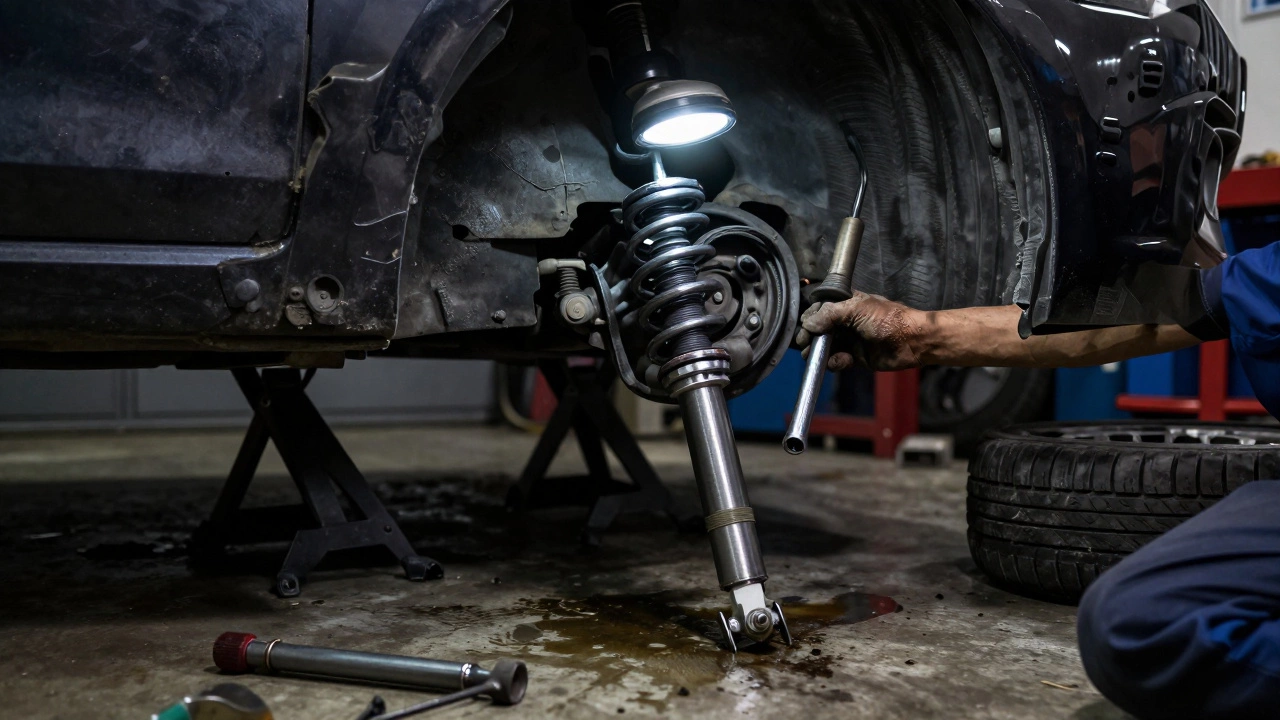
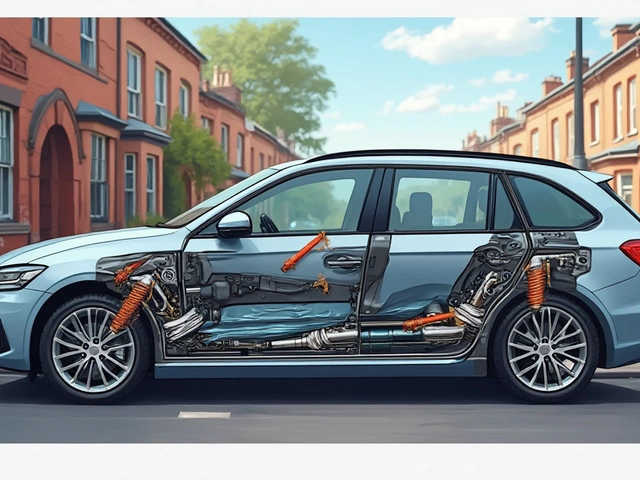
When your worn suspension parts, components like shocks, struts, and bushings that keep your car stable and comfortable over bumps. Also known as suspension wear, they’re one of the most overlooked causes of unsafe driving. You might not notice them until your car starts bouncing like a trampoline, pulling to one side, or making clunking noises over every speed bump. These aren’t just annoyances—they’re warning signs your suspension is failing, and ignoring them can lead to tire damage, brake problems, or even loss of control.
Bad shocks and struts don’t just make the ride uncomfortable—they reduce your ability to stop quickly. A study by the Auto Care Association found that worn shocks can increase stopping distance by up to 20% on wet roads. That’s the difference between avoiding a crash and hitting it. Worn bushings, rubber or polyurethane components that connect suspension parts and absorb vibrations. When they crack or harden, your wheels move out of alignment, causing uneven tire wear and steering that feels loose or vague. And bad control arms, metal arms that hold the wheels in place and let them move up and down. If they’re bent or the ball joints are loose, your car might drift or vibrate at highway speeds, putting extra stress on your tires and steering system.
You don’t need a mechanic to spot the early signs. Look for uneven tire wear—especially on the inside or outside edges. Listen for knocking or clunking when you go over bumps. Feel if your car dives forward when braking or sways when turning. If your steering feels sloppy or the car bounces more than it should, it’s not just old age—it’s wear. And it’s not something you can fix with a quick oil change. These parts wear out over time, and once they’re gone, they’re gone. Replacing them isn’t just about comfort—it’s about safety and saving money on tires and brakes down the road.
The posts below cover everything you need to know: how worn suspension parts connect to other problems like bad alignment, why replacing just one shock is a bad idea, how to tell if your shocks are done, and what happens when you ignore them. You’ll find real-world advice from mechanics who’ve seen the damage firsthand—no fluff, no guesses. If your car doesn’t feel right on the road, these are the answers you’re looking for.
 4 December 2025
Learn how to diagnose and fix a bad car suspension with step-by-step guidance on replacing shocks, struts, ball joints, and bushings. Save money and stay safe with proven DIY tips and part recommendations.
©2026 northwichtyrescentre.co.uk. All rights reserved



0