
When you breathe in air through your car’s vents, you’re not just getting fresh air—you’re getting whatever’s trapped in the cabin air filter, a component designed to trap dust, pollen, and pollutants before they enter the passenger compartment. Also known as a pollen filter, it’s the unsung hero that keeps your lungs clear while driving through traffic, construction zones, or leaf-covered roads. Most people think air filters only protect the engine, but the cabin filter protects you.
It’s a simple part, usually hidden behind the glovebox or under the dashboard, but a clogged one can make your AC smell musty, reduce airflow, and even trigger allergies. If you’ve noticed your windows fog up faster than usual, your vents blow weakly, or you keep sneezing on your commute, your cabin air filter is likely due for a change. Unlike engine air filters—which stop dirt from entering the combustion chamber—the cabin filter stops allergens, exhaust fumes, smoke, and even road dust from getting into your breathing space. It doesn’t need to be changed as often as oil, but waiting too long? That’s when problems start piling up.
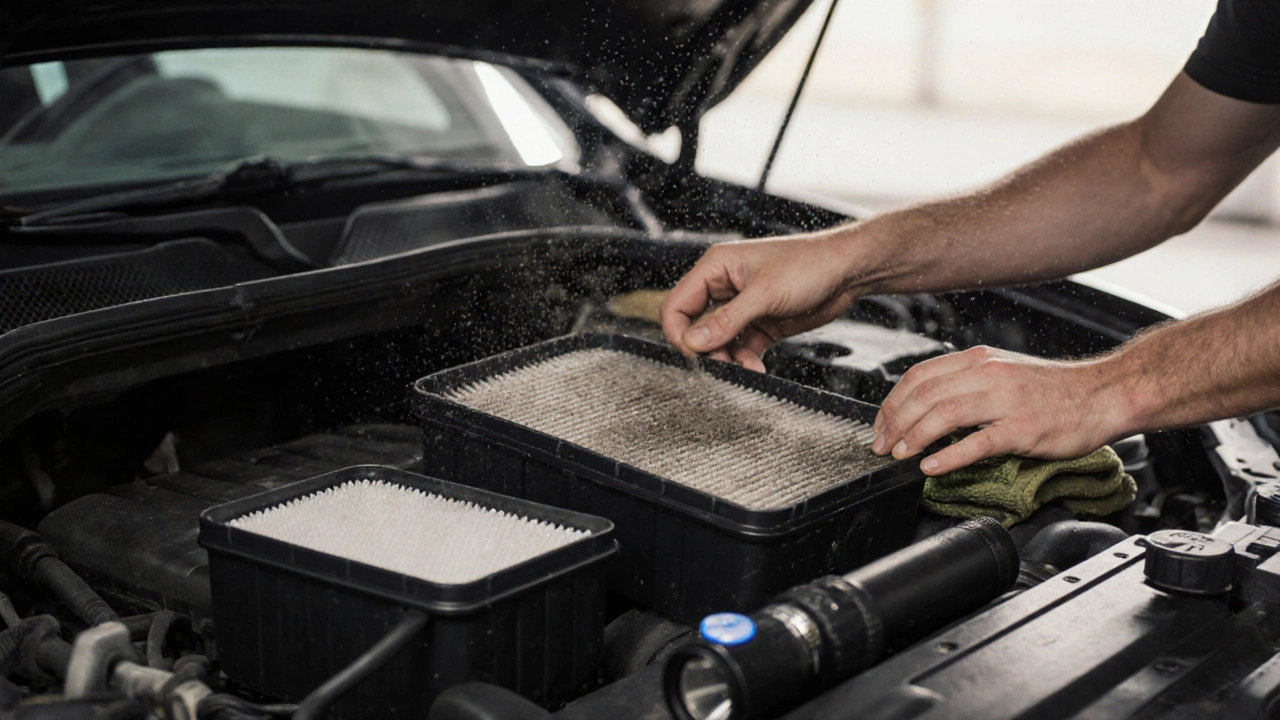
Some drivers confuse the cabin air filter with the engine air filter. They’re not the same. The engine air filter keeps debris out of your engine, helping fuel efficiency and performance. The cabin filter keeps your lungs safe. You can replace both at the same time, but they serve totally different jobs. And while you’re at it, don’t forget that a dirty cabin filter can make your heater and AC work harder, which wastes energy and can shorten the life of your blower motor.
Most manufacturers suggest replacing it every 12,000 to 15,000 miles—or once a year, especially if you drive in dusty or urban areas. But if you’ve got kids, pets, or allergies, you might want to check it every 6 months. A quick visual inspection takes less than five minutes: pull it out, hold it up to the light, and if you can’t see through it, it’s time to swap it. No tools needed for most cars.
There’s no magic trick to picking the right one. Just match the part number to your car’s make, model, and year. You don’t need the most expensive brand—just a clean, properly sized filter. Some even come with activated carbon layers to trap odors and gases, which is great if you drive behind trucks or in heavy traffic.
What you’ll find below are real-world stories from drivers who ignored this simple part—and what happened next. You’ll see how a clogged cabin filter led to weird smells, poor climate control, and even headaches on long drives. You’ll also find guides on how to replace it yourself, what to look for when buying a replacement, and why skipping this step can cost you more in the long run. These aren’t theory pieces. These are fixes people actually did, with real results.
 11 November 2025
Learn how to properly install an engine or cabin air filter to improve performance, fuel efficiency, and air quality. Step-by-step guide with common mistakes to avoid and replacement tips.

©2026 northwichtyrescentre.co.uk. All rights reserved
0