Spark Plug & Wire Maintenance Advisor
Determine whether you should replace your ignition wires along with your new spark plugs based on your vehicle's condition.
Result
StatusRecommended Action
Loading recommendation...
Reasoning
- Loading reasons...
Picture this: you’re in your garage, wrench in hand, ready to tackle that annoying rough idle. You’ve got a fresh set of spark plugs is electrical components that ignite the air-fuel mixture in an internal combustion engine. Also known as ignition plugs, they are critical for starting and running your vehicle efficiently. sitting on the workbench. But then you look at the old, cracked rubber boots of your ignition wires is cables that transmit high-voltage electricity from the ignition coil to the spark plugs. They are part of the ignition lead system. connecting them. Do you really need to replace those too? It feels like extra money for parts that might still be “okay.” This is one of the most common dilemmas DIY mechanics face, and the answer isn’t always a simple yes or no. It depends on your car’s age, its specific symptoms, and how much you want to risk another trip to the shop in three months.
The Short Answer: When It’s Safe to Skip the Wires
Technically, yes, you can change just the spark plugs. If your current ignition wires are less than five years old, show no visible cracks, and your car runs smoothly after the plug swap, you’re likely fine. The wires act as conduits; if they’re intact, they do their job regardless of whether the plug at the end is new or old. However, “technically possible” doesn’t always mean “best practice.” Think of it like changing the tires on your bike but keeping the frayed brake cables. It works today, but it’s a ticking time bomb for tomorrow. If your car is under seven years old and hasn’t had its wires touched since purchase, skipping them is usually a safe bet to save cash right now.
Why Ignition Wires Matter More Than You Think
Ignition wires aren’t just passive tubes. They have resistance. Over time, that resistance increases due to moisture intrusion, ozone degradation, and physical wear. High resistance means less voltage reaches the spark plug tip. A new spark plug has a lower gap requirement and needs a consistent, strong spark to fire correctly. If your wires are weak, even brand-new plugs might struggle to ignite the mixture fully, leading to incomplete combustion. This results in wasted fuel, reduced power, and higher emissions. In older vehicles with distributor-based ignition systems, this relationship is even tighter because the single coil has to push voltage through multiple long paths. Any drop in efficiency there gets amplified quickly.
Signs Your Wires Are Ready for Retirement
You don’t need a multimeter to know if your wires are failing. Your eyes and ears will tell you first. Look for these red flags before you decide to keep them:
- Cracks or splits in the rubber insulation: Even small fissures allow moisture to seep in, causing arcing and increased resistance.
- Corrosion on the metal terminals: Green or white buildup on the ends indicates oxidation, which disrupts the electrical connection.
- Chafing where the wire bends: Constant movement against the engine block wears down the jacket, exposing the core conductor.
- Visible arcing at night: If you see blue sparks jumping from the wire boot to the engine block, the insulation has failed completely.
If you spot any of these, replacing the wires alongside the plugs is not optional-it’s necessary. Keeping damaged wires with new plugs is like putting a new battery in a car with a bad alternator. One weak link drags down the whole system.

Coil-on-Plug Systems: The Modern Exception
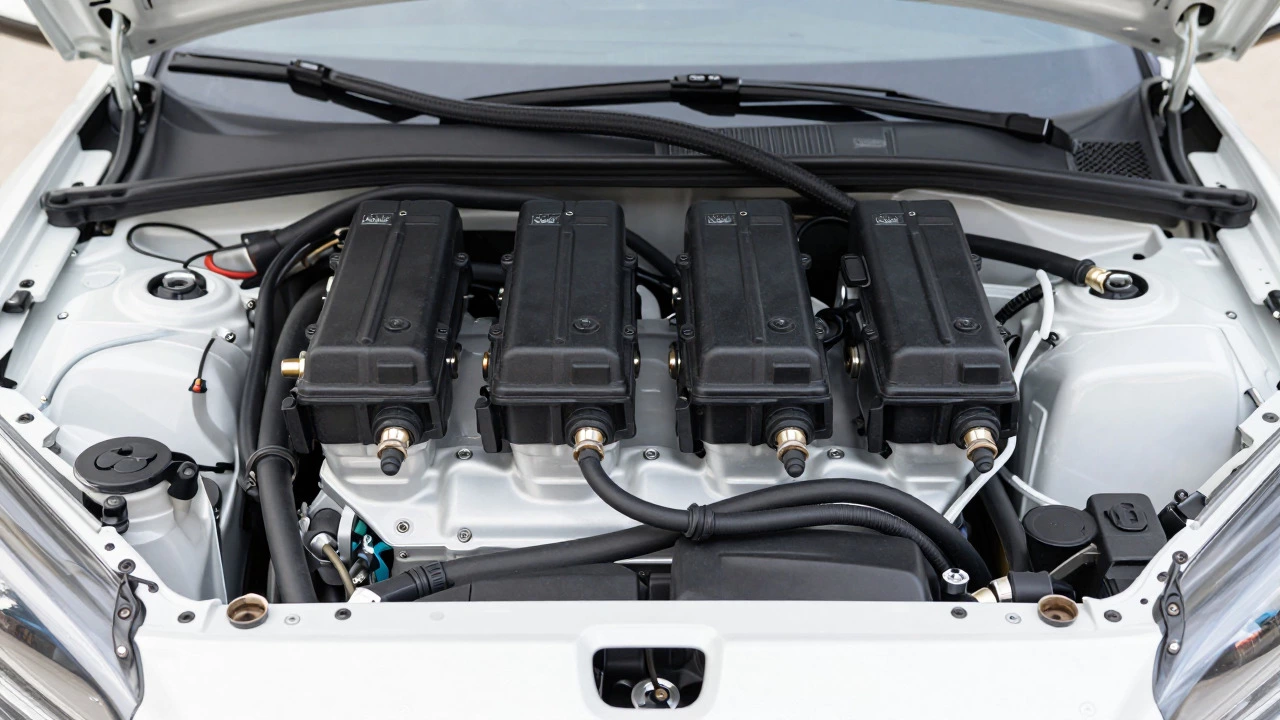
Here’s where things get tricky. If you drive a modern car (typically post-2010), you might not even have traditional ignition wires. Most contemporary engines use a Coil-on-Plug (COP) system. In this setup, each cylinder has its own dedicated ignition coil mounted directly on top of the spark plug. There is no long wire running across the engine bay. Instead, the coil snaps onto the plug well. For these cars, the question “can I change plugs but not wires?” becomes irrelevant because there are no wires to change. You only replace the coils if they fail, which is rare compared to plugs. So, if you’re working on a 2015 Honda Civic or a 2018 Toyota Camry, focus entirely on the plugs and maybe check the condition of the coil boots while you’re in there.
Cost-Benefit Analysis: Is It Worth It?
Let’s talk numbers. A set of four standard copper-core ignition wires typically costs between $30 and $60. A set of platinum or iridium spark plugs ranges from $40 to $80. Labor for both jobs combined is often billed as a single service interval task, so you might not pay significantly more for labor if you bundle them. If you’re doing the work yourself, the cost difference is negligible. The real cost is potential future headaches. Replacing wires takes about 15 minutes once you know what you’re doing. It’s not a complex job, but it does require care to avoid kinking the new wires. If you skip them now, and they fail six months later, you’ll have to redo the entire plug removal process again. That’s double the work for the same result. From a value perspective, if the wires are over five years old, replace them. It’s cheap insurance for reliable performance.
| Factor | Plugs Only | Plugs + Wires |
|---|---|---|
| Upfront Cost | $40 - $80 | $70 - $140 |
| Labor Time (DIY) | 45 mins | 60 mins |
| Risk of Future Failure | Medium (if wires are old) | Low |
| Performance Impact | Variable (depends on wire health) | Consistent optimal performance |
| Best For | Cars < 5 years old, healthy wires | Cars > 5 years old, worn wires |
Common Mistakes to Avoid During Installation
Whether you’re swapping just the plugs or the whole set, installation errors are the number one cause of post-service issues. Here’s how to mess up a perfect job:
- Tightening plugs too much: Spark plugs have a specific torque spec, usually around 15-20 ft-lbs. Overtightening can crack the ceramic insulator or strip the threads in the cylinder head. Use a torque wrench if you have one; if not, snug them firmly but don’t muscle it.
- Kinking the new wires: Ignition wires have a minimum bend radius. If you fold them too sharply, the internal structure breaks, and resistance spikes. Route them gently along their natural path.
- Mixing up the firing order: On older distributor cars, wiring order matters. Label each wire before removing it. If you swap cylinders 1 and 4 by accident, the engine will run roughly or not start at all.
- Forgetting the dielectric grease: Apply a thin layer of dielectric grease inside the wire boots. This prevents moisture buildup and makes future removal easier.
When to Definitely Replace Both Together
There are scenarios where skipping the wires is a bad idea. If your car is experiencing a misfire code (P0300-P0304), and you suspect the ignition system, replace both. Misfires can stem from weak sparks caused by either faulty plugs or degraded wires. Since you can’t easily test individual wires without specialized equipment, replacing both eliminates the variable. Also, if you’re upgrading from copper to iridium plugs, consider upgrading the wires too. Iridium plugs are designed for longer life and better performance, but they rely on a clean signal. High-quality low-resistance wires complement that upgrade. Finally, if you live in a humid climate, moisture is the enemy of ignition components. Old wires are porous. New seals help, but replacing the entire circuit ensures maximum protection against corrosion.
Frequently Asked Questions
Do spark plugs and wires wear out at the same rate?
Not exactly. Spark plugs typically last 30,000 to 100,000 miles depending on type (copper vs. iridium). Ignition wires generally last 5 to 7 years or 60,000 miles, whichever comes first. Because plugs can last longer than wires, you might find yourself replacing plugs twice before needing new wires, especially if you use long-life iridium plugs.
Can bad ignition wires damage new spark plugs?
Indirectly, yes. If wires cause inconsistent sparking, the engine may run lean or rich, leading to carbon buildup or overheating of the plug tip. This shortens the life of the new plugs. Consistent, strong voltage delivery protects the plug electrodes from premature erosion.
What is the difference between copper and silicone ignition wires?
Copper-core wires are cheaper and offer lower resistance but are prone to heat damage and cracking. Silicone wires are more expensive, handle higher temperatures better, and resist ozone degradation longer. For most daily drivers, copper is sufficient. For high-performance or hot-climate vehicles, silicone is the better choice.
How do I know if my car uses coils instead of wires?
Look under the hood. If you see a black plastic box or metal unit sitting directly on top of each spark plug well, you have a Coil-on-Plug system. If you see a bundle of thick rubber hoses running from a central distributor cap to the plugs, you have a traditional wire system. Cars built before 2005 mostly use wires; newer models mostly use coils.
Is it worth buying premium ignition wires?
For average commuters, no. Standard OEM-equivalent wires perform just as well as premium brands for 95% of drivers. Premium wires offer marginal gains in high-RPM performance and durability in extreme conditions. Unless you race your car or live in a desert climate, stick with reputable mid-range brands to save money without sacrificing reliability.