Engine Oil Overfill Diagnostic Tool
Select the symptoms you are observing to evaluate the risk of an oil overfill.
1. Dipstick & Oil Appearance
2. Engine Performance & Visuals
Most of us have been told that keeping the oil topped up is the secret to a long-lasting engine. But there is a tipping point where "too much of a good thing" becomes a serious mechanical problem. If you've just finished adding a quart of oil and you're wondering if you went overboard, you aren't alone. Overfilling isn't just a minor mistake; it can actually lead to engine failure if left unchecked.
Quick Summary: Spotting an Oil Overfill
- Check the dipstick; any level significantly above the "MAX" or "FULL" mark is a red flag.
- Look for milky, frothy oil on the dipstick, which indicates air bubbles (aeration).
- Watch for white or blue smoke coming from the exhaust.
- Listen for unusual engine noises or a rough-running idle.
- Check for oil leaks around the seals and gaskets.
The Dipstick Test: Your First Line of Defense
The most direct way to tell if you've overdone it is the old-school dipstick check. To do this right, park your car on a flat surface and let the engine cool for at least 15 minutes so the oil settles into the pan. Pull the dipstick out, wipe it clean with a lint-free rag, reinsert it fully, and pull it back out.
If the oil film ends exactly at the top dot or line, you're golden. However, if the oil reaches halfway up the metal shaft or beyond the "MAX" mark, you have an overfill. A small amount-say, a few millimeters over-usually isn't a disaster. But if you're an inch or more over, you're entering the danger zone where the engine oil is a lubricating fluid used to reduce friction and heat between moving parts in an internal combustion engine. When there's too much of it, the oil doesn't just sit there; it starts to interfere with the mechanical process.
The Danger of Foaming and Aeration
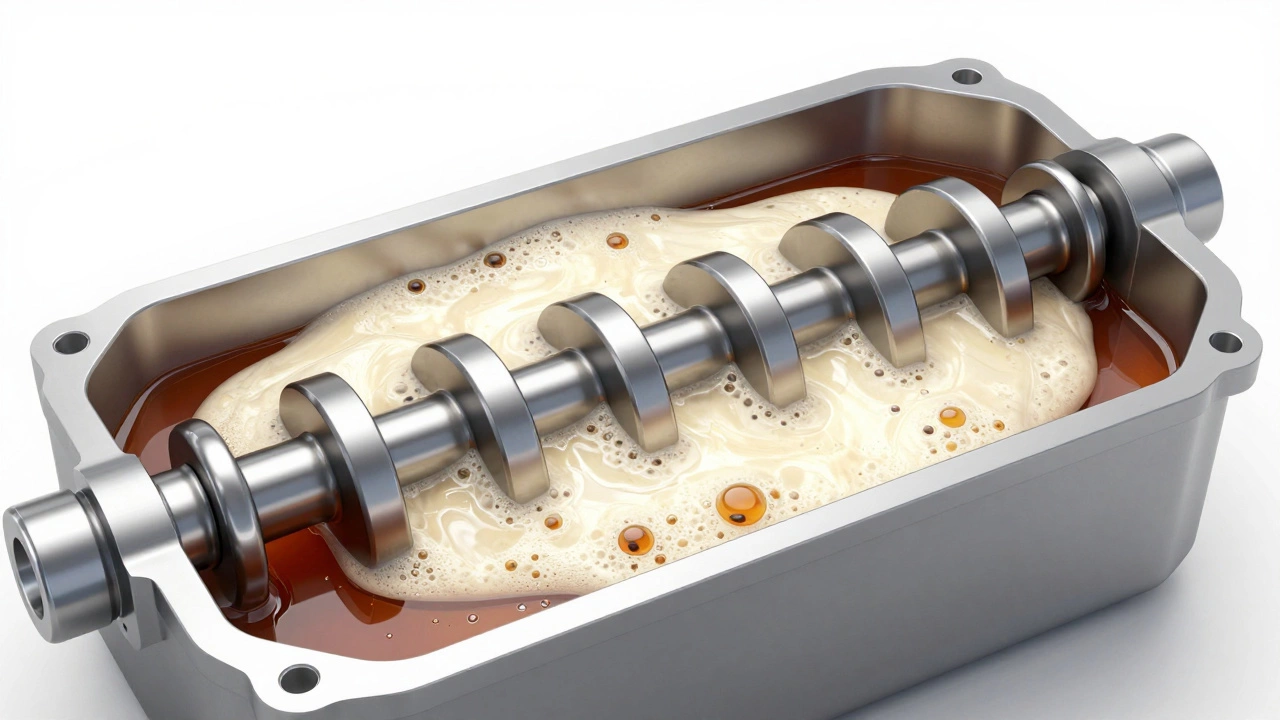
You might wonder why extra lubrication would be bad. Here is the physics of it: the Crankshaft is the main rotating shaft of the engine that converts the linear motion of the pistons into rotational motion. When the oil level is too high, the crankshaft literally dips into the oil pool and whips it, much like a kitchen mixer. This process is called Aeration, which occurs when air bubbles are trapped within the oil, creating a thick foam.
Air is a terrible lubricant. If your oil pump starts sucking up foam instead of liquid oil, your engine's internal components won't get the protection they need. This leads to increased friction and a spike in operating temperatures. If you pull your dipstick and the oil looks like a latte-milky and bubbly-you've got aeration caused by overfilling.
Watching Your Exhaust and Emissions
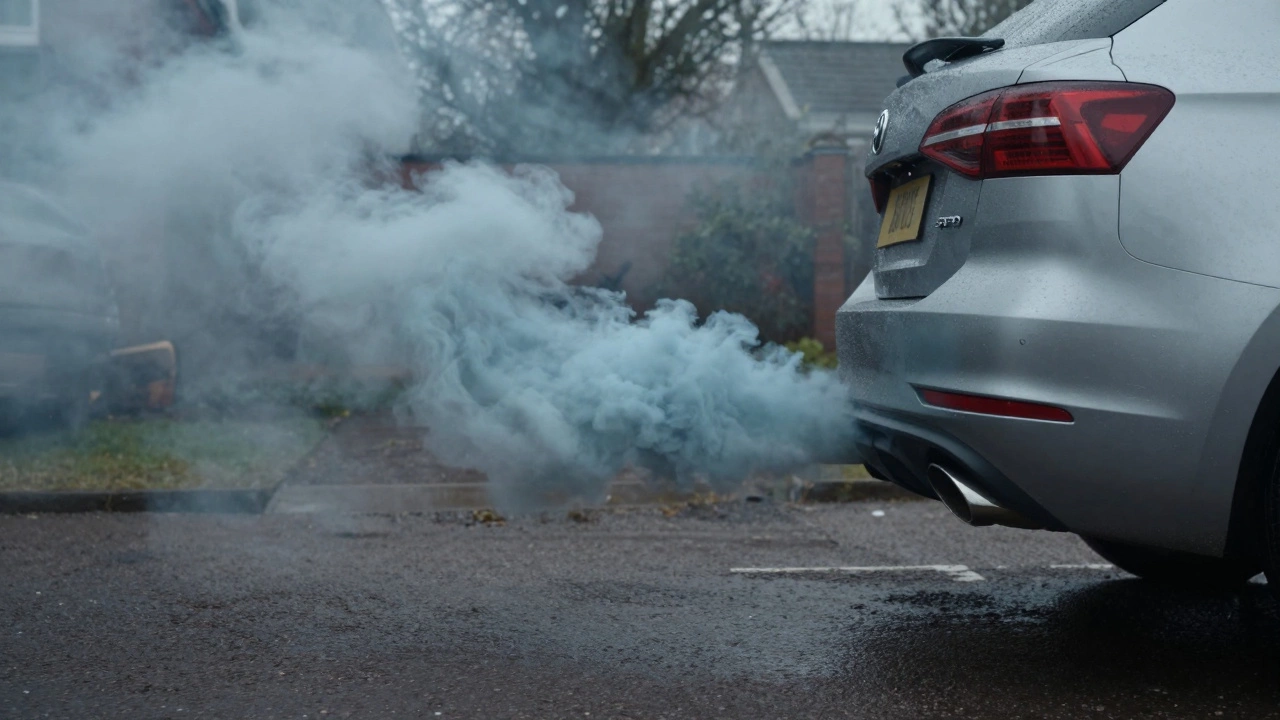
When there is too much oil in the pan, the excess pressure can push oil past the piston rings and into the combustion chamber. Once there, the oil burns along with the fuel. You'll notice this as a distinct cloud of smoke coming from your tailpipe.
Typically, this smoke is a bluish-grey hue. If you see this after a DIY oil top-up, it's a sign that the engine is struggling to contain the fluid. This isn't just a visual annoyance; burning excess oil can clog your Catalytic Converter, which is an emissions control device that converts toxic gases into less-polluting emissions. Replacing a ruined converter is a far more expensive job than simply draining some oil.
| Symptom | Normal Level | Overfilled Level |
|---|---|---|
| Dipstick Reading | Between Min and Max | Above Max line |
| Oil Texture | Smooth, viscous liquid | Frothy, bubbly, or milky |
| Exhaust Smoke | Clear/Transparent | Bluish-grey tint |
| Engine Sound | Consistent hum | Possible knocking or rough idle |
| Leakage | Dry gaskets | Seepage at seals/gaskets |
The Pressure Problem and Blown Seals
Engines are designed to operate within a specific pressure range. Too much oil increases the internal pressure within the Oil Pan, also known as the sump. This pressure needs to go somewhere, and it often finds the path of least resistance: your seals.
You might notice fresh oil leaks appearing around the rear main seal or the valve cover gaskets. When the pressure exceeds the seal's capacity, it literally pushes the oil out of the engine. While a slow leak is annoying, a blown seal can lead to a catastrophic loss of lubrication and potential engine seizure. If you've recently overfilled your oil and suddenly see puddles on your driveway, the pressure is likely the culprit.
Performance Red Flags: Rough Idling and Power Loss
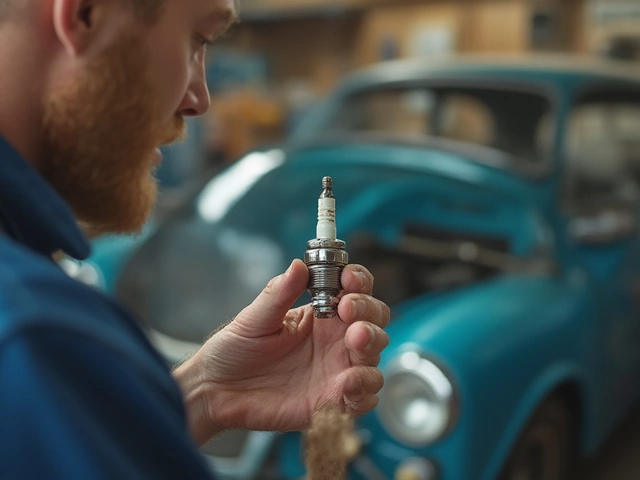
If your car feels sluggish or the engine is idling unevenly, it could be a result of the oil interfering with the combustion cycle. When oil leaks into the cylinders due to overfilling, it can foul the Spark Plugs. These are devices that deliver an electric spark to ignite the fuel-air mixture in the cylinder.
Fouled spark plugs cause misfires. You'll feel this as a shudder through the steering wheel or a lack of response when you hit the gas. In severe cases, the oil can even cause "hydro-locking" where the cylinder fills with too much liquid to compress, potentially bending a connecting rod and totaling the engine.
How to Fix an Oil Overfill
If you've confirmed you have too much oil, do not keep driving. The longer you run the engine with aerated oil, the more wear you're causing. You have three main options depending on your tools and comfort level:
- The Extraction Pump: This is the cleanest method. A fluid extraction pump allows you to suck the excess oil out through the dipstick tube. It's a handheld vacuum tool that lets you remove exactly as much as you need without getting oil all over your garage floor.
- The Drain Plug Method: If you don't have a pump, you can loosen the drain plug at the bottom of the oil pan. Be very careful here; the oil comes out fast. Try to let out just a small amount, tighten the plug, and check the dipstick again. Repeat until the level is correct.
- Professional Help: If you're not comfortable working under the car, a local mechanic can put the car on a lift and drain the excess in five minutes. Given the risk of engine damage, this is a small price to pay for peace of mind.
Can I just leave it if it's only a little bit over the max line?
If the oil is just a few millimeters above the mark, most modern engines can handle it without issue. However, if it's a significant amount (like half a quart or more over), you risk aeration and seal damage. When in doubt, it's better to remove the excess.
Will overfilling the oil void my warranty?
Generally, a simple overfill won't void a warranty immediately, but if the overfill leads to engine failure and the dealership finds evidence of aeration or blown seals caused by improper oil levels, they may deny the claim under "owner negligence." Keep your receipts for oil changes to show you follow a regular maintenance schedule.
How much oil is "too much"?
Any amount that puts the oil level significantly above the maximum mark on the dipstick is too much. For most passenger cars, adding just one extra quart (about 1 liter) beyond the capacity can be enough to cause the crankshaft to whip the oil into a foam.
Does synthetic oil behave differently when overfilled?
The chemistry of synthetic oil (better temperature resistance and flow) doesn't change the physics of overfilling. Whether you use conventional or synthetic, the risk of aeration and pressure-induced seal failure remains the same.
Can I use a vacuum cleaner to suck out the oil?
Absolutely not. Home vacuum cleaners are not designed for liquids and can short-circuit or explode if oil enters the motor. Use a dedicated oil extraction pump designed for automotive use.
Next Steps and Troubleshooting
If you have already drained the excess oil but are still seeing smoke or experiencing a rough idle, your spark plugs might be fouled. Try replacing the plugs to restore engine efficiency. If you see active oil leaks around the gaskets after a severe overfill, you'll need to monitor the levels closely and eventually replace the damaged seals.
For those who struggle with oil levels, a good rule of thumb is to add oil in small increments. Instead of pouring in a whole quart, add a quarter of a quart, wait a few minutes for it to drain down into the pan, and check the dipstick. It takes longer, but it prevents the headache of having to suck oil back out of your engine.