Exhaust Modification Risk Assessment
Answer a few questions to see if a full muffler delete fits your lifestyle or if a high-flow alternative is the better path.
Recommendation
Quick Takeaways for Car Owners
- Your car will be significantly louder, often leading to "drone" at highway speeds.
- You risk failing emissions tests and getting hit with heavy fines.
- Depending on your engine, you might actually lose low-end torque.
- Resale value usually drops because buyers fear a "beater" or a poorly modified car.
The Nightmare of Exhaust Drone
The biggest shock for most people isn't the loudness-it's the drone. In a stock setup, a muffler is designed to cancel out specific sound frequencies using destructive interference. When you remove it, those frequencies are no longer filtered.
Have you ever sat in a room with a humming refrigerator that suddenly becomes unbearable? That's drone. At a specific RPM-usually between 2,000 and 3,000-the cabin of your car can turn into a resonance chamber. This vibration doesn't just hit your ears; you feel it in your chest and the steering wheel. After a 30-minute commute, you'll likely arrive at your destination with a headache. It transforms a relaxing drive into a stressful endurance test.
Legal Trouble and Emissions Failures
Cutting out your muffler isn't just a mechanical change; it's a legal gamble. In most regions, including the UK and the US, there are strict noise ordinances and emissions regulations. A catalytic converter handles the chemical pollutants, but the muffler is key to meeting noise standards.
If you're stopped by police, a muffler delete is a "come hither" sign for a ticket. Beyond the police, you have to deal with the MOT or state inspections. Many inspectors will fail a vehicle immediately if the exhaust is excessively loud or if the modification violates the original manufacturer's certification. You'll find yourself spending more money trying to "quiet down" the car with makeshift baffles than you would have spent on a proper cat-back system in the first place.
The Truth About Backpressure and Performance
There is a common myth that removing a muffler magically adds 20 horsepower. In reality, for most street cars, it's a wash. Some engines, especially naturally aspirated ones, actually rely on a certain amount of backpressure to maintain exhaust gas velocity.
When you remove too much restriction, you can experience a loss in low-end torque. This means your car might feel sluggish when pulling away from a stoplight, even if it feels slightly punchier at redline. If you have a turbocharged engine, the impact is less severe, but you're still not seeing the massive gains you'd see from a full tune and upgraded turbocharger. For the average driver, the tradeoff is losing drivability for a tiny bump in top-end power that you'll likely never even use.
| Feature | Muffler Delete (Straight Pipe) | High-Flow Muffler |
|---|---|---|
| Sound Level | Extremely Loud / Harsh | Aggressive but Controlled |
| Drone Risk | Very High | Low to Moderate |
| Legal Compliance | Likely Illegal | Often Street Legal |
| Cost | Cheap (Cut and Weld) | Moderate (Part + Install) |

Mechanical Wear and Tear
Your exhaust system is a tuned instrument. When you remove the muffler, you change the pressure dynamics throughout the entire system. This can lead to increased vibration in the exhaust hangers and brackets. Over time, these vibrations can cause welds to crack or pipes to rub against the chassis, creating annoying rattles that are nearly impossible to track down.
Furthermore, the increased volume can mask other engine sounds. Usually, a skilled driver can hear a valve tick or a bearing starting to fail over the normal hum of the engine. When your car is screaming through a straight pipe, you lose that early warning system. You might not notice a mechanical problem until it becomes a catastrophic failure because you simply couldn't hear it over the noise.
The Resale Value Trap
If you plan on keeping your car for a decade, this might not matter. But if you ever intend to sell it, a muffler delete is a red flag for buyers. To a seasoned car enthusiast, it suggests the owner was more interested in "attention" than "maintenance." To a regular buyer, it just sounds like a broken car.
A car that screams through the neighborhood is hard to sell. You'll find that your pool of potential buyers shrinks significantly. Most people want a car that sounds sporty, not one that sounds like it's missing a fundamental piece of hardware. You'll often end up having to spend money to reinstall a factory system just to make the car sellable again.
Better Alternatives to the Straight Pipe
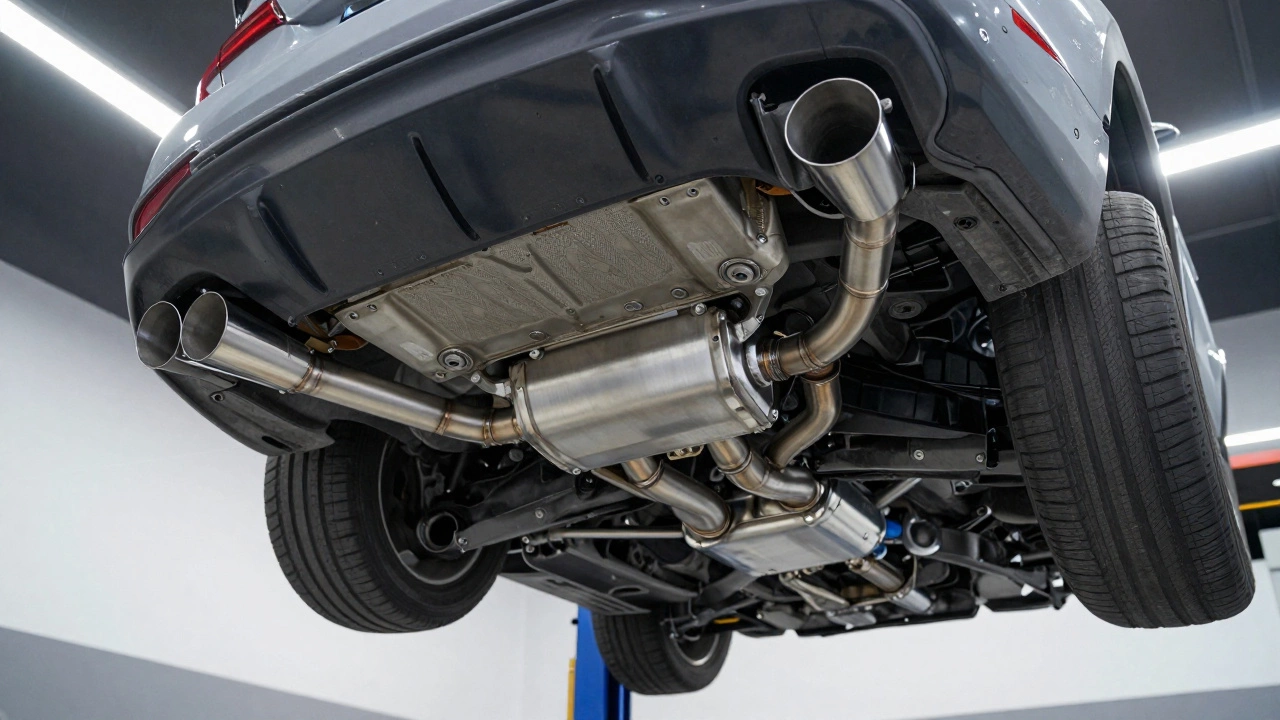
If you want a better sound without the headaches, there are smarter ways to go about it. Instead of a total delete, look into a cat-back exhaust system. These are engineered to provide a deeper tone while keeping the drone under control.
Another option is a resonator. If you've already done a delete and hate the drone, adding a resonator can filter out those specific annoying frequencies without sacrificing too much volume. It's the middle ground that gives you the "growl" without the "scream." If you really want flexibility, look into an exhaust cutout valve. This allows you to flip a switch to go straight-pipe when you're on a track and switch back to quiet mode when you're driving through a residential area at night.
Will a muffler delete make my car faster?
Rarely. While it reduces restriction, most street cars aren't limited by their muffler. You might see a tiny increase in top-end power, but you often lose low-end torque, which can actually make the car feel slower in city driving.
Is a muffler delete the same as removing the catalytic converter?
No. The muffler reduces noise, while the catalytic converter reduces toxic emissions. Removing the catalytic converter is far more illegal and will almost certainly cause your car to fail any emissions test and potentially trigger a Check Engine Light.
How do I stop the drone after removing my muffler?
The most effective way to kill drone is to install a resonator or a high-quality muffler. A resonator specifically targets the mid-range frequencies that cause that "booming" feeling in the cabin.
Can I just put a glasspack in instead of a full delete?
Yes, a glasspack is a basic type of muffler. It will be much louder than stock but will offer slightly more sound dampening than a completely open straight pipe, though drone can still be an issue.
Will my car fail an MOT or inspection with a muffler delete?
It is very likely. Depending on the local laws, noise levels are measured. If your car exceeds the legal decibel limit or if the modification is deemed unsafe or non-compliant with the vehicle's type approval, it will fail.
What to do next?
If you're still craving that aggressive sound but now realize the risks, start by researching high-flow mufflers. They give you the best of both worlds: improved flow for a bit more power and a sound that won't make your neighbors hate you. If you already have a straight pipe and the drone is driving you crazy, your next step should be finding a local exhaust shop to weld in a resonator. It's a relatively cheap fix that saves your sanity on long trips.