Spark Plug Condition Checker
Check Your Spark Plug Condition
This tool helps determine if your spark plugs are causing rough idle issues. Inspect your spark plugs (see article for guidance) and select the condition you observe.
Maintenance Interval Guide
Recommended spark plug replacement intervals:
- Copper plugs: Every 20,000-30,000 miles
- Platinum plugs: Every 60,000-80,000 miles
- Iridium plugs: Every 80,000-120,000 miles
Check your owner's manual for specific recommendations
Ever noticed your car shaking a little too much when it’s sitting still? Or maybe the engine sounds rough when you’re at a stoplight? You’ve probably heard that swapping out old spark plugs can fix it. But does changing spark plugs actually improve idle? The short answer: yes-but only if the old ones were bad enough to cause the problem.
What Causes a Rough Idle?
A rough idle isn’t a single issue. It’s a symptom. Your engine runs smoothly when air, fuel, and spark all line up perfectly in each cylinder. If one of those three things is off, the engine stumbles. Spark plugs handle the spark part. But so do fuel injectors, air filters, vacuum hoses, and even the engine’s computer.Old, worn, or fouled spark plugs are one of the most common culprits. When the gap widens from years of use, the spark gets weaker. When carbon builds up on the electrodes, the spark can misfire or skip entirely. That means one or more cylinders aren’t firing properly. The result? A lumpy, uneven idle. You feel it in the steering wheel. You hear it as a rhythmic thump or rattle. It’s not just annoying-it’s inefficient.
How Spark Plugs Affect Idle
Modern engines run on tight tolerances. A spark plug that’s been in there for 80,000 miles isn’t just old-it’s degraded. Copper plugs wear out faster. Platinum and iridium last longer, but they still change over time. Here’s what happens as they age:- Wider gap: The electrodes erode, increasing the distance the spark must jump. The ignition coil struggles to produce enough voltage.
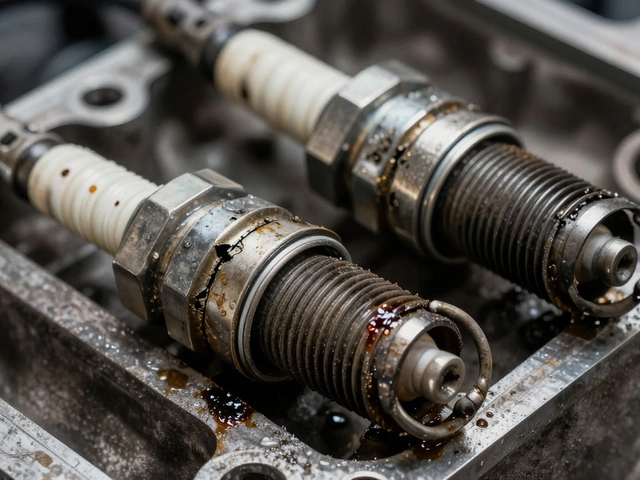
- Carbon buildup: Unburned fuel coats the tip, creating a path for electricity to leak instead of jumping the gap.
- Oil fouling: If your engine burns oil, it coats the plug in residue, killing the spark.
- Cracked insulator: A tiny crack lets the spark escape sideways, not down into the combustion chamber.
When any of these happen, the engine misfires. At idle, where RPMs are low and combustion timing is critical, even one misfire per second is noticeable. You’ll feel the shake. The RPM needle might dip or jump by 100-200 RPMs. The check engine light might even come on with a P0300 code (random misfire).
When Changing Spark Plugs Fixes Idle
If your car has over 60,000 miles and you’ve never changed the plugs, replacing them is one of the cheapest and most effective fixes you can make. I’ve seen it happen dozens of times in Bristol garages: a customer comes in with a rough idle, we pull the old plugs, and they’re covered in thick, black soot or have gaps wider than a paperclip.After installing new iridium plugs-say, NGK Laser Iridium or Denso Iridium TT-the idle smooths out almost instantly. The engine revs cleaner. The shaking stops. Fuel economy often improves by 5-8%. It’s not magic. It’s physics. The spark is strong again. Combustion is complete. Each cylinder fires on time.
But here’s the catch: if your idle problem started after a recent oil leak, or if the check engine light is flashing, changing plugs alone won’t fix it. You could spend £80 on new plugs and still have the same issue. That’s because:
- A leaking intake manifold gasket lets in extra air, throwing off the air-fuel mix.
- A dirty throttle body can stick open slightly, keeping RPMs higher than normal.
- A failing fuel injector might be dripping or clogged.
- A bad coil pack can cause misfires even with perfect plugs.
What to Check Before Replacing Spark Plugs
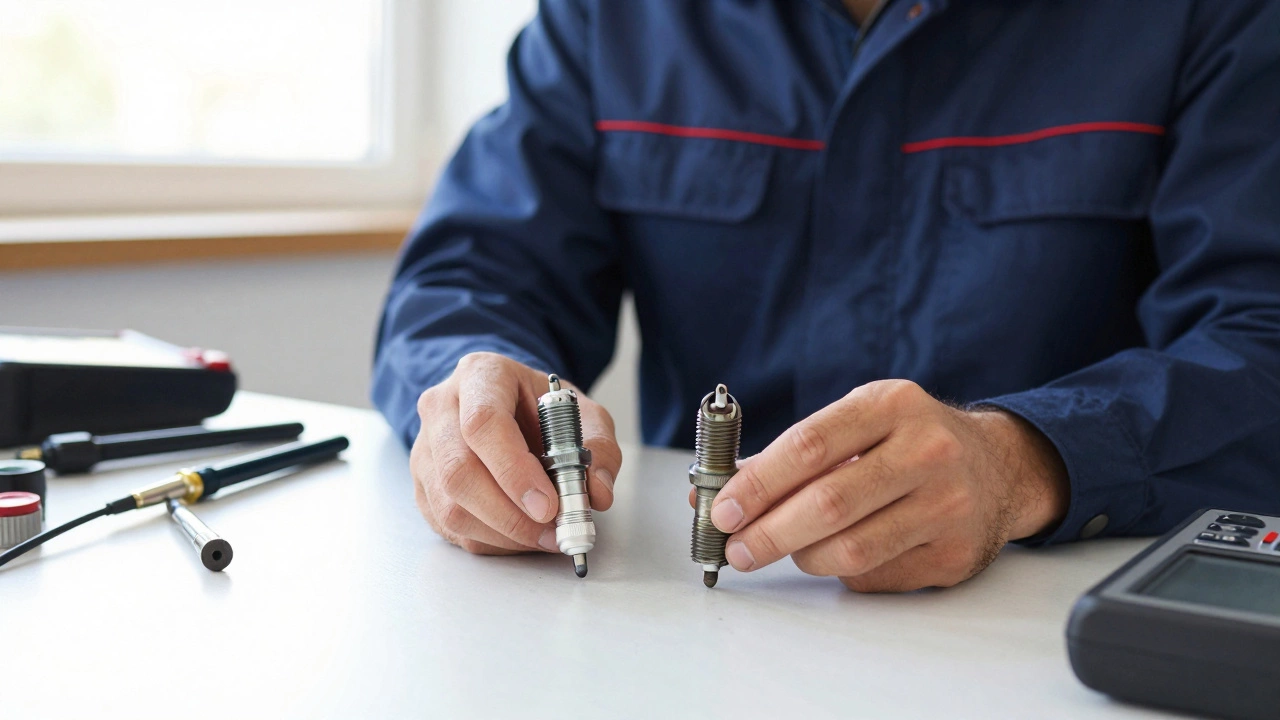
Don’t just swap plugs blindly. First, rule out the easy stuff:- Check the check engine light. If it’s on, read the code. P0301-P0308 means a specific cylinder is misfiring. That points to one plug, one coil, or one injector.
- Inspect the old plugs. Pull one out. Look at the tip. Black and dry? Carbon fouling. Wet and oily? Engine burning oil. White or blistered? Running too hot. All of these tell you what’s wrong.
- Look for vacuum leaks. Listen near the intake manifold with the engine running. A hissing sound means air is sneaking in where it shouldn’t.
- Check the air filter. A clogged filter reduces airflow, making the engine run rich and idle poorly.
- Test the fuel pressure. Low pressure means not enough fuel is getting to the injectors.
If the plugs look bad and no other issues show up, go ahead and replace them. But if you find a vacuum leak or a bad coil, fix that first. Replacing plugs won’t help if the real problem is elsewhere.
How Often Should You Change Spark Plugs?
There’s no one-size-fits-all answer. It depends on the plug type and your car’s make:- Copper plugs: Every 20,000-30,000 miles. Common in older cars.
- Platinum plugs: Every 60,000-80,000 miles. Found in many 2000s-2010s models.
- Iridium plugs: Every 80,000-120,000 miles. Standard in most modern cars.
Check your owner’s manual. If it says “replace at 100,000 miles,” don’t wait until the engine starts shaking. At 80,000, performance drops. Idle gets rougher. Fuel economy slips. That’s not a myth-it’s data from the Society of Automotive Engineers.
Some mechanics say you can stretch plugs past their limit. You can. But you’re gambling with performance, emissions, and long-term engine health. A misfiring cylinder can damage the catalytic converter. That repair costs £800-£1,200. New plugs? £40-£80.

Real-World Example: A 2018 Ford Focus
A customer brought in a 2018 Ford Focus with 89,000 miles. Idle was rough. The car shuddered at traffic lights. No check engine light. We pulled the spark plugs. All four were covered in thick, black carbon. The gap on each was over 1.5mm-way past the 0.8mm spec. We replaced them with NGK Laser Iridium plugs. The next day, the customer called back: “It’s like a new car. No more shaking. And I’m getting better MPG.”That’s the sweet spot. Not every rough idle is caused by spark plugs. But when they’re the problem, replacing them is the fastest, cheapest fix you’ll ever make.
What If the Idle Doesn’t Improve After Replacement?
If you changed the plugs and the idle is still rough, here’s what to do next:- Scan for codes-even if the light isn’t on, pending codes might show up.
- Inspect the throttle body. Clean it with carb cleaner and a soft brush.
- Check the PCV valve. A stuck valve causes vacuum imbalance.
- Test the idle air control valve. It’s a small motor that adjusts airflow at idle. If it’s dirty or failing, idle suffers.
- Look for intake manifold gasket leaks. A common issue on Ford, VW, and Honda engines.
If none of those fix it, you might have a deeper issue: a failing fuel pump, a bad MAF sensor, or even a timing chain problem. At that point, it’s time for a professional diagnosis.
Bottom Line
Changing spark plugs can improve idle-if the old ones were worn out. It’s not a cure-all, but it’s one of the most cost-effective maintenance steps you can take. If your car is over 60,000 miles and the idle is shaky, start there. Pull a plug. Look at it. If it’s dirty or gapped wide, replace them all. You’ll feel the difference.But if the problem persists, don’t keep throwing parts at it. Look for vacuum leaks, dirty throttle bodies, or failing sensors. Fix the real problem, not the easy one.
Good spark plugs don’t just make your car idle smoothly. They help it run cleaner, use less fuel, and last longer. In the long run, that’s cheaper than a new catalytic converter.
Can old spark plugs cause a rough idle?
Yes. Worn, fouled, or gapped-out spark plugs can cause misfires, especially at idle where combustion timing is critical. This leads to shaking, uneven RPMs, and a rough-running engine.
How do I know if my spark plugs need replacing?
Check your owner’s manual for the recommended interval. Signs include rough idle, poor fuel economy, hesitation during acceleration, or a check engine light with misfire codes. Pulling one plug and inspecting the tip for carbon, oil, or excessive wear is the best way to confirm.
Will new spark plugs improve fuel economy?
Yes, if the old ones were causing misfires. A healthy spark ensures complete fuel combustion. In real-world tests, replacing worn plugs can improve fuel economy by 5-8%, especially in older cars.
Do I need to replace all spark plugs at once?
Always. Even if only one is bad, the others are likely close to failing. Mixing old and new plugs creates uneven performance. Replacing them all ensures consistent spark across all cylinders.
Can I drive with bad spark plugs?
You can, but you shouldn’t. Misfires can overheat and damage the catalytic converter, which costs over £800 to replace. You’ll also burn more fuel and risk failing emissions tests.
What’s the best type of spark plug for idle performance?
Iridium plugs offer the best performance for idle and long-term reliability. They maintain a precise gap longer than copper or platinum, deliver a stronger spark, and resist fouling. Brands like NGK and Denso are widely trusted.