Your car overheats. Steam curls from under the hood. You check the coolant level and find it’s low-again. The mechanic says the radiator is leaking. Now you’re stuck with a tough question: is it worth repairing a radiator, or should you just replace it?
There’s no one-size-fits-all answer. But if you’ve spent time researching this, you already know that throwing money at a broken radiator without understanding the full picture can cost you more in the long run. Let’s cut through the noise.
What’s Actually Broken?
Not all radiator problems are the same. A small leak isn’t the same as a cracked core. A loose hose clamp? Easy fix. A corroded end tank? That’s a different story.
Most radiator leaks happen in one of three places:
- End tanks: Plastic or aluminum parts fused to the metal core. These crack with age or heat stress.
- Core tubes: The thin metal fins that cool the coolant. These can get clogged or develop pinhole leaks from corrosion.
- Seals and gaskets: The rubber or silicone seals between the tank and core. These dry out and fail over time.
Here’s the key: if the leak is at a seal or gasket, you might get away with a repair. If the core or end tank is cracked, you’re playing with fire.
Repair Options-And Why They Often Fail
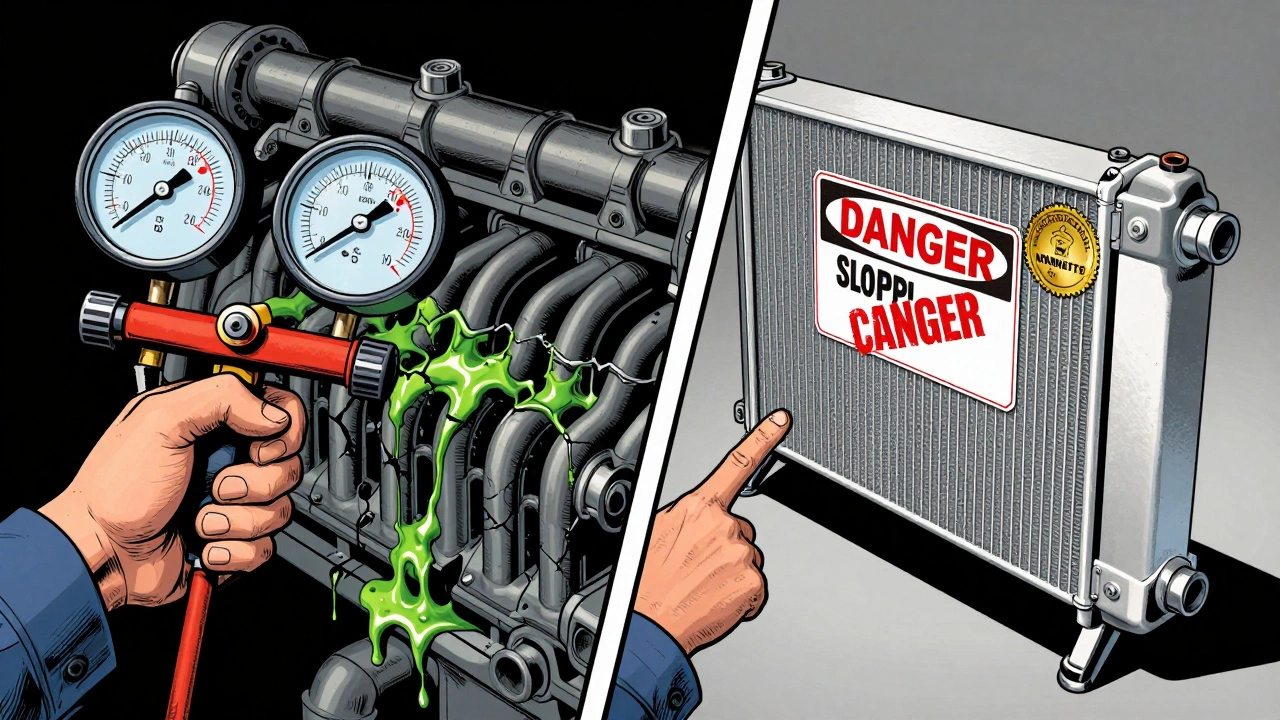
Most people hear "repair" and think of radiator stop-leak products. Those bottle additives? They’re a bandage, not a fix.
Stop-leak fluids work by thickening coolant to clog tiny holes. They can temporarily stop a pinhole leak. But here’s what they don’t tell you:
- They can clog your heater core, causing cabin heating problems.
- They can damage water pumps and thermostat housings.
- They don’t fix the root cause-corrosion, stress, or age.
Professional radiator repair? That usually means welding or epoxy sealing. It’s done in a shop with a vacuum tester and specialized tools. It works for small, clean leaks in metal-like a 1mm crack in the side tank.
But if your radiator is over 8 years old, has more than one leak, or shows signs of heavy corrosion (green or rust-colored sludge in the coolant), repair isn’t a smart move. The metal’s already failing in multiple places. Fix one spot, and another will pop open in six months.
Replacement Costs-What You’re Really Paying For
Let’s talk numbers. In the UK, a new radiator for a common family car like a Ford Focus or Volkswagen Golf costs between £120 and £250. Labor? Around £80 to £150, depending on how hard it is to access.
That’s £200 to £400 total for a brand-new part with a 12-month warranty.
Now compare that to a repair. A professional repair might cost £100 to £200. Sounds cheaper, right? But here’s the catch:
- Repair shops rarely offer warranties longer than 30 days.
- If it fails again, you pay for labor again-and you’re still stuck with an old, worn-out radiator.
- Old radiators often mean old coolant systems. You’ll likely need a full coolant flush and new hoses anyway.
That means your "cheap" repair could end up costing you £300+ when you factor in all the hidden work.
When Repair Makes Sense
There are exceptions. Repair might be worth it if:
- Your radiator is less than 5 years old and the leak is small and isolated.
- You’re driving a classic car and can’t find a replacement part.
- You’ve already replaced the hoses, thermostat, and water pump-and the radiator is the only remaining issue.
One real example: a 2018 Toyota Corolla with a slow drip from the driver-side tank seam. The mechanic cleaned the area, applied a high-temp epoxy sealant, and pressure-tested it. It held for over a year. That’s a win.
But that radiator was still in decent shape overall. The core was clean. No corrosion. No other leaks. That’s rare.
When to Walk Away
Replace the radiator if:
- It’s over 8 years old or has more than 80,000 miles.
- You’ve had to top up coolant more than twice in six months.
- The coolant looks rusty, milky, or has sludge.
- The radiator feels soft or has bulging spots when cold.
- You’re spending more than £150 on repairs and the car is worth less than £3,000.
Here’s the truth: radiators don’t just "wear out." They fail because of neglect. Old coolant turns acidic. It eats away at aluminum and brass. Once that starts, the damage spreads. A repair won’t stop that process.
If your coolant hasn’t been changed in five years, replacing the radiator is just the first step. You’ll need a full system flush, new thermostat, and probably new hoses. That’s £400 to £600 in total. At that point, why not just get a new radiator that’s designed to last?
What Happens If You Ignore It?
Driving with a bad radiator isn’t just expensive-it’s dangerous.
Overheating can warp your cylinder head. It can blow the head gasket. That repair? It’s £1,500 to £3,000. And if you’re lucky, that’s all it costs.
Worse, if the engine seizes while you’re driving, you could lose the entire engine. That’s a £4,000+ bill-or a totaled car.
One mechanic in Bristol told me about a customer who ignored a slow radiator leak for three months. He thought "it’s just a bit of coolant." By the time he brought it in, the head gasket was blown, the engine block was cracked, and the car was beyond repair.
Don’t be that person.
What to Do Next
Here’s your step-by-step plan:
- Check your coolant level and color. If it’s brown or gritty, flush the system.
- Find the leak. Use a flashlight. Look for white crust or wet spots near the radiator.
- Get a pressure test. Most garages do this for free or £20. It tells you if the leak is external or internal.
- Ask for a quote on a new radiator. Get the part number and check online for cheaper options.
- Ask if the repair is guaranteed. If they won’t give you 90 days, walk away.
If the cost of repair is more than half the price of a new radiator, replace it. Always.
Pro Tip: Buy a Quality Replacement
Not all radiators are made equal. Cheap aftermarket ones from eBay or Amazon often use thin metal, poor seals, and weak tanks. They leak within a year.
Stick with OEM-equivalent brands like Behr, a German manufacturer known for high-pressure tolerance and corrosion-resistant materials, Mahan, a brand trusted by UK mechanics for durability in wet climates, or Valeo, a global supplier with OEM contracts for Ford and Peugeot.
These cost more upfront-£180 to £300-but they last 8-10 years. The cheap ones? You’ll be back in six months.
Final Answer: Is It Worth Repairing a Radiator?
Only if the radiator is young, the leak is tiny, and you’re getting a proper warranty. Otherwise, replace it.
Repairing a radiator is rarely a long-term solution. It’s a gamble with your engine. And in the UK’s damp, cold winters, a cooling system failure can strand you miles from home.
Think of it like this: you wouldn’t patch a leaking roof and call it done. You’d replace the damaged tiles. Your radiator is the same. It’s a critical system. Don’t risk your engine on a temporary fix.
Replace it. Save yourself the stress, the tow truck, and the bigger bill later.
Can I drive with a leaking radiator?
You can drive short distances if you keep topping up coolant, but it’s risky. Even a small leak can lead to overheating in traffic or uphill driving. The engine can overheat in under 10 minutes. Don’t risk it.
How long does a radiator repair last?
A professional repair might last 6 to 12 months if done right. But if the radiator is old or corroded, it’ll likely fail again within 3 months. Most shops won’t guarantee repairs beyond 30 days.
Are radiator stop-leak products safe?
They’re not safe for long-term use. These products can clog the heater core, damage the water pump, and interfere with thermostat function. They’re a temporary bandage, not a fix. Avoid them unless you’re stranded and have no other option.
How often should I replace my radiator?
Most radiators last 8 to 12 years or 80,000 to 120,000 miles. But if you haven’t changed the coolant in over 5 years, corrosion can cut that lifespan in half. Replace it when it shows signs of leaking or discolored coolant.
Can a bad radiator cause transmission problems?
Yes-if your car has an automatic transmission, the transmission cooler is often built into the radiator. A leaking radiator can let coolant mix with transmission fluid, turning it milky. That causes gear slippage and eventual transmission failure. Check your transmission fluid-if it looks pink or cloudy, get it checked immediately.