Oil Change Calculator
Oil Change Calculator
Get personalized recommendations based on your vehicle's specific conditions.
Your Oil Change Recommendation
Recommended Interval:
Risk Level:
Most car manuals say to change your oil every 5,000 to 7,500 miles. But if you’re the kind of person who forgets until the check engine light flashes or the engine starts rattling, you might be wondering: what happens if you go over 5000 miles between oil changes? The short answer? It’s not a disaster right away-but it’s a slow, expensive mistake that adds up fast.
Your Engine Runs on Clean Oil, Not Old Sludge
Engine oil doesn’t just lubricate. It cools, cleans, and protects. Every time your engine runs, tiny metal particles, carbon buildup, and combustion byproducts mix into the oil. Fresh oil holds these contaminants in suspension until the filter catches them. But after 5,000 miles, that oil starts breaking down. The additives-detergents, dispersants, anti-wear agents-lose their punch. The oil thickens. It turns dark, sticky, and eventually, sludgy.At 7,000 miles, you’re still okay. At 10,000? You’re pushing it. At 15,000? You’re running on fumes. By then, the oil isn’t protecting your engine-it’s acting like sandpaper between moving parts. The bearings, camshafts, piston rings, and valve train all suffer from increased friction. You won’t notice it at first. But over time, metal wears down. Tiny gaps form. Power drops. Fuel economy dips by 5-10%.
Sludge Builds Up Where It Hurts Most
Old oil doesn’t just get dirty-it turns into gunk. Sludge forms in tight spaces: around the crankshaft, behind the timing chain, inside the oil passages. Modern engines have narrow oil galleries designed for clean, flowing oil. When sludge clogs them, oil can’t reach critical parts. That’s when you hear the ticking noise from lifters or the knocking from rod bearings. These aren’t just sounds-they’re warning signs of metal-on-metal contact.One mechanic in Bristol told me about a 2018 Honda Civic that came in with 22,000 miles on its original oil. The owner thought synthetic oil lasted forever. When they opened the valve cover, the camshaft was coated in thick, tar-like residue. The timing chain tensioner had seized. Repair cost? $3,200. A simple oil change at 5,000 miles would’ve cost $60.
Overheating Is a Silent Killer
Oil helps pull heat away from the pistons and cylinder walls. When oil degrades, its ability to absorb and transfer heat drops. That’s why engines running on old oil often run hotter-even if the temperature gauge looks normal. Overheating causes warping in cylinder heads, cracked blocks, and blown head gaskets. These aren’t cheap fixes. A head gasket replacement can run $1,500 to $3,000 depending on the car.It’s not just about the temperature reading. It’s about what’s happening inside. A 2022 study by the Society of Automotive Engineers found that engines with 12,000-mile oil intervals had 37% higher operating temperatures under load compared to those changed at 5,000 miles. That extra heat accelerates wear in every component.
Warranty and Resale Value Take a Hit
If your car is still under warranty, skipping oil changes can void coverage. Manufacturers require proof of maintenance. If your engine fails and you can’t show service records, they’ll deny the claim. Even if you’re out of warranty, buyers notice. A car with no oil change history sells for 15-25% less. Buyers assume the worst: worn bearings, sludge damage, unknown internal wear. They walk away-or lowball you hard.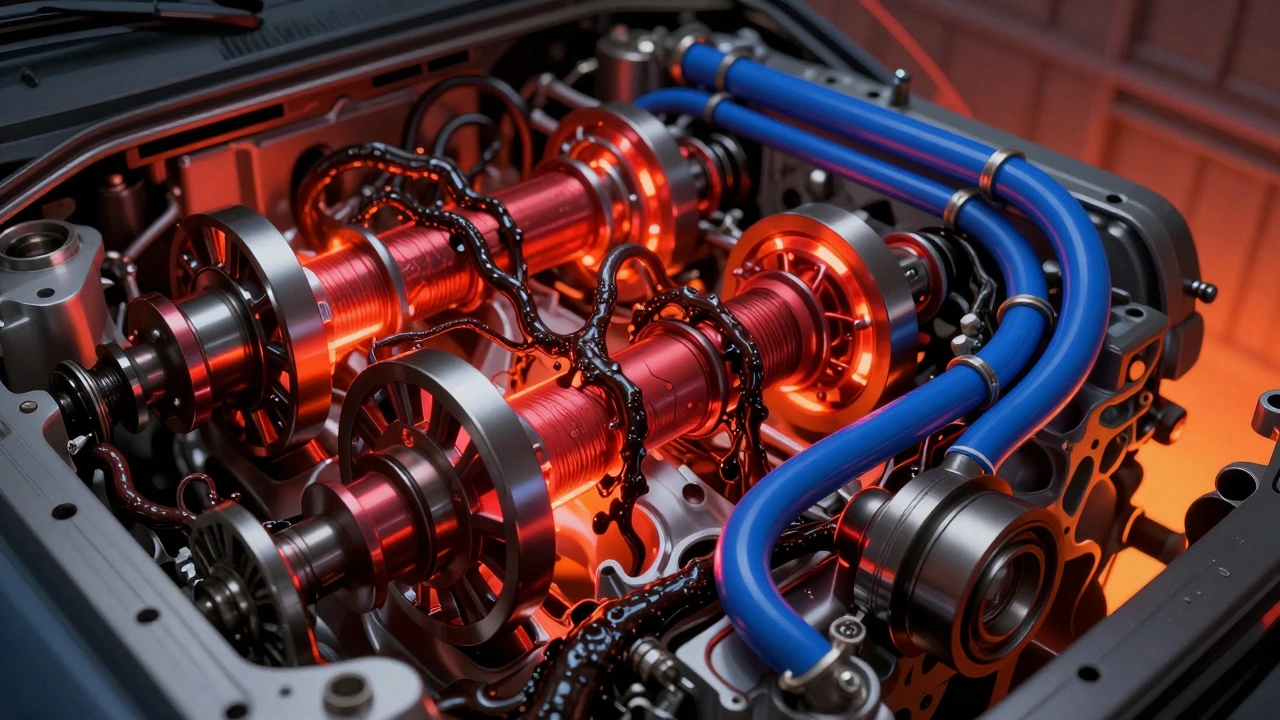
What About Synthetic Oil? Doesn’t It Last Longer?
Synthetic oil lasts longer than conventional-sometimes up to 10,000 or even 15,000 miles. But that doesn’t mean you can ignore the clock. Synthetic doesn’t stop contaminants from building up. It doesn’t prevent filter clogging. And it doesn’t protect against moisture buildup if you do mostly short trips.Here’s the catch: most synthetic oil warranties still require changes every 7,500-10,000 miles. If you go beyond that, you’re on your own. A 2023 Consumer Reports test showed that even top-tier synthetic oils lost 60% of their anti-wear protection after 12,000 miles. That’s not magic-it’s physics.
Short Trips Are the Real Enemy
If you drive less than 10 miles at a time, your oil degrades faster-even if you haven’t hit 5,000 miles. Short trips don’t let the engine reach full operating temperature. That means water from combustion doesn’t evaporate. It mixes with oil and forms acid. Acid eats away at metal. It also thickens the oil. If you commute 8 miles each way, five days a week, you’re better off changing oil every 3,000 miles or every six months-whichever comes first.Signs You’ve Waited Too Long
You don’t need a mechanic to tell you something’s wrong. Watch for:- Engine noise-ticking, knocking, or rattling that wasn’t there before
- Check engine light with codes like P0011 (camshaft position) or P0521 (oil pressure sensor)
- Smoke from the exhaust-especially blue smoke, which means oil is burning
- Oil smell inside the cabin or near the engine
- Low oil pressure warning, even after topping up
These aren’t vague issues. They’re symptoms of real, measurable damage. Ignoring them won’t make them go away. It’ll just make the repair bill bigger.
What to Do If You’ve Already Gone Too Long
If you’ve gone 10,000 miles or more without a change, don’t panic-but don’t delay either. Here’s what to do:- Check the oil level and color. If it’s black and thick, or if the dipstick feels gritty, you’re in trouble.
- Don’t just change the oil. Change the filter too. A dirty filter will contaminate fresh oil instantly.
- Consider an engine flush. Not all mechanics recommend it, but if you’ve gone past 12,000 miles, a professional flush can remove sludge before it causes permanent damage.
- After the flush, monitor the engine closely for the next 500 miles. Listen for noise. Watch for smoke. Check oil levels weekly.
- Switch to a high-mileage oil if your car has over 75,000 miles. It has seal conditioners and extra detergents to help clean up older engines.
Some people think flushing is risky. It can be-if your engine is already clogged with thick sludge. But skipping it when you’ve waited too long is riskier. A professional can assess the condition before deciding.
How to Never Forget Again
Set a reminder. Use your phone. Put a sticker on your windshield. Write it in your calendar. Pick a date that’s easy to remember-like your birthday or the first day of the month. Most people forget because they don’t have a system. Make one.Also, keep a simple log. Note the date, mileage, and type of oil used. You don’t need an app. A notebook works. If you ever sell the car, that log is worth its weight in gold.
Bottom Line: It’s Not About the Mileage. It’s About the Condition.
Going over 5,000 miles once won’t kill your engine. But doing it regularly? That’s how engines die quietly. Oil isn’t a luxury. It’s the lifeblood of your engine. Treat it like one. Change it on time. Don’t wait for the warning signs. By then, it’s too late.Can I really go 10,000 miles between oil changes with synthetic oil?
Some synthetic oils are rated for 10,000-15,000 miles, but only if you drive mostly highway miles and your engine is in good condition. If you do short trips, stop-and-go traffic, or tow heavy loads, you should still change it every 7,500 miles. Always check your owner’s manual-manufacturers set limits for a reason.
What happens if I just top up the oil instead of changing it?
Topping up doesn’t fix old oil. You’re just adding fresh oil to dirty oil. The contaminants, sludge, and broken-down additives are still there. It’s like adding clean water to muddy water-it doesn’t make it clean. You still need a full change to remove the gunk and restore protection.
Is it okay to change oil every 6 months instead of by mileage?
Yes-if you drive very little. Oil breaks down over time, even if you don’t drive much. Moisture, heat, and oxidation degrade it. Most manufacturers recommend changing oil every 6 months, no matter the mileage. If you drive under 5,000 miles a year, go by time, not distance.
Does driving style affect how often I need an oil change?
Absolutely. Aggressive driving, towing, hauling, or frequent idling puts extra stress on the oil. It heats up faster and picks up more debris. If you drive hard, change oil every 5,000 miles-even with synthetic. If you drive gently on highways, you might stretch it to 7,500. But never go beyond 10,000 without a serious risk.
Can old oil cause the engine to seize?
Yes. If oil becomes too thick, contaminated, or low, it can’t lubricate properly. Metal parts start grinding. Bearings wear out. Pistons stick. In extreme cases, the engine locks up completely. That’s not a repair-it’s a replacement. And it costs thousands. Changing oil regularly is the cheapest insurance you’ll ever buy.
If you’re unsure whether your oil is still good, pull the dipstick. Look at the color. Smell it. Feel it. If it’s dark, gritty, or smells burnt, it’s time. Don’t wait for the engine to scream. By then, it’s already too late.