Spark Plug Health Checker
Check Your Symptoms
Select any symptoms you're experiencing
Mileage Assessment
Enter your vehicle's current odometer reading
Spark Plug Health Assessment
Score: 0Scoring Explained
0-2 points: Healthy plugs. Continue regular maintenance.
3-4 points: Consider checking plugs soon. Monitor symptoms.
5-7 points: Urgent replacement needed. Symptoms indicate worn plugs.
Most drivers don’t think about spark plugs until their car starts acting up. But spark plugs are one of the most critical parts in your engine-and they wear out. Ignoring them can lead to poor fuel economy, rough idling, or even a breakdown. So how do you know if yours need changing?
Your engine is misfiring
If your car hesitates when you press the gas, sputters at stoplights, or feels like it’s stumbling, you’re likely dealing with a misfire. That’s when one or more cylinders aren’t firing properly. Bad spark plugs are the #1 cause. A misfire isn’t just annoying-it can damage your catalytic converter over time. You might even see the check engine light flash, which means the problem is serious and needs immediate attention.You’re getting worse gas mileage
You fill up more often than usual, and you’re not driving differently. That’s a red flag. Worn spark plugs don’t ignite fuel efficiently. Instead of a clean, powerful burn, you get incomplete combustion. That means more fuel goes out the tailpipe instead of powering your wheels. Drivers often notice a 15-30% drop in fuel economy before they even think to check the plugs. If your last fill-up gave you 250 miles instead of your usual 350, it’s time to look under the hood.The car won’t start or struggles to turn over
You turn the key and hear a click, or the engine cranks slowly but won’t catch. That’s not always the battery. If your spark plugs are fouled or cracked, they can’t generate the spark needed to ignite the air-fuel mixture. This is especially common in cold weather. Older cars with high mileage are more prone to this. If your car starts fine one day and then won’t start the next-with no other symptoms-it’s often the spark plugs.You hear unusual engine noises
A healthy engine runs smooth and quiet. If you start hearing ticking, popping, or rattling sounds from the engine bay, especially at idle, worn spark plugs could be to blame. These noises happen because the fuel isn’t burning cleanly. Instead of a controlled explosion, you get small, uneven bursts. You might also hear a knocking sound under acceleration-this is detonation, and it’s caused by misfires from weak or dirty plugs. Don’t ignore it. Engine knocking can lead to piston damage.
There’s visible wear or damage on the plugs
The best way to know for sure? Pull one out and look. You don’t need to change all of them to check. Remove one plug using a socket wrench and inspect it. A healthy plug has a light brown or grayish color on the electrode. If it’s black and sooty, your engine is running too rich. If it’s white or blistered, it’s overheating. If the electrode is worn down to a nub, or the ceramic insulator is cracked, it’s done. Oil residue on the plug means you’ve got an oil leak into the combustion chamber-which is a bigger problem, but still makes the plug useless.You’re past the manufacturer’s replacement interval
Most cars recommend spark plug replacement every 30,000 to 100,000 miles, depending on the type. Standard copper plugs last about 30,000 miles. Platinum ones go 60,000-100,000. Iridium plugs can last up to 120,000. But those are ideal numbers. Real-world driving-short trips, stop-and-go traffic, dusty roads-wears them out faster. If your last replacement was 70,000 miles ago and you’ve got 110,000 on the odometer, you’re overdue. Don’t wait for symptoms. Proactive replacement saves money in the long run.Performance drops under load
When you’re merging onto the highway or climbing a hill, your car feels sluggish. It doesn’t respond like it used to. That’s not just a sign of a dirty air filter or weak fuel pump. Spark plugs that are failing can’t keep up with demand. Under high load, the engine needs a strong, consistent spark. Worn plugs can’t deliver that. You might feel the car lag or hesitate right when you need power the most. That’s dangerous and frustrating.What happens if you don’t change them?
Skipping spark plug replacement doesn’t just hurt performance. It can cost you thousands. A misfiring engine floods the catalytic converter with unburned fuel, melting the internal honeycomb structure. Replacing that costs $1,000-$2,500. Bad plugs can also cause piston ring damage or even bent valves if the engine backfires. And you’ll burn through more fuel every month. Replacing spark plugs costs $100-$300 total, including labor. That’s less than one tank of gas at today’s prices.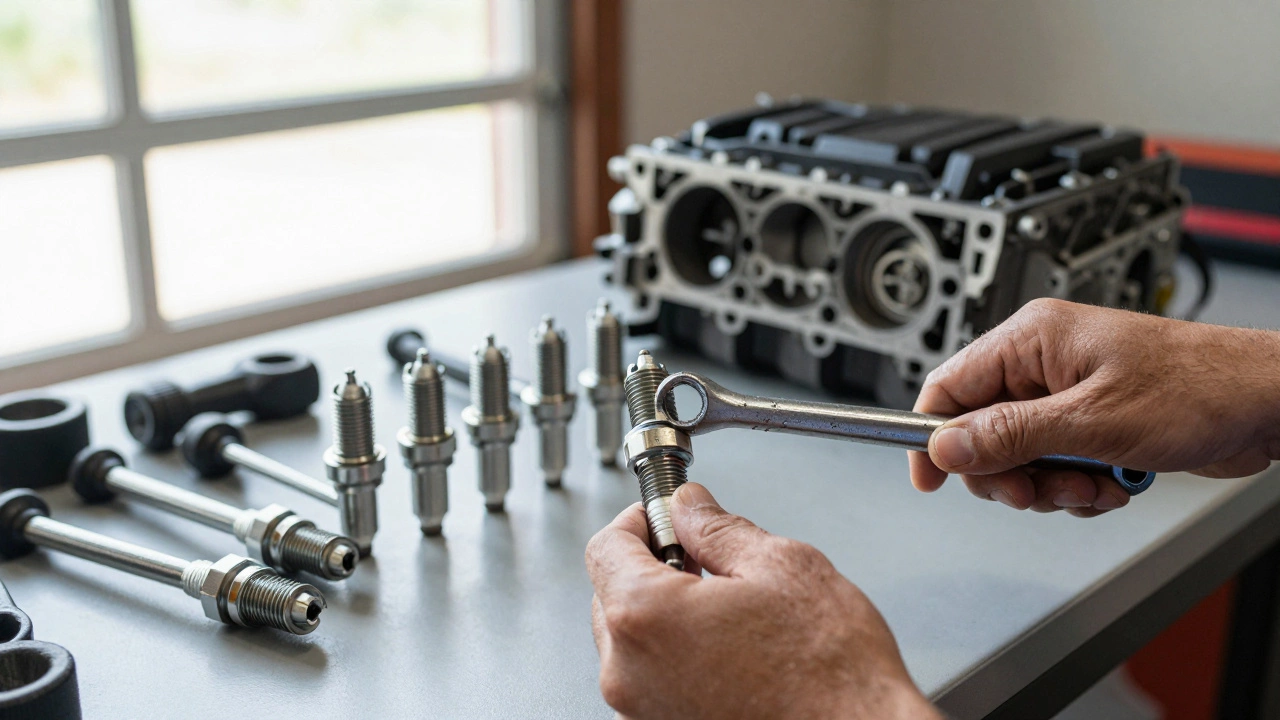
When to replace them
If you notice any of the symptoms above, don’t wait. Even if your car seems to run okay, replace them if you’re near or past the recommended mileage. Most mechanics will check the plugs during a tune-up, but you shouldn’t rely on that. Keep your own records. Write down the date and mileage when you last changed them. Set a reminder for 5,000 miles before the next expected replacement. That way, you’re always ahead of the curve.Quick checklist: Is it time?
- Is your check engine light on or flashing?
- Have you noticed a drop in fuel economy over the last 2-3 fill-ups?
- Does your car hesitate or misfire when accelerating?
- Is your engine noisier than usual, especially at idle?
- Are you past 60,000 miles since the last replacement?
- Has your car been sitting unused for months? (Moisture can corrode plugs.)
If you answered yes to two or more, it’s time to get them checked.
What kind of spark plugs should you use?
Don’t just grab the cheapest ones. Use the type specified in your owner’s manual. Most modern cars use iridium or platinum. These last longer and run hotter, which helps burn off carbon buildup. Copper plugs are cheaper but wear out fast. Using the wrong type can cause overheating or poor performance. If your manual says iridium, don’t swap in copper. It’s not a savings-it’s a risk.Can bad spark plugs cause the check engine light to come on?
Yes. Faulty spark plugs often trigger codes like P0300 (random misfire) or P0301-P0308 (cylinder-specific misfires). The engine control unit detects when combustion isn’t happening properly and turns on the light. Sometimes the light flashes, which means the misfire is severe and could damage the catalytic converter. Don’t ignore it.
How long do spark plugs last?
It depends on the type. Copper plugs last 20,000-30,000 miles. Platinum plugs last 60,000-100,000 miles. Iridium plugs can last up to 120,000 miles. But real-world conditions matter. Short trips, frequent idling, and poor fuel quality shorten their life. If you drive mostly in the city, plan to replace them sooner than the max interval.
Can I change spark plugs myself?
Yes, if you have basic tools and some patience. You’ll need a spark plug socket, ratchet, torque wrench, and gap tool. Make sure the engine is cold. Remove the ignition coils or wires one at a time. Don’t twist the plug-use steady pressure. Tighten new plugs to the torque spec in your manual-over-tightening cracks the ceramic. Under-tightening causes leaks. If you’re unsure, have a mechanic do it.
Do spark plugs affect emissions?
Absolutely. Bad spark plugs cause incomplete combustion, which increases hydrocarbons and carbon monoxide in your exhaust. This is why cars with worn plugs often fail emissions tests. Replacing them can drop emissions by 20-40%, depending on how bad they were.
Why do spark plugs wear out?
Every time a spark plug fires, a tiny bit of metal erodes from the electrodes. Over tens of thousands of cycles, that gap widens. The spark becomes weaker. Contaminants like oil, carbon, or fuel additives build up on the surface. Heat cycles and vibration also stress the ceramic insulator. Eventually, the plug can’t generate a strong enough spark to ignite the fuel reliably.