Car Radiator Diagnostic Tool
Select the symptoms you are experiencing with your vehicle to get a preliminary diagnosis.
Diagnostic Result:
Key Takeaways for Diagnosing Your Radiator
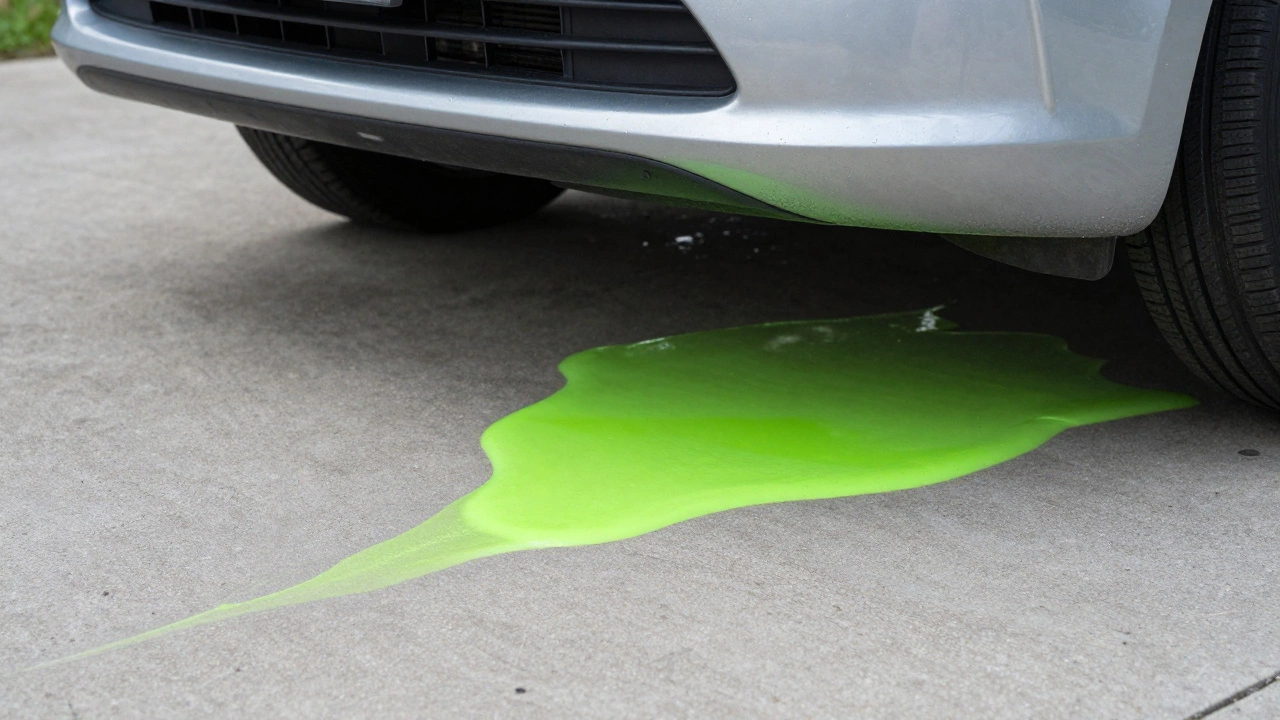
- Coolant Leaks: Look for bright green, orange, or pink puddles under the front of the car.
- Overheating: A rising temperature gauge or steam from the grill is a critical warning.
- Coolant Quality: Milky, brown, or rusty coolant indicates internal failure or contamination.
- Physical Damage: Check for cracked tanks, bent fins, or corrosion on the aluminum surfaces.
- Heater Performance: If your cabin stays cold in winter, you might have a blockage or air pocket.
The Core Job of Your Cooling System
Before we hunt for leaks, we need to understand what we're looking at. Car Radiator is a heat exchanger used to transfer heat from the engine coolant to the outside air. It works as the heart of the cooling loop, taking hot liquid from the engine and cooling it down using air flowing through its fins. If this part fails, the Internal Combustion Engine will quickly overheat, leading to warped cylinder heads or a blown head gasket, which can cost thousands to fix.
Spotting the Visual Red Flags
The easiest way to tell if your radiator is bad is to use your eyes. Start by checking your driveway. Since Engine Coolant (also known as antifreeze) is dyed for visibility, a leak is usually obvious. If you see a puddle of neon green or bright orange liquid directly under the front of the car, you've found your problem.
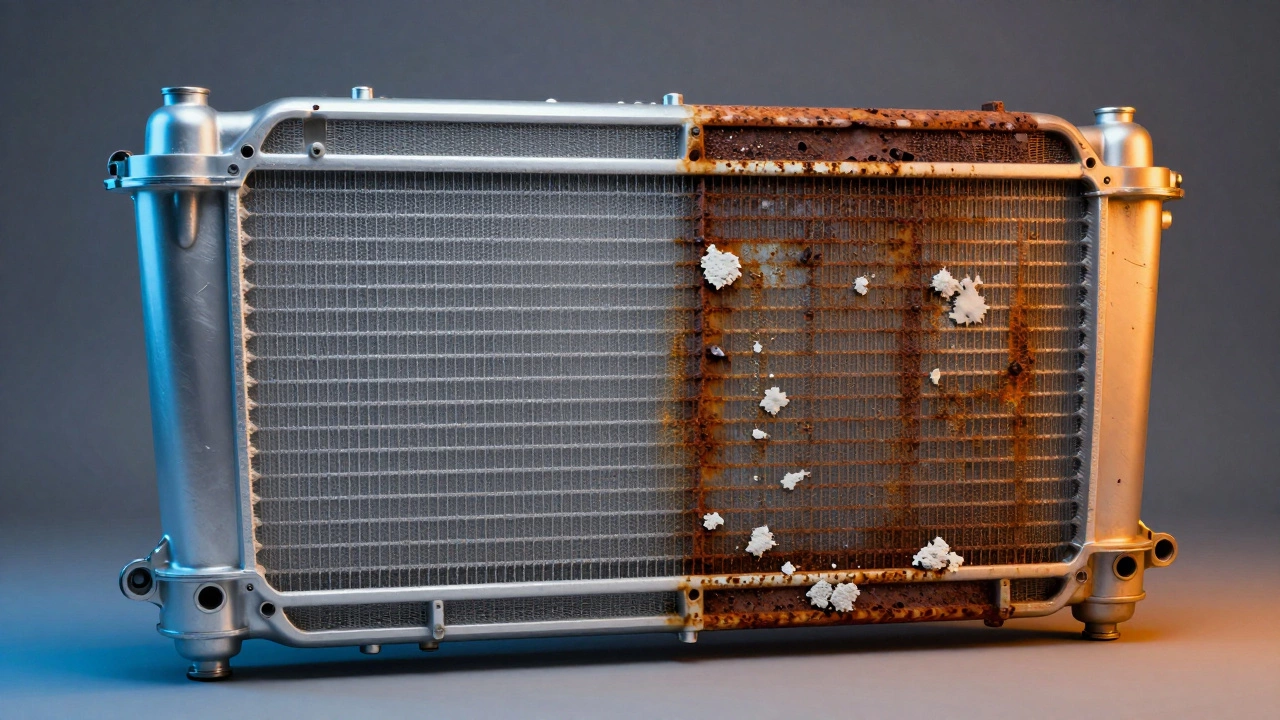
Next, pop the bonnet and look at the radiator's physical condition. Check the edges of the radiator tanks. Over time, plastic tanks can develop hairline cracks that only leak when the system is under high pressure. Look at the fins-the thin aluminum slats. If they are crushed, clogged with dead bugs, or heavily corroded with white crusty deposits, the radiator can't breathe, meaning it can't shed heat efficiently.
The 'Sweet Smell' and Other Sensory Warnings
Have you ever noticed a scent like maple syrup or candy while driving? That's the smell of ethylene glycol, the main ingredient in most antifreeze. If you smell this inside the cabin or around the engine bay, you have a leak. Even a pinhole leak can release enough vapor to create that distinct sweet aroma.
Listen for sounds too. A failing Water Pump might screech, but a bad radiator often manifests as a gurgling sound coming from the dashboard. This happens when air bubbles enter the system because the radiator can't hold enough coolant. If your heater suddenly blows cold air while you're driving, it's a huge red flag that your coolant level has dropped too low for the Heater Core to function.
Decoding the Temperature Gauge
Your dashboard is your best diagnostic tool. A healthy engine usually sits right in the middle of the gauge. If you notice the needle creeping toward the red zone during idling at a traffic light but dropping when you start moving, your radiator might be partially clogged or the Radiator Fan isn't kicking in. If the needle stays high regardless of speed, you likely have a total blockage or a massive leak.
Keep an eye out for overheating cycles. Some drivers notice the car runs fine for 20 minutes, then suddenly spikes. This often points to a radiator that is internally restricted, allowing some flow but not enough to handle the engine's full heat load during a long trip.
Testing the Coolant Quality
Not all radiator failures are leaks. Sometimes the radiator fails from the inside out. When you check your Coolant Expansion Tank, look at the color of the fluid. If the coolant looks like a chocolate milkshake or has oily rainbows floating on top, you have a serious problem. This usually means oil is leaking into the coolant, often due to a failed head gasket, but it can also indicate that the radiator's internal coatings have broken down.
Rusty, brown water is another sign of a bad radiator. This happens when the internal corrosion protection fails, and the metal inside the radiator begins to flake away. These rust particles then clog the narrow passages, effectively choking the cooling system.
| Symptom | Likely Cause | Urgency |
|---|---|---|
| Green/Pink Puddle | External Leak (Crack/Hose) | High |
| Sweet Smell | Slow Leak/Evaporation | Medium |
| Cold Cabin Heat | Air Pocket/Low Coolant | Medium |
| Rapid Temp Spike | Total Blockage/Fan Failure | Critical |
| Brown/Rusty Fluid | Internal Corrosion | Medium |
Pressure Testing: The Pro Method
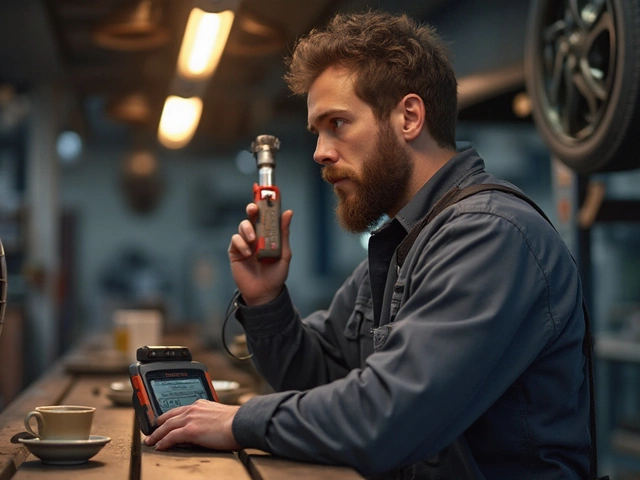
If you're still not sure, you can perform a pressure test. You'll need a Radiator Pressure Tester, which is a hand pump with a gauge that attaches to the radiator cap. By pumping the system up to its rated pressure (usually 13-16 psi), you can force leaks to reveal themselves.
If the needle on the gauge drops quickly, you have a leak. You can then look for the specific spot where coolant is spraying out. This is the only way to find those annoying "ghost leaks" that only happen when the engine is hot and the system is pressurized, but disappear as soon as the car cools down.
Common Radiator Failures and Their Causes
Why do radiators go bad in the first place? The most common culprit is chemical neglect. If you only use tap water instead of a proper 50/50 mix of antifreeze and distilled water, the internal metal will rust. Distilled water prevents mineral buildup, while antifreeze prevents boiling and freezing.
Another common issue is age-related fatigue. The plastic end-tanks expand and contract every time the engine heats up and cools down. After 10 years, that plastic becomes brittle and cracks. This is why many older cars suddenly develop leaks right in the seam where the plastic meets the aluminum core.
Dealing with a Bad Radiator
If you've confirmed your radiator is bad, you have two choices: repair or replace. While some shops can seal a small leak, it's rarely a permanent fix. The pressure in a cooling system is too high for most "stop-leak" products to work long-term. In fact, using those chemical sealants can often clog your Thermostat or heater core, making your problem much worse.
Replacing the unit is the safest bet. When doing so, it's a good rule of thumb to replace the Radiator Cap as well. The cap is actually a pressure-relief valve; if the spring inside the cap weakens, it can cause the system to boil over even if the radiator itself is brand new.
Can I just keep adding water to my radiator?
No. Adding water is a temporary band-aid. Pure water has a lower boiling point than coolant and causes internal corrosion. If you're constantly topping up, you have a leak that needs fixing before it leads to a catastrophic engine failure.
Will a bad radiator cause my car to shake?
Generally, no. A radiator issue affects temperature, not mechanical stability. However, if the engine is overheating severely, it can cause "pinging' or knocking sounds, which might feel like a vibration or shudder under acceleration.
How long does a typical car radiator last?
Most radiators last between 100,000 and 150,000 miles. However, if you live in an area with salted roads in winter or neglect your coolant flushes, they can fail much sooner due to corrosion.
Is it safe to drive with a small leak?
It's risky. A small leak can become a large burst at any time due to pressure buildup. If your coolant level drops too low, your engine can overheat in minutes, potentially warping the cylinder head and ruining the engine.
Why is my radiator bubbling?
Bubbling in the radiator or expansion tank usually means air is getting into the system. This could be caused by a leak, a failing radiator cap, or more seriously, combustion gases leaking into the coolant through a blown head gasket.
Next Steps and Troubleshooting
If you suspect a bad radiator, start with a visual check and a coolant level check. If the levels are low, refill the system (engine cold!) and monitor the gauge for one or two short trips. If the level drops again, it's time to either perform a pressure test or head to a mechanic.
For those who do their own work, remember to always "burp" the system after replacing a radiator. This means running the engine with the cap off (or using a bleed screw) to let trapped air bubbles escape. If you don't do this, you might experience overheating even with a brand new radiator.