Fuel Injector Symptom Checker
Select All Symptoms You Are Experiencing:
Please select your symptoms and enter mileage to see the analysis.
Recommended Action Plan:
You’re driving along, maybe heading to work or just running errands, and suddenly the car feels... off. It’s not a dramatic breakdown, just a subtle hesitation when you press the gas pedal. Or maybe the check engine light has been glowing like a stubborn nightlight for weeks. You start wondering if it’s something expensive, like the transmission, or something simpler, like a fuel injector a component in your vehicle's fuel delivery system that sprays fuel into the engine's cylinders. The truth is, bad injectors are surprisingly common, especially on cars with over 60,000 miles on the odometer. They don’t usually fail all at once; they degrade slowly, tricking you into thinking your car is just "getting old." But catching them early saves you from replacing spark plugs unnecessarily or dealing with a catalytic converter meltdown.
| Symptom | What It Feels Like | Likely Cause |
|---|---|---|
| Rough Idle | Car shakes at traffic lights | Clogged or leaking injector |
| Misfires | Jerking during acceleration | Inconsistent fuel spray |
| Poor Fuel Economy | Filling up more often | Dripping injector wasting fuel |
| Check Engine Light | Illuminated dashboard warning | O2 sensor detects imbalance |
The Most Obvious Signs Your Injectors Are Struggling
Let’s talk about what you actually feel when an injector goes south. The most classic symptom is a rough idle. You stop at a red light, and instead of settling into a smooth hum, the steering wheel vibrates, and the RPM needle bounces around. This happens because one cylinder isn’t getting the right amount of fuel. Maybe the injector is clogged with carbon deposits, so it’s starving the engine. Or worse, it’s stuck open, dumping too much raw fuel into the combustion chamber. Both scenarios mess up the air-fuel ratio, which is critical for a smooth burn.
Then there’s the misfire. This is distinct from a rough idle because it usually hits you under load. You merge onto the motorway, push the accelerator down, and the car stutters. It feels like a hiccup in power. A misfire code (like P0301, P0302, etc.) will likely pop up in your OBD-II scanner. While bad spark plugs can cause this, if you’ve recently replaced them and the problem persists, look at the injectors. A faulty Engine Control Unit (ECU) the computer that manages engine functions including fuel injection timing might be sending the wrong signal, but usually, it’s the mechanical part failing.
Another sneaky sign is a drop in fuel efficiency. If you notice you’re visiting petrol stations every week instead of every two weeks, and your driving habits haven’t changed, an injector might be dripping. When an injector leaks, it doesn’t shut off completely after spraying its dose. Instead, it continues to seep fuel into the cylinder even when the engine is off or idling. This wasted fuel doesn’t contribute to power; it just burns up your cash and fouls your spark plugs faster than usual.
Smells and Visual Clues You Can Spot Yourself
Your nose is a surprisingly good diagnostic tool here. If you smell strong gasoline fumes inside the cabin, particularly when you’re stopped in traffic or just after turning off the engine, that’s a red flag. It means unburned fuel is escaping the combustion process. This often happens when an injector is leaking externally or internally past the valve seat. In older vehicles, you might also see black smoke coming from the exhaust pipe. Black smoke indicates a rich mixture-too much fuel, not enough air. This is almost always a sign of a leaking injector or a stuck-open valve.
On the flip side, if you have a diesel engine, you might experience hard starting. Diesel injectors rely on precise pressure to atomize fuel. If the nozzle is worn, the fuel doesn’t spray finely enough to ignite quickly in cold weather. You’ll find yourself cranking the starter for longer than usual before the engine catches. For petrol engines, hard starting is less common with injector issues alone, unless multiple injectors are heavily clogged, creating a lean condition that prevents ignition.
Visually inspecting the area around the intake manifold can help too. Pop the hood and look for wet spots or dark residue near where the fuel rail connects to the engine. Fuel leaves oily stains. If you see fresh wetness around one specific injector, you’ve found your leaky culprit. Be careful though-fuel is flammable, and hot engines can ignite vapors. Don’t use an open flame to check for leaks!
Why Do Fuel Injectors Fail?
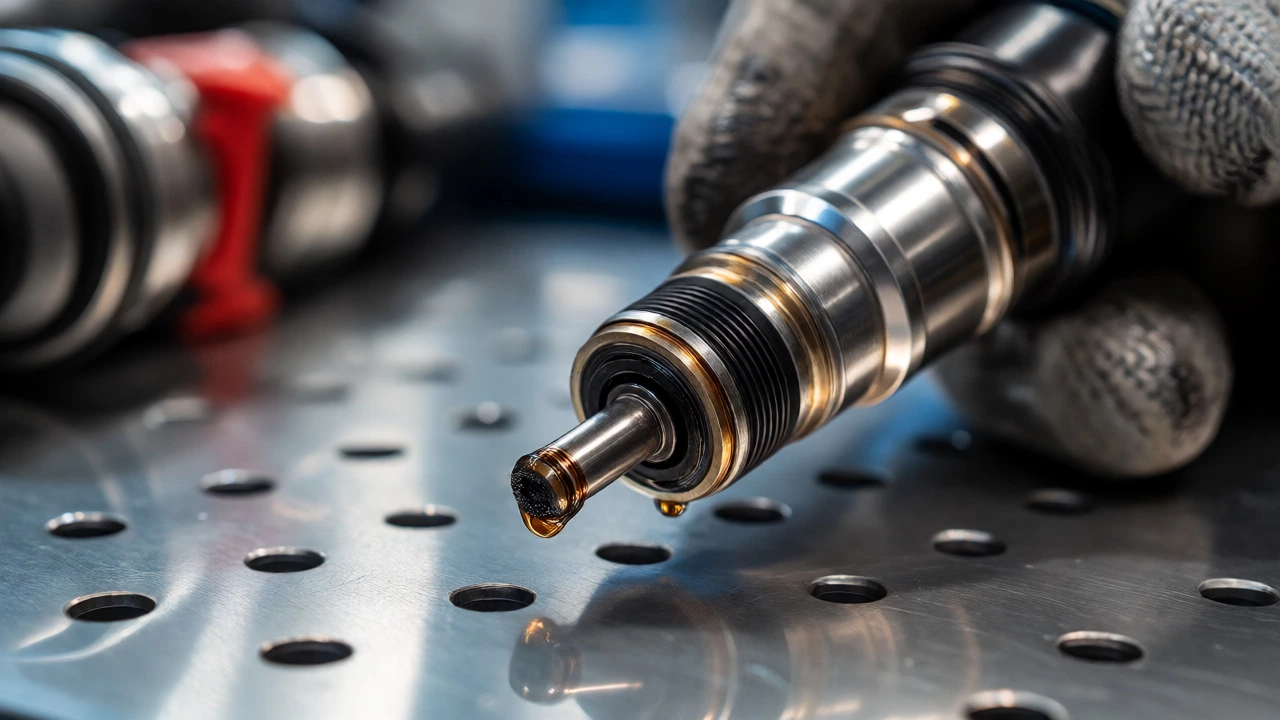
It’s not just age. Modern fuel injectors are precision instruments, with tiny holes smaller than a human hair. Over time, varnish and gum from old fuel build up on these nozzles. This is why using low-quality petrol or letting fuel sit in your tank for months (common in second cars or classics) causes problems. Ethanol blends, like E10 available in the UK, can also attract moisture. Water in the fuel system leads to corrosion inside the injector body, causing the internal pintle to stick.
Another factor is poor maintenance. Many drivers ignore fuel filter changes, thinking they’re unnecessary. But a clogged Fuel Filter a device designed to remove solid particulates and organic gums from fuel forces the pump to work harder, potentially pushing debris through to the injectors. Once those particles hit the fine mesh screen inside the injector, flow is restricted. You might not need a new injector immediately; sometimes, a professional ultrasonic cleaning restores flow rates. However, if the electrical coil inside the injector has burned out, cleaning won’t fix it. You’ll need a multimeter to check resistance, which should typically be between 12 and 16 ohms for high-impedance injectors, though specs vary by manufacturer.
DIY Tests vs. Professional Diagnostics
Can you test this yourself? Yes, but with limits. The simplest DIY method is the "listen test." With the engine running, take a long screwdriver and place the metal tip against the top of each injector while holding the handle end to your ear. Each injector makes a rhythmic clicking sound as it opens and closes. If one injector is silent or sounds significantly different-maybe a weak tick or no sound at all-it’s likely dead or clogged. This works best on accessible engines, but it’s tricky on modern cars with plastic covers.
For a more accurate check, you can buy a noid light kit. This small tool plugs into the injector’s wiring harness. When the engine turns over, the light flashes rapidly if the ECU is sending the pulse signal. If the light flashes but the engine still runs poorly on that cylinder, the problem is mechanical (clog or leak). If the light doesn’t flash, the issue is electrical-wiring, fuse, or the ECU driver itself. This distinction saves you from buying parts you don’t need.
However, for definitive results, a mechanic will use a fuel pressure gauge or a scan tool that shows live data. They can monitor fuel trim values. Short-term and long-term fuel trims tell the computer how much extra fuel it’s adding to compensate for a lean condition. If one bank of cylinders shows high positive fuel trims, it points to a restriction in that area. Conversely, negative trims suggest a rich condition, likely from a leaking injector.
Cleaning, Repair, or Replace?
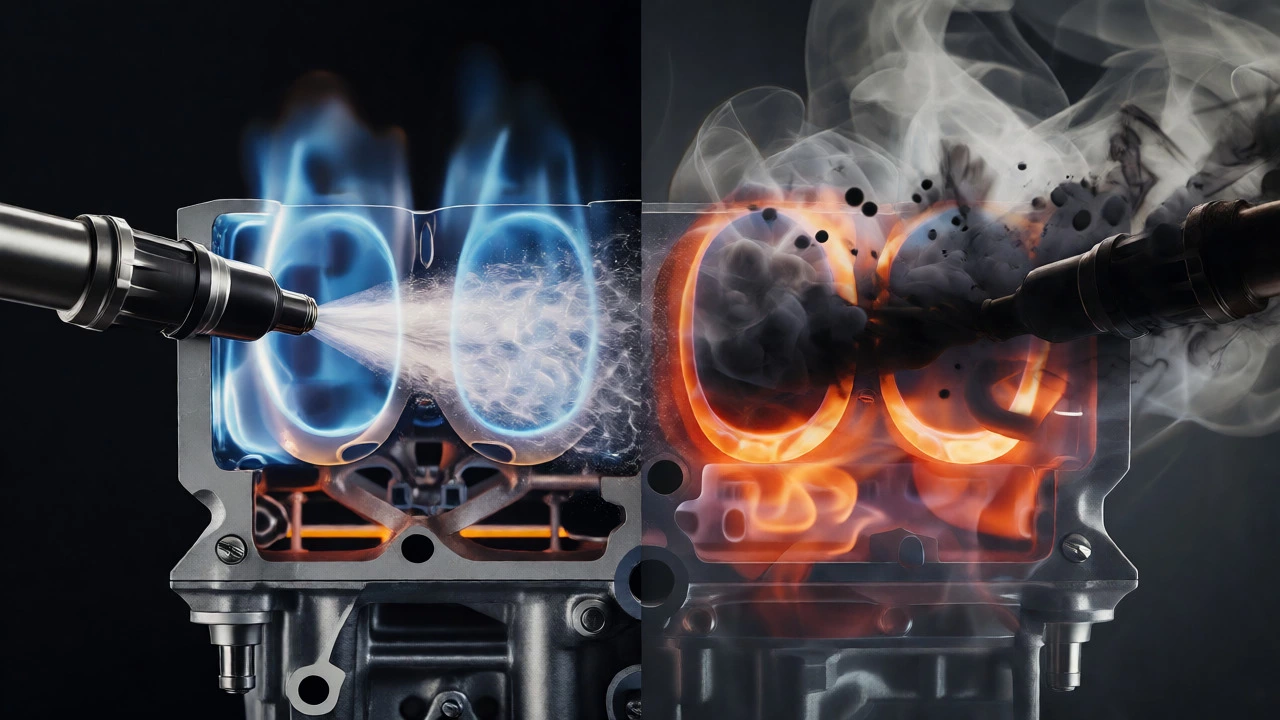
This is the big question. Should you clean or replace? If your car has under 80,000 miles and the symptoms are mild (slight rough idle), try a high-quality fuel system cleaner first. Pour a bottle into your tank and run the car at highway speeds for 20 minutes. Sometimes, this dissolves light varnish and frees up sticky pintles. It’s cheap and easy. If that doesn’t work, consider professional ultrasonic cleaning. This removes deep-seated carbon and checks flow patterns. It costs roughly £40-£60 per set of four injectors.
But if the injector is leaking, cleaning rarely helps. Leaks are caused by physical damage to the seal or the nozzle tip. No amount of sonic waves fixes a cracked housing. In this case, replacement is the only option. Replacing just one injector is possible, but it’s often smarter to replace them in pairs or sets. Why? Because old injectors wear unevenly. If you put a brand-new injector next to three old ones, the new one will flow more fuel, throwing off the balance again. Plus, labour costs for accessing injectors are high; doing all four at once spreads that cost out.
When buying replacements, stick to OEM (Original Equipment Manufacturer) or reputable aftermarket brands like Bosch, Denso, or Delphi. Cheap generic injectors often have inconsistent flow rates. Remember, the goal is uniformity. All injectors must deliver the exact same amount of fuel at the same time. If one is off by even 5%, you’ll still feel the misfire.
Preventing Future Injector Trouble
You can extend the life of your new injectors. First, never let your tank drop below a quarter full. Running on fumes pulls sediment from the bottom of the tank into the fuel lines. Second, change your fuel filter according to the service schedule, usually every 30,000 to 50,000 miles. Third, if you drive short distances frequently, consider using a fuel stabilizer occasionally. Short trips prevent the engine from reaching optimal operating temperature, allowing condensation to form in the fuel system. That water promotes rust inside the injectors.
Also, pay attention to your spark plugs. Fouled plugs are often a symptom of bad injectors, but changing plugs without fixing the injector is a waste of money. Check the plug tips. If they are black and sooty, it’s a rich condition (leaking injector). If they are white and blistered, it’s lean (clogged injector). Using this visual cue alongside your driving symptoms gives you a solid diagnosis before you spend any money.
Can I drive with a bad fuel injector?
Yes, for short distances, but it’s risky. Driving with a severely leaking injector can wash oil off the cylinder walls, leading to engine damage. It can also overheat and destroy your catalytic converter due to unburned fuel entering the exhaust. A clogged injector is less damaging but reduces power and increases emissions. Fix it soon to avoid costly secondary repairs.
How much does it cost to replace a fuel injector?
In the UK, a single quality injector costs between £30 and £80. Labour is the bigger expense, typically taking 1-2 hours depending on engine accessibility. Expect to pay £150-£300 total per injector if done at a garage. Replacing all four at once is often more economical per unit due to shared labour time.
Do fuel injectors get clogged easily?
Modern injectors are robust but sensitive to contamination. Using poor-quality fuel, neglecting fuel filters, or storing a car for long periods without stabilizer are the main culprits. Regular use of quality fuel additives can help prevent buildup, but they cannot clear severe mechanical failures.
Will a fuel injector cleaner fix a misfire?
Only if the misfire is caused by minor carbon buildup restricting flow. If the injector is electrically dead or mechanically leaking, cleaners will do nothing. Try a cleaner first as a low-cost diagnostic step; if symptoms persist after a tankful, you likely need physical repair or replacement.
How long do fuel injectors last?
Typically 60,000 to 100,000 miles. Some last much longer with excellent maintenance, while others fail earlier due to bad fuel quality. There is no fixed replacement interval; they are replaced based on symptoms and performance testing rather than mileage alone.