Suspension Comfort Diagnostic Tool
Answer the questions below to receive a personalized recommendation for softening your suspension. This tool analyzes common factors like tire pressure, component mismatch, and budget.
Recommendation
Explanation will appear here.
Key Factors Identified:
You just bought a set of coil springs that looked perfect on the spec sheet, but now your daily commute feels like you're driving over cobblestones in a go-kart. It’s frustrating. You wanted a sportier look or better handling, but you didn’t sign up for losing your fillings every time you hit a pothole. The good news? You don't necessarily need to throw money at a full air-ride system or buy new parts immediately. There are practical ways to soften those stiff coils and get some comfort back into your ride.
Before we start cutting metal or swapping parts, let's be clear about what "softening" actually means in this context. When mechanics talk about softening springs, they usually mean reducing the spring rate-the amount of force required to compress the spring by one inch. A lower spring rate means the wheel travels more easily over bumps, absorbing energy instead of transmitting it straight to your chassis. However, physics is stubborn. If you make the springs too soft without adjusting other components, you might end up with bottoming out or worse handling. This guide walks you through the real-world methods, from cheap tweaks to necessary upgrades, so you can decide what fits your budget and driving style.
Why Your Springs Feel Too Stiff
First off, why does your car feel like a tank right now? Often, it’s not just the springs themselves. It’s the combination of factors. If you installed aftermarket lowering springs, you likely reduced the static height of the car. To keep the car from sagging under its own weight, manufacturers often increase the spring rate. But here’s the catch: if you kept your old factory shock absorbers, they are probably mismatched. Factory shocks are valved (tuned internally) for softer, taller springs. Pair them with stiff, short springs, and the damper can’t control the faster oscillations, making the ride feel harsh and bouncy.
Another common culprit is tire pressure. People often overlook this because it seems too simple. If your tires are inflated to the maximum sidewall rating (say, 44 PSI) when the door jamb sticker recommends 32 PSI, you’re effectively adding an extra layer of steel hardness between you and the road. Before you touch a wrench, check your pressures. Dropping from 40 PSI to 32 PSI can mimic a softer spring setup significantly.
The DIY Method: Cutting Coils
Let’s address the elephant in the room: cutting the springs. Yes, people do it. It’s the cheapest way to lower a car and technically change the spring rate, but it comes with major caveats. When you cut a coil spring, you reduce the number of active coils. Fewer coils mean a stiffer spring, not a softer one. Wait, didn’t we want to soften it? Here is the nuance: cutting lowers the car, which changes the geometry. While the spring itself gets stiffer per inch of travel, the overall ride height reduction can sometimes make the car feel less "floaty," but it rarely makes the actual impact absorption softer. In fact, it often makes it harsher.
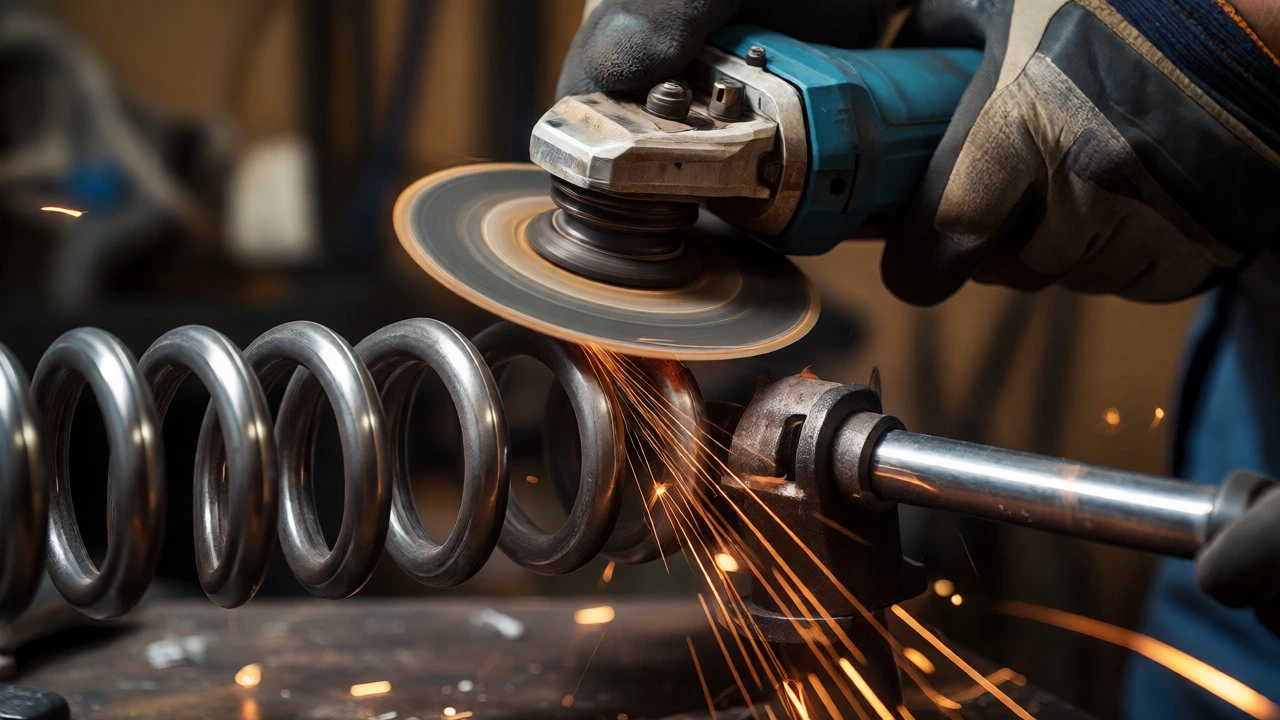
If you are determined to cut them anyway, you must use proper tools. Never use a standard hacksaw; it creates heat that ruins the temper of the steel, leading to premature failure. Use an angle grinder with a cutoff wheel or a dedicated spring cutter. Always cut from the top of the coil-over strut assembly if possible, as this keeps the spring seated correctly. Measure twice, cut once. Removing one coil is usually enough for a small drop. If you remove two, you risk the spring popping off the perch during hard cornering.
| Method | Cost | Difficulty | Ride Comfort Impact | Longevity Risk |
|---|---|---|---|---|
| Tire Pressure Adjustment | $0 | Easy | Moderate Improvement | Low |
| Cutting Coils | $0 - $20 | Moderate | Often Worse (Stiffer) | High (Failure Risk) |
| Spring Spacers | $50 - $150 | Easy | Slight Improvement | Medium (Geometry Change) |
| New Progressive Springs | $200 - $600 | Hard | Significant Improvement | Low |
| Adjustable Dampers | $300 - $800+ | Hard | Best Control | Low |
Using Spring Spacers and Shims
If you want to raise the car slightly to gain more suspension travel-which indirectly helps with comfort-spring spacers are a solid option. These are small aluminum or polyurethane discs placed above the spring. They don’t change the spring rate directly, but they allow the suspension to move further before hitting the bump stops. More travel means the spring has more room to work before it bottoms out. If your current issue is that the car slams into the bump stops on minor dips, spacers give the spring breathing room, resulting in a smoother ride.
Be careful with thickness. Adding a 1-inch spacer increases ride height by 1 inch. This changes the angle of your CV joints and ball joints. Go too high, and you’ll start wearing out drivetrain components prematurely. For most street cars, staying within 0.5 to 1 inch of adjustment is safe. Polyurethane spacers are generally preferred over aluminum because they absorb some vibration themselves, whereas aluminum transfers everything straight through.
The Right Way: Progressive Rate Springs
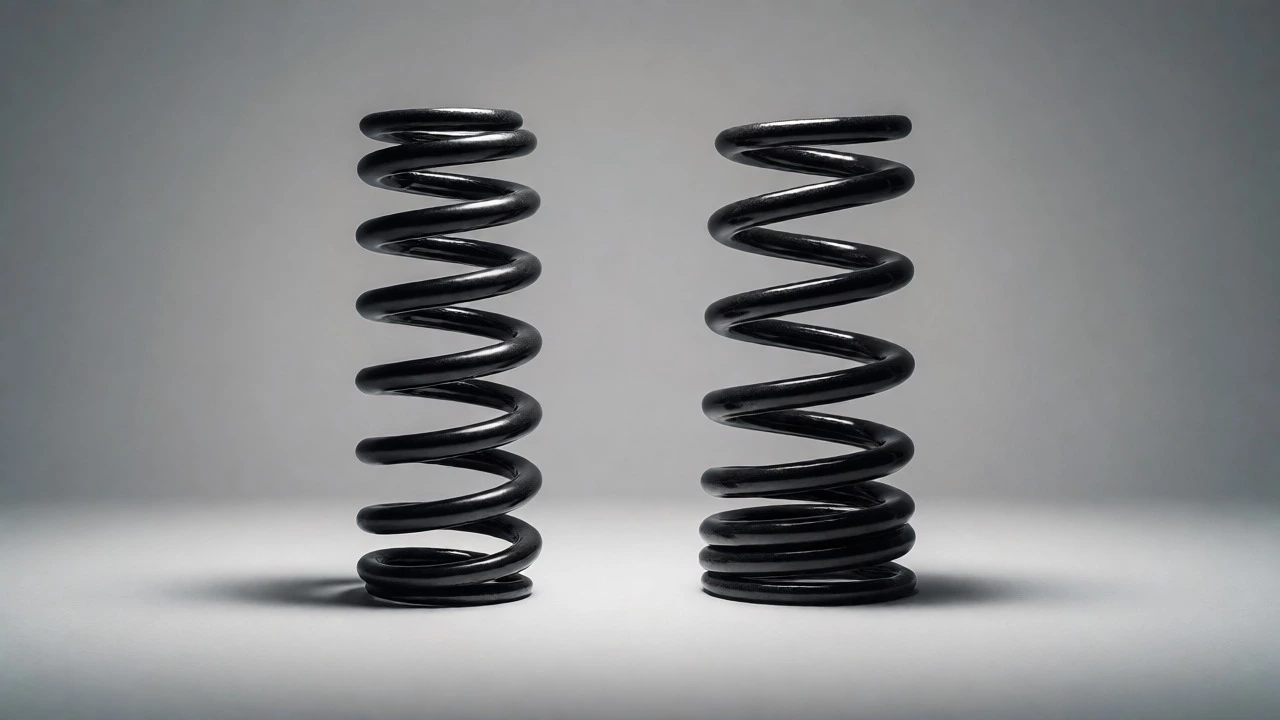
Here is where the real magic happens. If you want a genuinely softer ride without sacrificing all handling, look into progressive rate springs. Unlike linear springs, which have the same stiffness throughout their compression, progressive springs have variable pitch. Some coils are closer together (stiffer section), and others are farther apart (softer section).
Under normal driving conditions, only the widely spaced coils are active, providing a soft, comfortable ride. When you take a sharp turn or hit a big bump, the tighter coils engage, preventing the car from rolling too much or bottoming out. Brands like Eibach, H&R, and Tein offer these kits specifically designed to replace stock setups. The trade-off? They cost money. But unlike cutting your existing springs, you retain the structural integrity and warranty of the part. You also maintain proper fitment with your existing shock towers.
Don’t Forget the Shock Absorbers
You cannot soften a spring in isolation. The shock absorber controls the speed at which the spring compresses and rebounds. If your springs are stiff, your shocks need to be able to handle the higher loads without blowing out or fading. Many enthusiasts make the mistake of installing stiff springs and keeping weak factory shocks. The result is a car that bounces uncontrollably after every bump.
If you’ve modified your springs, consider upgrading to adjustable dampers. Even basic monotube shocks often provide better damping characteristics than stock twin-tube units. If your budget allows, adjustable coilovers let you dial in both ride height and damping firmness. Start with the damping setting on the softest side and adjust upward until the car stops wallowing in corners. This gives you precise control over how "soft" the suspension feels.
Check Your Bushings and Mounts
Sometimes, the problem isn’t the spring at all. Worn-out rubber bushings or collapsed upper spring mounts can create noise and vibration that mimics a harsh ride. Inspect the top mount bearings on your struts. If they are dry or seized, the spring won’t rotate freely, causing binding and a jerky feeling. Lubricating or replacing these cheap parts ($15-$30 each) can sometimes solve the entire issue. Also, check the sway bar links. Loose or broken links cause clunking noises and reduce stability, making the ride feel unpredictable.
Practical Tips for Testing Changes
After making any change, you need to test drive properly. Don’t just drive around the block. Find a stretch of road with known imperfections-railroad crossings, expansion joints, or rough pavement. Drive it slowly first, then pick up speed. Pay attention to how the car reacts. Does it float? Does it crash? Write down notes. If you changed tire pressure, wait a day for the tires to settle. If you cut springs, re-check torque specs after 100 miles, as settling can loosen bolts.
Remember, safety is non-negotiable. If you hear metallic grinding or see uneven tire wear shortly after modifications, stop driving and inspect the alignment. Changing spring rates affects camber and toe settings. An alignment is almost always required after significant suspension changes. Skipping it will ruin your tires in weeks and make the car pull to one side.
Frequently Asked Questions
Can I soften my springs by heating them?
No, heating coil springs without specialized equipment and re-tempering processes will weaken the steel unpredictably. You risk the spring snapping while driving. It is safer to replace them or adjust damping rather than trying to alter the metallurgy yourself.
Will lowering springs make my ride harsher?
Generally, yes. Lowering springs are shorter and often stiffer to prevent bottoming out. If you pair them with stock shocks, the ride will likely become harsher. To mitigate this, ensure you use matched shock absorbers designed for lowered vehicles.
Do tire size affect suspension stiffness?
Yes. Larger wheels with low-profile tires have less sidewall flex, which transmits more road impact to the chassis, making the ride feel stiffer. Switching to smaller rims with taller sidewalls can add cushioning and effectively soften the perceived ride quality.
Is it safe to cut coil springs myself?
It carries risks. Improper cuts can lead to uneven seating, premature failure, or the spring popping off. Always use an angle grinder, cut from the top if possible, and ensure the cut is perfectly flat. Wear heavy gloves and eye protection, as springs store massive amounts of energy.
What is the best way to soften a truck suspension?
For trucks, consider a leveling kit with softer front springs or a lift kit with progressive-rate rear leaf springs. Additionally, installing heavier-duty but well-valved shock absorbers can improve control without making the ride overly rigid. Check your owner's manual for recommended load ratings.