Exhaust System Impact Calculator
Estimated Cost Range
Parts only (installation extra)
Projected Outcome
There is nothing quite like the deep, rumbling growl of a well-tuned engine. It turns a mundane commute into an event and signals that your car has more than just stock potential. But getting that specific "throaty" tone without turning your daily driver into a lawnmower requires precision, not just volume. You don't want noise; you want character.
Achieving this sound involves manipulating backpressure, flow dynamics, and resonance frequencies. It is a balance between letting the engine breathe freely and managing the acoustic waves exiting the tailpipe. If you get it wrong, you end up with drone or excessive rattling. If you get it right, you get a rich, aggressive note that complements the engine's power band.
Understanding the Science of Exhaust Tone
To change the sound, you first need to understand what creates it. An exhaust system is a network of pipes and mufflers designed to move spent gases from the engine to the atmosphere. In a stock configuration, the goal is often minimal noise and maximum emissions control, which results in a muffled, flat tone.
The "throatiness" comes from low-frequency pressure pulses. When fuel burns in the cylinders, it creates high-pressure gas. As these gases exit, they create sound waves. A stock muffler is a device that uses chambers and perforated tubes to cancel out sound waves through destructive interference. To make the sound throatier, we need to reduce this cancellation for lower frequencies while still dampening the harsh, high-pitched ringing.
- Backpressure: While old-school thinking suggested high backpressure made engines louder, modern forced-induction and high-revving engines actually lose power with too much restriction. However, some backpressure helps maintain exhaust velocity, which contributes to a deeper tone at low RPMs.
- Pipe Diameter: Larger pipes allow more air to flow but can slow down gas velocity if oversized. Slower gas velocity often leads to a looser, rattle-prone sound rather than a tight, muscular one.
- Resonance: This is the key to "throatiness." Resonators are tuned to cancel specific annoying frequencies (like highway drone) while allowing the desirable low-end rumble to pass through.
The Cat-Back System: The Safest Starting Point
If you are new to modifying your vehicle’s acoustics, a cat-back exhaust is an aftermarket exhaust system that replaces everything from the catalytic converter back to the tailpipe. This is the most popular upgrade because it does not touch the emissions equipment located before the catalytic converter, keeping you legal in most regions.
A cat-back system typically includes a larger diameter piping, a less restrictive muffler or resonator, and a polished tip. By removing the restrictive factory muffler, you immediately gain volume and a deeper tone. Many manufacturers offer different muffler styles within their cat-back lines, such as straight-through designs for aggression or chambered designs for a smoother, classic muscle-car rumble.
| System Type | Sound Level | Power Gain | Legality | Cost Range |
|---|---|---|---|---|
| Cat-Back | Moderate Increase | Minimal (5-10 hp) | Generally Legal | $300 - $800 |
| Downpipe | Significant Increase | Moderate (15-30 hp) | Often Illegal | $200 - $600 |
| Header-Back | Very Loud | High (20-40+ hp) | Varies by Region | $800 - $1,500+ |
Modifying the Front End: Downpipes and Headers
If a cat-back doesn't give you enough bite, the next step is addressing the front of the exhaust system. The downpipe is the section of pipe connecting the turbocharger or catalytic converter to the mid-pipe. Factory downpipes are often narrow and packed with dense catalytic material to trap pollutants, creating significant restriction.
Replacing this with a high-flow downpipe opens up the turbo or engine significantly. For turbocharged cars, this reduces heat soak and allows the turbo to spool faster, which changes the exhaust note from a dull thrum to a sharp, aggressive whistle followed by a deep roar. Naturally aspirated engines benefit from headers, which are tubing that collects exhaust gases from each cylinder head individually. Long-tube headers improve scavenging efficiency, pulling exhaust out more effectively and creating a sharper, race-car-like crackle on deceleration.
Be aware that replacing the catalytic converter with a straight pipe or high-flow unit may violate local emissions laws. In places like California or parts of Europe, this can result in failed inspections or fines. Always check your local regulations before cutting into the front end of your exhaust.
The Role of Resonators and Muffler Design
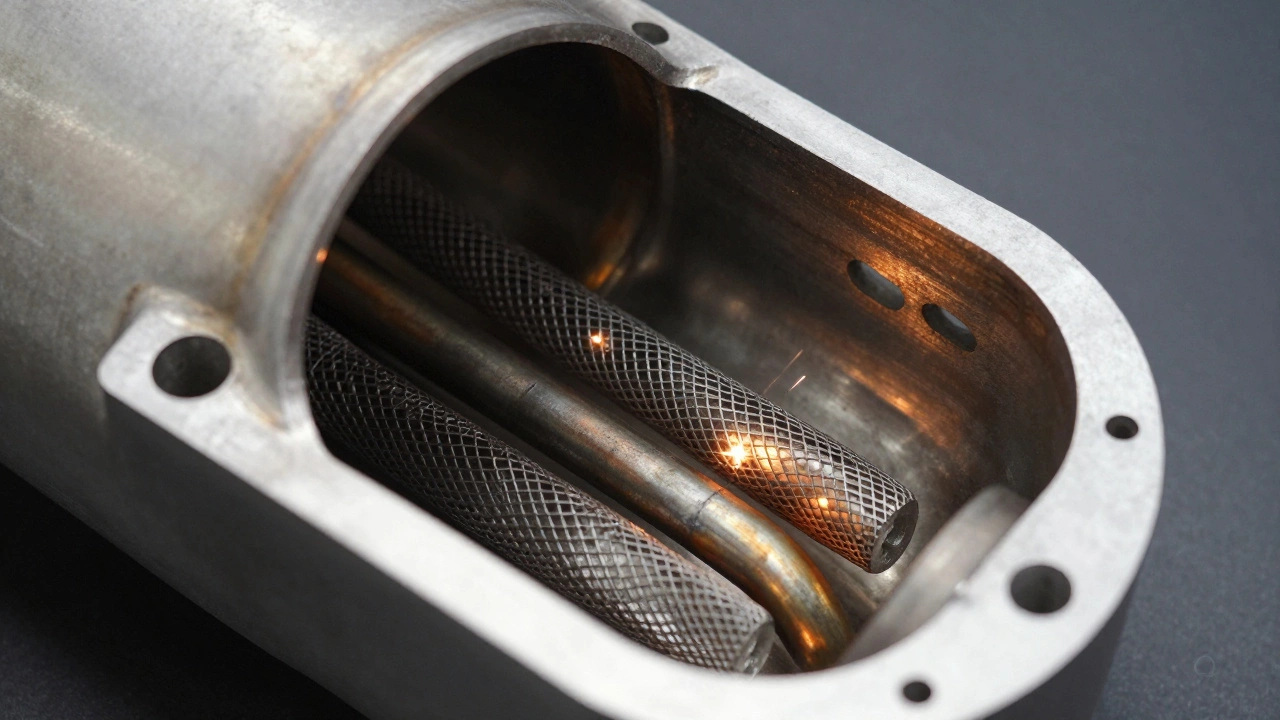
Not all loud exhausts sound good. Some sound tinny, others rattle, and many suffer from "drone"-a humming noise at highway speeds that vibrates inside the cabin. This is where the design of the resonator becomes critical. A resonator is essentially a smaller, tuned chamber placed before the main muffler. Its job is to cancel out specific frequencies that cause drone without killing the overall volume.
If you want a throaty sound, look for systems that use straight-through perforated core designs rather than restrictive baffles. Baffles tend to choke the sound, making it quiet but also dead. Straight-through cores allow the sound waves to travel freely, preserving the harmonic richness of the engine note. Some enthusiasts opt for a "resonator delete," removing this component entirely. While this adds volume and aggression, it almost always introduces drone, making long drives unpleasant.
Tailpipe Tips and Visual Acoustics
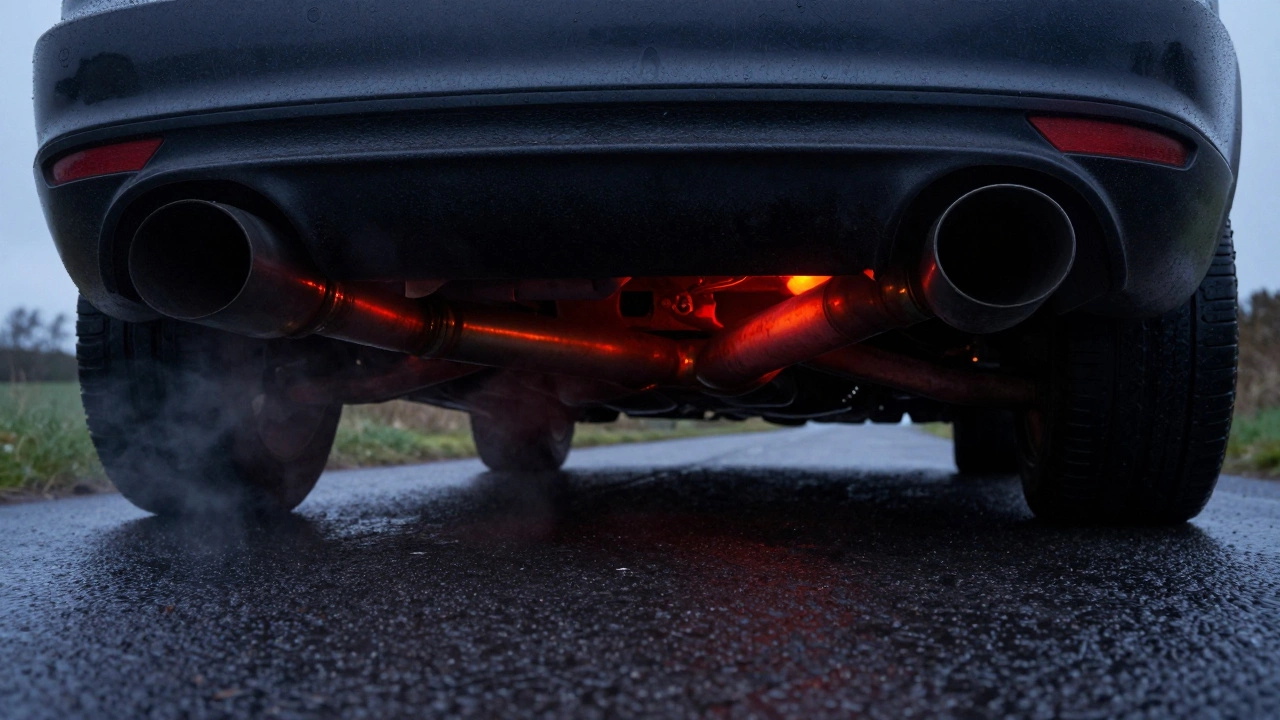
While the tip itself does little to change the internal acoustics, its shape and size affect how the sound exits the vehicle. A wider tip can help disperse the sound waves more evenly, reducing the "popcorn" popping noise that occurs when gas hits the edge of a small pipe. Additionally, the angle of the tip matters. Tips angled slightly downward help prevent rain and debris from entering the pipe, which can cause rust and alter the sound over time.
Material choice also plays a role. Stainless steel retains its structural integrity better than aluminized steel, ensuring the sound doesn't degrade as the metal thins and corrodes. Titanium exhausts are lighter and have a distinct, sharper metallic ring, but they come at a premium price.
Common Pitfalls to Avoid
Chasing the loudest possible sound often leads to disappointment. Here are three common mistakes to avoid:
- Oversizing the Pipe: Using a 3-inch pipe on a small 2.0-liter engine will kill exhaust velocity. The sound will become loose and ratty because the gas isn't moving fast enough to create coherent pressure waves. Stick to manufacturer recommendations for pipe diameter based on engine displacement.
- Ignoring Cabin Drone: What sounds great standing outside the car might be unbearable sitting inside it. Always listen to reviews specifically mentioning "highway drone" for your specific vehicle model.
- Skipping the Test Drive: Never buy an exhaust system solely based on online videos. Audio compression on social media distorts frequency response. If possible, visit a local shop to hear similar setups in person.
Installation and Tuning Considerations
Installing a new exhaust system often requires adjusting your engine's software. Modern cars use oxygen sensors to monitor exhaust composition and adjust fuel mixture accordingly. Changing the exhaust flow can trick these sensors, leading to a lean condition or poor idle quality. A professional tune ensures the engine runs efficiently with the new hardware, maximizing both power and sound quality.
Proper installation is crucial. Loose clamps or misaligned flanges can cause exhaust leaks, which introduce a ticking noise that ruins the smooth throaty tone. Ensure all gaskets are replaced and bolts are torqued to specification. Heat shielding should also be reinstalled to protect undercarriage components from increased exhaust temperatures.
Will a cat-back exhaust void my warranty?
In many regions, including the US under the Magnuson-Moss Warranty Act, a dealer cannot void your entire warranty simply because you installed a cat-back exhaust. They must prove that the modification directly caused the damage. However, if the exhaust fails and damages nearby components, those specific repairs may not be covered. Check your local consumer protection laws.
What is the difference between a throaty sound and a loud sound?
A loud sound is measured in decibels and indicates volume. A throaty sound refers to the tonal quality-specifically, a deep, rich, low-frequency rumble. You can have a very loud exhaust that sounds tinny or harsh, or a moderately loud one that sounds deep and muscular. Throatiness is about resonance and harmony, not just noise level.
Can I get a throaty sound on a diesel engine?
Yes, diesel engines naturally produce a deeper tone due to their higher compression ratios and combustion characteristics. A simple cat-back swap often yields significant improvements. However, diesels are prone to drone, so choosing a system with a high-quality resonator is essential to maintain cabin comfort.
How much horsepower do I gain from a performance exhaust?
Gains vary by vehicle. Naturally aspirated engines might see 5-10 horsepower from a full header-back system. Turbocharged vehicles can see 15-30+ horsepower, primarily from reduced backpressure allowing the turbo to spin more efficiently. Most gains come from improved airflow rather than raw power generation.
Is it illegal to remove the resonator?
It depends on your location. In many jurisdictions, removing any part of the emission control system, including resonators if they are integrated with the catalytic converter, is illegal. Even if the resonator is purely acoustic, exceeding local noise ordinances can result in fines. Always verify local noise limits before deleting components.