Brake Caliper Cost Calculator
Calculate Your Brake Caliper Replacement Costs
When your brakes start squealing or the car pulls to one side, you know something’s wrong. Most people immediately think of brake pads-and yeah, those wear out fast. But here’s the thing: if you’re replacing pads, you’re probably going to need a new caliper too. And that’s where the real question kicks in: How much is a caliper?
Let’s cut through the noise. A brake caliper isn’t some mysterious part you order from a catalog with no idea what you’re getting. It’s the clamp that squeezes your brake pads against the rotor. If it’s sticking, leaking, or corroded, no amount of new pads will fix your brakes. And prices? They vary wildly. You could pay $75 or $750. It all depends on what kind of car you drive, where you buy it, and whether you’re getting a rebuild kit or a brand-new unit.
What Exactly Is a Brake Caliper?
A brake caliper is the metal housing that holds your brake pads and contains one or more pistons. When you hit the brake pedal, hydraulic fluid pushes those pistons outward, pressing the pads against the rotor. Simple? Yes. But it’s also one of the most stressed components in your braking system.
There are two main types: floating calipers and fixed calipers. Floating calipers are the most common on everyday cars. They slide over the rotor and use a single piston to push one pad, while the other side is pressed by the caliper body itself. Fixed calipers? Those are found on performance vehicles. They have pistons on both sides of the rotor-more stopping power, more complexity, and more cost.
If you hear a grinding noise after replacing pads, or your car pulls to one side when braking, the caliper is likely the culprit. Sticking pistons, rusted slides, or fluid leaks all point to caliper failure. And if you ignore it, you’ll wear out your rotors faster, ruin new pads, and risk losing braking power entirely.
How Much Does a Brake Caliper Cost?
Here’s the breakdown based on real-world pricing from 2025 data:
- Basic economy car (Honda Civic, Toyota Corolla): $120-$200 per caliper (OEM replacement)
- Mid-size sedan (Honda Accord, Toyota Camry): $180-$300 per caliper
- Compact SUV (Honda CR-V, Toyota RAV4): $200-$350 per caliper
- Luxury or performance vehicle (BMW 3 Series, Subaru WRX): $350-$700 per caliper
- Heavy-duty truck (Ford F-150, Chevrolet Silverado): $400-$800 per caliper
These are prices for a single caliper. Most cars have two front calipers and two rear ones. But you rarely need to replace all four at once. Front calipers take the brunt of the work, so they’re the ones that fail first.
Some shops will sell you a rebuilt caliper. These are original units that have been disassembled, cleaned, fitted with new seals and pistons, and tested. Rebuilt calipers typically cost 30-50% less than new OEM ones. For a Honda Civic, that means you might pay $80 instead of $160. But here’s the catch: rebuilt calipers don’t always last as long. If you’re planning to keep the car for another 5+ years, go new. If it’s a beater you’re fixing up for a year or two, a rebuilt might make sense.
Why Prices Vary So Much
Not all calipers are created equal. Here’s what drives the cost:
- Brand: OEM (original equipment manufacturer) calipers from Toyota, Ford, or BMW cost more than aftermarket brands like Brembo or Centric. But OEM parts are engineered to match your car’s exact specs.
- Material: Cast iron calipers are standard. Aluminum ones are lighter and used on performance cars-they cost more because they’re harder to manufacture.
- Design: Fixed calipers with multiple pistons cost more than floating ones. High-end vehicles use 4- or 6-piston calipers. That’s not just a fancy upgrade-it’s necessary for heat dissipation and even pad wear.
- Location: If you’re buying from a dealership, expect to pay 20-40% more than an auto parts store. Online retailers like RockAuto or Amazon often have better prices, but check the seller ratings. A $99 caliper from an unknown seller might be a used part repackaged as new.
Also, don’t forget labor. Replacing a caliper isn’t a 10-minute job. It takes about 1.5-3 hours depending on the car. Labor rates in the UK average £80-£120/hour. So even if the part costs £150, you’re looking at £300-£500 total with installation.
When You Can Skip Replacing the Caliper
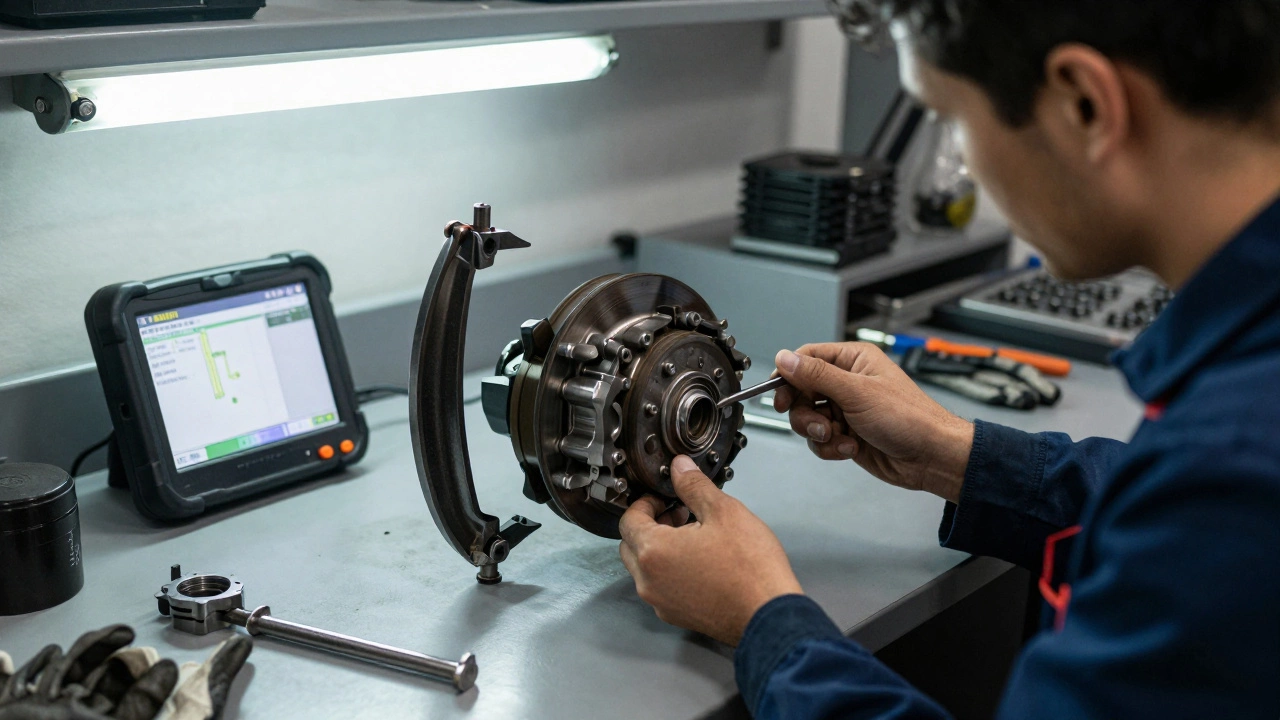
You don’t always need a new caliper when replacing brake pads. Here’s when you can get away with just pads:
- Your caliper moves freely-no sticking, no resistance when you push the piston back.
- No fluid leaks around the piston or hose connection.
- The caliper housing is clean, with no cracks or deep rust.
- The slide pins aren’t seized. You can move them by hand with a little grease.
If all that checks out, clean the caliper, replace the pads, and lubricate the slides. That’s a full brake job for under £100 in parts. But if you’re unsure? Get it inspected. A mechanic can check piston movement and fluid pressure in minutes. It’s cheaper than replacing rotors because you ignored a bad caliper.
What Happens If You Don’t Replace a Faulty Caliper?
Ignoring a bad caliper doesn’t just mean slower stops. It’s dangerous.
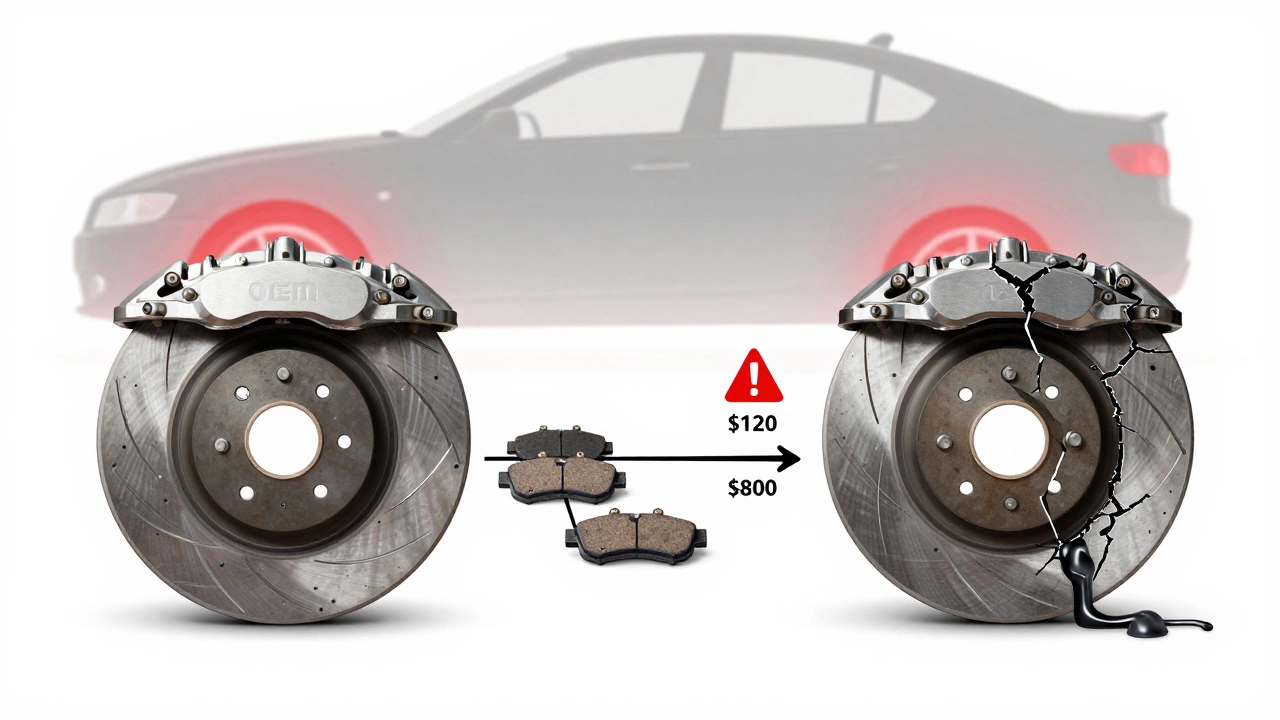
- Uneven brake wear: One pad wears out twice as fast as the other. You’ll need to replace pads every 10,000 miles instead of 30,000.
- Overheated rotors: A sticking caliper drags the pad against the rotor. That generates heat. Too much heat warps the rotor. Replacing a warped rotor costs £100-£200 per side.
- Brake fluid leaks: A leaking caliper loses fluid. That means reduced pressure. You might feel the pedal go soft. In extreme cases, you lose braking on one wheel.
- Insurance issues: If you’re in an accident and an inspection reveals a known faulty caliper, your insurer might deny the claim.
There’s no such thing as "it’s still working for now." Brake systems don’t fail gradually. They fail suddenly.
How to Save Money on Caliper Replacement
You don’t have to pay dealership prices. Here’s how to cut costs without cutting corners:
- Buy online: Sites like RockAuto, Amazon, or eBay have competitive pricing. Look for brands like Centric, Akebono, or Brembo. Read reviews carefully-focus on ones that mention brake performance after installation.
- Buy in pairs: If one front caliper is bad, the other one is close behind. Replace both at once. You’ll save on labor and avoid a second trip to the garage.
- Do it yourself: Replacing a caliper is doable with basic tools. You’ll need a jack, torque wrench, C-clamp (to push the piston back), and brake cleaner. YouTube tutorials for your exact car model are surprisingly accurate. Just make sure you bleed the brakes properly afterward.
- Ask for rebuilt: If you’re on a tight budget, rebuilt calipers from reputable suppliers are fine for daily drivers. Just avoid the cheapest ones on Amazon with no reviews.
Caliper Replacement Checklist
- Inspect caliper for fluid leaks (look for dark, oily residue)
- Check if the caliper slides move freely (no rust, no stiffness)
- Test piston movement with a C-clamp (should retract smoothly)
- Compare rotor thickness-uneven wear means caliper drag
- Replace brake fluid when installing a new caliper (old fluid absorbs moisture and reduces performance)
- Use high-temp brake grease on slide pins-never on the friction surface
Frequently Asked Questions
Can I drive with a bad brake caliper?
No. Driving with a stuck or leaking caliper is unsafe. It causes uneven braking, overheats rotors, and can lead to total brake failure. Even if the car seems to stop, the hidden damage to your rotors and pads will cost more to fix later. Get it checked immediately.
Is it cheaper to rebuild a caliper or replace it?
Rebuilding a caliper with a kit costs £30-£60 in parts, but it takes 2-3 hours of labor and requires special tools. For most people, buying a rebuilt caliper for £100-£180 is more cost-effective. Unless you’re a DIY enthusiast with time and experience, replacement is the smarter choice.
Do I need to replace both front calipers if one is bad?
Yes. Calipers wear at similar rates. If one fails, the other is likely close behind. Replacing both at once ensures even braking and avoids a second repair job in 6-12 months. It also saves on labor costs since the mechanic is already there.
Can I use aftermarket calipers instead of OEM?
Yes, if they’re from a reputable brand like Brembo, Centric, or Powerstop. Many aftermarket calipers meet or exceed OEM standards. Avoid no-name brands with no reviews. Look for certifications like ISO 9001 or SAE J1164. They’re often cheaper and just as reliable.
How do I know if my caliper is leaking?
Look for wet, dark fluid around the caliper body or where the brake line connects. You might also see brake fluid on your wheel rim or tire. If you notice a drop in brake fluid level in the reservoir, that’s another sign. Don’t wait for the pedal to feel spongy-check early.
Next Steps
If you’re wondering whether your caliper needs replacing, start with a visual inspection. Jack up the front of your car, remove the wheel, and look for fluid leaks or rusted slides. If you’re unsure, take it to a trusted mechanic for a brake inspection-they’ll check piston movement and pressure balance. Most charge £20-£40 for this, and it’s money well spent.
Don’t let brake repairs become a guessing game. Knowing what a caliper costs, how it fails, and when to replace it gives you real control over your car’s safety-and your wallet.